
Introduction
Folding bikes are made to be folded and unfolded many times, often every day. That convenience puts extra wear on hinges, clamps and small parts that a normal bike does not have, so folding bike care needs a few extra checks.
This guide explains folding bike maintenance in a simple routine: fold checks, cleaning, lubrication, tyres, brakes and gears, and the warning signs that mean a hinge or latch needs professional attention.
Folding vs regular bike care: quick comparison
| Area | Folding bike extra check | Regular bike check |
|---|---|---|
| Frame hinge | Latch lock, hinge play, wear | Frame cracks only |
| Handlebar and seatpost clamps | Quick-release tension, slip | Bolt tightness |
| Wheels | Small wheels wear faster, check often | Tyre and spoke check |
| Carrying and storage | Folded latch, no crushing | Dry storage |
What you will need
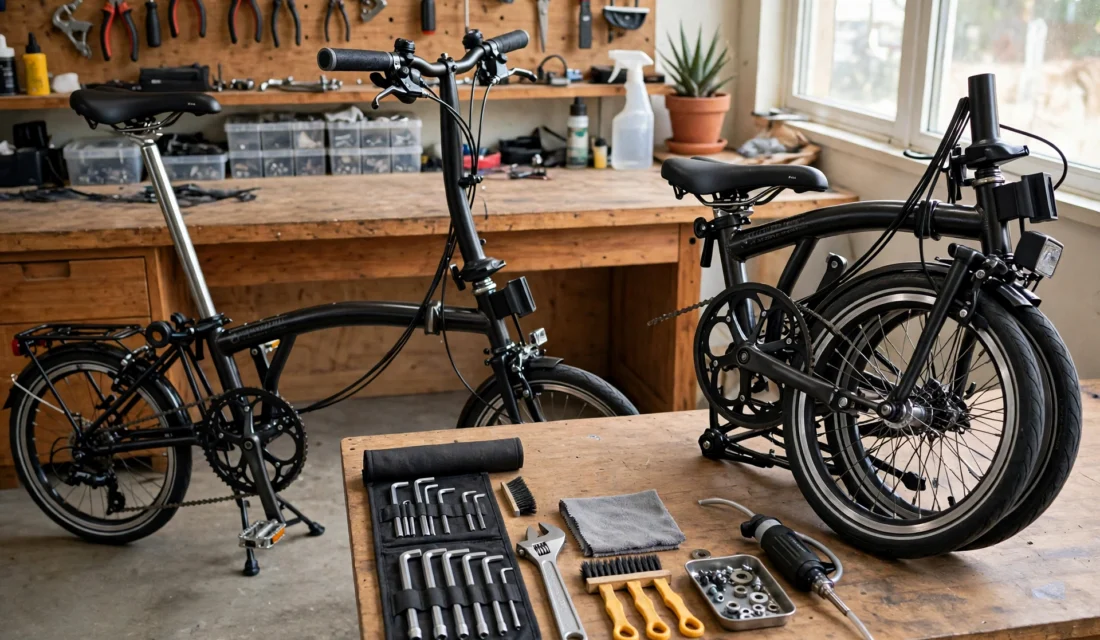
- Allen keys and a small adjustable spanner for hinge and clamp bolts
- A clean cloth, mild soap, and a suitable chain lubricant for your conditions
- A pump with a gauge, because small tyres lose pressure faster and feel changes sooner
- Tyre levers and a repair kit for roadside punctures
- Your folding bike manual, especially for latch adjustment and torque limits
Step 1: Check the fold before every ride
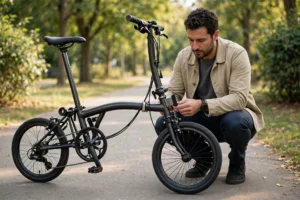 Unfold the bike fully, close each latch in the manual order, and check that every latch clicks or locks firmly. Try to move the frame at the hinge: there should be no play, rocking or creaking. Check handlebar and seatpost clamps the same way, because a slipping seatpost or handlebar stem is dangerous.
Look at hinge surfaces for dirt, rust, cracks or worn paint that suggests movement. Clean dirt from hinge faces, because grit can prevent a latch from closing fully and can wear the hinge over time. If a latch will not close, will not stay closed, or a hinge moves after closing, do not ride. Have it inspected and adjusted by a dealer or repairer.
- All latches fully closed and locked, every time.
- No play at frame, stem or seatpost hinges.
- No crack, bent latch or missing safety catch.
- Quick-releases tight, not just closed.
Step 2: Clean the fold and frame
Wipe the frame with a damp cloth and mild soap, paying attention to hinge faces, latch mechanisms and the areas where folded parts touch each other. These contact points collect dirt and can scratch paint, which then rusts on steel frames. Dry the bike fully, especially after wet rides, and do not use a high-pressure washer on hinges, bearings or latches.
Check for paint chips at fold contact points and touch them up if the manual or maker recommends it. Keep the folded bike clean in storage too, because dirt left in a hinge for weeks can seize a latch or cause corrosion.

Step 3: Lubricate hinges, chain and moving parts
Apply a light lubricant to hinge pivots only if the manual allows it, and wipe off excess so dirt does not stick. Lubricate the chain regularly, especially after wet rides, and wipe off excess lubricant after it has soaked in. Check cables for fraying, especially where they bend when the bike folds, because repeated folding can wear cables at tight bends.
Do not over-lubricate latches to mask a worn or loose latch. Lubrication helps smooth movement, but it does not fix play, a bent latch or a missing safety catch. If a latch feels different after cleaning and lubrication, have it checked.
| Part | Care |
|---|---|
| Chain | Clean, lubricate, wipe excess |
| Hinge pivots | Clean, light lubricant if manual allows |
| Cables at fold bends | Check for fraying and kinks |
Step 4: Maintain tyres, wheels and brakes
 Small folding bike wheels spin faster, wear tyres faster, and show pressure loss sooner. Check pressure with a gauge before rides, inspect tyres for cuts and embedded objects, and check spokes for looseness. A small wheel with a soft tyre feels sluggish and can damage the rim on potholes.
Check brakes for pad wear, cable tension and wheel spin, as on any bike, and check that brake parts do not rub when the bike is folded and unfolded. After unfolding, spin both wheels and squeeze both brakes before riding, because a cable can shift during folding.
- Tyre pressure checked with a gauge, not by squeezing.
- Brake pads within wear limit, wheels spin free.
- Spokes even, no loose or broken spokes.
- Quick-release wheels fully closed after unfolding.
Step 5: Check gears, chain and drivetrain
Shift through all gears slowly and check for skipping, hesitation or chain noise. Small-wheel folding bikes often use hub gears or a single chainring, so check the hub gear cable and shifter for smooth movement, and check chain tension if your model has a chain tensioner. Clean the chain regularly, because a folded bike stored in a bag collects dirt quickly.
If gears skip under load, or the chain falls off repeatedly, check chain wear, chainring teeth and rear sprocket wear, and have the drivetrain adjusted. Do not force a stiff shifter, because a bent cable or derailleur can cause a chain jam.
Step 6: Fold, carry and store correctly
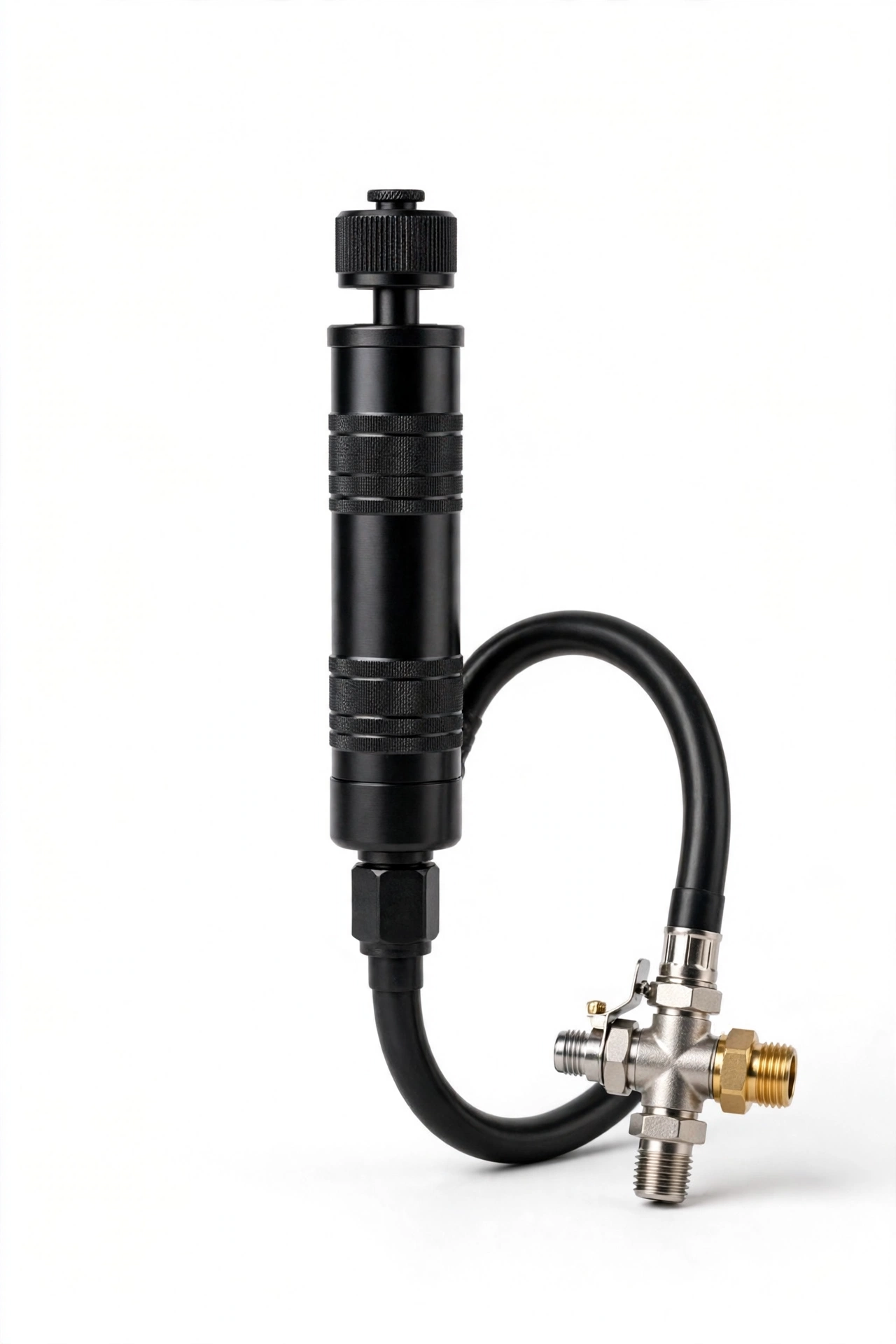
Fold in the manual order, close all folded latches or straps, and carry the bike by its handle or frame, not by a wheel or cable. When storing folded, keep it upright or as the manual says, away from heavy objects that could crush a wheel or bend a latch. Do not hang a folded bike by a single latch for long periods.
Before the next ride, unfold fully and repeat the Step 1 fold check. A bike that was folded for transport can shift in a car boot or train, so never assume it is ready just because it was ready yesterday. Check the fold, brakes and tyres every time.
| Before every ride | Done |
|---|---|
| All latches locked, no hinge play | ☐ |
| Tyres firm, brakes work, wheels spin free | ☐ |
| Gears shift smoothly, chain not dry | ☐ |
| Handlebar and seatpost clamps tight | ☐ |

Common mistakes to avoid
- Riding with a latch that is not fully locked, because it felt almost closed.
- Using a high-pressure washer on hinges and bearings.
- Ignoring cable wear at fold bends until a cable snaps.
- Forgetting to recheck brakes and wheels after unfolding.
- Storing a folded bike under heavy luggage that bends a latch.
Related guides: Folding Bike Hub, Folding Bike category, How to Fix a Flat Tyre, How to Replace Handlebar Grips.
Frequently asked questions
How often should I check folding bike hinges? Check latches and hinge play before every ride, and clean and inspect hinges weekly in daily use, or after wet or dusty rides. A hinge check takes less than a minute once it becomes a habit.
Why does my folding bike creak when I pedal? Creaks can come from a loose latch, a dry hinge, a loose seatpost clamp, or a bottom bracket. Check latches and clamps first, clean and lubricate as the manual allows, and have it inspected if the creak remains.
Can I lubricate folding bike hinges? Only if the manual allows it, and only with a light lubricant, wiped clean after. Do not use thick grease or spray lubricant to hide a loose or worn latch.
Do small wheels need more tyre care? Yes. Small tyres lose pressure faster, wear faster, and are more affected by potholes. Check pressure with a gauge often, and replace tyres before tread becomes very low.
What if a latch will not stay closed? Do not ride. Clean the latch, check for dirt or damage, and have a dealer or repairer adjust or replace it. A latch that opens while riding can cause a sudden loss of control.
Can I fold a wet folding bike for storage? Dry it first if you can, especially hinges and chain. A wet bike stored folded for days can rust, seize latches, and develop a stiff chain.
How should I service folding bike hinges each season? Once a season, or after a period of heavy commuting, clean hinge faces thoroughly, check for play, cracks and worn latch parts, and have a dealer adjust latch tension if the manual allows adjustment. Replace worn hinge parts promptly, rather than tightening a latch harder to compensate, because a latch that is forced can fail suddenly. Keep a short service log with dates, so hinge wear becomes visible over time, and book a full service at least once a year, or sooner if you ride daily in wet or dusty conditions, because small wheels, hinges and cables wear faster than on a larger bike.
