Introduction
Most bikes are stolen because they were locked badly, not because no lock was used. A lock through only a wheel, a lock on a sign that lifts off, or a cable left slack on the ground all give a thief time and leverage.
This guide explains how to lock your bike safely, which lock combinations work best, where to lock, and the daily habits that make theft much harder. It focuses on practical locking, not on lock ratings alone.
Lock types: quick comparison
| Lock type | Strengths | Limits |
|---|---|---|
| D-lock, U-lock | Strong, hard to cut or lever | Heavy, needs a close anchor |
| Heavy chain | Flexible, reaches awkward anchors | Heavy to carry |
| Folding lock | Compact, flexible | Varies by model, check rating |
| Cable lock alone | Light, easy to carry | Easy to cut, use only as second lock |
What you will need
- A strong primary lock, preferably a D-lock or heavy chain, sized to your frame and anchor
- A second lock or cable for the front wheel, if it is quick-release
- A bag or frame mount for carrying the lock, so you actually take it on every ride
- A phone photo of your bike, frame number and lock key number, stored safely
- Removable lights, bags and accessories, or a habit of taking them with you
Step 1: Choose the right lock for where you park
Match the lock to the risk. For a quick stop in a busy place, a good D-lock may be enough. For all-day parking, a station, or an area with known theft, use two different lock types, because a thief prepared for one tool may not be prepared for both. Check the lock rating and the manufacturer guidance for your bike value, and remember that no lock is unbreakable: the goal is to make your bike a poor target compared with others nearby.
Test the lock size at home: it should reach through the frame and a wheel to a typical stand, without leaving a large loop of slack. A lock that is too large leaves room for leverage tools, while a lock that is too small forces you to lock only a wheel. Practice locking in daylight, so you are not learning in the dark.
- Primary lock: through frame and rear wheel, to a fixed anchor.
- Second lock: front wheel, or frame to a second anchor.
- Cable alone: only for accessories or as a second deterrent.
- Keep keys separate, and know your key number.
Step 2: Choose a safe anchor and place
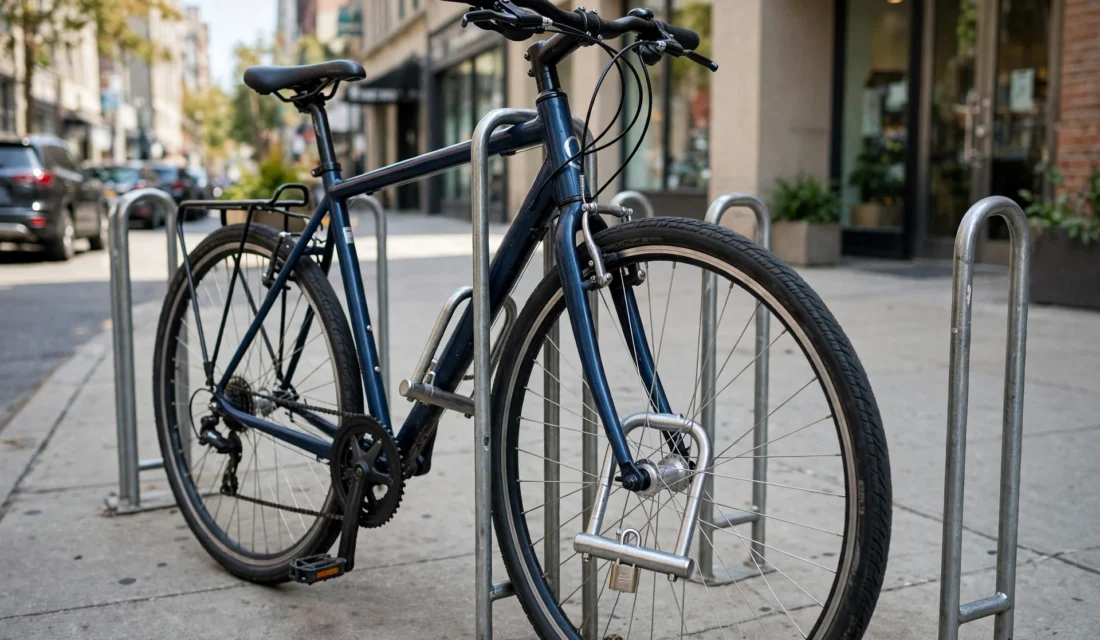
Choose a dedicated bike stand, a sturdy rail, or a Sheffield stand that is bolted to the ground and cannot be lifted. Test the anchor by shaking it: if it moves, lifts, or is cut, find another. Avoid short signs, thin fences, small trees, and scaffolding that can be lifted or cut. Avoid places where the bike blocks a pavement, doorway or fire exit.
Lock in a busy, well-lit place, ideally in view of people, cameras or a shop entrance. A quiet, hidden corner gives a thief privacy, even if it feels safer to you. If you park regularly, vary your spot a little, and avoid leaving a bike in the same hidden place overnight every day.
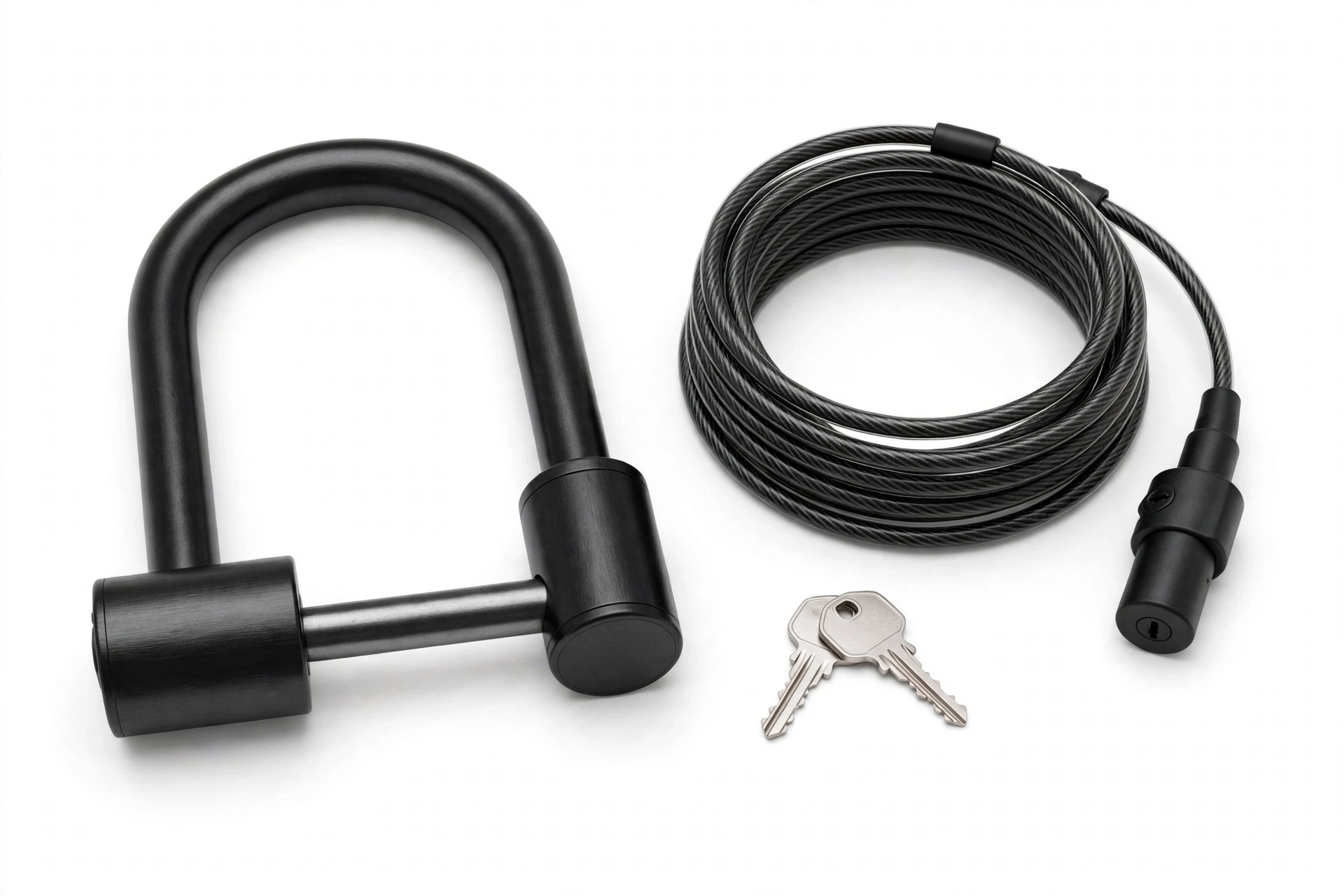 Hapleby Premium Bike Lock Set
A practical lock set for securing your bike at home or out on the road.
Step 3: Lock the frame and wheels correctly
Put the primary lock through the rear triangle of the frame and the rear wheel, then around the anchor. This secures the most valuable part, the frame, and one wheel at the same time. If you lock only the front wheel, a thief can remove that wheel and take the rest of the bike. If you lock only the frame, a quick-release wheel can be taken in seconds.
Keep the lock body off the ground, where it can be hammered or levered against the pavement, and keep the keyhole facing down or sideways, where it is harder to tamper with and less likely to fill with water. Fill the lock loop as much as possible with frame, wheel and anchor, so there is little slack for tools.
| Locking check | Pass |
|---|---|
| Frame locked to anchor | Rear triangle and wheel, not wheel alone |
| Lock off ground | No slack loop on pavement |
| Front wheel secured | Second lock, or wheel removed and locked with frame |
Step 4: Secure accessories and quick-release parts
Remove lights, computers, bags and pumps, or lock them inside a bag you take with you. Quick-release wheels, saddles and seatposts are easy targets: use a second lock, a cable through them, or locking skewers if you park in high-risk places. A saddle left unlocked can be taken in seconds, and a wheel left unlocked is a common first theft.
If your front wheel is quick-release and you have only one lock, remove the front wheel and lock it together with the rear wheel and frame to the anchor. This takes a few seconds longer, but it is much safer than leaving the front wheel free. Practice this at home, so you can do it quickly in the rain.
- Take lights and computers with you, every time.
- Lock or remove quick-release wheels and saddles.
- Check that bags are empty or taken, not left on the bike.
- Do not leave a helmet hanging on the bike in a high-risk place.
Step 5: Test the lock before you leave
Pull the lock, shake the bike, and try to lift it from the anchor. The bike should not lift off, the lock should not slide off the anchor, and the key should turn fully and come out cleanly. If the lock feels loose, reposition it and test again. A lock that looks locked but is not fully engaged is a common mistake, especially with cold hands or in a hurry.
Check that the bike is stable and will not fall onto the pavement or into traffic. A falling bike can damage the frame, wheels or lock, and it can also expose the lock to leverage. Take a photo of the locked bike and its location if you park in a large or unfamiliar place.
Step 6: Build habits for home, work and overnight parking
At home, lock the bike inside a garage, shed or hallway if possible, and lock it to a fixed anchor even indoors. At work, use the same busy, well-lit stand each day, but do not leave the bike overnight if you can avoid it. For overnight parking, use two locks, remove accessories, and check the bike in the morning for tampering, such as a loosened wheel or a lock that feels different.
Record your frame number, take clear photos from both sides, and register the bike if a local register exists. If a bike is stolen, report it promptly with photos, frame number and lock details. Keep lock keys in a safe place, and know how to get a replacement key before you need one.
| Final check | Done |
|---|---|
| Frame and rear wheel locked to fixed anchor | ☐ |
| Front wheel and accessories secured | ☐ |
| Lock tested, off ground, key removed | ☐ |
| Bike stable, in busy well-lit place | ☐ |
 Tragoods Premium Bicycle Tire Levers Set
A handy set for tyre work when a puncture needs a quick fix.
Common mistakes to avoid
- Locking only a wheel, not the frame.
- Using a cable lock alone for all-day parking.
- Locking to a sign, fence or object that can be lifted or cut.
- Leaving the lock on the ground with a large slack loop.
- Leaving lights, bags and quick-release wheels on the bike.
Related guides: Bike Gadget Hub, Bike Gadget category, How to Lock Bike with U Lock, How to Fix a Flat Tyre.
Frequently asked questions
Is one D-lock enough? For a short stop in a busy place, often yes, if it locks frame and rear wheel to a fixed anchor. For all-day or overnight parking, a second, different lock is safer.
Should I lock the front wheel too? Yes, if it is quick-release. Use a second lock or cable, or remove the wheel and lock it with the frame and rear wheel.
Where should I not lock my bike? Avoid signs that lift off, thin fences, small trees, scaffolding, and objects that block pavements or exits. Test the anchor by shaking it first.
How do I carry a heavy lock? Use a frame mount, a lock holder, or a bag that keeps the lock stable. A lock left at home because it is heavy does not protect your bike.
What should I do if my bike is stolen? Report it promptly with photos, frame number and location, check nearby cameras and registers, and tell local bike shops. Keep your lock and key details for the report.
Can I lock my bike to another bike? No. Locking to another bike does not secure yours to a fixed object, and it can damage both bikes and block the stand for others.