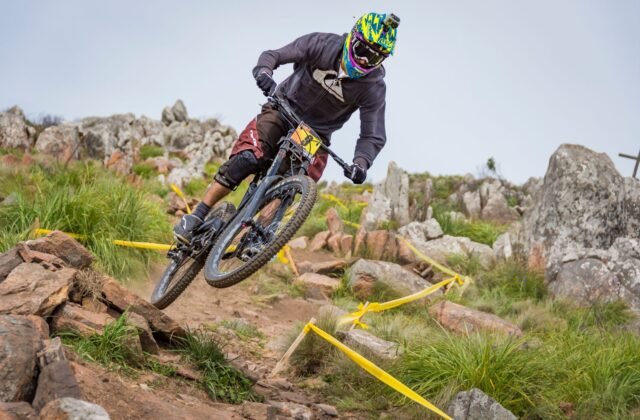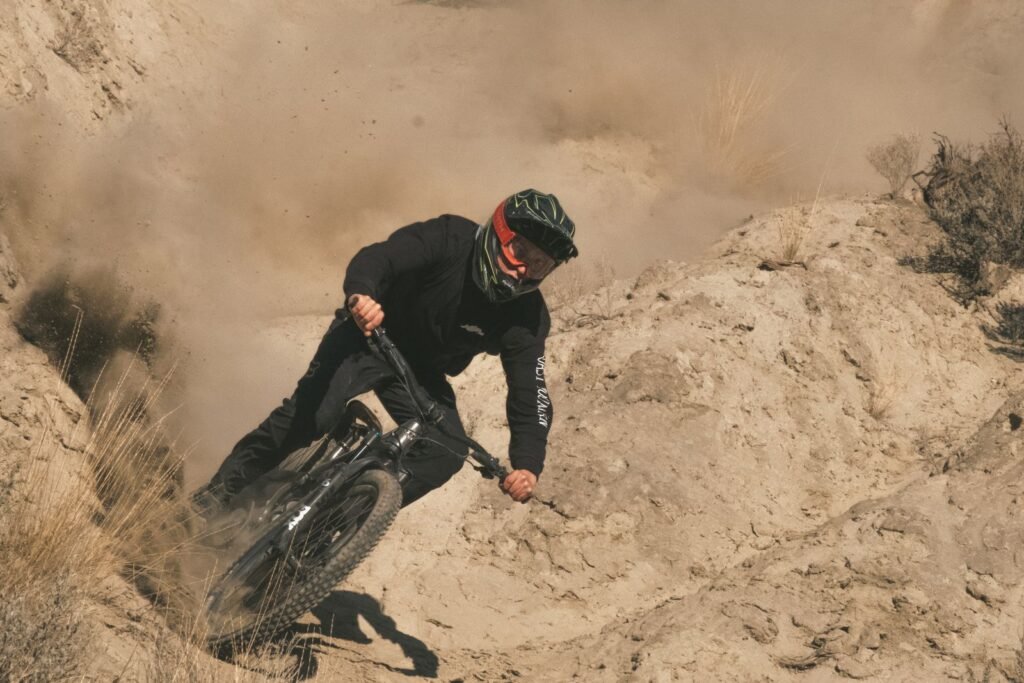
Straight answer: On dry, dusty trails, the downhill mountain bike is the better choice when your rides are mostly steep, rough descents; the cross country mountain bike is the better choice when your rides are mostly climbing, distance and smoother ground. A downhill bike, with about 180-210 mm of suspension travel, keeps both tyres planted and gives you braking control where dust hides the grip. A cross country bike, with about 100-120 mm of travel, is lighter, climbs faster and rolls further for the same effort.
Introduction
A downhill mountain bike and a cross country mountain bike are built for opposite ends of the same trail. One is built to survive the drop; the other is built to earn the climb. On dry dust, the differences that matter are suspension travel, tyre width, weight and riding position, and dust makes all four count for more.
Dry dust punishes the wrong choice fast. A light bike that feels quick on hard-packed dirt can wash out in the first dusty corner, spin its rear wheel on a loose climb, or run out of braking room before a drop. A heavy bike that feels planted on descents can wear you out on the climb back up, and dust in the moving parts adds drag every mile. This guide compares the two bikes on the same dry, dusty trail, shows how to test them before you buy, and explains what to do if you already bought the wrong one. For the bigger picture, start with the Mountain Bikes Hub, and keep your rides in the Mountain Bike category.
Downhill Mountain Bike vs Cross Country Mountain Bike on Dry Dust: The Core Comparison
| Attribute | Downhill mountain bike | Cross country mountain bike | What to watch |
| Suspension travel | About 180-210 mm, built for rough, steep descents | About 100-120 mm, built for efficiency and climbing | More travel soaks up rocks on dust; less travel keeps the bike lively on climbs. |
| Weight | Heavier, with a reinforced frame and bigger parts | Noticeably lighter and easier to pedal uphill | Weight costs effort on every dusty climb. |
| Climbing on loose dust | Slow and heavy; the rear wheel can spin on the steepest pitches | Faster on smooth ground, but the narrow rear tyre can lose grip | Test both on the same dusty climb. |
| Descending on dust | Confident on steep, rough descents; long travel keeps the tyres in contact | Quicker to turn, but easier to wash out when the front tyre loses grip | Match the bike to the steepest descent you ride. |
| Tyres and grip | Wider, knobbly tyres spread the load and bite into loose dust | Narrower, faster-rolling tyres grip best on hard-packed dust | Wider tyres help on loose dust; narrower tyres roll faster on firm dust. |
| Braking on dust | Strong, larger brakes with one-finger control; the extra weight adds stopping distance | A lighter bike stops sooner, but the tyres give up sooner on loose dust | Brake early and lightly on dusty corners. |
| Best for | Riders who shuttle, ride a lift or pedal to the top to descend | Riders who climb to earn their descents and ride long distances | Pick the bike that fits the ride you do most. |
When the Answer Changes
- Steep, rough descents. If your loop ends with long, rocky descents, the downhill bike is the clear choice.
- Mostly climbing, or a long pedal to the trail. If the ride is mostly up, the cross country bike’s lighter weight and pedalling position win.
- Deep, powdery dust. In very loose dust, grip and control beat weight. A downhill bike’s wider tyres float where a cross country bike digs in and stalls.
- You shuttle or ride a lift. If you do not have to pedal to the top, the downhill bike’s climbing penalty disappears, and its descending control is hard to beat.
Test Both Bikes on the Same Dry Trail: A 20-Minute Decision Ride
Specifications do not tell you how a bike rides your trail. One short test ride on dry dust tells you more than any list of parts. Use the same trail, the same effort and the same lines for both bikes.
- Pick your real trail: a dusty trail you ride often, 10 to 20 minutes long, with a climb, a flat stretch and a descent.
- Ride the downhill bike first. Note where you lose grip, and how your arms and legs feel at the top.
- Rest, then ride the cross country bike the same way: same effort, same lines, same corners.
- Repeat the dustiest corners on both bikes. The bike that holds its line with the least wrestling wins those corners.
- Choose the bike that got you through the trail with grip, control and energy to spare. If one bike leaves you exhausted on the climb, that is part of your answer.
What a fail looks like
| Symptom | Cause | Fix |
| Rear wheel spins on loose climbs | The tyre is losing contact, or the gear is too high | Let a little air out of the rear tyre, stay seated, and try an easier gear. Use the mountain bike air pressure guide for starting points. |
| Front wheel washes out in dusty corners | Too much speed, or the front tyre is not gripping the loose surface | Slow down before the turn, brake earlier, and keep your weight forward. |
| Arms and hands tire fast | The bike is bouncing you around on rough dust, or the suspension is too firm | Lower the tyre pressure slightly and open the suspension up a little. |
Myth: A heavier bike is always slower on dry dust.
Fact: On steep, dusty descents, the heavier bike is often faster, because its tyres stay in contact and its brakes work better. Weight hurts on climbs, not on descents.
Myth: Narrow tyres are always faster on dry dust.
Fact: On loose dust, wider tyres grip better. Narrow tyres are faster only on hard-packed, firm dust.
Before you test: Walk the trail first. Check for loose rock, dust, sand and branches. Wear a helmet and gloves, and test on dry ground. Carry a pump and a way to check tyre pressure. If a section looks dangerous, do not ride it.

How to Set Up Either Bike for Dry Dust
What you will need
- A tyre pump or gauge
- A shock pump
- A multi-tool
- A dusty trail you know well
The method
- Set the rear shock sag with your riding gear on. Too firm sags little and bounces; too soft uses up its travel on the first bump.
- Set tyre pressures for grip, not speed. Lower the rear a little more than the front if the trail is loose. See the mountain bike air pressure guide for starting points.
- Slide the saddle forward a little and keep the bars low enough to weight the front wheel.
- Ride the same trail again and note what changed. Keep what helped, and undo the rest.
- After the ride, clean the dust off the chain, seals and pivots. Dust left on the bike wears parts faster.
Do not: ride with the rear shock fully locked out on a rough descent. Open the suspension back up first.
Note: Change one setting at a time, ride the same trail, and write down what you felt. Two changes at once tell you nothing.

When the Damage Is Already Done
If you already bought the wrong bike for your dusty trails, you do not always need a new bike. Work through the likely fixes first, cheapest first.
- Wrong tyres. Fit the widest, grippiest tyres your frame and fork will take.
- Too much pressure. Drop the pressure a little at a time and test the same dusty corner until the bike holds its line.
- Suspension set up wrong. Set the sag with your gear on, and open the lockout on descents.
- Dust in the moving parts. Clean the chain, seals and pivots after every dusty ride.

Choosing a Cross Country Mountain Bike as a Safe Alternative
- Choose the lightest bike you can afford that still fits wide enough tyres for your dust.
- Fit tyres with a tread that suits loose dust, not just hard-packed dirt.
- Set the suspension soft enough to grip, and firm enough to pedal without wasting effort.
- Ride your usual loop and check the result on the climb and in the dustiest corners. If you finish with energy left, the bike fits your trails.
What to Do Next, in Order
- Ride your usual dusty trail and note where you lose grip.
- Check tyre pressure and suspension sag before you blame the bike.
- Test the other bike type on the same trail, at the same effort.
- Match the bike to your steepest descent and your longest climb.
- Buy the bike that fits the ride you do most, not the ride you dream about.
Never Do These
- Never ride a dusty descent on tyres pumped hard for the road.
- Never brake hard in the middle of a dusty corner.
- Never lock the suspension out for a rough descent.
- Never ride a trail you have not walked first when the dust hides rocks and ruts.
- Never judge a bike by one dusty ride.
In short
On dry dust, downhill bikes win steep, rough descents, and cross country bikes win climbs, distance and smooth ground. Test both on your own dusty trail first.
The essentials
- Suspension travel: downhill bikes run 180-210 mm; cross country bikes run about 100-120 mm.
- Tyres: wider, knobbly tyres grip loose dust; narrower tyres roll faster on firm dust.
- Weight: a lighter bike climbs better; a heavier bike holds its line on descents.
- Test: ride both bikes on the same dusty trail, at the same effort.
- Setup: tyre pressure and sag matter more on dust than on firm ground.
More Questions, Answered
Is a downhill bike good on dry dust?
Yes, on steep, rough descents, where its long travel and wide tyres keep grip. It is heavy to pedal uphill, so it suits shuttled or lift-served trails best.
Is a cross country bike good on dry dust?
Yes, on climbs, distance and smoother trails. Its narrower tyres can wash out in deep dust, so fit the widest tyres the frame allows.
What tyre pressure should I use on dry dust?
Start a little lower than your usual firm-trail pressure, so the tyre spreads and grips. Use the mountain bike air pressure guide for starting points.
Which bike should I buy first for dusty trails?
Buy the bike that fits the trails you ride most. If your rides end with steep, dusty descents, start with the downhill bike. If they are mostly climbing and distance, start with the cross country bike, as described in Trail Mountain Bike vs Cross Country Mountain Bike: Which Is Better for Dry dust?
Additional Details
Name: Downhill Mountain Bike vs Cross Country Mountain Bike: Which Is Better for Dry dust?
Description: Downhill mountain bike vs cross country mountain bike on dry dust: compare travel, tyres and weight, then test both bikes on your local trail before you buy.
Published: November 10, 2026