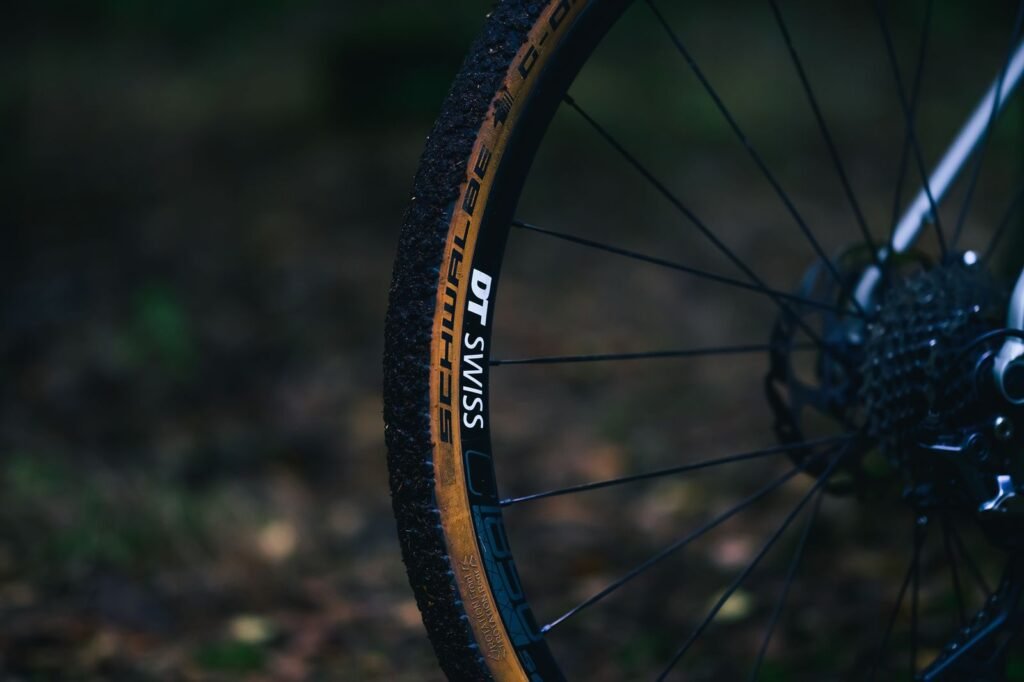
Straight answer: The trail mountain bike wins in wet weather for most riders. Its rear suspension keeps the rear tyre pressed into wet roots, rocks and ruts, so it holds grip where a hardtail skips and bounces. The hardtail wins only on smooth, firm trails, where its lighter frame and direct pedalling matter more.
Trail Mountain Bike vs Trail Hardtail Bike in Wet Weather
Wet weather changes what matters on a trail. Grip, control and confidence matter more than speed, and a small loss of traction on a wet root can end a ride. This is the trail mountain bike vs trail hardtail bike question for wet weather, answered for the trail most riders actually ride.
A trail mountain bike here means a full-suspension trail bike, with suspension at the front and rear, built for climbs, descents and mixed trail features. A trail hardtail has suspension only at the front and a rigid rear end, so the rear wheel follows every bump. If the trail is rough, rooted or rutted when wet, take the trail bike. If it is smooth, firm and rolling, the hardtail is the lighter, simpler choice. More trail comparisons live in the Mountain Bikes Hub.
Trail Mountain Bike vs Trail Hardtail Bike: The Core Comparison
Wet weather rewards the bike that keeps its tyres on the ground. The table below puts the two sides side by side.
| Attribute | Trail Mountain Bike | Trail Hardtail Bike | What to watch |
|---|---|---|---|
| Wet grip | Stronger on rough, wet ground; rear suspension keeps the tyre in contact | Good on smooth ground; rear wheel can skip on wet roots | Watch the rear wheel on wet roots |
| Control on descents | More settled over drops, ruts and off-camber roots | Needs more body movement and a lighter touch | Brake without locking a wheel |
| Climbing | Steady on loose, wet climbs; some energy goes into the suspension | Direct and efficient; rear wheel can spin on a wet pitch | Wet, loose climbs favour the trail bike |
| Weight and effort | Heavier, with more parts to move and maintain | Lighter and easier to carry over a blocked section | A long, smooth climb favours the hardtail |
| Best wet trail | Rooty, rocky and rutted trails after rain | Smooth, flowing trails with firm ground underneath | Match the bike to the trail surface |
When the Answer Changes
The verdict flips when the trail, the rain or the rider changes:
- Trail surface: On smooth, hard-packed dirt, the hardtail is quick and sure. On wet roots, rocks and ruts, the trail bike takes over.
- How wet it is: Light rain on firm ground changes little. Standing water, deep mud and slick clay favour rear suspension and a slower line.
- Tyre condition: Worn tyres lose grip before suspension matters. A fresh, open tread that sheds mud narrows the gap between the two bikes.
- Climb or descent: A wet descent rewards the trail bike. A long, firm climb rewards the hardtail.
The Wet Weather Test: How to Decide in One Short Ride
Do not judge either bike on a dry car park. Ride the same short, wet loop on both, at the same easy pace, and compare grip and control, not speed.
- Pick a short loop with a wet root section, a short climb and a gentle descent, short enough to repeat.
- Set the same tyres and pressure on both bikes. Check the mountain bike air pressure guide before you ride.
- Ride the root section seated, then standing, and note where the rear wheel skips, spins or slides on each bike.
- Brake before the wet turn, not in it, then climb the same wet pitch twice, seated and with weight over the rear wheel.
What a Fail Looks Like
| Symptom | What It Means | What To Do |
|---|---|---|
| Rear wheel skips over wet roots | The rear tyre is leaving the ground | Slow down and let the suspension work |
| Rear wheel spins on a wet climb | Weight is too far forward | Shift weight back and pedal smoothly |
| Front wheel washes out in a turn | You braked in the turn | Brake before the turn and look ahead |
| Bike feels harsh and tiring | Suspension is too firm, or pressure too high | Soften the setup and retest |
Myth versus Fact
Myth: A hardtail is always slower in the wet.
Fact: On a smooth, firm trail, a hardtail can be just as quick. Its disadvantage is on rough, wet ground, where the rear wheel loses contact.
Before you test
Check both brakes, tyre tread and axle fittings before riding in the wet. Wear a helmet, gloves and eye protection, and ride the loop at walking pace first if you do not know the trail. Do not test on a trail that is closed after rain.
How to Set Up Either Bike for Wet Weather
Setup matters more in the wet than on a dry day. The same bike can feel sure-footed or skittish depending on pressure, tread and braking, so set both bikes up the same way before you compare them.
What You Will Need
- A pump and a pressure gauge, so both bikes run at the same starting pressure
- A clean cloth, a brush and a small bottle of chain oil for wet-weather use
- Tyres with an open tread that can shed mud, with no cuts or worn knobs
- Working brakes with clean pads and rotors, and a helmet and gloves
The Method
- Clean the bike first. Remove mud from the tyres, chain and brakes, so you can see wear and check that nothing is rubbing.
- Set tyre pressure for wet ground, starting a little lower than dry pressure, then test the same root section. Too low risks a pinch flat.
- Set suspension for grip, not stiffness. Soften the rear a little on the trail bike, and the fork a little on the hardtail, so each follows the ground.
- Oil the chain lightly, wipe off the excess, brake early and gently. Test both brakes on a safe, straight section first, then ride the loop, change one thing only, and ride it again.
Note: Do not change everything at once. If you change pressure, suspension and tyres together, you will not know which change helped.
Warning: Never ride a trail that is closed after rain, and never ride across a flooded section. Deep water hides holes and ruts, and riding it damages the trail for other riders.
When the Damage Is Already Done
If you already bought the wrong bike for the wet trails you ride, you do not have to start again. Most wet-weather problems can be reduced with setup, tyres and riding style.
- Hardtail skipping on wet roots: Fit a tyre with a more open, grippy tread, lower the pressure a little, and ride with bent elbows and knees so your body absorbs the bumps the rear wheel cannot.
- Trail bike feeling heavy on smooth climbs: Keep the suspension firm on climbs, use a lower gear and a steady cadence, and save the soft setup for descents.
- Both bikes sliding in wet turns: Slow down earlier, brake before the turn, and keep your weight centred. No bike holds grip if you brake hard mid-turn on wet roots.
If the trail you ride most is rough and wet, and the hardtail keeps skipping, a full-suspension trail bike is the honest fix. If your trail is smooth and firm, and the trail bike feels heavy, the hardtail is the simpler fix. See also Trail Mountain Bike vs Downhill Mountain Bike and Trail Mountain Bike vs Electric Mountain Bike, which use the same wet-trail test.

The Safe Alternative: Start with the Trail Hardtail Bike
If you are unsure, or your budget is tight, the trail hardtail is the safe starting point. It is lighter, simpler and cheaper to maintain, and it teaches good riding habits, because you learn to read the trail and move your body instead of relying on rear suspension. See Hardtail Mountain Bike vs 27.5 Mountain Bike for the hardtail side.
The Method
- Choose an open tread that sheds mud instead of packing up with it.
- Set pressure for grip, starting a little lower than dry pressure, and test the same wet section.
- Soften the fork slightly and ride with loose arms and bent knees, letting your body act as the rear suspension the bike does not have.
If you later move to rough, wet trails most weeks, you will know exactly what a rear shock adds, because you will have felt its absence. The same trade-off is covered in Full Suspension Mountain Bike vs Cross Country Mountain Bike.
What to Do Next, in Order
- Walk or ride your usual trail after rain and note whether it is smooth, rooty or rutted.
- Choose the bike for that trail: trail bike for rough and wet, hardtail for smooth and firm.
- Set up the bike using the method above, starting with tyres and pressure.
- Ride the same short wet loop twice, changing one setting between runs.
- Clean and check the bike after the ride, then keep the setup that held grip best.
Never Do These in Wet Weather
- Never brake hard in a wet turn. Brake before the turn, or the front wheel can wash out.
- Never ride with worn, smooth tyres in the wet. Grip starts with the tread, not with suspension.
- Never skip the brake check. Wet pads and rotors need a test stop before the trail.
- Never ride a closed or flooded trail. It is unsafe, and it damages the trail surface.
In Short
For most wet trail riding, the trail mountain bike is the better choice, because its rear suspension keeps the rear tyre on wet roots, rocks and ruts. The trail hardtail is the better choice on smooth, firm trails, where it is lighter, simpler and more direct. Choose the bike for the trail surface you ride most, set it up for wet grip, and test it on the same short loop before you decide.
The Essentials
- Trail bike wins on rough, wet trails; hardtail wins on smooth, firm trails.
- Rear suspension keeps the rear tyre in contact on wet roots and ruts.
- Tyres and pressure matter as much as suspension in the wet.
- Brake before wet turns, never in them.
- Test both bikes on the same short, wet loop.
More Questions, Answered
Is a hardtail bad in wet weather?
No. A hardtail is fine in wet weather on smooth, firm trails, especially with a good tread and lower pressure. It is only at a clear disadvantage on rough, wet ground, where the rear wheel skips over roots and rocks.
Is a full-suspension trail bike always better in the rain?
Not always. It is better on rough, rooty and rutted trails, but it is heavier and needs more maintenance. On a smooth, rolling trail, that extra weight and upkeep buy little extra grip.
What matters most for wet grip: suspension or tyres?
Tyres matter first. A worn or clogged tyre slides on either bike. Once the tread is right, rear suspension adds grip on rough ground by keeping the tyre in contact.
Additional Details
Name: Trail Mountain Bike vs Trail Hardtail Bike: Which Is Better for Wet weather?
Description: Trail mountain bike vs trail hardtail bike in wet weather: the full-suspension trail bike grips better on wet roots, while the hardtail wins on smooth trails.
Published: November 10, 2026