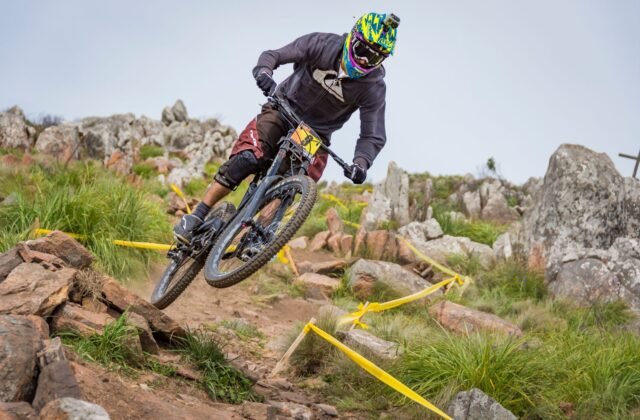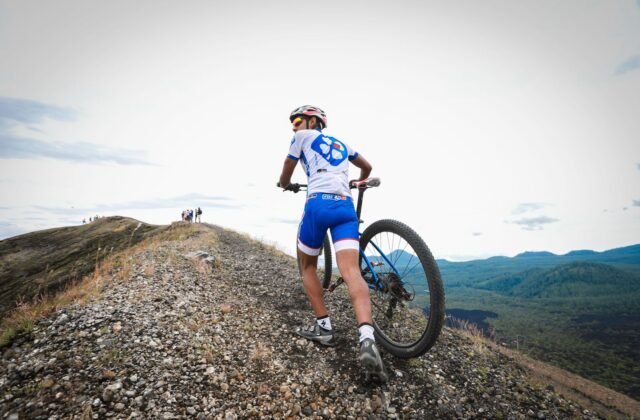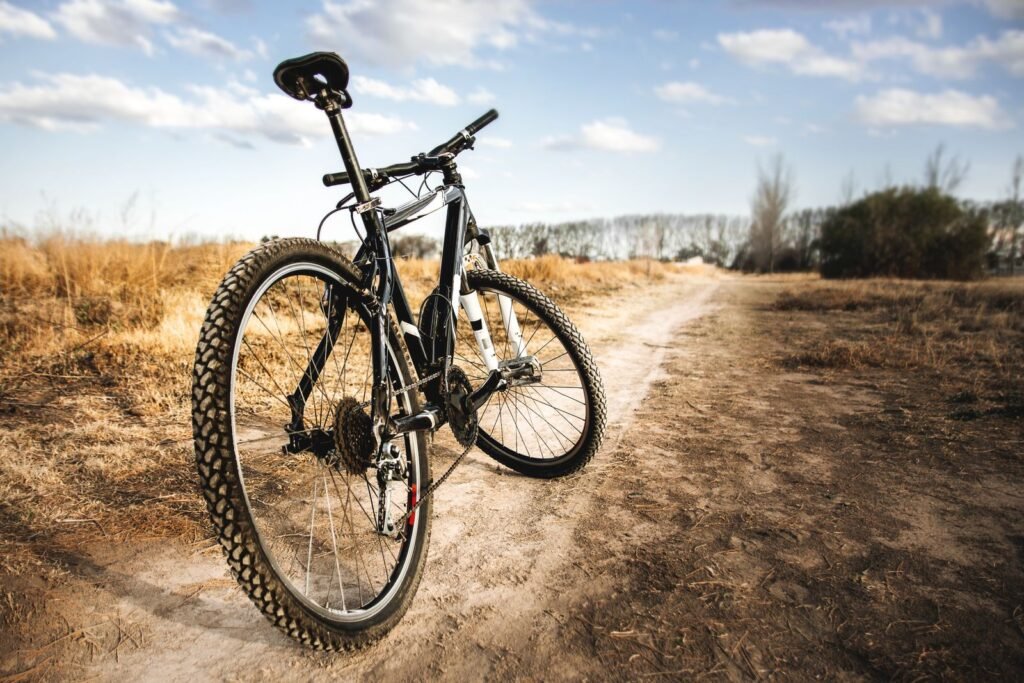
Straight answer: on dry dust, a hardtail mountain bike is the better choice for most riders. Its lighter frame and rigid rear end waste less of your effort, and on dry, packed trails the back wheel stays planted without rear suspension. A 27.5 mountain bike wins when the dust is loose, rocky or steep: its smaller wheels steer and accelerate faster, and a 27.5 bike with rear suspension keeps the back tyre pressed into soft dust where a hardtail skips.
The labels overlap, and that matters. “Hardtail” describes suspension — a fork up front and a rigid rear. “27.5” describes wheel size — 27.5-inch wheels. A 27.5 bike can itself be a hardtail, so this guide compares the two as buyers actually meet them: a hardtail, usually sold with 29-inch wheels, against a 27.5-wheeled trail bike, usually sold with rear suspension. If you ride mostly smooth, dry hardpack, buy the hardtail. If your dusty trails are loose and rocky, buy the 27.5.
Dry dust is the great leveller of mountain bikes. A thin layer of loose dust sits on hard ground, so the trail feels grippy one second and slippery the next. The front wheel pushes dust aside as it rolls, the back wheel spins in it on climbs, and braking distances grow because the tyre slides on dust before it bites the hardpack underneath. In these conditions, the bike that wastes the least energy and keeps its tyres in contact with the ground wins. That is exactly where a hardtail and a 27.5 bike differ — and where most buyers get confused, because the two names describe different things.
This article compares them only on dry dust: hardpack fire roads, loose corners, dusty climbs and descents. It covers how each one rolls, grips, climbs and descends, a short test you can run on your own trail, and what to do if you already bought the wrong one. For the wider mountain bike picture, see the Mountain Bikes Hub, and if suspension is your main question, read our hardtail vs full suspension comparison.
Hardtail Mountain Bike vs 27.5 Mountain Bike: The Core Comparison
The table sums up the comparison on dry dust. The details below it explain the rows that change the result.
| Attribute | Hardtail Mountain Bike | 27.5 Mountain Bike | What to watch on dry dust |
|---|---|---|---|
| What it means | Suspension layout: a fork up front, a rigid rear end | Wheel size: 27.5-inch wheels, often with rear suspension | Check both the frame and the wheels before you buy |
| Wheel size | Usually 29-inch wheels | 27.5-inch wheels | Larger wheels roll over ruts more easily; smaller wheels turn faster |
| Rolling on dust and ruts | Rolls over small ruts and roots with less effort | Needs more effort to roll over the same ruts | Dust hides ruts, so roll-over matters more than it looks |
| Grip on loose dust | Back wheel can skip on loose dust because the rear is rigid | Rear suspension, where fitted, keeps the back tyre pressed into the dust | Tyre tread and pressure matter as much as suspension |
| Climbing dusty slopes | Efficient: almost all pedalling reaches the back wheel | Slightly less efficient, but nimble on tight, dusty switchbacks | Spin the wheel and you waste energy; climb smoothly |
| Descending dusty trails | Direct and fast on smooth descents, harsher on rocky ones | More forgiving on rocks and drops; easier to change direction | Brake before corners, not in them; dust lengthens braking distances |
| Weight | Lighter, with fewer moving parts | Usually heavier, with extra suspension parts | A lighter bike climbs dusty slopes with less effort |
| Maintenance | Simpler: no rear shock to service, fewer pivots | More to service: rear shock, pivots and seals collect dust | Dust gets into everything; clean pivots after dry rides |
| Best for | Smooth, dry hardpack and long dusty climbs | Loose, rocky, steep dusty trails | Match the bike to the dustiest trail you ride most |
Two rows decide most purchases: the hardtail is the efficient, light choice for hardpack, while the 27.5 is the agile, forgiving choice for loose and rocky dust. The next section covers the cases where the winner flips.

When the Answer Changes
The dust is deep and loose
When the dust is finger-deep and soft, the 27.5 wins. A hardtail’s rigid rear bounces and spins in soft dust, so you lose drive on climbs and grip in corners. A 27.5 bike with rear suspension keeps the back tyre in the dust longer, and its smaller wheels let you steer around the softest patches instead of ploughing through them. If your tyres sink into dust past the tread, treat the trail as loose, not hardpack.
The trail is rocky or steep
On rocky, steep, dusty descents, the 27.5 wins again. The rear suspension absorbs the rocks the dust hides, and the smaller wheels make the bike easier to turn at low speed on tight switchbacks. A hardtail can still descend well here, but it demands more from the rider — your arms and legs become the rear suspension, and on a long descent that is tiring. For more on steep trails, see our hardtail vs enduro comparison.
Test Both Bikes on the Same Dusty Trail: A 20-Minute Decision Ride
Do not decide from a shop floor. Ride both bikes on the same dusty trail, back to back, and let the trail decide.
- Pick a loop with dust. Choose a short loop with a dusty climb, a loose corner and a short descent. Mark the start and finish so both rides are the same.
- Set the tyres the same. Put the same type of tread on both bikes and set the same pressure. Different tyres tell you more about the tyres than about the bikes.
- Ride the hardtail first. Ride the loop at your normal pace. Note where the back wheel spins on climbs, where it skips over rocks, and how tired your arms feel.
- Ride the 27.5 second. Ride the same loop the same way. Note where it feels easier to steer, where it grips better, and where it feels slower.
- Repeat the dusty climb. Ride the loosest climb on each bike twice and compare how much the back wheel spins. The bike that spins less climbs dust better.
- Choose the bike, not the feeling. Pick the bike that was faster and calmer on the worst part of your loop — the loose corner and the dusty climb — not the one that felt faster on the smooth start.
What a fail looks like
- Back wheel spins on every dusty climb → the rear is skipping on loose dust → try a slightly lower rear tyre pressure and a steadier pedalling rhythm, or choose the bike that keeps its rear tyre planted.
- Front wheel washes out in dusty corners → you braked in the corner or leaned too far forward → brake before the corner, keep your weight centred, and enter corners slower.
- Arms and hands ache after a short dusty descent → the rigid rear is passing every bump through to you → relax your grip, bend your elbows, and on rocky trails consider the bike with rear suspension.
Myth vs Fact: Myth: Bigger wheels are always better on dust. Fact: Larger wheels roll over ruts more easily, but smaller 27.5 wheels accelerate and steer faster, and on loose dust that agility can matter more than roll-over.
Myth: A hardtail cannot grip on dust. Fact: A hardtail grips well on dry hardpack, where its rear wheel stays loaded and driving. The grip problem appears when the dust is deep and loose, where a rigid rear skips.
Before you test: Check both bikes before you ride. Make sure the brakes work, the tyres are pumped to the same pressure, and the wheels are fixed in place. Wear a helmet and gloves, and ride the loop slowly first to learn where the dust is deepest. Do not test a bike on a trail you have never ridden — dust hides ruts and rocks.

How to Set Up Either Bike for Dry Dust
What you will need
- A floor pump with a gauge.
- Tyres to match your dust: knobbly for loose, faster-rolling for hardpack.
- A clean cloth, dry-condition chain lube and a multi-tool.
The method
- Clean the drivetrain. Wipe dust from the chain, cassette and chainrings: dust mixed with old lube grinds parts down.
- Use dry-condition lube. Apply it, then wipe off the excess — wet lube collects dust and turns it into grinding paste.
- Set the tyre pressure low. Start near the low end of the range on the sidewall, so the tread spreads and grips dusty hardpack.
Note: The pressure on the sidewall is a limit, not a target. See our mountain bike air pressure guide before you change anything.
Warning: Never ride with a loose wheel, a slipping brake or a cracked frame. Dust hides damage, so check the bike first.

When the Damage Is Already Done
- Hardtail that skips on loose dust: fit a knobbly rear tyre and run it slightly softer before you blame the frame.
- 27.5 that feels slow on hardpack: fit a faster-rolling rear tyre and pump it up a little. The right tyre closes most of the gap.
The Safe Alternative: Start with a 27.5 Mountain Bike
- Choose one with a lockable fork: hardtail-like efficiency on smooth climbs, full travel on rocky descents.
What to Do Next, in Order
- Ride your dustiest trail and note where each wheel loses grip.
- Decide which dust you ride most: smooth hardpack, or loose and rocky.
- Test a hardtail and a 27.5 bike on the same dusty loop, then buy the bike that won the worst part of it.
Never Do This on Dry Dust
- Never brake hard in a dusty corner. Brake before the corner and roll through it.
- Never ride with a dry, dusty chain. Clean it and lube it first.
- Never pump your tyres to the sidewall maximum for dust. Hard tyres skip on loose dust.
In Short
On dry dust, a hardtail is the better buy for most riders: lighter and more efficient, and dry hardpack gives its rigid rear all the grip it needs. Loose, rocky or steep dust flips it to the 27.5, whose smaller wheels and rear suspension keep the tyres planted. Test both on the same loop and match the bike to your dustiest trail.
The Essentials
- Hardtail: lighter, more efficient, best on dry hardpack.
- 27.5: smaller wheels steer faster and grip loose dust.
- Loose dust, rocks and steep trails flip the answer to the 27.5.
- Test both bikes on the same dusty loop before you buy.
More Questions, Answered
Can a 27.5 bike be a hardtail?
Yes. “Hardtail” is suspension and “27.5” is wheel size, so a 27.5 hardtail combines both — often the best of both for dry dust.
What tyre pressure should I use on dry dust?
Start near the low end of the range on the sidewall: lower for loose dust, higher for hardpack. See our mountain bike air pressure guide.
Additional Details
Name: Hardtail Mountain Bike vs 27.5 Mountain Bike: Which Is Better for Dry dust?
Description: Hardtail mountain bike vs 27.5 mountain bike: which is better for dry dust? Compare grip, rolling, weight and control, then test both first on your trail.
Published: November 10, 2026
Word count: 1,980 words