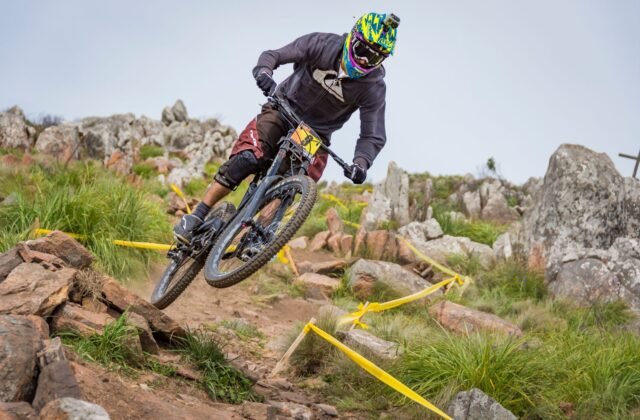
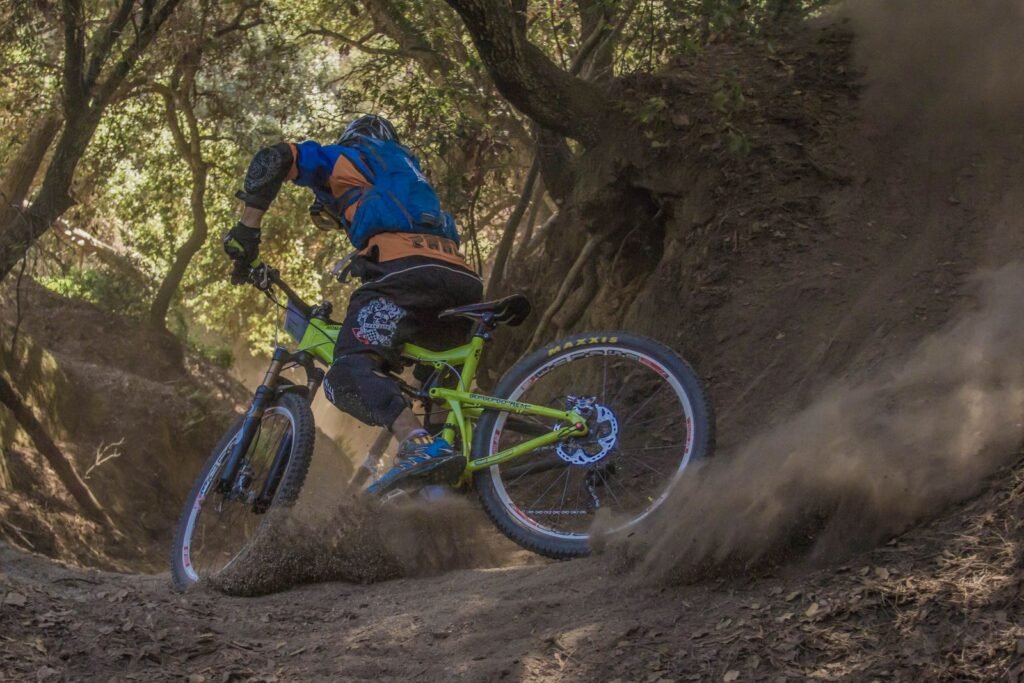
Straight answer: For steep descents, the 29er mountain bike is the better choice. Its bigger wheels roll over rocks and roots with less bounce, hold speed through rough sections, and feel calmer when the trail drops away. A 27.5 mountain bike turns quicker and feels easier to move around, but on a long, steep descent it needs more work from the rider to stay smooth.
- 29er wins on: rollover, stability at speed, and momentum on rough descents.
- 27.5 wins on: quick turns, flicking the bike around, and a livelier feel in tight sections.
- The tie-breaker: if your descents are steep, rocky, and fast, the 29er is the safer pick; if they are short, tight, and twisty, the 27.5 earns its keep.
That said, wheel size is only one part of the bike. Tyre width, suspension travel, geometry, and your own height and reach matter just as much, and a well-set-up 27.5 can out-descend a poorly set-up 29er. The question is not which wheel is better in a catalogue, but which one suits the descents you actually ride.
Introduction
Steep descents punish small mistakes. A wheel that catches on a root, a front end that tucks, or a bike that feels too long in a switchback can turn a fun trail into a walk down. This guide compares the two wheel sizes head to head, then gives you a simple test you can run on your own trails, a setup method for steep ground, and a plan if you already bought the wrong size. The Mountain Bikes Hub has more comparisons in the same format if you are still choosing a bike.
29er Mountain Bike vs 27.5 Mountain Bike: The Comparison
Start with the bones of each bike. The table below compares the two as they are normally sold and ridden, with a 29-inch wheel against a 27.5-inch wheel on the same kind of trail bike.
| Attribute | 29er Mountain Bike | 27.5 Mountain Bike | What to watch |
|---|---|---|---|
| Wheel diameter | 29 in | 27.5 in | Bigger wheels change the bike’s geometry, not just its rollover. |
| Rollover over rocks and roots | Rolls over obstacles more easily | Catches more on square edges | Test on a rocky section you ride often. |
| Stability at speed | Calmer and more settled | Livelier, needs more correction | Speed brings out the 29er’s advantage. |
| Agility in tight turns | Slower to turn, longer wheelbase | Turns quicker, easier to flick | Tight switchbacks favour the 27.5. |
| Fit for shorter riders | Can feel big and long | Easier standover and reach | Shorter riders should test both sizes. |
| Weight | Usually a little heavier | Usually a little lighter | Wheel weight matters most when accelerating. |
| Best terrain | Steep, rough, fast descents | Tight, twisty, jumpy trails | Match the wheel to your local trails. |
When the Answer Changes
Change the trail or the rider, and the winner changes with it:
- Tight, twisty descents: if your descents are mostly switchbacks and slow, technical turns, the 27.5 turns in faster and needs less room.
- Shorter rider: a smaller rider often finds the 27.5 easier to move around and easier to get behind on steep ground.
- Bike-park jumps and drops: a playful 27.5 is easier to lift, whip, and land on jump lines than a long 29er.
- Wet, muddy descents: grip and braking matter more than wheel size, so read our Enduro Mountain Bike vs 29er Mountain Bike guide for wet-weather setup.
How to Test Both Bikes Before You Decide
Do not trust a car-park test ride. A bike that feels fine on tarmac can feel very different on a steep, rocky descent, so test both sizes on the same trail.
- Pick a descent you know well, with rocks, roots, and at least one tight turn.
- Ride it on the 29er first, at your normal pace, and note where you brake and where you feel nervous.
- Ride the same descent on the 27.5, with the same tyre pressures and the same protection.
- Count how many times you put a foot down, and how often the front wheel catches on a root or rock.
- Score rollover, control, and confidence from 1 to 5 for each bike, then add the scores up.
What a fail looks like
| Symptom | Cause | Fix |
|---|---|---|
| The front wheel stops dead on a root | Small wheel meeting a square edge at low speed | Carry more speed into the section, or pick the bigger wheel |
| Your hands go numb halfway down | Too much vibration reaching the bars | Drop tyre pressure a little and relax your grip |
| You overshoot tight turns | The bike is too long for the turn | Brake earlier, look through the turn, and try the smaller wheel |
| You feel tossed around on rough ground | Not enough rollover or suspension for the speed | Slow down, lower the saddle, and check your sag |
Myth: Bigger wheels are always faster downhill. Fact: They roll over rough ground better, but a skilled rider on a 27.5 can be faster on tight, twisty descents.
Myth: 27.5 bikes are only for shorter riders. Fact: Many taller riders choose 27.5 for playfulness and quick handling, not just for fit.
Myth: Wheel size matters more than setup. Fact: Tyre pressure, suspension setup, and brake position change a descent more than 1.5 inches of wheel.
Before you test: Wear a full-face or trail helmet, gloves, and knee protection, and ride with a friend on a descent you already know. Walk any section you cannot see through first, and stop if the trail is wet, loose, or busier than usual.
How to Set Up Your Bike for Steep Descents
What you will need
- A floor pump with a gauge
- A shock pump, if you have suspension
- A multi-tool
- A helmet, gloves, and knee protection
The method
- Set the saddle low enough that you can move behind it on steep ground without catching your shorts.
- Set tyre pressures within the range printed on the sidewall, starting at the lower end for grip.
- Set sag to about 25–30% at the rear and 20–25% at the fork, if you have suspension.
- Angle the brake levers so you can reach them with one finger while standing on the pedals.
- Check the brakes on flat ground before the descent, front and rear, at walking speed and then at riding speed.
- Ride the descent once at a relaxed pace, braking early and looking well ahead of the front wheel.
Set your brake levers first. On a steep descent, your weight shifts forward and your hands tire fast. Levers you cannot reach with one finger will make you brake late, and late braking is how most descent crashes start.
When the Damage Is Already Done
If you already bought a 27.5 and your descents are steep and rough, do not panic — you have options before you sell the bike:
- Fit the widest tyres your frame and fork clear — more air volume rolls over roots better.
- Drop tyre pressures a little, within the range printed on the sidewall, for more grip.
- Fit a longer-travel fork only if your frame is rated for it — check the maker’s limits first.
- If the bike still feels wrong after setup and practice, sell or trade it while it is current; a bike you fear does not teach you anything.
The Safe Alternative: Choose the 27.5 Mountain Bike
If the verdict does not fit your riding — tight trails, jump lines, and a need for quick handling — here is how to choose a 27.5 with confidence:
The method
- Get the size right at a shop — standover and reach matter more than wheel diameter.
- Pick a bike with enough suspension travel for your trails, and check that the fork and frame match.
- Check the brakes: hydraulic discs stop better and need less hand strength on long descents.
- Test ride on a real descent, not a car park, and try a tight switchback at slow speed.
- Before you pay, compare with our Cross Country Mountain Bike vs 29er Mountain Bike guide if you are torn between trail speed and climbing ease.
What to Do Next, in Order
- Ride your local steep descent once and note where you brake, wobble, or put a foot down.
- Test both wheel sizes on that descent if you can borrow or demo one.
- Set tyre pressure, sag, and saddle height before you judge any bike.
- Pick the wheel that stays calm on your roughest section, not the one that feels fastest on smooth ground.
- Read our Enduro Mountain Bike vs 29er Mountain Bike guide before you plan any bike-park days.
Never Do These on Steep Descents
- Never brake only with the front brake — you can go over the bars on steep ground.
- Never ride a descent you have not walked or seen — blind drops hide rocks and holes.
- Never skip a helmet, even on a descent you know well.
- Never run tyres at the maximum printed pressure — grip disappears when the tyre cannot deform.
- Never change three settings at once: you will never know which one helped.
- Never buy a bike without a test ride on dirt.
In short
For steep descents, the 29er is the better wheel: it rolls over rocks and roots, holds its line at speed, and feels calmer when the trail drops away. The 27.5 is the better wheel when descents are tight, twisty, and playful, or when a smaller, livelier bike suits your size and style. Test both on a descent you know, set the bike up properly, and let the trail — not the catalogue — decide.
The essentials
- 29ers roll over rough ground better and feel calmer at speed.
- 27.5 bikes turn quicker and feel more playful in tight sections.
- Test both bikes on the same steep descent, on the same day.
- If you bought the wrong size, tyres, setup, and lessons fix most of it.

More Questions, Answered
Is a 29er better than a 27.5 for steep descents?
Usually, yes. The bigger wheel meets rocks and roots at a shallower angle, so it rolls over them instead of catching, and it holds speed and line better on rough, steep ground.
Are 27.5 bikes good for steep descents?
Yes, with the right setup. A 27.5 with wide tyres, good brakes, and a rider who stays low and back can descend steep trails well — it just needs more rider input than a 29er on rough sections.
Which wheel size is better for shorter riders on descents?
Many shorter riders prefer 27.5, because the bike feels smaller, standover is easier, and it is simpler to move around on steep ground. Still test both sizes if you can.
Can I put 29-inch wheels on a 27.5 bike?
Usually not. The frame and fork are built around one wheel size, and a bigger wheel can rub the frame, change the geometry, and void the maker’s guidance. Check the frame’s stated clearance first.
Additional Details
Name: 29er Mountain Bike vs 27.5 Mountain Bike: Which Is Better for Steep descents?
Description: 29er mountain bike vs 27.5 mountain bike for steep descents: which wheel rolls over roots, holds speed, and stays calmer on steep trails? Compare them here.
Published: November 10, 2026
Affiliate Disclosure: We may earn a commission when you buy through links on this site, at no extra cost to you.