This guide is part of the Helmets and Safety Hub.
You crashed, your head hit, and the helmet that saved you is now done. That is the problem this guide solves: the helmet looks almost as good as new, the foam underneath may be crushed, and you face a second purchase you did not budget for. The Bicycle Helmet Safety Institute (BHSI) is blunt about the first part. The foam in a helmet is made for one-time use: after crushing once it is no longer as protective as it was, even if it still looks intact, and if you can see marks on the shell or measure any foam crush at all, you should replace the helmet.
The second part is where the discount question comes in. A crash-replacement program is the manufacturer’s way of softening that second purchase: you send back the crashed helmet, or proof of the crash, and the brand sells you a replacement at a reduced price. BHSI mentions these programs in passing — “many manufacturers will replace crashed helmets for a nominal fee” — but it does not name a single brand, and it gives no brand-by-brand list of terms. That gap is the honest starting point for this guide: no central list exists, and none of the five helmet listings below publishes its brand’s crash-replacement terms either. What follows is what is actually known — the rule that decides whether your helmet is done, the three things that decide whether you get a discount, and five replacement helmets with real prices.
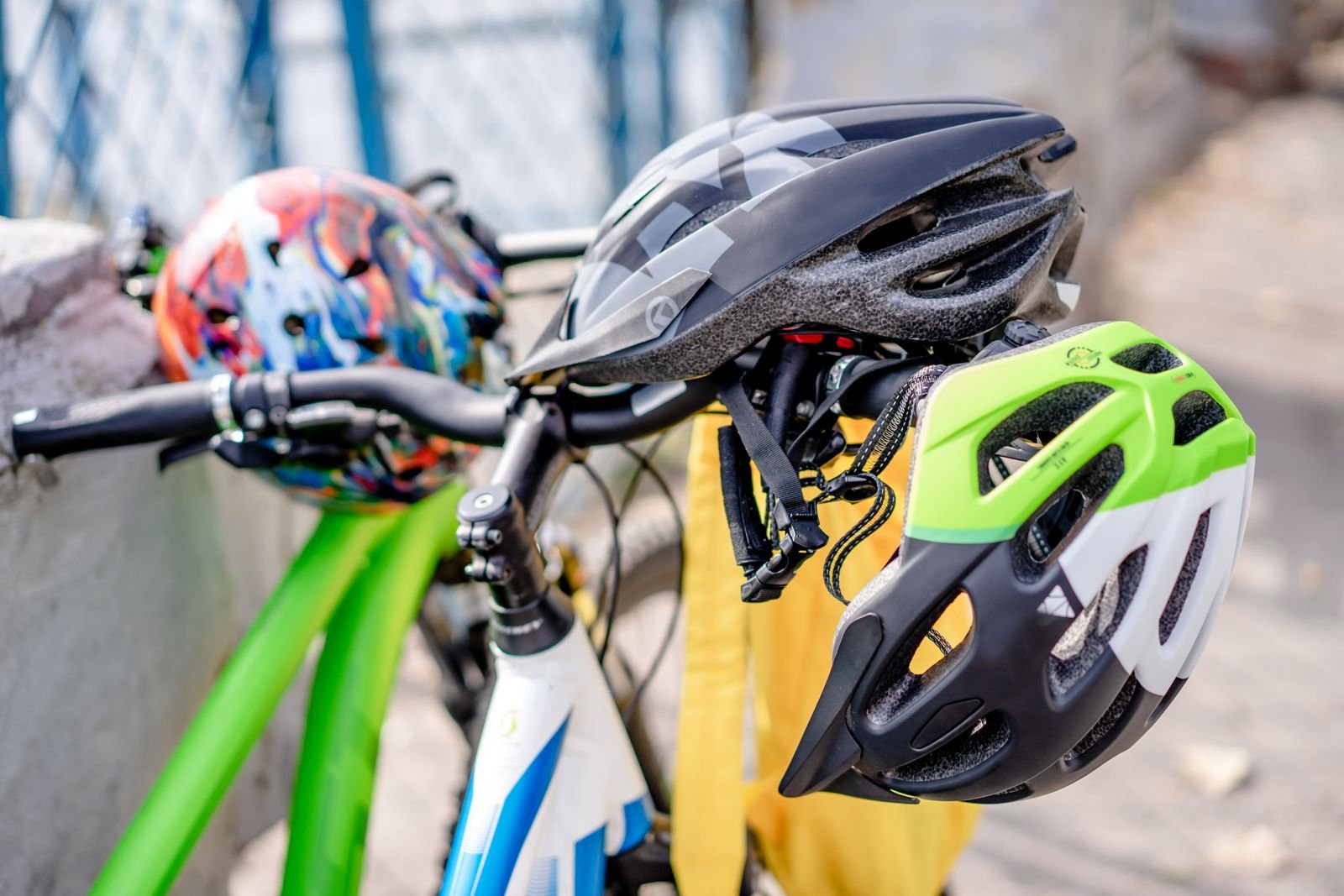
Photo by Atlantic Ambience on Pexels — brightly colored bicycle helmets resting on handlebars.
What decides whether you get a replacement discount
Three things decide the answer, and all three sit with the brand, not with the shop where you bought the helmet. First, the program terms: whether the brand runs a crash-replacement program at all, which models it covers, and how large the discount is. Those terms are set by each manufacturer, they change without notice, and they are not published in any single place — not on BHSI’s page, and not on the five listings below. The only reliable way to learn a brand’s terms is to ask the brand directly, before you buy the replacement.
Second, proof of the crash. A brand that offers a reduced-price replacement needs to know the helmet really crashed. In practice that means keeping the damaged helmet, photographing the damage, and keeping your proof of purchase. BHSI’s own advice points the same way: most manufacturers will inspect a crashed helmet to see if it needs replacement. Throw the helmet away and you throw away the evidence the brand would want to see — so keep it, photograph the shell and the foam, and keep the receipt or order confirmation.
Third, the time limit. Programs that exist usually have a window — a period after the crash, or after the purchase, inside which you must claim. No figure for that window is published in the source, and none of the listings states one, so no number is given here. The practical rule is simple: ask as soon as you know the helmet is done. A helmet that sat in a cupboard for a year after a crash is a much weaker claim than one reported in the same week.
One more check decides whether you even need a replacement. BHSI is clear that the crash rule is about impact, not about age. Helmets do not expire, and the foam in an uncrashed helmet performs well for many years. A 2015 lab study by MEA Forensic crash-tested 675 used but uncrashed helmets, some as old as 26 years, and found no significant change in impact performance with age. So a helmet that never crashed and still fits well does not need replacing just because the calendar moved on — but one that took a hit to the head does, even if it looks fine. The thin shells on modern helmets tend to hide dents in the foam, and cracks in the foam always require replacement. If you dropped the helmet hard enough to crack the foam, the same rule applies: replace it.
Before you buy, check the standards sticker inside your current helmet. BHSI says to look for a CPSC, ASTM or Snell sticker inside. A helmet without one of those stickers should be replaced regardless of the crash question. And check the fit: if you cannot adjust the helmet to fit correctly, replace it. Those two checks cost nothing and they settle the question for a surprising number of old helmets.
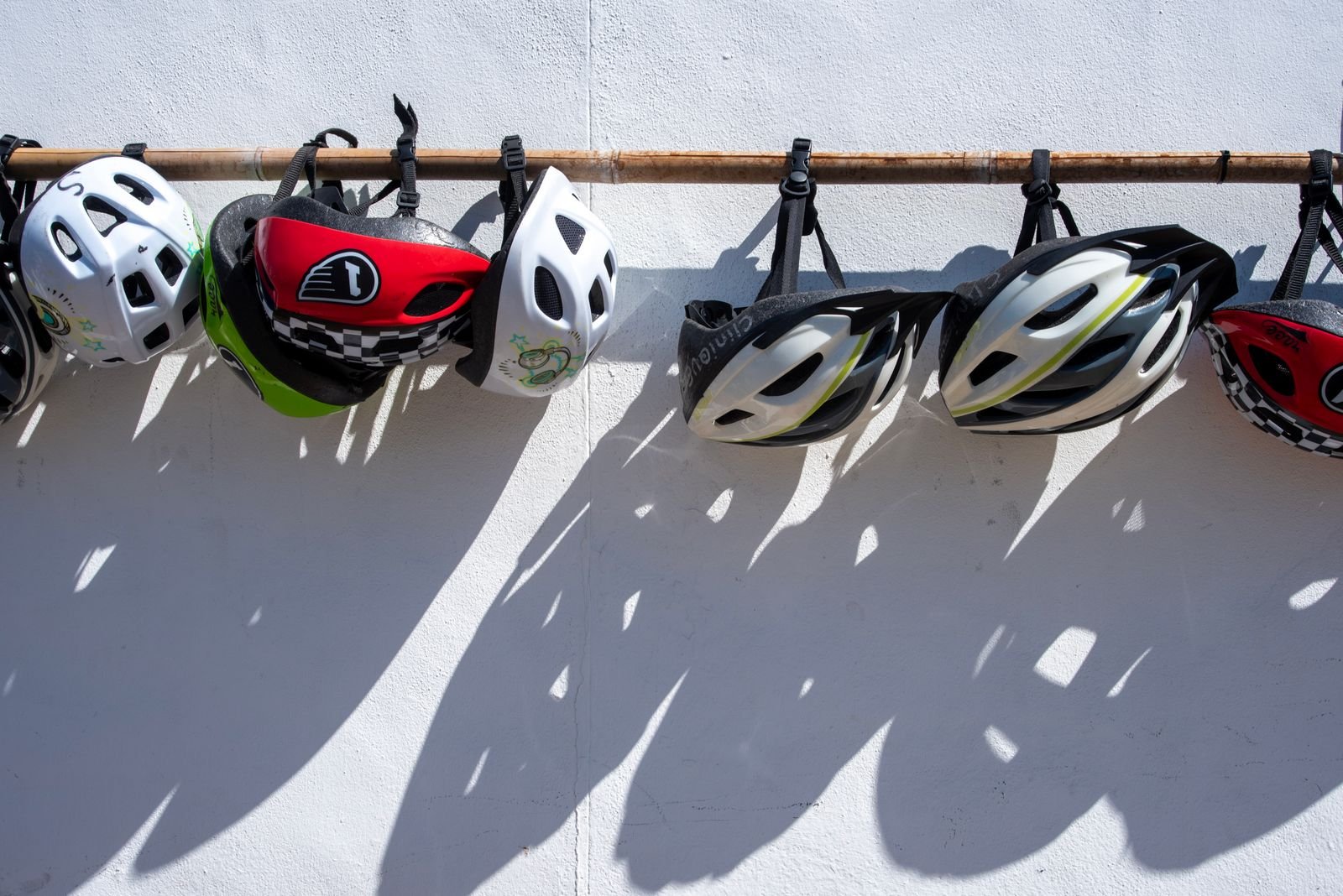
Photo by Jan van der Wolf on Pexels — a row of colorful bike helmets hanging on a wall.
The 5 replacement helmets to buy after a crash
Each pick below follows the same template: what it is, the figures from its own listing, what it does well, what to watch, and the crash-replacement position. Prices are as of November 24, 2026, from the Amazon listings; prices change, so check the current price before you buy. None of the five listings publishes its brand’s crash-replacement terms, so every pick carries the same honest line on that point: not published on the listing, ask the brand.
Best overall: Giro Fixture MIPS Bike Helmet
The Giro Fixture MIPS is the best overall replacement because it pairs the one safety feature worth paying for — MIPS — with a fit range that covers most adult heads, at a price that stays under seventy dollars. Giro is a long-established helmet brand, and the Fixture is its entry-level mountain-bike helmet — a sensible default when you need a new helmet quickly after a crash.
- Price: $68.00 as of November 24, 2026
- Fit: Universal Adult, 54–61 cm
- Protection: Integrated MIPS Brain Protection System
- Colour: Matte Black/Grey
Reasons to buy: MIPS is built in, not an add-on, and the listing’s own description says all Giro helmets are designed to reduce as much energy as possible while meeting and exceeding stringent safety standards. The universal 54–61 cm fit covers most adults without needing to choose between sizes. At $68.00 it is the most expensive pick here, but it is also the only one from a brand whose name most riders already know.
Reasons to avoid: It costs roughly three times the cheapest pick below, and the listing does not state a vent count, so riders who run hot cannot compare its airflow against the others from the listing alone. The matte black colour is practical but unremarkable if you want to be seen.
Crash-replacement terms: Not published on the listing. Contact Giro directly with photos of the damage and your proof of purchase before you buy.

Best value MIPS: OutdoorMaster MIPS Adult Cycling Helmet
The OutdoorMaster MIPS helmet is the best value pick because it is the cheapest MIPS helmet of the five, and it adds the practical extras that make a helmet easy to live with: a sun visor and two removable liners. If your crashed helmet was a budget model and you want MIPS protection without paying the Giro price, this is the one to look at first.
- Price: $48.44 as of November 24, 2026
- Fit: Size M
- Protection: MIPS, described on the listing as designed to provide added safety in many accidents
- Extras: Sun visor, two removable liners, ventilation for mountain and road use
- Colour: Misty Sakura
Reasons to buy: MIPS at $48.44 is the lowest price for the feature in this group, and the two removable liners mean you can wash the padding instead of living with sweat-soaked foam. The sun visor is genuinely useful on bright days, and the listing covers both mountain and road use, so it is not a single-discipline helmet.
Reasons to avoid: It comes in size M only on this listing, so riders outside that size need a different pick. The colour is a pale pink that not every rider will want, and OutdoorMaster is a newer value brand rather than a long-established helmet maker, which matters if brand history is part of your trust in a helmet.
Crash-replacement terms: Not published on the listing. Contact OutdoorMaster directly with photos of the damage and your proof of purchase before you buy.

Best with a rear light: P2R A20 MIPS Bike Helmet
The P2R A20 MIPS is the pick for riders who ride in low light, because it is the only helmet here with a built-in rear LED light. It also has the highest vent count stated in this group at 23 vents, and it carries both MIPS and a CPSC bicycle helmet certification on the listing — the clearest standards statement of the five.
- Price: $50.92 as of November 24, 2026
- Protection: Integrated MIPS technology, designed to help reduce certain rotational forces from angled impacts; CPSC bicycle helmet certified
- Ventilation: 23 vents
- Extras: Rear LED light
Reasons to buy: The rear LED light is a real visibility gain for commuters and evening riders, and it is built into the helmet rather than clipped on. Twenty-three vents is the best airflow figure stated in this group. The CPSC certification is stated plainly on the listing, so there is no guessing about standards.
Reasons to avoid: The listing does not state a size range, so check the size options on the product page before ordering. The rear light needs its own battery or charge, which is one more thing to maintain, and P2R is a less familiar brand than Giro or Bell.
Crash-replacement terms: Not published on the listing. Contact P2R directly with photos of the damage and your proof of purchase before you buy.

Best budget: BELL Adult Reflex Helmet
The BELL Adult Reflex is the cheapest pick in this group by a wide margin, and it comes from Bell, a brand with a long history in helmets. If the crash has already cost you enough and you need a working helmet for the lowest possible outlay, this is the honest budget choice — with the understanding that at this price you are buying a basic helmet, not a feature-packed one.
- Price: $12.79 as of November 24, 2026
- Ventilation: Eleven vents, described on the listing as keeping heads extra cool
- Colour: Solid Light Titanium
Reasons to buy: At $12.79 it costs less than a fifth of the best overall pick, which matters when a crash has already forced an unplanned purchase. Bell is an established helmet brand. Eleven vents is a reasonable airflow figure for a budget helmet.
Reasons to avoid: The listing states neither MIPS nor a certification nor a size range, so check the product page — and the sticker inside the helmet when it arrives. The low price also means fewer features: no visor, no removable liners, no light.
Crash-replacement terms: Not published on the listing. Contact Bell directly with photos of the damage and your proof of purchase before you buy. See the BELL Adult Reflex Helmet on Amazon.
Best cheap everyday helmet: Schwinn Thrasher Helmet
The Schwinn Thrasher is the everyday pick: a full-featured budget helmet with a dial fit system, twenty air vents and a removable visor, for about twenty-three dollars. Schwinn is a familiar name, the fit range is stated clearly at 58–62 cm for riders aged 14 and over, and the listing gives more concrete detail than any other budget helmet here.
- Price: $23.09 as of November 24, 2026
- Fit: 58–62 cm, riders aged 14+, adjustable dial and straps
- Ventilation: 20 air vents
- Extras: Removable visor, interior padding, lightweight microshell
- Colour: Black
Reasons to buy: The dial fit system and the stated 58–62 cm range make sizing straightforward. Twenty vents and a removable visor are genuine features at $23.09, and the interior padding is listed as part of the package. It is the best-specified budget helmet in this group.
Reasons to avoid: The listing states neither MIPS nor a certification, so check the sticker inside the helmet when it arrives. It is a fitness and recreational helmet, not a specialist mountain or road model, so riders chasing the lightest or most ventilated helmet should look at the MIPS picks above.
Crash-replacement terms: Not published on the listing. Contact Schwinn directly with photos of the damage and your proof of purchase before you buy. See the Schwinn Thrasher Helmet on Amazon.
All five picks compared
| Helmet | Price | MIPS | Standout feature | Crash-replacement terms published? |
|---|---|---|---|---|
| Giro Fixture MIPS | $68.00 | Yes | Universal 54–61 cm fit | No — contact the brand |
| OutdoorMaster MIPS | $48.44 | Yes | Two removable liners, sun visor | No — contact the brand |
| P2R A20 MIPS | $50.92 | Yes | Rear LED light, 23 vents | No — contact the brand |
| BELL Adult Reflex | $12.79 | Not stated | Eleven vents, lowest price | No — contact the brand |
| Schwinn Thrasher | $23.09 | Not stated | Dial fit, 20 vents, visor | No — contact the brand |
Prices are as of November 24, 2026. Prices change — check the current price on Amazon. The pattern in the table is the point of this guide: every helmet here is a solid replacement, and none of their listings publishes crash-replacement terms. The discount, if one exists for your brand, is something you find out by asking the brand, crashed helmet and receipt in hand.
Who should skip each one
Skip the Giro Fixture MIPS if your budget is tight after the crash. It is the best helmet here, but at $68.00 it costs more than the other four picks in some pairings, and the OutdoorMaster gives you MIPS for about twenty dollars less.
Skip the OutdoorMaster MIPS if you do not fit size M, or if you want a brand with a longer helmet history. The value is real, but the size range on this listing is narrow and the brand is newer than Giro, Bell or Schwinn.
Skip the P2R A20 MIPS if you never ride in low light. The rear LED light is its reason to exist; without that use, the OutdoorMaster is cheaper and the Giro is the stronger brand.
Skip the BELL Adult Reflex if you want MIPS. The price is unbeatable, but the listing does not state MIPS or a certification, and a replacement helmet is the wrong place to save money if you ride fast or in traffic.
Skip the Schwinn Thrasher if you want MIPS or a specialist helmet. It is the best everyday budget pick, but it is a fitness and recreational helmet, and riders who want the extra rotational protection should choose one of the three MIPS picks above.
Frequently asked questions
Which brands offer a helmet crash replacement discount?
The Bicycle Helmet Safety Institute says many manufacturers will replace crashed helmets for a nominal fee, but it does not name the brands, and no brand-by-brand list of terms is published in the source. The five brands in this guide do not publish their crash-replacement terms on their Amazon listings. Ask the brand directly.
How do I claim a crash replacement discount?
Keep the crashed helmet, photograph the damage to the shell and the foam, and keep your proof of purchase. Then contact the manufacturer — BHSI’s advice is to contact them if you are in doubt — and ask what its program covers, what proof it wants, and how soon you must claim. Most manufacturers will also inspect a crashed helmet to see if it needs replacement.
Do I really need a new helmet if mine looks fine after a crash?
Yes, if your head hit. The foam is made for one-time use, and after crushing once it is no longer as protective as it was, even if it still looks intact. Thin shells hide dents in the foam. If you can see marks on the shell or measure any foam crush at all, replace the helmet.
Does a helmet expire if it never crashed?
No. Helmets do not expire, and the foam in an uncrashed helmet performs well for many years. A 2015 lab study crash-tested 675 used but uncrashed helmets, some as old as 26 years, and found no significant change in impact performance with age. Most manufacturers recommend replacement after five years, but BHSI regards some of that advice as marketing.
What should I check on a replacement helmet before I buy?
Check the size range against your head measurement, check that the listing states MIPS if you want it, and when the helmet arrives, look for the standards sticker inside — CPSC, ASTM or Snell. If a helmet has no standards sticker, replace it. Also check that you can adjust it to fit correctly; if you cannot, it is the wrong helmet.
Additional Details
- Name: Helmet Crash Replacement Discount Programs: Which Brands Offer One and How to Claim It
- Description: Helmet crash replacement discount programs: which brands offer one, what proof and time limits decide it, and 5 replacement helmets to buy.
- Published: November 24, 2026
Sources: Bicycle Helmet Safety Institute, “When Should I Replace My Bicycle Helmet” (helmets.org/replace/). Related reading: Best Value Road Bike Helmets and The Best Looking Road Cycling Helmets.