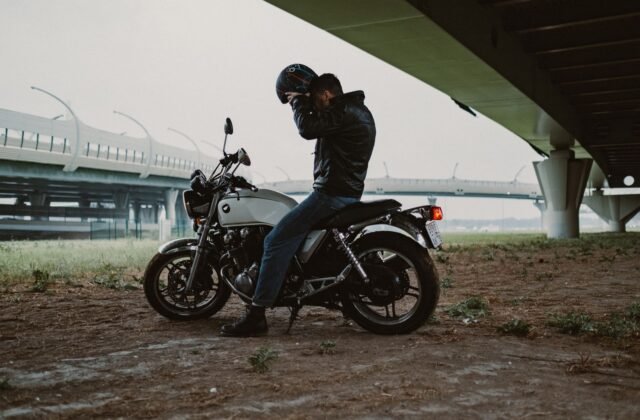
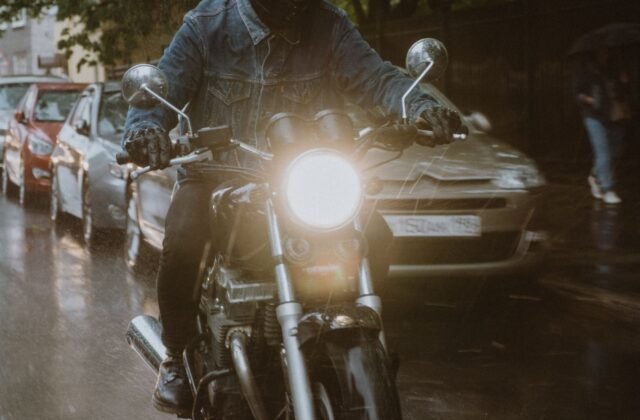
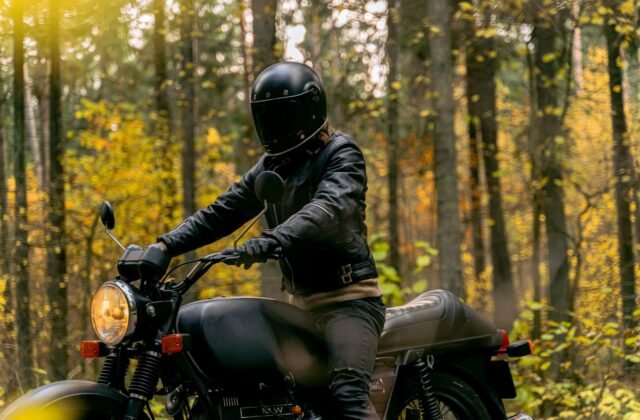
Part of our guide on Helmets and Safety Gear.
Popular motorcycle safety gear is popular for a simple reason: it is the kit riders actually wear, ride after ride. A helmet, a jacket, gloves, boots and eye protection cover the parts of the body that meet the road first, and each piece has one job — to take the slide, the impact or the weather for you.
This guide covers the five essentials every rider needs, how to pick each one, and when to replace it. It does not cover race suits. For scooter riders, read Scooter Safety Gear and Helmets: What to Wear and Why; for helmet types, read Best Dual-Sport Motorcycle Helmets and Best Rated Modular Motorcycle Helmets.
Quick facts
| Fact | What it means for your ride |
|---|---|
| Gear this guide covers | Helmet, jacket, gloves, boots and eye protection — the five pieces most riders wear on every ride |
| Start here | The helmet first: the one piece no ride should start without |
| Most common mistake | Gear that looks right but fits badly — a loose helmet protects less |
| What to check first | The helmet’s certification mark, the jacket’s armour, and whether the gloves still let you feel the controls |
| When to replace | After any crash, after a hard drop, or when straps, armour or stitching wear out |
| Related guides | Scooter Safety Gear and Helmets, Best Dual-Sport Motorcycle Helmets, Best Rated Modular Motorcycle Helmets |
Quick recap
- Start with the helmet: full-face, certified, and snug enough that it does not move when you shake your head.
- A jacket with armour, gloves with palm protection, sturdy boots and a clear visor cover the rest.
- Gear that fits badly protects badly — try it on and work the controls before you buy.
- Replace gear after a crash, even when it looks fine from the outside.
- Bright colours and reflective panels help other road users see you, day and night.
The short answer: helmet first, then jacket, gloves, boots and eyes
The most popular motorcycle safety gear is a short list: a full-face helmet, an armoured jacket, gloves with palm protection, sturdy boots, and a clear visor or glasses. Those five pieces cover the head, the torso, the hands, the feet and the eyes. Buy the helmet first; the rest follows the same rule: it must fit, stay in place, and let you ride the bike properly.
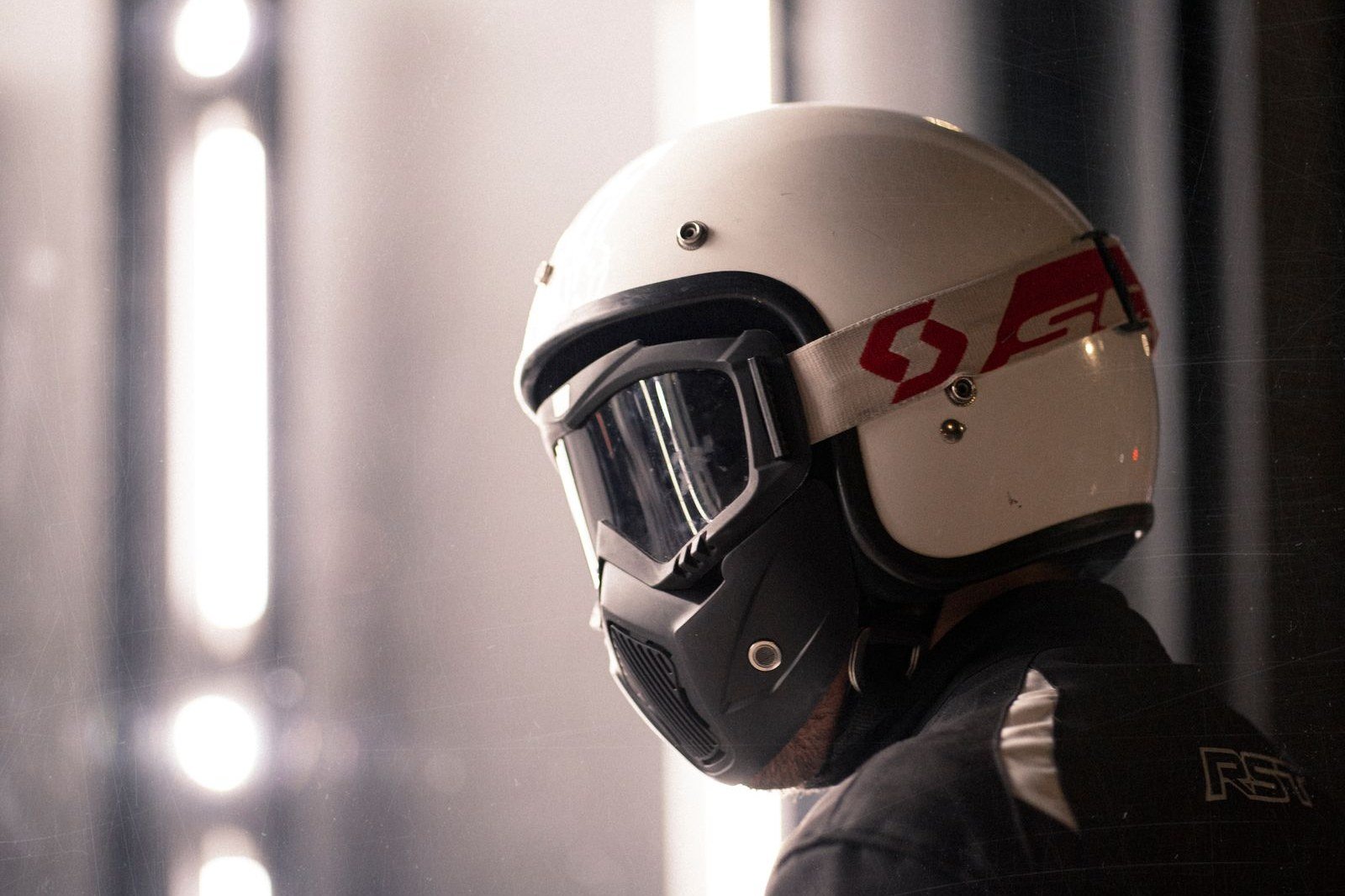
The rest of this guide follows that rule: how to build the kit, what each piece protects, how weather changes the choice, and when to replace worn gear.
How to build your gear kit, step by step
Work through these steps before a long ride in new gear. Note what pinches, and whether you can still feel the clutch, the brake and the throttle.
- Measure your head and try helmets on. The right size feels snug all round, with no pressure point.
- Check the certification mark and the manufacture date on the label inside the helmet.
- Sit on the bike in the jacket and gloves. Reach the bars, work the clutch and brake, and check the blind spots.
- Walk in the boots. They should support the ankle and grip the pegs without pinching the toes.
- Check the visor: clear, scratch-free, and easy to open and close with a gloved hand.
- Ride a short, slow loop close to home and note anything that pinches or slides out of place.
What you’ll need
You need the helmet itself, the jacket and gloves you will ride in, and the bike, so you can check the fit in the riding position.

What each piece of gear protects
Use this table to match each piece of gear with what it protects.
| Gear | What it protects | What to look for |
|---|---|---|
| Full-face helmet | Head, face and jaw in a fall; wind, rain and insects at speed | DOT mark, snug fit, clear visor, comfortable lining |
| Armoured jacket | Shoulders, elbows, back and chest in a slide | CE armour in the shoulders and elbows, a back protector pocket, abrasion-resistant fabric |
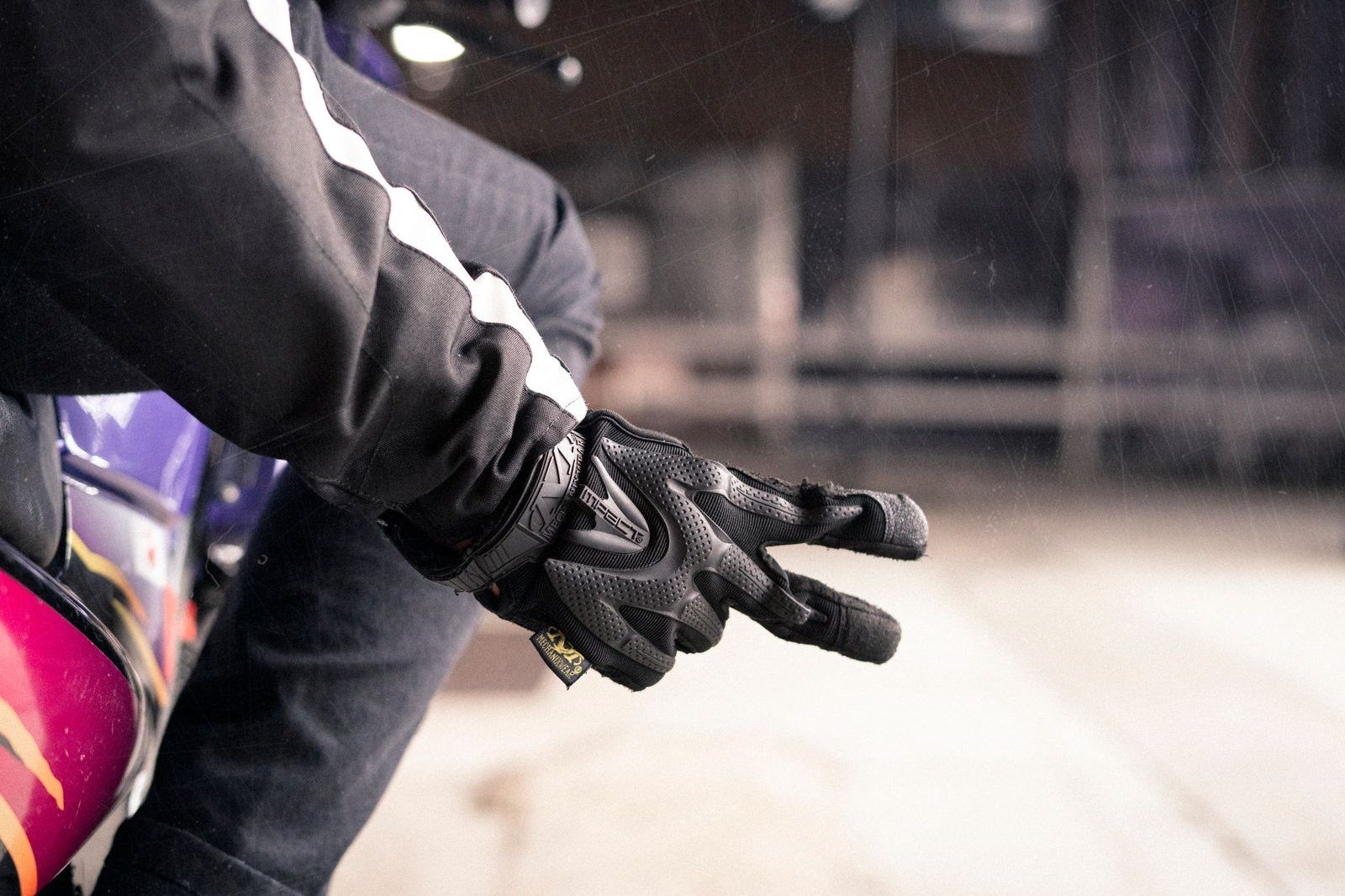
| Gloves | Palms and fingers — the first thing most riders put down | Palm padding, knuckle protection, a wrist closure that stays shut |
| Boots | Ankles and feet; grip on the pegs and the road | Ankle support, a stiff sole, a closure that cannot flap loose |
| Visor or glasses | Eyes from wind, dust, rain and insects | Clear, scratch-free, easy to open with a gloved hand |
The jacket is the second purchase for most riders, after the helmet. An armoured jacket spreads the force of a slide across the shoulders, elbows and back, and the right fabric resists tearing where a normal jacket would shred. Look for CE-certified armour and a back-protector pocket, and check the armour sits over the joint in the riding position.

How weather and ride type change the gear you need
The five essentials do not change with the weather, but the version of each one does. In hot weather, a vented jacket and light gloves keep air moving — but the helmet stays on, however hot the day. In rain, a waterproof layer, gloves that still grip when wet, and a visor that does not fog make the difference between a careful ride and a miserable one. In cold weather, a windproof layer and gloves that still let you feel the levers matter most.
Ride length changes the kit less than most riders expect. Most falls happen close to home, at low speed, in the gear you are already wearing.
What works
- A vented jacket with a removable waterproof liner, so one jacket covers summer and rain
- Gloves in two weights, light and insulated, both with palm protection
What to watch
- A jacket that is waterproof but has no vents will leave you sweating on a warm day
- Thick winter gloves can dull the feel of the clutch and brake — test them on the bike first
Fit and adjustment that make gear work
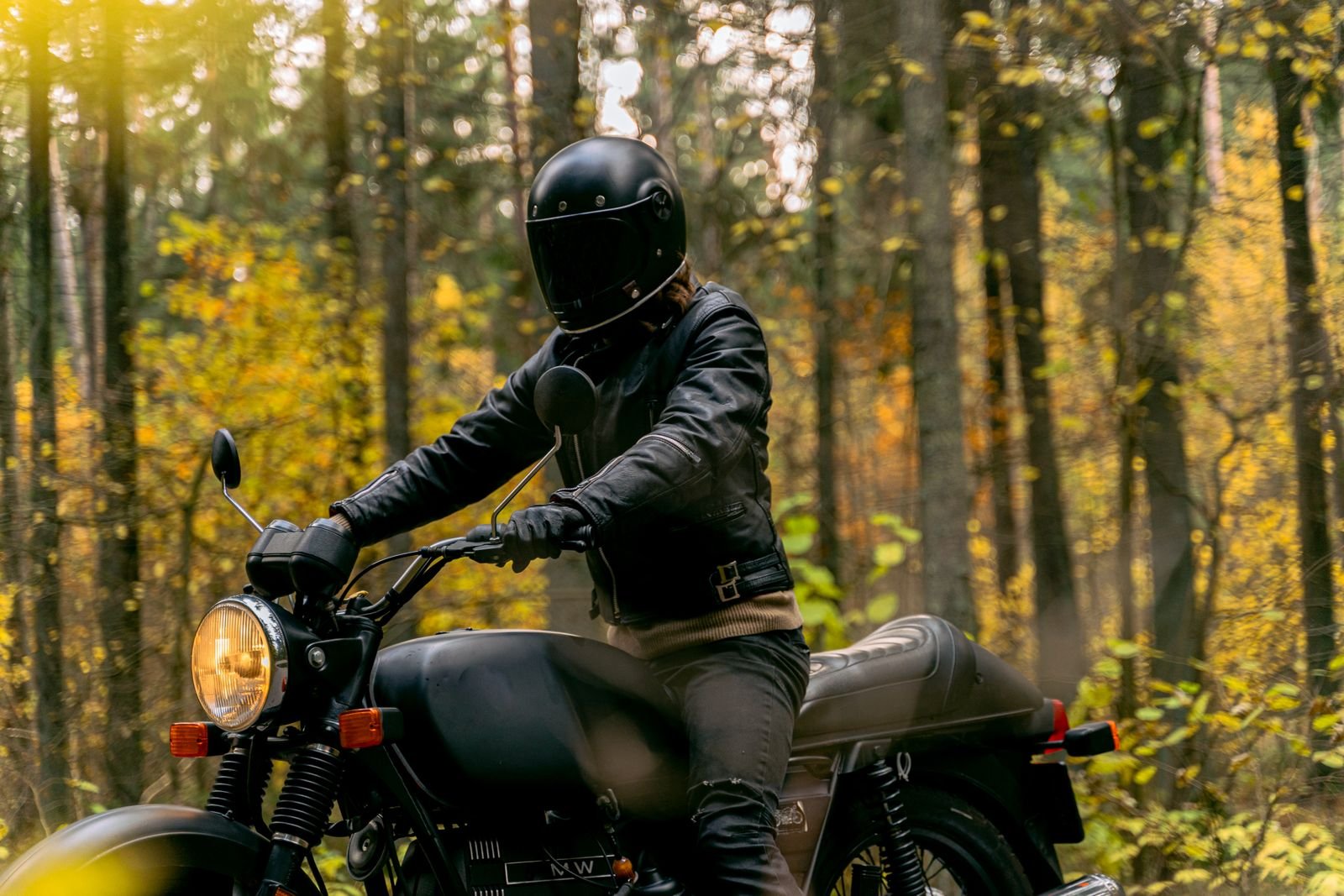
Good gear only works when it fits, and fit is something you check on the bike, not in front of a mirror. A helmet that feels fine standing up can press on the forehead after twenty minutes at speed, and jacket armour can slide off the elbow when you lean forward to the bars.
What works
- A helmet that is snug all round, with even pressure and no rocking when you shake your head
- Jacket armour that stays over the shoulder and elbow when you lean into the riding position
- Gloves with fingers that reach the ends without bunching, so you can feel the levers
What to watch
- A helmet that is easy to put on is often too big — a correct fit takes a firm pull to get on
- A jacket that fits over a T-shirt may be too tight over a jumper
- Gloves that are too long in the fingers fold over the levers and dull your feel for the controls
When gear needs replacing
Gear wears out, and the wear is not always visible. A crashed helmet, a jacket with torn stitching, or gloves worn thin at the palm have all done their job and need replacing.
| Wear or damage | Best use | Limit |
|---|---|---|
| Helmet dropped hard or crashed | Replace it — the shell and liner may be damaged where you cannot see it | Never keep riding in a crashed helmet |
| Visor scratched or cloudy | Replace the visor, not the helmet | A scratched visor flares headlights at night |
| Jacket armour cracked or stitching torn | Replace the armour or the jacket | Armour out of place will not be over the joint when it matters |
| Gloves worn through at the palm | Replace the gloves | Thin palms tear first in a slide |
| Boots with a worn sole or broken zip | Repair the zip or replace the boots | A sole that slips off the peg is a risk every ride |
What works
- Checking the helmet, jacket and gloves for wear at the start of every riding season
- Replacing a visor as soon as scratches catch the light, before night riding makes it worse
What to watch
- A helmet that looks fine after a crash can still have a cracked liner — do not trust looks alone
- Stitching that has gone at a seam will go further under load; a loose thread is an early warning
Gloves are the cheapest piece of the kit and the easiest to put off replacing. A pair with hard-shell knuckle protection and palm padding costs little and covers the part of the body that meets the road first.

The verdict
Popular motorcycle safety gear is popular because it works: a full-face helmet, an armoured jacket, gloves, boots and a clear visor cover the parts of the body that meet the road first. Buy the helmet first, check the fit of every piece, and replace any gear that has taken a crash.
Readers also ask
What motorcycle safety gear should a beginner buy first?
A full-face helmet, first and always. Then an armoured jacket, gloves with palm protection, sturdy boots and a clear visor.
Do I need a full-face helmet, or is an open-face helmet enough?
A full-face helmet protects the jaw and face as well as the top of the head. An open-face helmet leaves the chin and jaw exposed, so full-face is the safer choice for road riding.
How do I know if a motorcycle helmet fits properly?
It should feel snug all round, with even pressure and no sore spot, and not rock when you shake your head. Fasten the strap and try to roll it off from the back: if it moves, it is too big.
Are motorcycle jackets with armour worth it?
Yes. CE-certified armour in the shoulders and elbows spreads the force of a slide, and abrasion-resistant fabric resists tearing where a normal jacket would shred.
Can I wear normal gloves and boots to ride?
Work gloves and trainers leave the palms and ankles exposed. Riding gloves with palm padding and boots with ankle support are made for exactly those risks.
How often should I replace my motorcycle helmet?
Replace it after any crash or hard drop, even when it looks fine — the liner can be damaged where you cannot see it. Also replace it when the lining is worn flat or the strap no longer holds.
Additional Details
Name: Popular Motorcycle Safety Gear: The Essentials Every Rider Needs
Description: Popular motorcycle safety gear explained: the helmet, jacket, gloves, boots and visor every rider needs, how to pick them, and when each piece needs replacing.
Published: November 17, 2026