Part of our guide on E-Bikes.
A step-through e-bike gears problem usually starts small: a shift that hesitates, a rattle in one gear, or a chain that skips as you pull away. On a step-through the fault is often the same as on any e-bike, but the low frame changes the job: the cable runs a longer route, many models carry a full chain guard, and you shift under load more often, at low speed, in traffic.
This guide shows how to adjust step-through e-bike gears safely: the two-minute checks first, then cleaning, cable tension, limit screws and the B-tension gap, and finally the point where a part is the right answer. For the same steps on a standard frame, read How to Adjust Commuter E-Bike Gears Safely.
Quick facts
| Fact | What it means for your ride |
|---|---|
| Problem this guide fixes | Gears that hesitate, skip, rattle, or will not reach the top or bottom gear |
| Check first | The chain, chain guard, cable, barrel adjuster and derailleur hanger |
| Most common causes | A dirty or dry chain, a stretched cable, a bent hanger, and a chain guard rubbing the chain |
| Tools you need | Your manual, a cloth, degreaser, chain lubricant, a 5 mm Allen key and a screwdriver |
| Stop and get help | A bent derailleur, a chain in the spokes, a cracked hanger or a motor fault |
| Related guides | How to Adjust Commuter E-Bike Gears Safely, Step-Through E-Bike vs Pedal Assist E-Bike |
Quick recap
- Start with the chain, the chain guard and the cable.
- Most skipping is fixed by cleaning the chain and turning the barrel adjuster a quarter turn.
- Never force a shift under full power; ease off the pedals first.
- On a step-through, check the guard and cable run before the limit screws.
- When a fix needs a part, match the speed count exactly.
The short answer: clean it, then adjust a quarter turn at a time
The straight answer is that most step-through e-bike gear problems are fixed by cleaning the drivetrain, checking the chain guard and cable, and turning the barrel adjuster a quarter turn at a time. The barrel adjuster is the collar where the cable meets the derailleur: anti-clockwise tightens it, clockwise loosens it.
That order matters because the symptoms overlap. A dry chain can feel like a worn cassette, a rubbing chain guard can sound like a bent derailleur, and a stretched cable can make every gear hesitate. On a step-through the cable also takes a longer route around the low frame, so it picks up friction and stretches sooner.
The rest of this guide follows that rule: diagnosis, the symptom table, the frame, and the part that ends the job.
How to adjust step-through e-bike gears, step by step
Work through these steps in order, and note which gear hesitates. Switch the bike off, and lift the rear wheel so you can turn the pedals by hand.
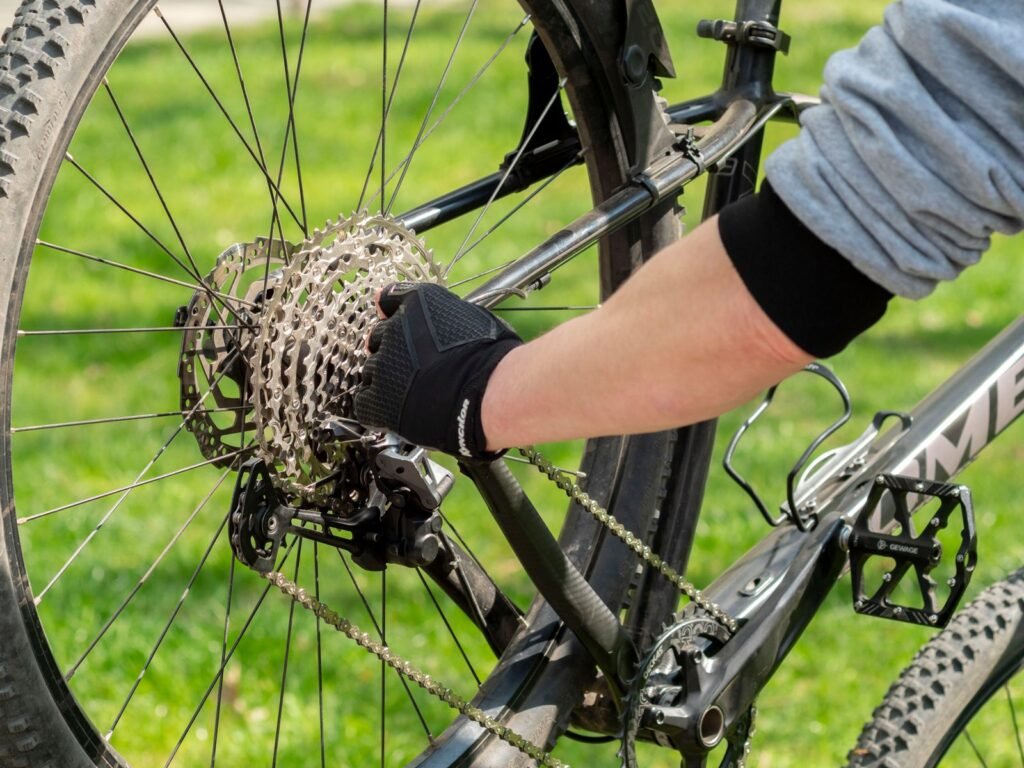
- Clean and lubricate the chain. Wipe the chain with a cloth and degreaser, brush the cogs clean, let it dry, then lubricate each link and wipe off the excess.
- Check the chain guard. Look for rub marks, check the guard bolts are tight, and refit it squarely.
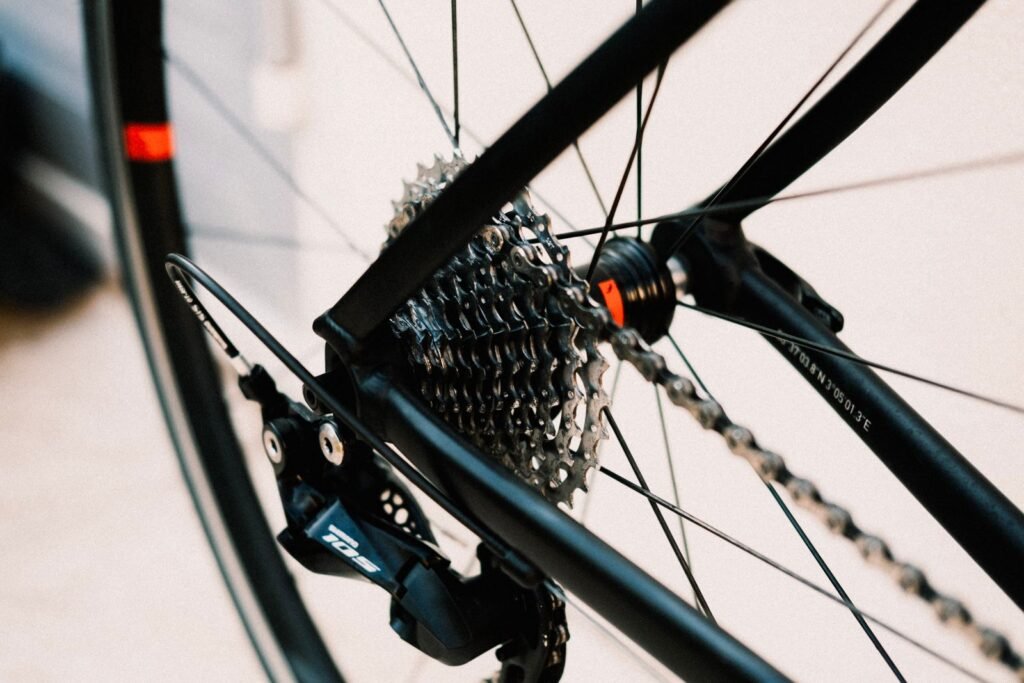
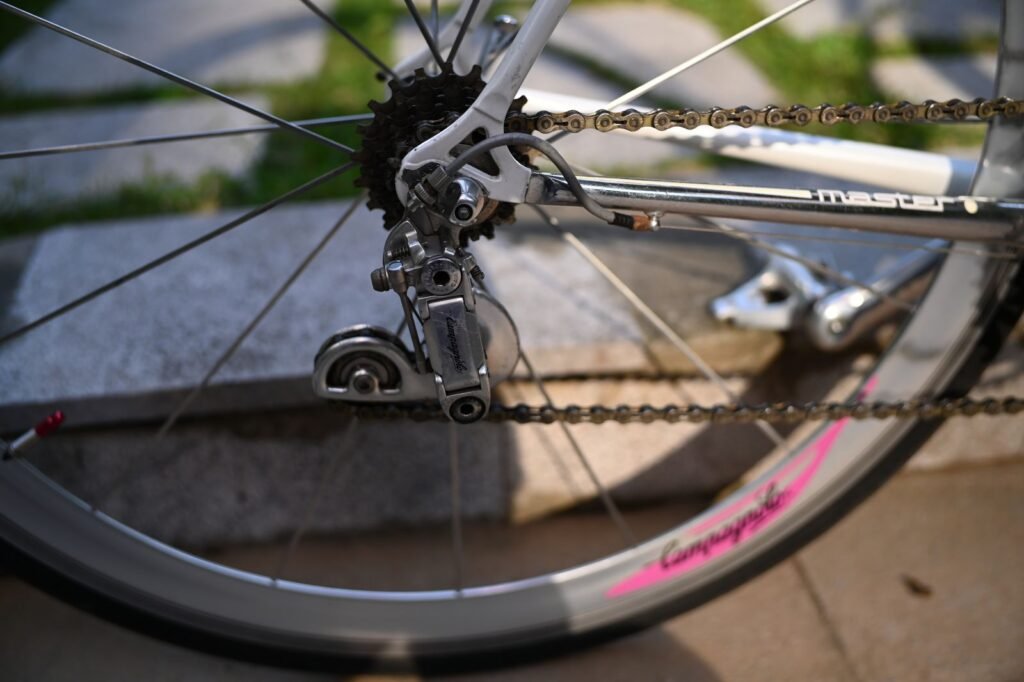
- Look at the derailleur and hanger. Check the derailleur hangs straight and the jockey wheels line up under the cassette.
- Shift through every gear by hand. With the rear wheel lifted, click through all the gears slowly. Slow to a larger cog means a loose cable; slow to a smaller cog, a tight one.
- Turn the barrel adjuster a quarter turn. Anti-clockwise tightens the cable; clockwise loosens it. Test after every turn.
- Set the limit screws only if a gear is out of reach. The H screw stops the chain falling off the smallest cog; the L screw stops it reaching the spokes.
- Check the B-tension gap. The top jockey wheel should sit a few millimetres below the largest cog. If it rubs, turn the B screw to open the gap.
If every step looks normal and the problem stays, get a shop to check the hanger and the chain.
What you’ll need
- Your manual, or the label on the derailleur, for the speed count and screw positions
- A cloth, degreaser and lubricant; a 5 mm Allen key; a small screwdriver
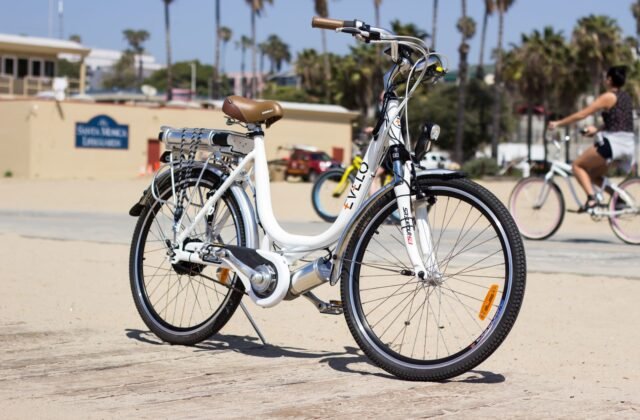
The step-through e-bike below is the same 7-speed style this guide is written for.

What the symptom usually means
Match what you notice with what to try first. If the chain falls into the spokes, get qualified help.
| Situation | What you’ll notice | What to try |
|---|---|---|
| Slow to a larger cog | The chain hesitates before it climbs to an easier gear | Clean the chain, then tighten the cable a quarter turn |
| Slow to a smaller cog | The chain hangs before it drops | Clean the chain, then loosen the cable a quarter turn |
| Chain skips under power | The chain jumps a cog when you pull away | Check the chain for wear, and ease off the pedals |
| Rattle in one gear only | Clicking in one gear only | Check the chain guard for rub, then the B-tension gap |
| Will not reach the easiest gear | The chain stops one cog short | Check the L screw and the cable tension |
| Chain falls off or into the spokes | The chain drops off the cassette | Stop riding at once |

How the step-through frame changes the answer
The same derailleur behaves differently on a step-through, because the frame shapes the cable run. The cable travels further around the low top tube, so it picks up friction and stretches sooner. A step-through that shifted cleanly when new can start hesitating after a few hundred miles: the cable is usually the cause.
The upright position is the second difference: you shift at low speed, often from a standstill, while the motor is still pushing. A shift under full power grinds the chain across the cassette. The chain guard is the third: many step-through e-bikes ship with a full guard that hides rub marks and traps grit, and a guard refitted after a puncture can touch the chain in one gear only.
What works
- Ease off the pedals when you shift
- Shift before you need the gear
- Keep the long cable run clean and dry, and replace a frayed cable
What to watch
- Do not shift under full power; it wears the chain and cassette and can snap a cable
- Do not blame the limit screws for a fault in every gear; that points to the cable or the chain
Settings and controls that affect gear shifting
Before deciding a derailleur is worn, check the assist level: the highest assist pushes the chain hard through every shift.
The shifter is part of the diagnosis too. One that clicks firmly is doing its job; one that feels vague or sticks has a cable fault. If the gear indicator says one gear and the chain sits on another, the cable has slipped.
What works
- Use the lowest assist level that keeps the ride comfortable
- Shift one gear at a time, with a short pause on the pedals
- Compare the gear indicator with the cog the chain sits on
What to watch
- A shifter that moves without clicking points to a cable or shifter fault, not to the derailleur
- If the indicator disagrees with the chain, the cable has slipped; re-tension it first
When a fix needs a part or a replacement
Some gear problems have a simple fix, and some need a part. A dirty chain can be cleaned and a stretched cable re-tensioned, but a bent derailleur, a worn chain and a frayed cable cannot be adjusted away. Match replacements exactly: a derailleur and chain must match the speed count, and a cable must fit the long run.
| Fix | Best use | Limit |
|---|---|---|
| Clean and lubricate the chain | Shifts hesitate in every gear after wet rides | Will not help if the chain is worn |
| Re-tension the cable | Shifts are slow in one direction | Will not help if the cable is frayed or sticking |
| Replacement cable and housing | Shifter feels vague, or the cable sticks | Must fit the long cable run |
| Replacement chain | Chain skips after cleaning and tensioning | Must match the speed count |
| Replacement derailleur | Derailleur bent or cracked | Must match the speed count and mount; get a shop to fit it |
| Professional diagnosis | A bent hanger, a chain in the spokes, or an unexplained fault | Do not straighten a hanger at home |
What works
- Keep the manual and derailleur label with the bike
- Ask a shop to check hanger alignment before buying a new derailleur
- After any fix, take a short, low-assist ride and shift through every gear
What to watch
- A new chain on a worn cassette will keep skipping
- Do not ride on with a chain that falls into the spokes
If the gears keep skipping after cleaning and tensioning, the chain or cassette is usually worn.

The verdict
Most step-through e-bike gear problems are fixed by cleaning the chain, checking the chain guard, and turning the barrel adjuster a quarter turn at a time. When those checks fail, get a qualified shop to check the hanger and the chain.
Readers also ask
Why do my gears skip when I pull away?
Usually a worn chain, a dirty drivetrain, or a shift under full power. Clean the chain and ease off the pedals.
Which way do I turn the barrel adjuster?
Anti-clockwise tightens the cable; clockwise loosens it. Turn a quarter turn at a time.
Can I adjust e-bike gears with the motor on?
Switch the bike off and turn the pedals by hand. Test-ride afterwards at low assist.
Why does my chain guard rub the chain?
The guard may be loose, bent, or refitted out of line. Check the bolts and rub marks, and refit it squarely.
When should I replace the cable?
When the shifter feels vague, the cable sticks, or tensioning no longer fixes slow shifts.
Is it safe to ride if I cannot reach the easiest gear?
You can ride carefully on flat ground, but not with a chain that falls off the cassette. Check the L screw and the hanger first.
Affiliate Disclosure: We may earn a commission when you buy through links on this site, at no extra cost to you.
Additional Details
Name: How to Adjust Step-Through E-Bike Gears Safely
Description: Learn how to adjust step-through e-bike gears safely: clean the chain, set cable tension, and fix skipping shifts.
Published: November 18, 2026