Part of our guide on E-Bikes.
A commuter e-bike gears problem usually starts small: a shift that hesitates, a rattle in one gear, or a chain that skips as you pull away. Left alone it gets worse. Most gear problems are not a worn-out drivetrain. They are usually a stretched cable, a dirty chain, a moved limit screw, or a bent hanger.
This guide shows how to adjust commuter e-bike gears safely, in an order that finds the fault before you change anything: the two-minute checks first, then cable tension, limit screws and the B-tension gap, and finally the point where a part or a professional is the right answer. If the chain itself is the problem, read E-Bike Chain Keeps Slipping: Causes and Fixes alongside this guide.
Quick facts
| Fact | What it means for your ride |
|---|---|
| Problem this guide fixes | Gears that skip, hesitate, rattle, or drop the chain |
| Check first | The chain, the cable, the hanger, and the limit screws |
| Most common causes | A stretched cable, a dirty or worn chain, a bent hanger |
| Tools you need | Your manual, a rag and degreaser, chain lube, hex keys |
| Stop and get help | A bent derailleur, a chain in the spokes, any motor fault |
| Related guides | E-Bike Chain Keeps Slipping: Causes and Fixes, How to Fix Commuter E-Bike Battery Problems |
Quick recap
- Clean the drivetrain before you adjust anything. Dirt hides the real fault.
- Most skipping is cable tension. A quarter turn of the barrel adjuster, tested after each turn, fixes most of it.
- Limit screws stop the chain going past the largest cog into the spokes, or past the smallest into the frame.
- Switch the bike off and remove the battery before you touch the chain.
- Never force a shift under full power. Ease off the pedals when you change gear.
- When a fix needs a part, match the speed count and the mount exactly.
The short answer: clean it, check the chain, then adjust the cable a quarter turn at a time
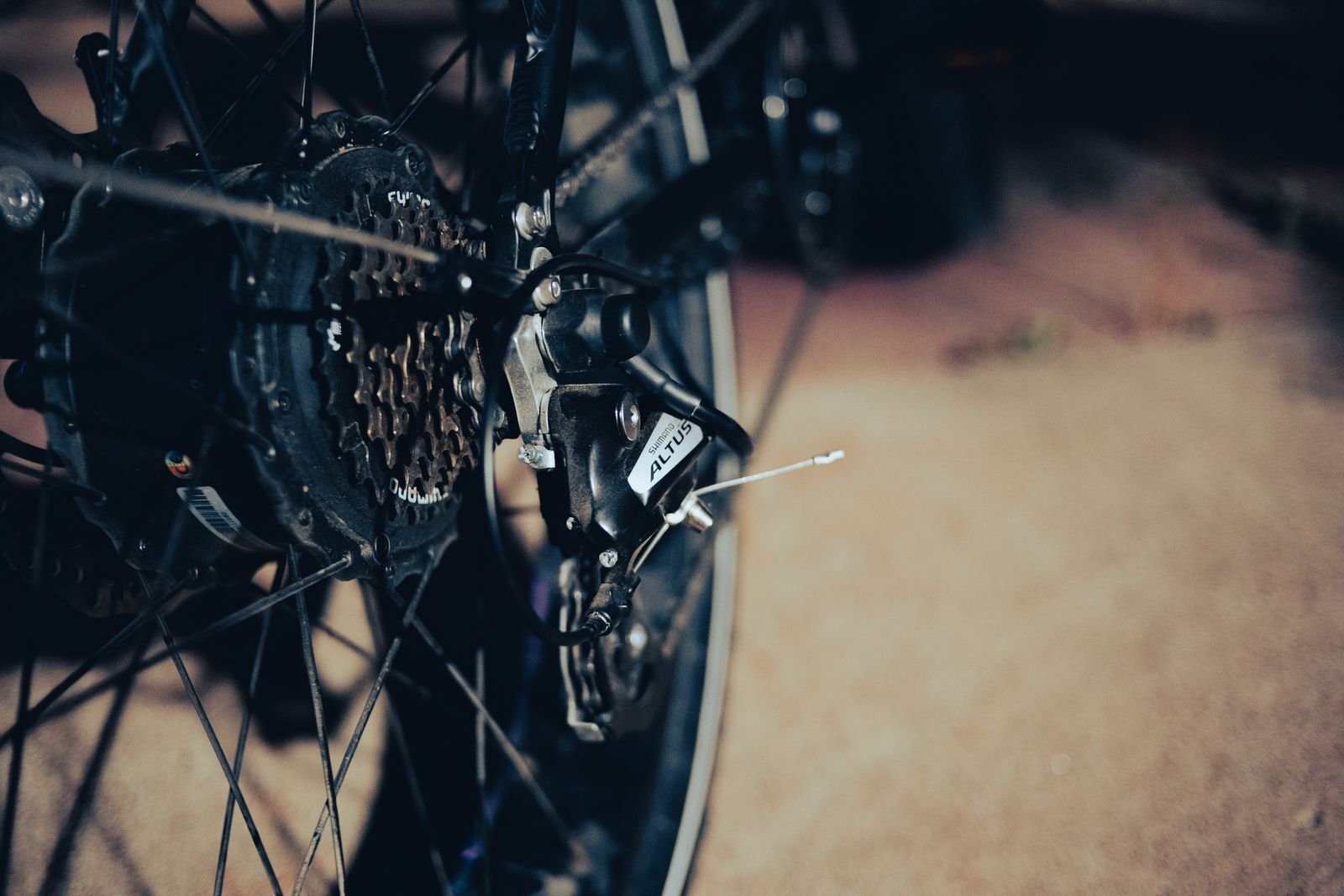
The straight answer is that most commuter e-bike gear problems are fixed by cleaning the drivetrain, checking the chain for wear, and turning the barrel adjuster a quarter turn at a time. The barrel adjuster is the threaded collar where the cable meets the derailleur. Turn it anti-clockwise to tighten the cable, clockwise to loosen it, and test after every turn.
That order matters because the symptoms overlap. A worn chain skips under load and looks like a cable problem. A bent hanger makes every gear noisy and looks like a limit screw problem. A commuter e-bike also wears its gears faster, ridden daily in rain and grit.
How to diagnose a commuter e-bike gear problem, step by step
Work through these steps in order, and note what you find: which gears are bad, and whether it started after a knock or a wet ride.
- Clean the chain and cassette. Degrease the chain, brush the cassette, wipe dry, and lube one drop per link. A gritty chain shifts badly in every gear.
- Check the chain for wear and stiff links. Lift it off the front ring, check for sideways play, and bend each link to find one that sticks.
- Check the hanger is straight. Stand behind the bike: the cage should be vertical, the top jockey wheel in line with the cogs. A bent hanger needs a shop tool.
- Set the cable tension. Shift to the smallest cog, then up one gear at a time. Slow to climb: barrel adjuster anti-clockwise a quarter turn. Slow to drop: clockwise. Repeat until every shift is clean.
- Set the limit screws. The H screw stops the chain past the smallest cog, the L screw past the largest. Shift to each end gear and check the chain sits without rubbing. Never force a screw.
- Set the B-tension gap. The B screw sets the gap between the top jockey wheel and the largest cog. Shift to the largest cog: the gap should be a few millimetres.
- Test ride at low speed. Ride on a flat road in low assist and shift through every gear. Note any gear that still hesitates, and repeat only the step that matches it.
If every step looks normal and the problem stays, get a shop to check the hanger, chain and cassette together. A drivetrain that still skips usually has a worn chain and cassette together.
What you’ll need
- Your manual, or the derailleur label, for the speed count
- Degreaser, a rag, a brush, and chain lube
- Hex keys, and a chain checker or ruler for wear
- A work stand, or a way to lift the rear wheel

What the symptom usually means
Use this table to match what you notice with what to try first. If the chain jumps into the spokes, skip the table and get help.
| Situation | What you’ll notice | What to try |
|---|---|---|
| Chain skips under load | Chain jumps when you pedal hard | Check chain and cassette wear first |
| Slow to shift to a larger cog | Chain hesitates before climbing | Barrel adjuster anti-clockwise, a quarter turn |
| Slow to shift to a smaller cog | Chain hangs on the larger cog | Barrel adjuster clockwise, a quarter turn |
| Chain rattles on the largest cog | Ticking in the easiest gear | Check the L limit screw and B-tension gap |
| Chain drops off the smallest cog | Chain falls past the smallest cog | Check the H limit screw |
| Grinding noise in one gear | One gear grinds, the rest shift cleanly | Check for a bent hanger or a worn cog |

How load, hills and wet weather change the answer
The same gears can feel like different gears on a loaded climb, after a wet week, or on a cold morning. Load is the most common surprise: a commuter carrying a bag, a lock and a laptop asks more of the chain on every start. Gears perfect with no load and bad under load mean wear, not cable tension.
Wet weather washes lube off the chain and grinds the cassette, so summer gears go noisy after a wet month. Cold shows up as a cable that moves stiffly on a frosty morning — a sign the cable and housing need attention.
What works
- Ease off the pedals when you shift
- Clean and lube the chain after wet or gritty rides
- Test every adjustment under load on a short ride, not only on the stand
What to watch
- Never shift under full power on a hill; the chain can jump and jam
- Do not judge gear health from one wet ride; clean the chain first
- Do not keep riding a skipping chain; it wears the cassette
Settings and controls that affect gear shifting
Before blaming the derailleur, check the controls. Assist level is the biggest: the highest assist pushes the chain hard on every start, and a rider who changed it by accident can mistake the result for a gear fault. A knocked shifter can move without clicking, and a frayed cable makes the lever vague.
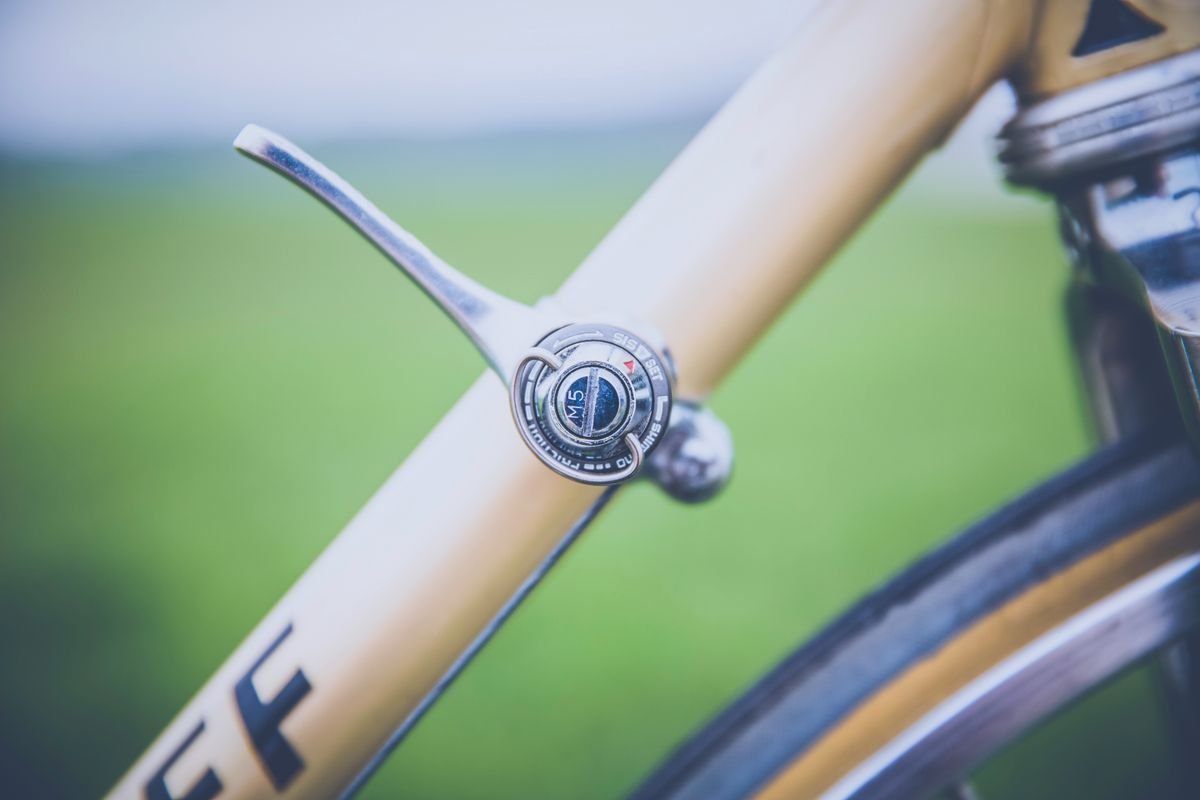
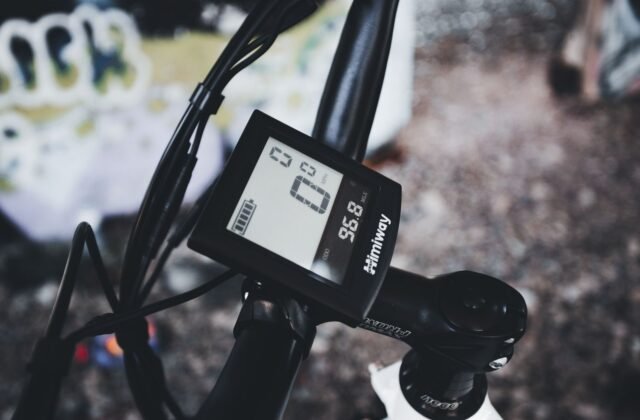
The gear indicator is part of the diagnosis too. If it says one gear and the chain sits on another, the cable has slipped and the barrel adjuster is the fix. If the indicator is right but the chain rattles, check the limit screws or the B-tension. If the shifter moves but nothing happens, the cable has snapped.
What works
- Use a lower assist level for the first few strokes after a shift
- Check the shifter clicks once per gear, and the indicator matches the cog
- Look at the cable at the shifter and the derailleur clamp for fraying or rust
What to watch
- A shifter that moves without a click means a cable or shifter fault
- An indicator that disagrees with the chain means the cable has slipped
- Do not ride with a shifter or cable that sticks, slips, or changes gear by itself
When a fix needs a part or a replacement
Some gear problems have a simple fix, and some need a part. A stretched cable can be adjusted, a dirty chain can be cleaned, and a limit screw can be set. A bent hanger needs a shop tool, and a bent derailleur cannot be straightened at home. Match the speed count and the mount exactly. For the wheel-off steps, read How to Fix a Flat Tyre on the Road.
| Fix | Best use | Limit |
|---|---|---|
| Barrel adjustment | Shifts hesitate in one direction | Will not help if the chain, cassette or hanger is worn |
| New chain | Chain skips under load, or a checker shows wear | Must match the speed count |
| New cassette | Skipping stays after a new chain, cogs look hooked | Must match the speed count |
| Hanger alignment | Gears will not index in any gear | Needs a shop tool |
| Replacement derailleur | Derailleur bent or cracked, jockey wheels seized | Must match the speed count |

The verdict
Most commuter e-bike gear problems are fixed by cleaning the chain and turning the barrel adjuster a quarter turn at a time, not by buying a new derailleur. When those checks fail, a shop test is the right next step.
Readers also ask
Why does my commuter e-bike skip gears under load?
Skipping under load usually means a worn chain or cassette, not a cable problem. Check the chain first, then the cassette.
How do I know if the chain or the cassette is worn?
A chain checker shows chain wear, and hooked or pointed teeth mean a worn cassette. If skipping stays after a new chain, replace both.
Which way do I turn the barrel adjuster?
Anti-clockwise to tighten the cable when the chain is slow to climb, clockwise to loosen it when it is slow to drop. Test after every turn.
Can I adjust the limit screws myself?
Yes, a quarter turn at a time, with the bike off. The H screw stops the chain past the smallest cog, the L screw past the largest. Never force a screw.
Why do my gears go out of adjustment after a wet winter?
Rain and grit wash lube off the chain and wear the cable. Clean and lube the chain after wet rides, and check the cable in spring.
Should I shift while the motor is driving?
Ease off the pedals when you shift, and let the chain move before you push hard again. Shifting under full power can make the chain jump.
Affiliate Disclosure: We may earn a commission when you buy through links on this site, at no extra cost to you.
Additional Details
Name: How to Adjust Commuter E-Bike Gears Safely
Description: Learn how to adjust commuter e-bike gears safely: diagnose skipping and noise, set the barrel adjuster and limit screws, and know when a part needs replacing.
Published: November 15, 2026