Short answer: Look for a manufacture date printed on the battery pack — usually a sticker or a laser etch, sometimes a coded string. Calendar age matters on its own, because lithium cells degrade sitting on a shelf, faster if the pack sat full or sat hot. The sticker tells you the age; the test ride tells you the truth. No brand publishes one universal date-code format, so the method is the same everywhere: find the marking, read the age, then test the pack hard under load.
Introduction
A used e-bike is a used battery with a bicycle attached. That one sentence decides how to shop for one. The frame, the motor and the gears all matter, but the battery is the most expensive part to replace, the hardest part to judge from the outside, and the part whose age you cannot see by looking at the bike. A clean chain and fresh tyres can hide a tired pack, and a scuffed frame can hide a healthy one.
This guide shows you how to decode the manufacture date on a used e-bike battery, what that date does and does not tell you, and how to check the pack with your hands and a test ride. The date sticker is the starting point, not the verdict. A young pack can be ruined by bad storage, and an older pack can still be strong if it was kept well. Read the sticker, then prove it.
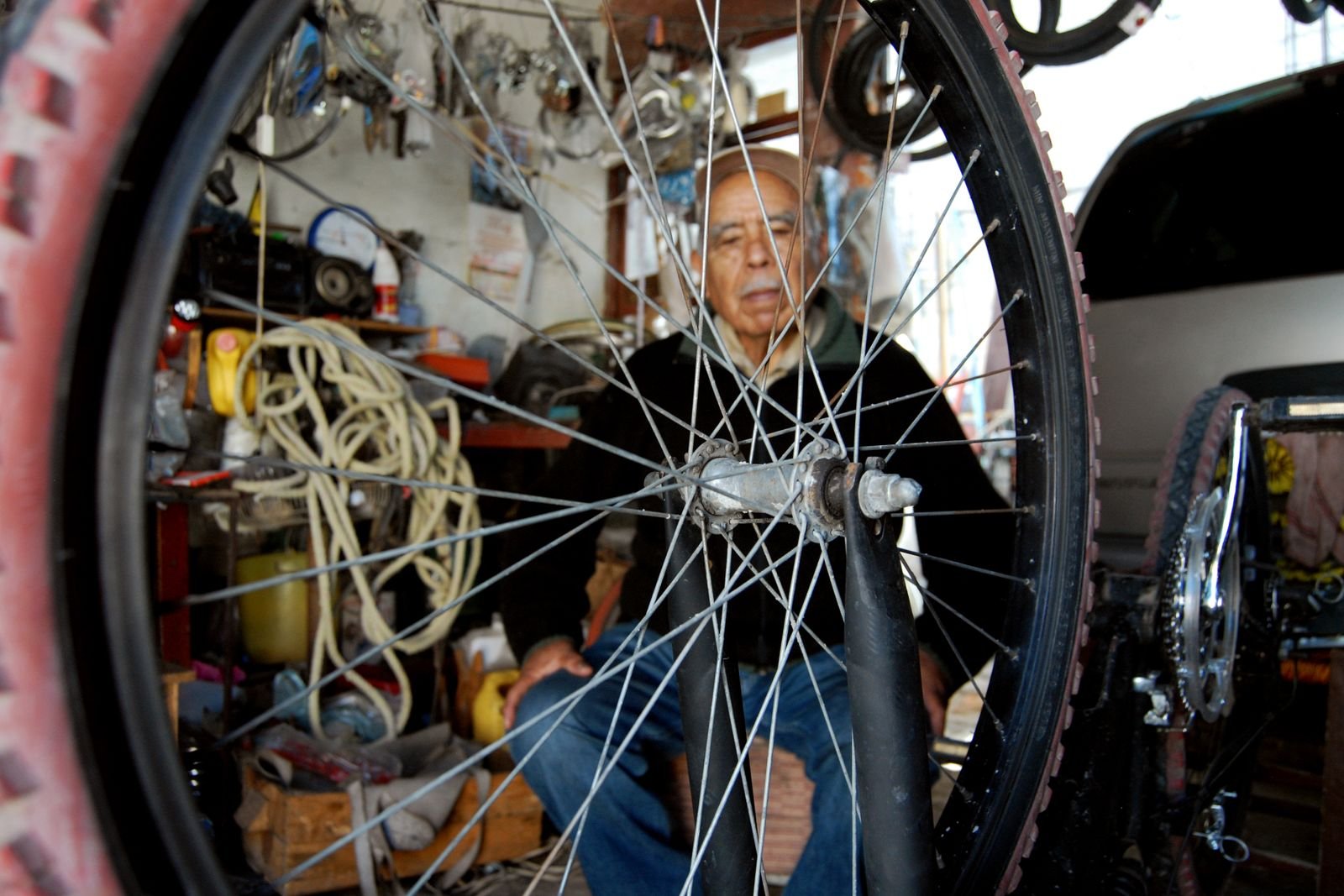
Photo by INOCENTE SANCHEZ GUADARRAMA on Pexels. Inspect the bike the way a mechanic would: hands on, not just eyes on.
Quick facts
| Fact | Detail |
|---|---|
| Date marking | Sticker or laser etch on the pack, sometimes a coded string |
| Why age matters | Lithium cells degrade on the shelf, faster if stored full or hot |
| Best check | Dealer plug-in readout of pack health and charge cycles (major brands) |
| Load test | Full charge, hard ride up the steepest hill at full assist for several minutes |
| Hard no | Case not flush in its cradle, swelling, rattling, opened or rebuilt pack |
| Test ride | 15 minutes minimum, with a chain wear gauge and a tyre pressure gauge |
Quick recap
- Find the manufacture date on the pack first — sticker, laser etch, or coded string.
- Calendar age counts separately from miles: a pack degrades sitting still, faster full or hot.
- Major-brand systems can be read by a dealer; generic systems cannot.
- Test under load: a healthy pack holds its charge indicator steady on a hard climb; a tired one drops two bars or shuts down.
- Replacement availability matters more than condition — a worn battery on a supported bike beats a healthy battery on an orphaned one.
Best used e-bikes under $1,000: where the sticker does the most work
Under $1,000, most used e-bikes are older machines or generic systems, and the date sticker does the most work here because there is often nothing else to check. Generic battery systems carry no dealer readout — no plug-in report of pack health, no charge-cycle count — so the inspection is done by hand, and the sticker is the only age evidence you get. Look on the pack itself: a printed sticker, a laser etch, or a coded string. If you cannot find any marking, treat the age as unknown and price the bike accordingly.
At this price the physical checks carry the most weight. The case must sit flush in its cradle — a case that does not sit flush is a hard no, full stop. Check for swelling, for corrosion, green residue or pitting on the contacts, for rattling when you shake the pack gently, for cracks at the mount points, and for any sign of water. Rattling means loose cells, and loose cells mean the pack was dropped or badly rebuilt. A pack that has been opened, rebuilt, or fitted with different-brand cells is a walk-away. The same goes for a missing safety certification marking. At this tier the replacement question bites hardest: many of these bikes are orphaned, with no brand support and no replacement pack to buy. Remember the counterintuitive rule — a worn-out battery on a well-supported bike is a better buy than a healthy battery on an orphaned one, because replacement availability comes first and condition second.
| What to check | Under $1,000 |
|---|---|
| Date evidence | Sticker, etch or coded string — often the only age evidence |
| Dealer readout | Usually not available — generic systems carry no plug-in data |
| Best check | Hands-on physical inspection plus the load test |
| Biggest risk | Orphaned bike with no replacement battery available |
Best used e-bikes under $2,000: sticker plus dealer readout
Under $2,000, the used market shifts toward major-brand bikes a few years old, and the checking method changes with it. Major-brand systems can be plugged in by a dealer, who can read pack health and charge cycles straight from the battery management system. That readout is the single most valuable check on a used e-bike, and it is worth paying a shop for an hour to get it. The date sticker still matters — it tells you the calendar age, which the readout alone does not — but now you have two independent pieces of evidence, and they should agree. A three-year-old pack with low cycles and a clean readout is a different purchase from a three-year-old pack with high cycles and a tired readout,
At this tier, use both checks together. Read the sticker first so you know the calendar age before the dealer visit, then compare it with the readout. If the sticker says the pack is two years old and the dealer readout shows heavy cycle counts and poor health, the bike was ridden hard or stored badly — the calendar age was only half the story. If the sticker is missing or unreadable, say so to the dealer, because the readout becomes your only age evidence and the price should reflect that. The physical checks still apply: case flush in the cradle, no swelling, no corrosion on the contacts, no rattling, no cracks at the mounts, no water signs, and no opened or rebuilt pack. The load test still applies too — a readout is a report, and a hard climb is the proof. Replacement availability is usually better here than under $1,000, because the brands are still supporting these models, but confirm it before you buy rather than assuming it.
| What to check | Under $2,000 |
|---|---|
| Date evidence | Sticker or etch, plus the dealer readout to cross-check it |
| Dealer readout | Available for major-brand systems — worth paying a shop for an hour |
| Best check | Readout plus load test, with the sticker as the age baseline |
| Biggest risk | High cycles or poor storage hiding behind a young-looking sticker date |
Best used e-bikes $2,000–$3,500: recent bikes, same calendar rule
From $2,000 to $3,500, you are looking at recent major-brand used e-bikes, and the temptation is to trust the age of the bike and skip the battery checks. Do not. The calendar rule does not care what the bike cost new: lithium cells degrade sitting on a shelf, faster if they sat full or sat hot. A two-year-old pack stored fully charged in a hot garage can be weaker than a four-year-old pack stored well and ridden regularly. The sticker tells you when the pack was made. It does not tell you how it was stored, and storage is half the story.
At this tier the dealer readout is standard practice, not a favour — expect it, and walk away from a seller who will not let you get one. The readout gives you pack health and charge cycles, and together with the sticker date it gives you the full picture: calendar age, use, and condition. The load test still closes the deal: full charge, hard ride up the steepest hill nearby at full assist for several minutes, watching the charge indicator. A healthy pack holds steady. A tired one drops two bars on the first climb or throws an error and shuts down. At this price replacement packs usually exist, but check the price before you buy — a $2,800 bike that needs a $900 battery is a $3,700 bike. The physical checks do not change with price: flush case, no swelling, no corrosion, no rattling, no cracks, no water, no rebuilt cells.
| What to check | $2,000–$3,500 |
|---|---|
| Date evidence | Sticker or etch — cross-check against the dealer readout |
| Dealer readout | Standard practice — expect it, and walk away if refused |
| Best check | Readout plus load test; price a replacement before you buy |
| Biggest risk | Bad storage hiding behind a recent sticker date |
How to choose
Choose by replacement availability first and battery condition second. That is the counterintuitive rule, and it is the one that saves buyers the most money. A worn-out battery on a well-supported bike is a better buy than a healthy battery on an orphaned one, because a supported bike can be given a new pack and an orphaned one cannot. Before you fall in love with any used e-bike, find out whether a replacement battery exists for that exact model, who sells it, and what it costs. If the answer is nobody, or the price is close to the price of the bike, the battery’s condition stops mattering — you are buying a bike with a countdown and no reset.

Photo by illustrate Digital Ug on Pexels. A workshop check is worth more than a seller’s word.
Then read the sticker and test the pack. Find the manufacture date — sticker, laser etch, or coded string — and remember no brand publishes one universal date-code format, so the format varies by brand and the method is the same everywhere: find the marking, read the age, and do not try to decode a format the maker never published. For major-brand systems, pay a dealer for the plug-in readout of pack health and charge cycles. For generic systems, inspect by hand. Then run the load test: full charge, hard ride up the steepest hill nearby at full assist for several minutes. A healthy pack holds its charge indicator steady; a tired one drops two bars on the first climb or throws an error and shuts down.
Check the rest of the bike the same way. The drivetrain tells the real mileage: a chain under 0.5% elongation is lightly used, and a chain past 0.75% that is skipping is heavily used. Hooked or shark-fin cassette teeth mean heavy wear. The odometer is a claim, not a fact — displays and controllers can be swapped. Check the serial number, usually under the bottom bracket shell, sometimes on the head tube or a dropout, and run it through Bike Index and Project 529. Ask for the original charger and check it is the correct one.

Common issues and how to avoid
The most common issue is buying the sticker instead of the battery — trusting the date and skipping the test. A recent sticker date feels reassuring, but calendar age is only half the story, and a young pack stored full in a hot garage can be weaker than an older pack stored well. Avoid it by treating the sticker as the starting point and the load test as the verdict. Full charge, steepest hill nearby, full assist, several minutes. If it drops two bars or throws an error, the pack is tired whatever the sticker says.
The second common issue is the hidden rebuild: a pack opened, rebuilt, or fitted with different-brand cells, sold as original. The signs are in the physical check — a case that does not sit flush, swelling, rattling, cracks at the mount points, water marks, or corrosion on the contacts. Any one of those is a reason to walk away, and a rattle is the clearest of all: loose cells mean it was dropped or badly rebuilt. The third common issue is the orphaned bike: a healthy battery on a model nobody supports, where the first battery problem becomes a dead end. Avoid it by confirming replacement availability before you pay. The fourth is the swapped odometer — a display or controller that has been changed, showing a mileage the bike never did. Avoid it by reading the drivetrain instead: chain elongation and cassette teeth tell the real mileage, and they cannot be reset with a screwdriver.

Who should not buy
Do not buy a used e-bike if you cannot find the battery’s date marking and cannot get a dealer readout or a proper load test — you would be paying for a pack you know nothing about, and the battery is the most expensive part of the bike. Do not buy if the case does not sit flush in its cradle, if the pack swells, rattles, or shows corrosion on the contacts, or if it has been opened or rebuilt with different-brand cells. Those are not negotiating points; they are walk-away signs.
Do not buy a used e-bike if no replacement battery exists for the model, unless you are happy to own a bike with a countdown and no reset. Do not buy if the seller will not let you test ride for at least 15 minutes, charge it fully first, or take it to a dealer for a readout. A seller who blocks the checks is telling you what the checks would find. Walk away and keep looking — the used market always has another bike, but it never refunds a bad battery.
How to use
Use this method every time you look at a used e-bike, in this order. Bring a chain wear gauge, a tyre pressure gauge, a flashlight, your phone, and a multitool — the whole kit fits in a small bag.

Photo by Pavel Danilyuk on Pexels. Fifteen minutes on the bike beats fifteen minutes of talking about it.
- Find the date. Look for the manufacture date on the battery pack — sticker, laser etch, or coded string. Note the age and remember the format varies by brand.
- Check the case. Look for swelling, check the case sits flush in its cradle, look for cracks at the mount points and any sign of water. Shake the pack gently and listen for rattling.
- Check the contacts. Look for corrosion, green residue, or pitting on the terminals. Check the safety certification marking is present.
- Check the drivetrain. Measure the chain with the wear gauge — under 0.5% is lightly used, past 0.75% and skipping is heavily used. Look at the cassette teeth for hooking or shark-fin wear.
- Check the serial. Find it, usually under the bottom bracket shell, sometimes on the head tube or a dropout, and run it through Bike Index and Project 529.
- Ask for the charger. Ask for the original charger and check it is the correct one for the pack.
- Charge fully, then ride hard. Charge the pack fully, then ride hard up the steepest hill nearby at full assist for several minutes. Watch the charge indicator: steady means healthy, two bars gone on the first climb or an error shutdown means tired.
- Test ride for 15 minutes minimum. Ride it properly — hills, stops, starts — not a lap of the car park.
- Get the readout. For major-brand systems, pay a dealer for the plug-in readout of pack health and charge cycles. Compare it with the sticker date.
- Price the replacement. Before you pay, find out whether a replacement battery exists for the model and what it costs. Then decide.

Frequently asked questions
Where is the manufacture date on a used e-bike battery?
Usually a sticker or a laser etch on the pack itself, sometimes a coded string. No marking means the age is unknown.
Does the date-code format differ by brand?
Yes. No brand publishes one universal format, so the format varies by brand. Find the marking, read the age, and do not try to decode a format the maker never published.
Can a dealer tell me the battery’s health?
For major-brand systems, yes — a dealer can plug in and read pack health and charge cycles, the single most valuable check, worth paying a shop for an hour. Generic systems carry no such data, so inspect those by hand.
How do I test a used e-bike battery under load?
Charge it fully, then ride hard up the steepest hill nearby at full assist for several minutes. A healthy pack holds its charge indicator steady; a tired one drops two bars on the first climb or throws an error and shuts down.
Is an old battery always a bad buy?
No. Calendar age matters, but storage and use matter as much. And a worn-out battery on a well-supported bike is a better buy than a healthy battery on an orphaned one — replacement availability first, condition second.
The verdict
Decode the sticker, then prove it. The manufacture date tells you the calendar age, and calendar age matters — lithium degrades on the shelf, faster full or hot. But the date is only the starting point. Read the pack with your hands, read the drivetrain for the real mileage, run the load test on the steepest hill nearby, and get the dealer readout on major-brand systems. Decide on replacement availability first: a tired battery on a supported bike is a fix, while a healthy battery on an orphaned bike is a countdown. Buy the bike whose battery you understand, not the one whose sticker looks youngest.
Additional Details
Name: Used E-Bike Battery Date Sticker: How to Decode the Manufacture Date
Description: Used e-bike battery manufacture date sticker decode: find the sticker or etch, read the calendar age, and test the pack under load before you pay.
Published: November 22, 2026