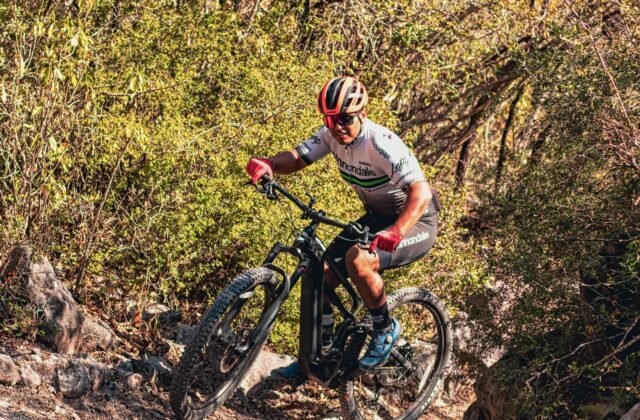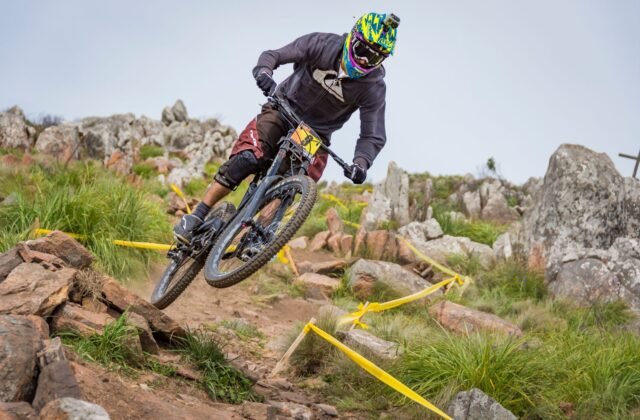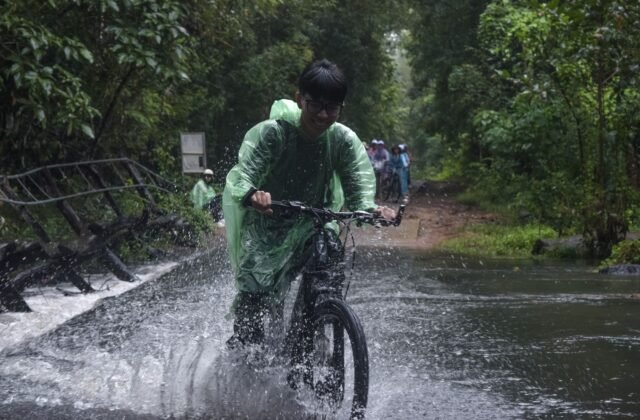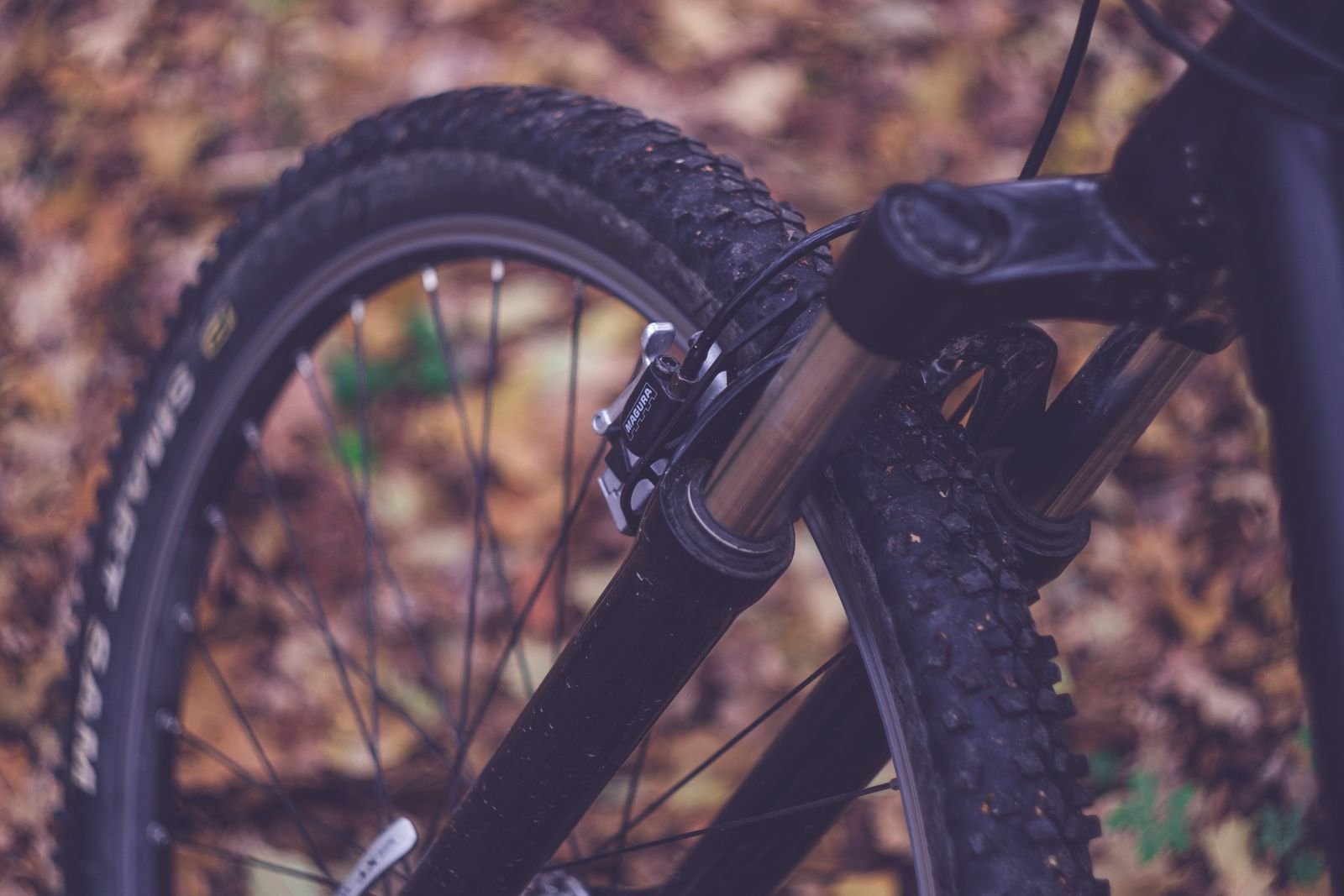
Straight answer: For most weekend trail riding, a full-suspension mountain bike is the better choice — it climbs, descends and corners with more grip and less fatigue over a two-hour ride.
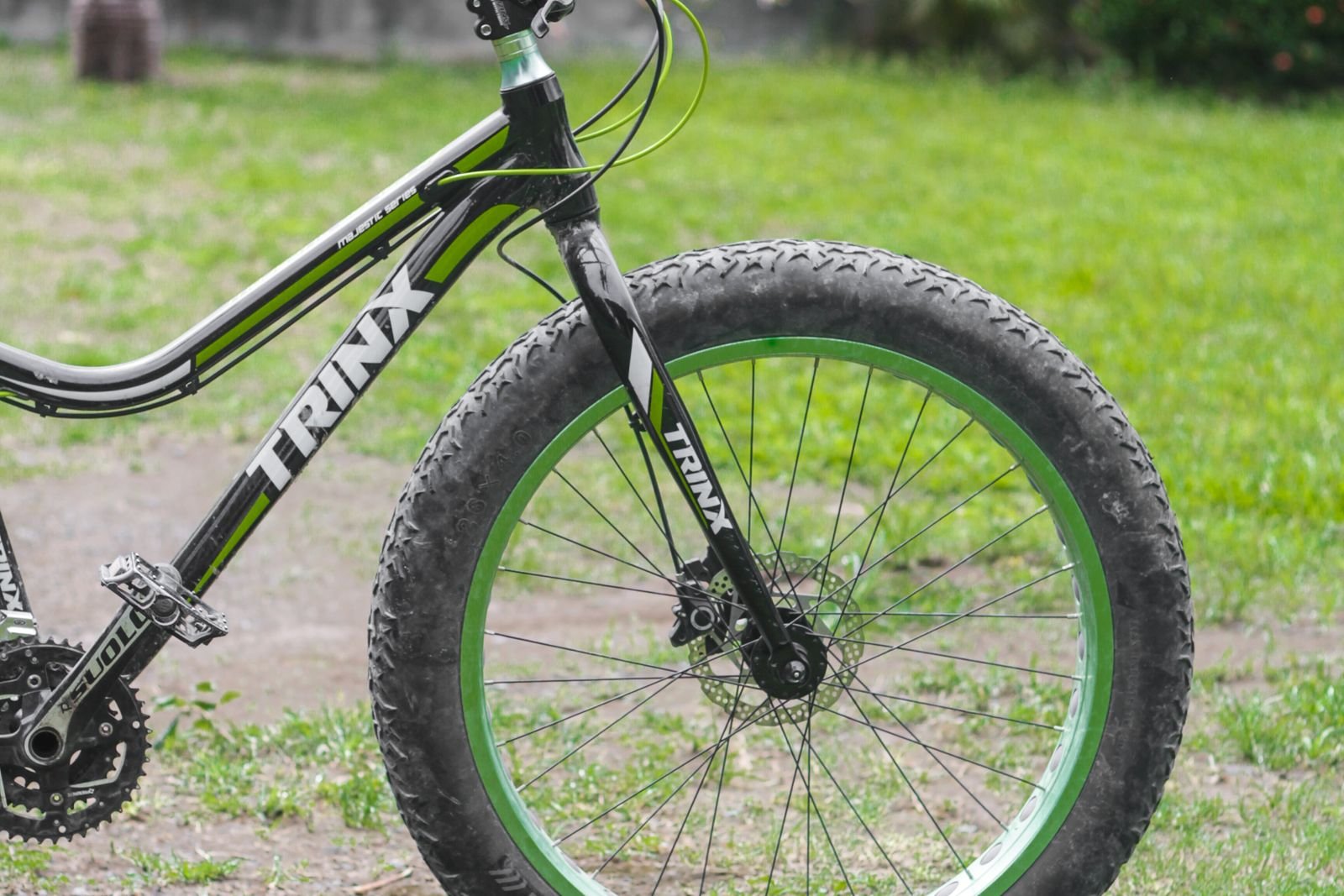
In a full suspension mountain bike vs fat mountain bike comparison, a fat bike only takes over when your weekend trails are mostly soft: deep sand, snow, boggy mud or beach tracks. On firm, rocky or rooty singletrack, its wide, heavy tyres cost you speed and effort on every climb.
Stand a full-suspension mountain bike next to a fat mountain bike and they look like close cousins. Both are built for rough ground. The difference is how they deal with bumps: one uses suspension travel at both ends, the other uses very wide, low-pressure tyres.
This is about weekend trail riding only: the local loop you ride on a Saturday morning, a mix of climbs, descents, roots, rocks and the odd soft patch. For the wider picture, start with the Mountain Bikes hub, then see Hardtail Mountain Bike vs Fat Mountain Bike: Which Is Better for Beginners? and Full Suspension Mountain Bike vs Trail Mountain Bike: Which Is Better for Steep descents?
Below is the side-by-side comparison, a 20-minute test for your own trails, how to set up a full-suspension bike for weekend riding, and what to do if you already bought the wrong one.
Full Suspension Mountain Bike vs Fat Mountain Bike: The Core Comparison
The short version is grip against comfort. Full suspension buys grip with travel and a lighter build. A fat bike buys grip with tyre size, and it pays off on ground soft enough to sink a normal tyre.
| Attribute | Full suspension | Fat bike | What to watch |
|---|---|---|---|
| Suspension and comfort | 120–160 mm of travel front and rear smooths roots and rocks. | Wide 4–5 inch tyres at low pressure soak up small bumps, with no damping. | Fat tyres bounce back on long, rough descents. |
| Grip on loose ground | The rear shock keeps the tyre on the ground over roots and rocks. | The huge contact patch floats over sand, snow and boggy mud. | A fat tyre wins only on soft ground. |
| Climbing | Lighter, and the suspension keeps the rear wheel driving on rough climbs. | Heavy tyres make every climb harder work. | Suspension wins if you climb more than you descend. |
| Rough descents | Travel and geometry handle rocks, drops and roots at speed. | Helps on loose descents but rebounds hard off rocks. | Check the fork and shock before a steep descent. |
| Speed on firm trails | Rolls fast on hardpack, with less drag and quicker steering. | Slow on firm ground — wide tyres drag, and steering feels heavy. | On a mixed loop, full suspension is faster. |
| Weight | Noticeably lighter, so it climbs and accelerates more easily. | Noticeably heavier — wide rims and tyres add weight at the wheels. | Wheel weight is what you feel most on climbs. |
| Best for | Mixed trails with climbs, roots and rocks. | Trails that are mostly sand, snow or soft mud. | Match the bike to the ground you ride most. |

When the Answer Changes
The verdict above holds for most riders on most weekend trails. These are the cases that flip it:
The trail is sand, snow or deep mud
When the trail turns soft — deep sand, snow, or mud that swallows a normal tyre — the fat bike pulls ahead. Its wide tyres float where narrower tyres dig in and stall.
Your ride is mostly smooth, flowing singletrack
On smooth hardpack, the full-suspension bike’s advantage shrinks and the fat bike’s drag grows. A long, smooth climb on a fat bike costs real effort.
The descent is steep and rocky
On steep, rocky descents, full-suspension travel soaks up hits that would throw a fat bike off line. Its weight makes it harder to steer at speed.
Test Both Bikes on the Same Weekend Trail: A 20-Minute Decision Ride
One short test ride on a trail you know well tells you more than any table. Use the same trail, load and pace for both bikes.
- Pick your real trail: a loop you ride most weekends, with a climb and a soft patch.
- Ride the full-suspension bike first, and note where you spin out or lose the front wheel.
- Rest, drink, and ride the same trail on the fat bike at the same effort.
- Compare how your legs feel at the top, and your hands after the rough sections.
- If it was close, repeat the softest corners and choose the bike that got you through with less wrestling.
What a fail looks like
| Symptom | Cause | Fix |
|---|---|---|
| Rear wheel spins out on loose climbs | The tyre is losing contact over roots or rocks | Let a little air out and stay seated |
| Hands and shoulders ache after a short descent | Every bump goes straight to you | Slow down and check your tyre pressure |
| The bike bounces and wanders on fast, rough ground | Too much air in the tyres, or the rebound is set too fast | Drop the pressure and slow the rebound |
Myth vs Fact:
Myth: A fat bike’s wide tyres make suspension unnecessary.
Fact: A fat tyre soaks up small bumps, but it has no damping — your arms and legs do the damping instead.
Myth: More suspension travel is always better.
Fact: Extra travel adds weight and bob; past a point, it costs more energy than it saves.
Myth: A fat bike is slow everywhere.
Fact: On soft ground a fat bike is faster, because it keeps moving where the other bike sinks.
Before you test: Walk the trail first and check for loose rock, ruts and drop-offs. Wear a helmet and gloves, and walk the bike home if a section looks dangerous.

How to Set Up a Full-Suspension Bike for Weekend Trails
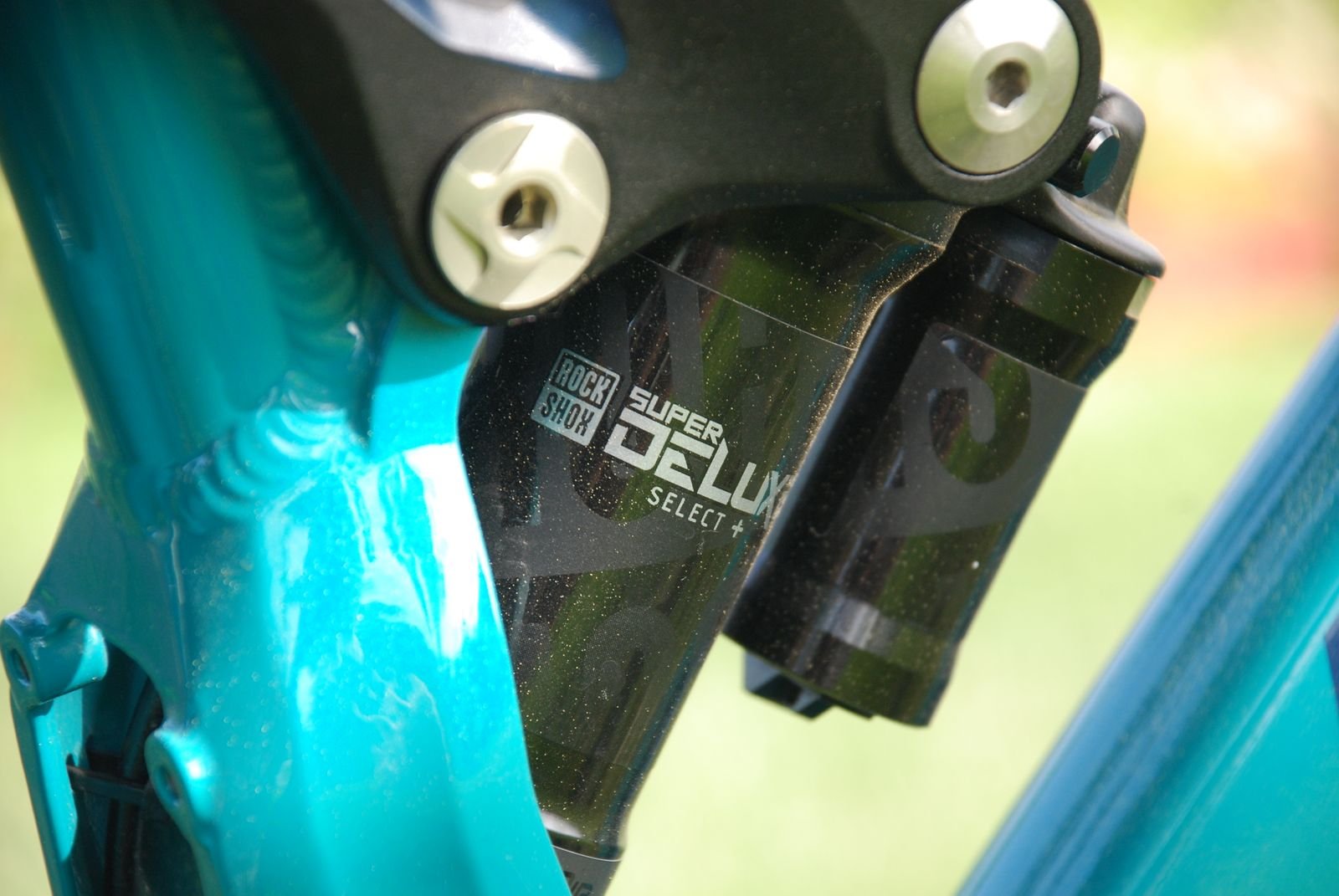
A full-suspension bike rides best when it is set up for your weight and your trails, not the way it left the shop.
What you will need:
- A shock pump
- A tyre pump or gauge
- A multi-tool
- Your normal riding shoes and pack
The method:
- Set rear shock sag with your riding gear on.
- Switch the lockout to its middle setting for a mixed trail.
- Set tyre pressures for grip, not speed. For starting points, see our mountain bike air pressure guide.
- Slide the saddle forward a little and shift into an easy gear before a climb bites.
- Ride the same trail again and note what changed: keep what helped, undo the rest.
Note: Change one setting at a time, ride the same trail, and write down what you felt.
Warning: Never ride down a steep hill with a hot, fading brake or a loose load. Stop at the top, check the brakes and the load, and descend slowly with both brakes.
When the Damage Is Already Done
Already bought the wrong bike for your weekend trails? Work through these fixes in order.
- You bought a fat bike but your trails are mostly smooth hardpack. Fit the narrowest tyres your rims take.
- You bought a full-suspension bike but your trails are deep sand. Fit the widest tyres the frame takes and drop the pressure.
- The suspension was never set up. Set the sag and tyre pressure before you judge the bike.
- The bike is the wrong size. A frame that is too big or too small cannot be fixed with setup.
- The bike still stalls on every soft climb. Trade it toward a bike built for your ground.

The Safe Alternative: Start with a Fat Mountain Bike
If the damage above matches your bike, or your weekends are mostly soft ground, a fat mountain bike is the safe alternative. It is simple, tough and forgiving — and on the right ground, the faster bike.
The method:
- Pick the lightest fat bike you can afford.
- Learn the bike’s limits on a gentle, flat trail first, before you commit to a steep descent.
- Drop the tyre pressure for sand and snow, and add it back for hardpack.
- Ride the same loop on both setups and keep the bike that leaves you fresher.
What to Do Next, in Order
- Decide how much of your riding is soft ground.
- Test a full-suspension bike and a fat bike on the same weekend trail.
- Set the sag and tyre pressure before you judge either bike.
- When you are ready to buy, match the bike to your ground.
Never Do These on Weekend Trails
- Never run your tyres at road pressure on a trail. High pressure bounces off roots and rocks.
- Never add air to the rear shock without checking the sag first. Too much air makes the bike harsh.
- Never ignore the first hiss of air after a cut. A slow leak can leave you walking miles.
- Never ride with worn brake pads. They stop badly and score the rotor.
In short
For most weekend trail riding, a full-suspension mountain bike is the better choice: it climbs with more grip, descends with more control, and leaves you fresher after a two-hour loop. A fat bike wins only when your trails are mostly soft — deep sand, snow or boggy mud.
The essentials
- A full-suspension bike is the better choice for most weekend trail riding.
- A fat bike wins on soft ground: sand, snow and boggy mud.
- Fat tyres are about 4–5 inches wide.
- Full-suspension bikes have 120–160 mm of travel front and rear.
- Set the sag and tyre pressure first.
- Test both bikes on the same trail before you buy.
More Questions, Answered
Are fat bikes good for trail riding?
Yes, on soft trails. On sand, snow and boggy mud, a fat bike’s wide tyres grip where a normal tyre sinks. On firm trails, they drag and a full-suspension bike is faster.
Is a full-suspension bike worth it for weekend riding?
Yes, if your trails have roots, rocks and descents. The suspension keeps the tyres in contact with the ground, so you climb and descend with more grip.
What tyre pressure should I use on a fat bike?
Low enough to spread the tyre over soft ground, and higher on firm trails. Start from the pressure printed on the tyre sidewall; our mountain bike air pressure guide gives starting points.
Which bike is better for a beginner on weekend trails?
A full-suspension bike is the easier beginner choice on mixed trails: it forgives mistakes on roots and rocks. A fat bike is the better beginner choice if your trails are mostly sand or snow.
Additional Details
Name: Full Suspension Mountain Bike vs Fat Mountain Bike: Which Is Better for Weekend trail riding?
Description: Full suspension mountain bike vs fat mountain bike: which is better for weekend trail riding? Compare grip, comfort, climbing and cost, then test both.
Published: November 10, 2026