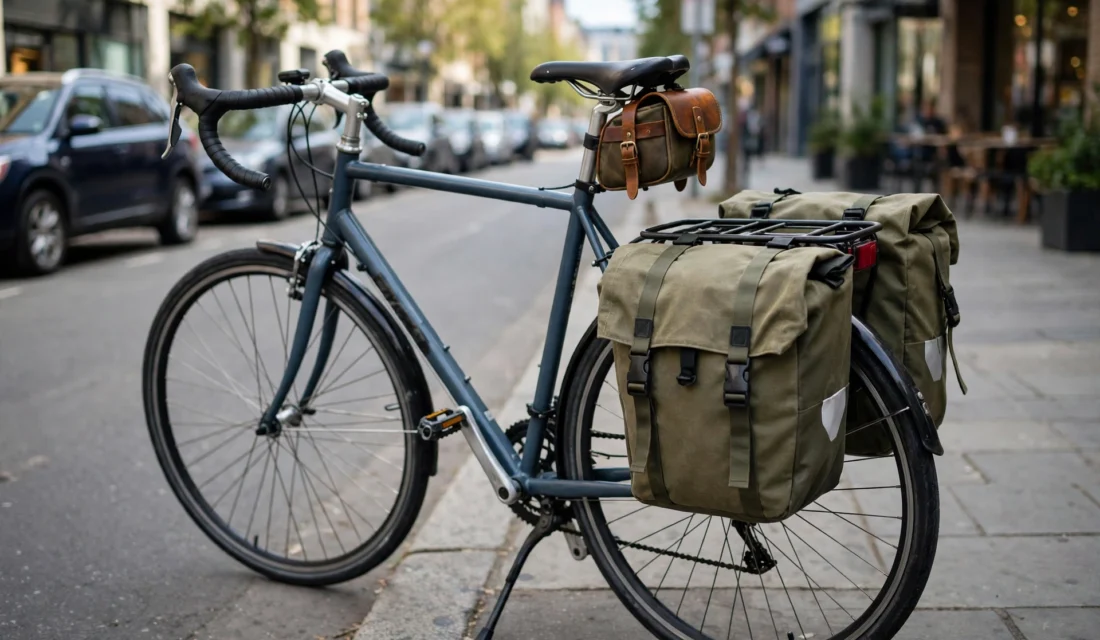
Short answer: Panniers carry better for heavy, regular loads, because they hang low on a rack and keep weight off your back. Frame, handlebar, and saddle bags carry better for light, quick-access items on short rides. For most commuters, a small pannier set wins on comfort, balance, and weather protection.
Introduction
Choosing between bags and panniers is really a choice about weight, balance, and how often you carry. A bag on your back feels free, until a long ride in heat makes it feel heavy.
This guide compares the options, shows how to fit them, and ends with a decision checklist for your ride.
Bike bags vs panniers compared
| Feature | Bike bags | Panniers |
|---|---|---|
| Where weight sits | Frame, bars, or saddle | Low on a rear or front rack |
| Best load | Light, small items | Heavy, bulky, regular loads |
| Balance | Good if kept light | Best, especially in pairs |
| Off-bike use | Easy to carry | Good if they unclip and have a handle |
| Needs a rack | Usually no | Yes, in most cases |
| Weather protection | Varies by bag | Often better, with roll tops |
What you will need
- Your bike, with a rack fitted if you choose panniers.
- The bags or panniers you are comparing, with straps, hooks, and rain covers.
- A typical load: laptop, clothes, lock, tools, water, and food, as you would really carry them.
- A pump and repair kit for a test ride.
- A tape measure for heel clearance and rack fit.
Step 1: List what you actually carry
Write a real load list for a week, not an ideal one. Include work, shopping, and weekend rides, and note which items must stay dry, which must be easy to reach, and which are heavy.
- Light and frequent: phone, keys, snacks, repair kit.
- Medium and daily: laptop, lunch, change of clothes.
- Heavy or bulky: groceries, books, tools, camping gear.
If your list is mostly light, bags may be enough. If it is mostly heavy or daily, panniers are usually the better base, with a small bag for quick-access items.
Step 2: Check balance and handling
Load the bike as you would ride it, then ride a quiet street at low speed. Note steering, braking, and how the bike feels when you stop and start.
- Panniers in pairs, balanced left and right, give the most stable feel.
- One heavy pannier alone can pull the bike to one side.
- A heavy handlebar bag can make steering feel vague or heavy.
- A heavy saddle bag can sway on rough roads.
- Keep the heaviest items low and close to the bike, not high or far out.
If handling feels unsafe, reduce the load, rebalance it, or change the bag type before a longer ride.
Step 3: Fit a rack and panniers safely
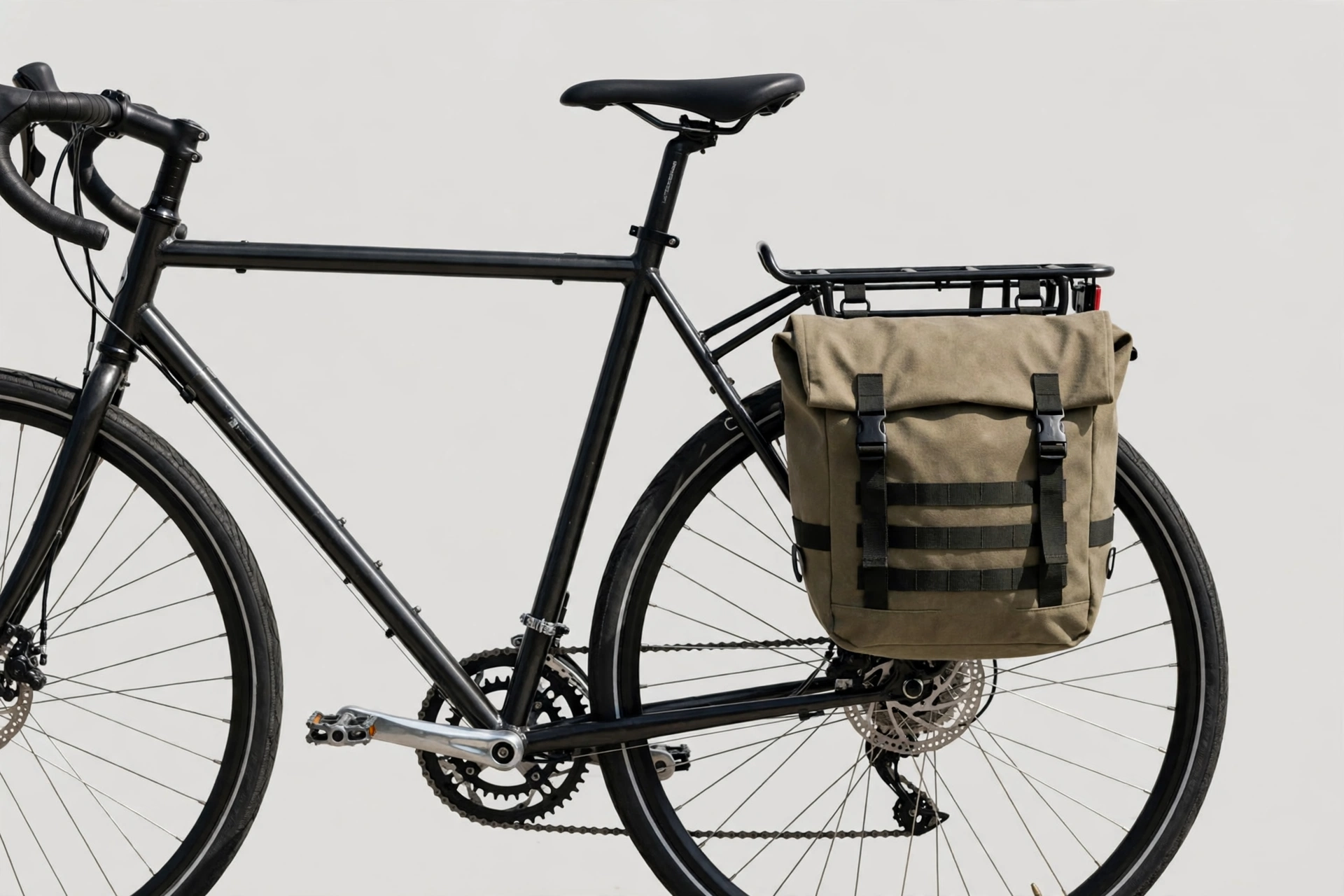
Check rack fit before you buy panniers. The rack must match your frame, brake type, and wheel size, and it must be rated for the load you plan to carry.
- Fit the rack tightly, with all bolts done up, and check it does not touch the tyre or brake.
- Hook panniers on, and adjust hooks so they cannot bounce off.
- Check heel clearance: your heel should not hit the pannier when pedalling.
- Check that panniers do not cover lights or reflectors, and do not touch the wheel or chain.
- Ride a short test, then recheck bolts and hooks.
If a pannier touches the wheel, moves, or unclips on a test ride, do not use it for a long ride until it is fixed.
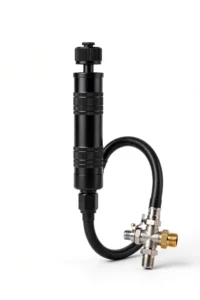 Mini Bike Pump – Portable Aluminum Alloy
A portable pump for a test ride after fitting bags or panniers.
Step 4: Fit frame, handlebar, and saddle bags
Small bags are quick to fit, but they still need care. Straps must be tight, and the bag must not rub the frame, cables, or tyre.
- Frame bags: keep them clear of bottle cages and cables, and do not overload them.
- Handlebar bags: keep them light, and check steering and brake levers still move freely.
- Saddle bags: check they do not sway into the wheel, and keep the load small.
- Top tube bags: keep them clear of your knees when pedalling.
After fitting, ride a short test and check for rubbing, sway, or loose straps. A bag that moves can wear paint, damage cables, or catch on a wheel.
Step 5: Pack for weather and security
Rain and theft are the two most common bag problems. Pack with both in mind, even on a dry morning.
- Put electronics and papers in a waterproof pouch inside the bag, even if the bag claims to be waterproof.
- Use roll tops and rain covers correctly, and close every zip and buckle.
- Keep valuables in a bag you can take with you, not in a pannier left on a parked bike.
- Lock panniers to the rack where the maker allows it, and remove them at long stops.
- Use reflective material or a light on the rear bag at night.
After rain, open bags, dry them, and check for damp clothes or papers before the next ride.
Step 6: Test on your real route
A car park test is not enough. Ride your normal route, with stops, turns, hills, and rough ground, and note what works and what annoys you.
| Test point | What to check | Pass sign |
|---|---|---|
| Starting and stopping | Balance, foot clearance | No sway or heel strike |
| Turning | Steering and lean | Predictable, not heavy |
| Wet road | Spray, bag closure | Load stays dry |
| Parking | Removal, carrying | Quick, clean, no tools needed |
| Night ride | Lights, reflectors | Still visible from behind |
Keep a short note after the first week. Small problems, such as a strap that slips or a zip that sticks, often decide which bag you keep.
 Cyctravel Bike Tire Repair Kit
A repair kit to keep with your carrying setup for a test ride.
Step 7: Choose by ride type
Use this short guide, then adjust for your load and your bike.
- Daily commute with a laptop and clothes: panniers, plus a small top tube or frame bag for phone and keys.
- Short town ride or cafe ride: a handlebar or saddle bag, kept light.
- Shopping trip: panniers in pairs, so the load stays balanced.
- Touring or long day ride: panniers for bulk, plus a handlebar bag for maps, food, and camera.
- E-bike with a rack: panniers work well, but check rack fit and battery access first.
- Bike without a rack: start with frame, saddle, and handlebar bags, and add a rack later if loads grow.
For help with a puncture on any of these rides, see How to Fix a Flat Tyre on the Road: A Safe Step-by-Step Guide. For more carrying ideas, see the Bike Gadget category.
Step 8: Maintain bags and racks
Bags fail slowly, often at a strap, hook, or zip. A quick monthly check keeps them safe.
- Check straps, hooks, buckles, and zips for wear, cracks, or fraying.
- Check rack bolts and mounts, and tighten only to the maker’s guidance.
- Clean bags with a damp cloth, and dry them fully before storage.
- Store bags dry, out of direct sun, and away from sharp tools.
- Replace a worn hook or strap at once, rather than riding with a bag that can fall off.
 Tragoods Premium Bicycle Tire Levers Set
Tyre levers to carry with a repair kit on bag and pannier rides.
Decision checklist
- Load is heavy or daily: choose panniers.
- Load is light and quick-access: choose bags.
- Balance is stable on a test ride: good.
- Heel, wheel, light, and brake clearance are clear: good.
- Rain plan and off-bike carrying plan are set: good.
- Rack, hooks, and straps pass a monthly check: good.
If two or more checks fail, change the bag, rebalance the load, or add a rack before a long ride.
Frequently asked questions
Do I need a rack for panniers?
Most panniers do, because they hook onto a rack rail. Check your frame and brake type before buying a rack.
Can I use one pannier only?
Yes, for a light load, but keep it balanced and low. For heavy loads, use a pair.
Are panniers waterproof?
Some are, some are only water resistant. Use an inner waterproof pouch for electronics and papers.
Will a handlebar bag affect steering?
It can, if it is heavy. Keep handlebar loads light, and check brake and gear controls still move freely.
Can I carry a laptop in a pannier?
Yes, in a padded sleeve, kept low and protected from rain. Keep the pannier balanced with the other side where possible.
What if my bike has no rack mounts?
Start with frame, saddle, and handlebar bags. Some racks fit with clamps, but check fit and safety with the maker first.
As an Amazon Associate, this site may earn from qualifying purchases made through links on this page, at no extra cost to you.
How do I stop bags from rattling?
Check straps first, then hooks, then the load itself. Tighten loose straps, rebalance heavy items low and close to the bike, and add padding around hard items such as tools or bottles. If rattling continues, stop and recheck the fit before riding further.