Short answer: Choose a three-wheel moped or trike by stability first, then seating, storage, power type, and local rules. Test ride before you buy, check brakes, tyres, lights, and weight limits, and use the site’s model roundup for examples, not as a substitute for a test ride.
For model examples, see Five Three Wheel Mopeds for Adults You Didn’t Know You Needed and the Mopeds & Trikes Hub. This guide does not repeat that roundup; it helps you choose between types.
Introduction
A third wheel can make riding feel steadier, especially at low speed, when stopping, or when carrying a load. It does not remove the need for good brakes, a helmet, and safe riding.
This guide walks through types, fit, rules, and a test ride, so you can choose with confidence.
Three-wheel types compared
| Type | Best for | Watch out for |
|---|---|---|
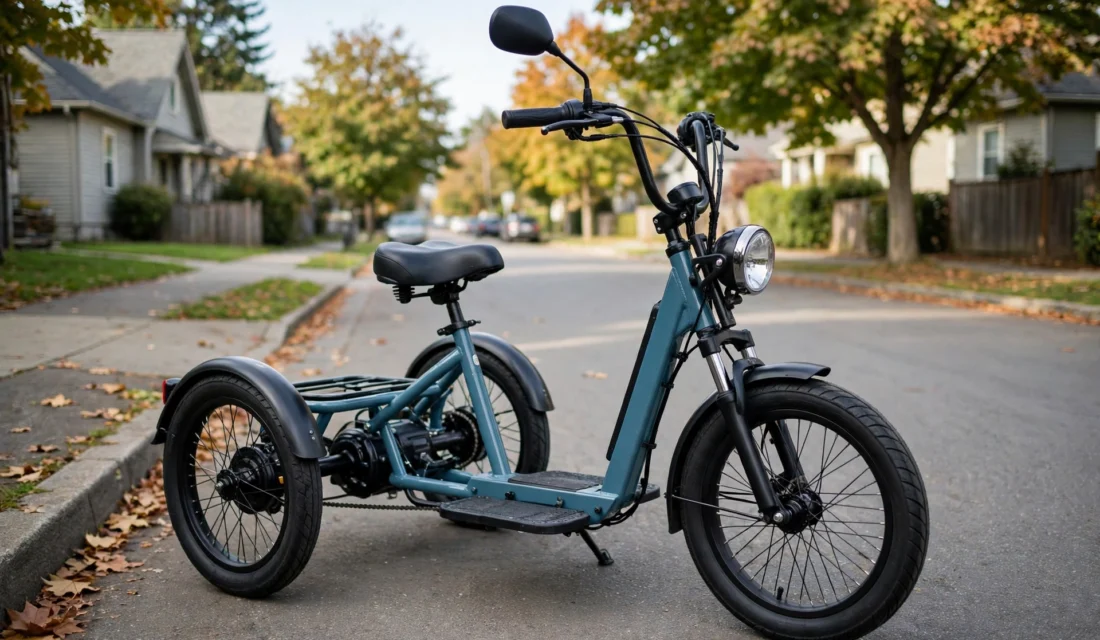
| Two wheels at the rear | Stability, cargo, slow rides | Wide turning, parking space |
| Two wheels at the front | Steering feel, road use | Weight, cost, service access |
| Electric trike | Short trips, hills, carrying | Battery care, charging, range in cold |
| Petrol moped trike | Longer rides, fuel stops | Fuel, noise, servicing, local rules |
| Mobility-style trike | Low speed, easy mounting | Road rules, speed limits, use limits |
What you will need
- Your height, inseam, and any mobility needs, noted before shopping.
- A list of your usual trips: distance, hills, loads, and parking.
- Your local licence, registration, helmet, and road-use rules, checked with the authority, not guessed.
- A helmet that fits, gloves, and closed shoes for a test ride.
- A tape measure for seat height, step-over height, and storage space.
Step 1: Define your real use
Wri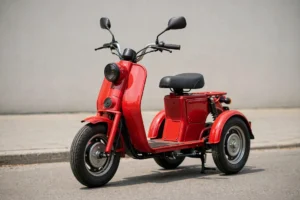 te down your top three trips. A leisure ride, a shopping trip, and a commute need different trikes, even if they look similar.
- Short, flat, local trips: stability and easy mounting matter most.
- Hilly or longer trips: power, brakes, and range or fuel matter more.
- Carrying loads: cargo space, weight limit, and low loading height matter most.
- Two riders or a passenger: check the maker’s passenger rules and seat, never assume.
If a trike cannot do your top trip safely and legally, it is not the right choice, however attractive it looks.
Step 2: Check stability, seating, and fit
Sit on the trike, with your usual shoes, and check mounting, seating, and reach before any ride.
- Can you mount and dismount without strain or tipping?
- Can both feet reach the ground safely at a stop?
- Is the seat comfortable for your usual trip length, with back support if you need it?
- Can you reach brakes, throttle or pedals, and controls without stretching?
- Does the trike feel stable when you lean, turn slowly, and stop?
A trike that feels unstable at walking speed will not feel better at road speed. Stop and try another model.
Step 3: Check power, range, and weight limits
Do not rely on a headline range or speed figure. Check the maker’s full details, and ask how hills, load, and cold weather affect them.
- Electric: battery size, charging time, charger type, and battery replacement or service.
- Petrol: fuel type, fuel capacity, servicing, and local emission or noise rules.
- Weight limit: rider, passenger if allowed, and cargo, together, not separately.
- Storage: will it fit your garage, shed, or parking space, with room to mount and charge?
- Transport: can it be moved for service, and does it need a trailer or van?
 Heavy Duty 3 Wheel Mobility Scooters for Seniors & Adults 500lbs Capacity
A heavy-duty three-wheel option to compare for stability and capacity.
Step 4: Check local rules before you buy
Rul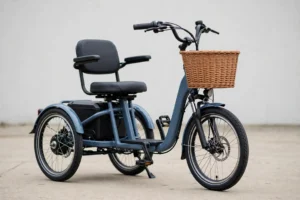 es differ by place and by vehicle type. A trike that is legal in one area may need a licence, registration, insurance, or a helmet in another, or may be limited to certain roads.
- Check licence and age rules with your local authority.
- Check registration, insurance, and inspection needs.
- Check helmet and protective gear rules.
- Check where it may be ridden: roads, cycle paths, pavements, or private land.
- Check passenger, cargo, and speed limits.
Keep a note of the source and date of the rules you checked, because rules change. If you cannot confirm a rule, ask the authority before buying.
Step 5: Do a full test ride
A test ride should cover your real use, not just a car park loop. Wear a helmet, gloves, and closed shoes, and bring a typical load if the seller allows it.
| Test point | What to check |
|---|---|
| Mount and dismount | Easy, stable, no strain |
| Slow turns | Steady, no tipping feel |
| Braking | Firm, even, no pulling to one side |
| Hill or load | Power feels adequate, not strained |
| Parking | Stable on a slope, lock works |
| Lights and horn | All working, easy to reach |
If anything feels unsafe, noisy, loose, or wrong, stop the ride and ask for help. Do not buy a trike you have not tested, or one with a fault you cannot explain.
Step 6: Check storage, charging, and servicing
Owning a trike is more than riding it. Check where it will live, how it will be charged or fuelled, and who will service it.
- Storage: dry, secure, and large enough, with a lock and, for electric models, a safe charging point.
- Charging: use only the maker’s charger, keep cables clear, and never charge a damaged battery.
- Servicing: find a local service option before buying, and check parts availability.
- Tyres and brakes: check pressures, tread, and brake wear on the maker’s schedule.
- Winter: store dry, keep batteries as the maker directs, and check tyres and brakes before spring use.
 50cc Stretched Trike | 3 Wheeler | Automatic Transmission | PST50-19N (Burgundy)
A stretched three-wheel trike example from the model roundup.
Step 7: Compare running costs honestly
Compare the full cost, not just the purchase price. Include insurance, registration, fuel or charging, servicing, tyres, and storage.
| Cost area | Electric trike | Petrol trike |
|---|---|---|
| Fuel or charging | Charging at home or a point | Petrol at a station |
| Servicing | Motor, brakes, battery checks | Engine, fuel, brakes, tyres |
| Parts | Battery, tyres, brakes | Engine parts, tyres, brakes |
| Storage | Dry, secure, charging point | Dry, secure, fuel storage rules |
If a cost is unknown, ask the seller in writing before you commit. A low purchase price can hide high servicing or battery costs.
 ASHOMELI 1000W Electric Cargo Tricycle Truck Simple Tricycle, 60-70Km 60V 45Ah Large Capacity Battery
An electric cargo trike example for carrying loads.
Step 8: Make a safe final decision
- It fits you, your trips, and your storage.
- Local rules are confirmed, not guessed.
- The test ride felt stable, with firm brakes and clear controls.
- Weight limits cover you and your usual load.
- Servicing and parts are available locally.
- You have a helmet, gloves, and a lock ready.
For safety gear ideas, see Scooter Safety Gear and Helmets: What to Wear and Why and the Scooter category.
Frequently asked questions
Is a three-wheel moped safer than a two-wheel scooter?
It can feel steadier at low speed and when stopped, but it still needs good brakes, tyres, and safe riding. Stability also depends on the model, load, and road surface, so test ride first.
Do I need a licence for a three-wheel moped?
It depends on your area and the vehicle type. Check licence, registration, and insurance rules with your local authority before buying.
Can I carry a passenger?
Only if the maker allows it and local rules allow it. Check the seat, weight limit, and passenger rules for that exact model.
Are electric trikes good for hills?
Some are, some are not. Check power, battery, and weight limit together, and test ride on a hill like the ones you will use.
How much storage do I need?
Measure your parking space first, including room to mount, charge, and lock the trike. A wide trike needs more space than a two-wheel scooter.
What should I check before the first ride?
Check brakes, tyres, lights, horn, steering, and controls, and read the manual for charging, fuel, and weight limits. If anything is loose, damaged, or unclear, get help before riding.
Should I buy without a test ride?
No. Fit, stability, and controls differ a lot between models, and a test ride is the best way to find problems before you pay.
Before buying, compare this guide with the model roundup at Five Three Wheel Mopeds for Adults You Didn’t Know You Needed and the Mopeds & Trikes Hub.
As an Amazon Associate, this site may earn from qualifying purchases made through links on this page, at no extra cost to you.
How do I check a used trike?
Check brakes, tyres, steering, lights, and frame for damage, rust, or repairs. Ask for service records, battery age where relevant, and the maker’s manual. If the seller cannot answer, or a fault is hidden, walk away and get an independent check before paying.
Take your time, compare at least two models side by side, and choose the trike that fits your body, your trips, and your local rules, not just the one that looks best in a photo.