Part of our guide on E-Bikes.
A commuter e-bike tyre works harder than a tyre on a regular bike. It carries a motor and a battery, takes the motor’s push on every start, and rolls over the same glass and potholes five days a week. Most tyre trouble is not bad luck — it is low pressure, a worn tread, or a small cut left alone until it becomes a flat on a work morning.
This guide shows how to care for commuter e-bike tyres in a safe order, from two-minute checks to the point where a new tyre is the right answer. For a flat on the road, read How to Fix a Flat Tyre on the Road; for the battery side of range, read How to Fix Commuter E-Bike Battery Problems.
Quick facts
| Fact | What it means for your ride |
|---|---|
| Problem this guide fixes | Tyres that lose pressure, puncture often, wear out early, or feel slow and rough |
| Check first | Pressure, tread depth, sidewall condition, valves, and anything stuck in the rubber |
| Most common causes | Low pressure, worn tread, embedded glass or thorns, and tyres that are too old |
| Tools you need | A pump with a gauge, tyre levers, a spare tube or patch kit, and a rag |
| Stop and get help | A bulge, exposed casing threads, or a tyre that will not seat: stop riding and get help |
| Related guides | How to Fix a Flat Tyre on the Road, How to Fix Commuter E-Bike Battery Problems, How to Charge an E-Bike Battery Safely |
Quick recap
- Check pressure weekly with a gauge. A soft tyre is the most common cause of a slow ride and a pinch flat.
- Read the size and pressure range from the sidewall, and never exceed the maximum printed there.
- Look for cuts, cracks, bulges and debris in the tread. A bulge or exposed casing means replace the tyre, not patch it.
- The rear tyre wears faster than the front, because it carries more weight and takes the motor’s push.
- Liners, sealant and puncture-resistant tyres cut flats, but they do not replace pressure checks.
- When a tyre needs replacing, match the size and width exactly, and check the tube and rim tape too.
The short answer: pressure, tread and the sidewall tell you almost everything
Most commuter e-bike tyre trouble comes down to three checks you can do in two minutes. The straight answer is that a slow, puncture-prone or tired-looking tyre is far more likely to be under-inflated, worn out or carrying a small cut than to be a bad tyre. Check the pressure, feel the tread and sidewall, and look for debris.
The symptoms overlap. A soft tyre drags and pinches the tube on a pothole, which looks like a puncture problem. A worn tread slips on wet paint, which looks like a grip problem. A tiny piece of glass in the tread works its way in over days, which looks like bad luck.
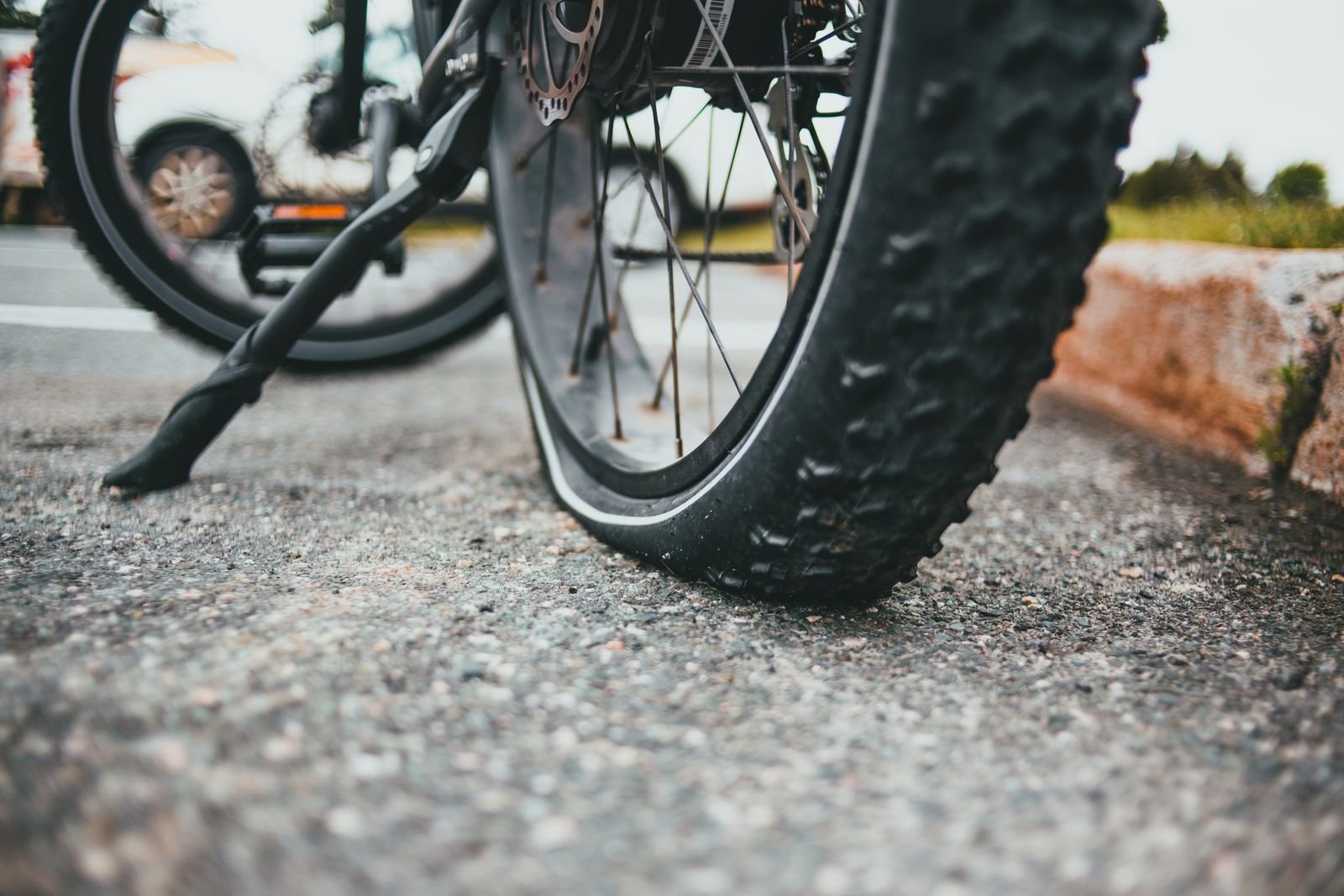
The rest of this guide follows that rule: the steps find the fault, the table matches each symptom to its cause, and the fix section tells you when a pump, a patch or a new tyre is the answer.

How to check and care for commuter e-bike tyres, step by step
Work through these steps in order, one wheel at a time.
What you’ll need: a floor pump with a gauge, tyre levers, a spare tube or patch kit, a clean rag, and the right replacement size — read it from the sidewall, for example 700x38c or 26 x 1.95.
- Read the sidewall. Find the size, pressure range, and rotation arrow. Note the size before you shop — the wrong width will not seat.
- Check the pressure with a gauge. Press the gauge onto the valve and read it. Pump inside the sidewall range, not to the maximum. Check both tyres weekly.
- Inspect the tread. Run your fingers over the tread and pick out glass, thorns or stones. A flat strip in the middle means the tyre is worn.
- Inspect the sidewalls. Look for cracks, cuts, bulges and casing threads showing through. Cracks from age and sun mean replace the tyre even if the tread looks fine.
- Spin each wheel. Watch the tyre as it turns. A wobble or hop means it is not seated evenly. Let the air out, push it into place, and pump up slowly.
- Check the valves and rim tape. Make sure the valve sits straight and holds air, and the rim tape covers every spoke hole. A leaking valve or an exposed spoke hole will keep causing flats.
- Clean the tyres. Wipe the tread and sidewalls with a damp rag and brush grit from the grooves. Grit left in the tread causes slow punctures days later.
If the tyre holds pressure, looks sound and spins true, it is fine to ride. If any step finds a bulge, a deep cut or exposed casing, replace it.
What your tyres are telling you
Tyres show their problems plainly. Match what you see to the table below before you buy anything.
| Situation | What you’ll notice | What to try |
|---|---|---|
| The bike feels slow and heavy | Soft tyres, more drag, shorter range on the same route | Pump both tyres into the sidewall range |
| Frequent punctures | Flats every few rides, often in the same wheel | Clean the tread, check for a lodged object, and consider liners or a puncture-resistant tyre |
| A bulge in the sidewall | A soft lump on the side of the tyre that grows as you pump | Stop riding and replace the tyre — the casing is damaged |
| Tread smooth in the middle | Flat, shiny centre strip with little grip left | Replace the tyre; the rubber is worn out |
| Cracks on the sidewall | Fine cracks in the rubber, often on a tyre a few years old | Replace the tyre; aged rubber can fail without warning |

How temperature, load and riding habits change the answer
The right pressure is not the same in every season. Cold weather, a heavy load and daily riding all change how a tyre behaves.
What works: check pressure more often in cold weather, because pressure falls as it drops. Keep a little more air in with a heavy bag or child seat, inside the sidewall range. Ride around glass and debris.
What to watch: a tyre fine in summer can feel soft on the first cold morning — usually pressure, not a leak. A heavy load wears the rear faster, so check it first. Rain washes grit into the tread, so clean the tyres more often in wet weeks.
Settings and controls that affect tyre wear
Tyres have no settings of their own, but your pressure and assist level change how fast they wear. The range on the sidewall matters most, and the gauge on your pump gets it right.
What works: use a floor pump with a gauge and pump inside the sidewall range. For a heavier e-bike the upper half usually feels best, but never exceed the maximum. Check pressure cold, before the ride — riding warms the air and raises the reading.
What to watch: a pump without a gauge is guesswork, and squeezing the tyre is not a check. High assist on every start wears the rear faster, so ease off from a standstill.
When a fix needs a part or a replacement
Most tyre trouble is fixed with air, cleaning or a patch. A few need a part, fewer still a new tyre.
| Fix | Best use | Limit |
|---|---|---|
| Pump to the correct pressure | A soft tyre or a slow ride, with no leak | Will not fix a leak, a puncture or a damaged casing |
| Patch the inner tube | A small thorn or nail puncture | Not for large cuts, sidewall damage or a tube that keeps failing |
| Fit tyre liners or sealant | Repeated punctures on the same commute | Adds weight; will not stop a sidewall cut |
| Replace the inner tube | A punctured tube, a leaking valve, or wrong size | Check the tyre first, or the new tube will puncture too |
| Replace the tyre | Worn tread, cracked sidewalls, a bulge, or exposed casing | Match the size and width exactly, and check the tube and rim tape too |
If you are unsure whether a tyre is safe, take the wheel to a qualified shop. It can check the casing, rim and seating in minutes, for far less than a failure on a busy road.

The verdict
Care for commuter e-bike tyres by checking pressure weekly, clearing debris from the tread, and replacing a tyre when the tread is smooth, the sidewall cracks, or the casing shows. Do that, and most flats never happen.
Readers also ask
How often should I check my commuter e-bike tyre pressure?
At least once a week with a gauge, and before any long ride. A tyre loses a little air weekly, and a heavy e-bike hides a soft tyre until it pinches the tube.
What pressure should my e-bike tyres be?
Use the range printed on your own tyres’ sidewall. Heavier e-bikes usually feel best in the upper half, but never exceed the maximum.
How long do commuter e-bike tyres last?
It depends on weight, torque and roads, and the rear wears faster. Replace a tyre when the tread is smooth, the sidewall cracks, or the casing shows — not on a fixed schedule.
Can I use regular bike tyres on my e-bike?
Only if rated for your bike’s weight and speed. E-bike rated tyres, marked E25 or E50, are built for a motor’s extra load, and are the safer choice for a daily commute.
Why do I keep getting punctures on my commute?
Usually debris in the tread, a worn tyre, under-inflation causing pinch flats, or a sharp object still lodged in the tyre. Clean the tread, check the pressure, and feel inside the tyre before fitting a new tube.
Affiliate Disclosure: We may earn a commission when you buy through links on this site, at no extra cost to you.
Additional Details
Name: How to Care for Commuter E-Bike Tyres and Make It Last
Description: Learn how to care for commuter e-bike tyres: check pressure and tread, stop repeat punctures, fix flats safely, and know exactly when a tyre needs replacing.
Published: November 15, 2026