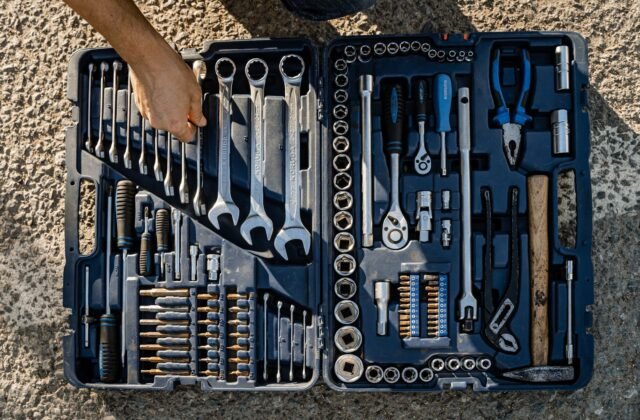
Parts, Maintenance and Fixing Hub — brakes and rotors.
The Formula: One Rub Per Revolution Means Check the Rotor
Rub once per revolution + a visible wobble at the same spot = suspect rotor runout. Confirm the rotor is secured, rule out the wheel and the hub, then decide between a small correction and a replacement.
Two things first. The 0.5 mm figure comes from the question, not the source: no millimetre threshold for a “small” correction is published, so 0.5 mm is the bend you are asking about, not a limit. And the source does not describe truing with an adjustable wrench at all — the only tool it names is Park Tool’s DT-2.2, for a small correction.
Key numbers: 0.5 mm — the bend in the question, not a published threshold. DT-2.2 — the truing tool the source names, for a small correction. 160 mm and 180 mm — the rotor sizes in the listings below. No universal wear limit — check the wear limit marked on your own rotor and the exact caliper or pad documentation.
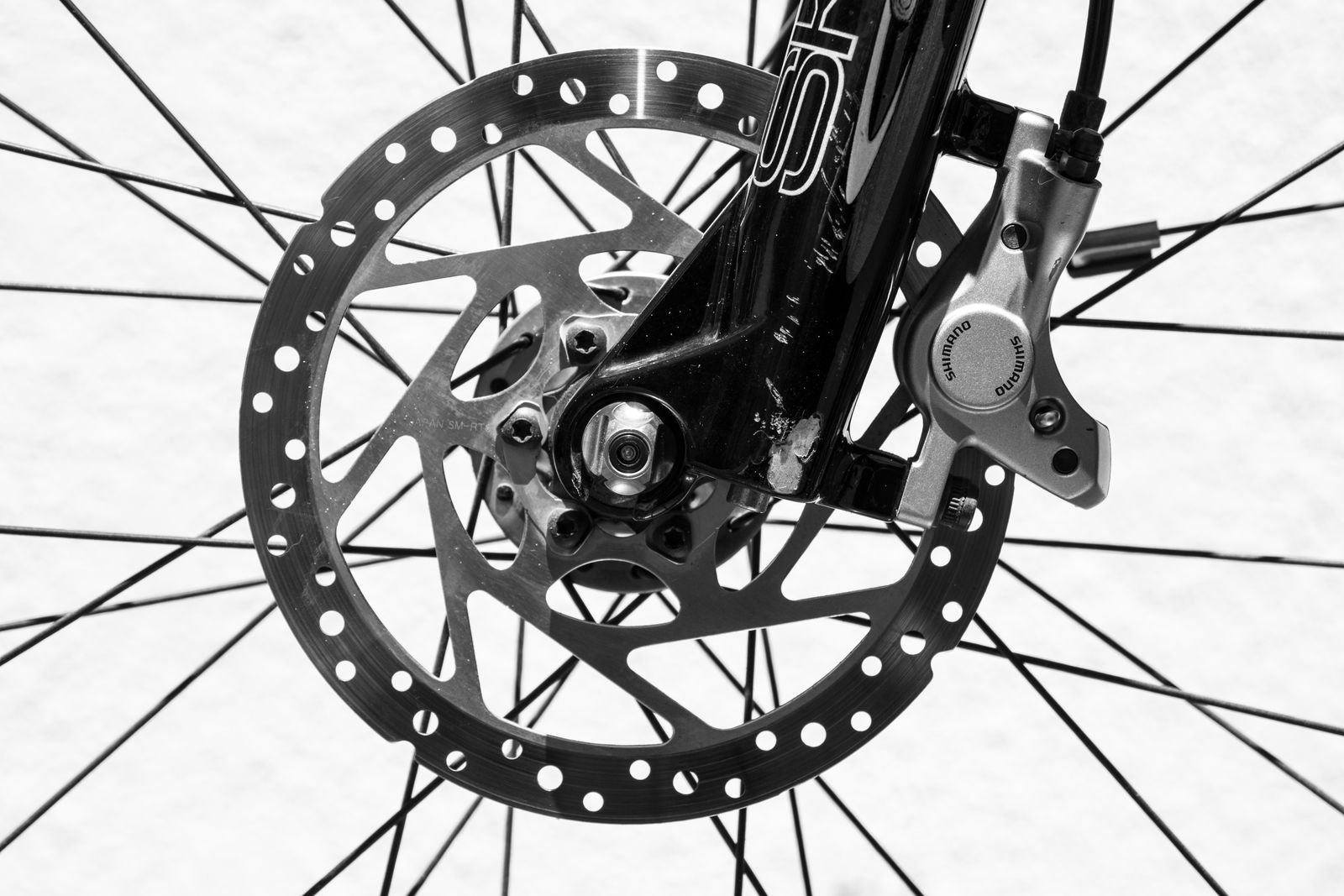
Read the Rub: What Each Sound Points To
Rub can come from the wheel, hub, rotor, caliper, cable or pistons, and the sound alone does not identify the cause. The pattern sorts into three cases.
| What you hear and see | What it points to | Next step |
|---|---|---|
| Continuous rub, all the way round | Wheel seating, caliper alignment, cable movement on mechanical brakes, or piston movement on hydraulic brakes | Inspect seating and alignment; procedures differ by brake model, so use the brake maker’s service instructions |
| Rub at one point per revolution, with a visible side-to-side wobble at the same spot | Rotor runout — a bent rotor | Confirm the rotor is secured, then a small correction or a replacement |
| Weak braking, oil, or a leak | Contamination or a fluid problem, not a bend | Stop riding; find the contamination source and follow the manufacturer’s replacement instructions |
These are the source’s checks for brake rub in general, not a bent-rotor-only procedure. Their job here is narrower: to stop you truing a rotor that was never the problem. A loose wheel, loose rotor or misaligned mount can sound like a bent rotor, and the source says to correct those before centring the caliper — the same logic applies before touching the rotor.
The replacement rotor in the box below — 2Pcs 160mm Disc Brake Rotor, $7.99 as of November 24, 2026 — is a 160 mm stainless steel rotor, 2-pack with 6 bolts.

What Decides True vs Replace, Ranked
Five factors decide the answer, in this order. Work down the list; the first one that fails ends the argument.
1. Is the bend small and in one spot? A small correction is the only kind the source describes truing — Park Tool’s DT-2.2 is for a small correction. A badly bent rotor is not a truing job: the source says it should be assessed or replaced. The source draws that line without a number, so a bend around half a millimetre sits on the “small correction” side only as a judgement, not a published rule.
2. Is the rotor secured? Confirm the rotor is secured before any correction: a loose rotor wobbles like a bent one and will not stay true.
3. Is the wheel seated and the hub sound? Make sure the wheel is seated and secured per the bicycle and axle instructions — reseat it first if it was recently removed — and check for hub play by rocking the wheel side to side. Loose bearings, a loose rotor or a misaligned mount must be corrected before you centre the caliper or touch the rotor.
4. Is braking weak, or is there oil or a leak? If so, the bend is not the job in front of you. Brake fluid, oil or grease can ruin pads: follow the manufacturer’s replacement instructions, and do not assume sanding or heating contaminated pads makes them safe. Stop riding and find the contamination source first.
5. Are you sure what you are looking at? The source’s rule for the uncertain case is assessment or replacement — not true-it-and-see.
Worked Example: Two Rotors, Two Answers
Rider A hears a light touch once per revolution. Spinning the wheel with the bicycle stable, she watches the rotor through the caliper: a small side-to-side deviation repeats at the same point. The wheel is seated, the rotor bolts are secure, there is no hub play, and braking feels normal. This is the source’s “small correction” case: a small, localised bend on an otherwise sound rotor, corrected with a proper truing tool — the DT-2.2 — or by a shop, then tested at walking speed in a safe, traffic-free area.
Rider B hit a rock with the rotor. The bend is visible without spinning the wheel, the rotor looks creased rather than wavy, and braking feels weak. This is the source’s “badly bent, damaged or uncertain” case: have the rotor assessed or replaced, not bent back. The weak braking is checked on its own terms too — with oil or a leak it is a contamination problem, and contaminated pads are a replacement item.
The second rotor below — Teyssor 160mm Bike Disc Brake Rotor, $8.99 as of November 24, 2026 — is a single 160 mm rotor with 6 bolts.

Why “Just Bend It Back with a Wrench” Is Too Optimistic
The optimistic version goes: bent half a millimetre, wrench in the toolbox, bend it back, ride on. Three things in the source push back.
First, the source never describes truing with an adjustable wrench: the tool it names is Park Tool’s DT-2.2, for a small correction. Recommending the wrench as a procedure would invent one the source does not cover, so this guide does not recommend it. The wrench is the question, not the answer the source gives.
Second, the sound alone does not identify the cause: a rhythmic touch can point to runout, but the source warns it does not prove it. Seating, hub play, a loose rotor and a misaligned mount can all sound the same, and each must be ruled out before the rotor is touched. Bending a rotor that was never bent does not fix a loose hub.
Third, there is no universal number to lean on. The source refuses universal pad and rotor thickness numbers: check the wear limit marked on the rotor and the exact documentation. The same refusal applies to a bend threshold — half a millimetre is the question’s figure, and the source gives no figure saying that size is safe to true or not. The size of “small” is a judgement made with the rotor in front of you, or by a mechanic.
Five Ways to Handle a Bent Rotor, in Order
1. Reseat the wheel. Make sure the wheel is seated and secured per the bicycle and axle instructions; reseat it first if it was recently removed. A wheel that is not seated squarely makes the rotor run out of true.
2. Spin the wheel and watch the rotor. With the bicycle stable, spin the wheel and watch the rotor through the caliper: a side-to-side deviation repeating at the same point can indicate a bent rotor. Note whether it is one spot or the whole rotor.
3. Check the hub and the rotor bolts. Rock the wheel gently side to side for hub play, and confirm the rotor is secured. Have loose bearings, a loose rotor or a misaligned mount corrected before trying to centre the caliper or true the rotor.
4. Make a small correction with the right tool — or have a shop do it. Park Tool describes its DT-2.2 rotor truing tool for a small correction, and the box below is that tool — Park Tool DT-2.2, $25.50 as of November 24, 2026. The source describes no adjustable-wrench procedure, so no wrench steps are given here. If the bend is small and localised and everything else checks out, a small correction with a proper truing tool is the source’s answer; if you are not sure, a qualified mechanic is.

5. Replace the rotor when it is badly bent, damaged or uncertain. That is the source’s rule, without exception. After any service, confirm the wheel is secure and test braking at walking speed in a safe, traffic-free area; if the brake feels weak, the wheel binds, or the cause is unclear, have a qualified mechanic inspect it before riding. For a related stuck-piston problem, see Hydraulic Disc Brake Piston Stuck on One Side and Won’t Retract; for brake setup, Electric Mountain Bike Brakes and Commuter E-Bike Brakes.
How Much Do You Actually Need?
Less than the question assumes: a small, localised bend on a secured rotor, seated wheel and sound hub needs a small correction — not a new rotor or brake. The rotors above exist for the other outcome: badly bent, damaged or uncertain, where the source’s answer is assessment or replacement.
What you do not need is a number from this guide saying 0.5 mm is safe: no such number is published, and the source’s rule is to check the wear limit marked on your rotor and the exact documentation. The half-millimetre is a starting point for the judgement, not a limit the source endorses. If you cannot tell whether the bend is small or the rotor is sound, have a qualified mechanic inspect it before riding.
The Verdict
A rotor bent around half a millimetre, with one localised wobble and everything else sound, is a small correction with a proper truing tool — not a wrench procedure the source never describes. A badly bent, damaged or uncertain rotor is a replacement; weak braking or a leak means stop riding first.
Readers Also Ask
Is a 0.5 mm bend safe to true?
No published threshold says so. The source describes a “small correction” without a millimetre figure, so 0.5 mm is the question’s number, not a limit the source endorses.
Can I use an adjustable wrench instead of a truing tool?
The source does not describe wrench truing at all, so this guide gives no wrench procedure. The tool the source names is Park Tool’s DT-2.2, described for a small correction.
How do I know the rotor is bent and not the caliper?
Spin the wheel and watch the rotor through the caliper: a wobble repeating at the same point points to the rotor; continuous rub points to seating, alignment, cable or piston movement.
When must a rotor be replaced?
When it is badly bent, damaged or uncertain — that is the source’s rule. A rotor you cannot judge is one to have assessed or replaced, not trued and hoped about.
What if braking is weak or there is oil on the rotor?
Stop riding and find the contamination source. Brake fluid, oil or grease can ruin pads; follow the manufacturer’s replacement instructions, and do not assume sanding or heating contaminated pads makes them safe.
Additional Details
- Name: Disc Brake Rotor Bent 0.5 mm: True It with an Adjustable Wrench or Replace It?
- Description: Disc brake rotor bent 0.5 mm — true it with an adjustable wrench or replace it? What the source covers, the tool it names, and where it gives no answer.
- Published: November 24, 2026