Part of our guide on E-Bikes Hub.
A problem with commuter e-bike brakes usually shows up at the worst moment: a squeal on a wet morning, a lever that pulls further than it used to, or brakes that fade on a long downhill with traffic behind you. Most of these faults are not a dead brake. They are usually worn pads, a dirty or bent rotor, a stretched cable, or air in a hydraulic line.
This guide checks commuter e-bike brakes in a safe order, from the checks that take two minutes to the point where a part or a shop is the right answer. It covers disc brakes, which most commuter e-bikes use. If your bike has rim brakes, the pad, cable and lever checks still apply, and the rotor checks do not. For how the two types compare, read Disc Brake vs Rim Brake: Which Is Better After Rain?
Quick facts
| Fact | What it means for your ride |
|---|---|
| Problem this guide fixes | Commuter e-bike brakes that squeal, rub, feel soft, fade, or pull to one side |
| Check first | The pads, the rotor, the caliper alignment, the cable or hydraulic line, and the lever |
| Most common causes | Worn pads, a contaminated or bent rotor, a stretched cable, and air in a hydraulic line |
| Tools you need | Your manual, a hex key set, isopropyl alcohol and a clean rag; new pads if yours are worn |
| Stop and get help | A cracked rotor, a leaking hydraulic line, or a lever that pulls to the handlebar: do not ride it |
| Related guides | Disc Brake vs Rim Brake, How to Fix a Flat Tyre, E-Bikes Hub |
Quick recap
- Start with the pads and the rotor. A brake that worked yesterday rarely fails overnight without a cause.
- A squeal is often contamination or a glazed pad, not a dead brake.
- A soft or spongy lever on a hydraulic brake usually means air in the line — a shop job for most riders.
- A rubbing brake is often a bent rotor or a caliper that needs aligning, not a new brake.
- Never touch a rotor with oily fingers, and clean it only with isopropyl alcohol.
- Stop riding at once if a rotor is cracked, a line leaks, or the lever pulls to the bar.
The short answer: check the pads and the rotor before you buy anything
Most commuter e-bike brake problems come from worn pads or a dirty, bent or contaminated rotor. A brake that squeals, rubs or feels weak most likely needs pads, a clean rotor or a caliper adjustment — not a new brake.
The symptoms overlap: a worn pad can squeal like a contaminated rotor, and a bent rotor can feel like a dragging brake. A commuter e-bike works its brakes harder than a weekend bike — heavier, ridden in rain and traffic, stopping all day.
The rest of this guide follows that rule.
How to check commuter e-bike brakes, step by step
Work through these steps in order, with the bike off the ground if you can. Note which wheel, and when the fault happens.
- Look at the pads. Down to the backing plate, or the wear groove gone, means finished — a pad worn to metal scores the rotor.
- Spin each wheel and listen. A rub once per turn means a bent rotor; a constant rub means a misaligned caliper or an unseated wheel.
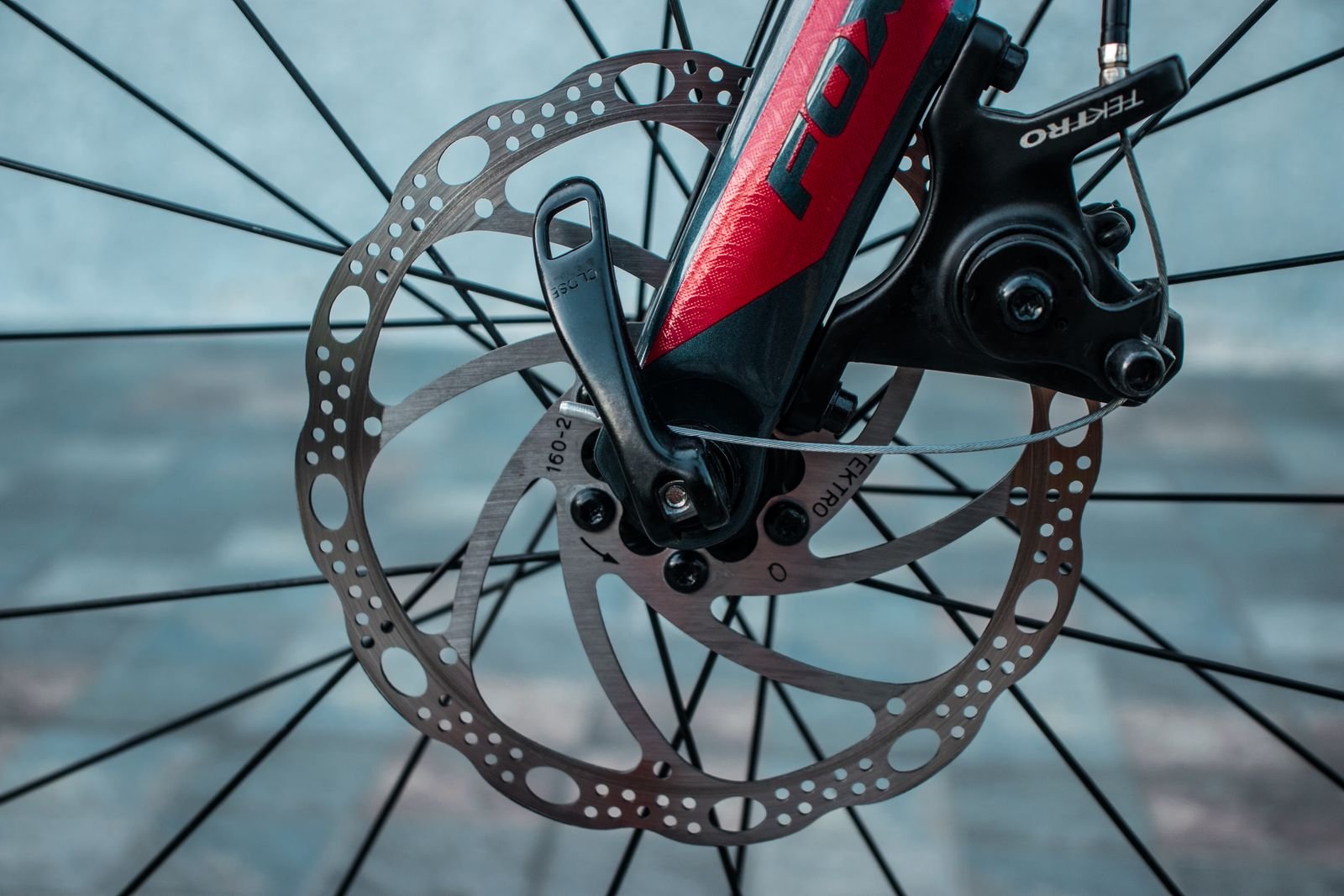
- Look at the rotor for bends, scoring, cracks and oil. A visible wobble is a bend. A cracked or deeply scored rotor needs replacing, not cleaning.
- Check the caliper alignment. Loosen the bolts slightly, squeeze the lever to centre the caliper, hold it, and tighten again. If the rub stays, the rotor is bent or the wheel is not straight.
- Check the lever feel. A firm lever that bites early is healthy. A spongy lever on a hydraulic brake usually means air in the line; on a mechanical brake, a lever that pulls far means a stretched cable — try the barrel adjuster.
- Check the cable or hose. On a mechanical brake, look for a frayed or rusty cable and a sticky housing. On a hydraulic brake, look for wetness at the caliper, lever and fittings — a leak means stop riding.
- Ride a short test on a quiet street. Brake gently, then firmly, and note whether the fault happens when cold, when hot, or only in the wet.
If every step looks normal and the problem stays, get a qualified shop to look.
What you’ll need
- Your manual, for the pad model and rotor size
- A hex key set
- Isopropyl alcohol and a clean rag
- New pads, if yours are worn
- A pump and tyre levers if you take the wheel off — see How to Fix a Flat Tyre
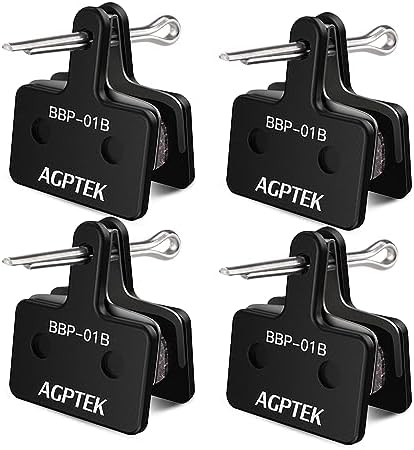
One Amazon product in this section only: the pads below fit the TRP, Tektro and Shimano brakes on many commuter e-bikes — check your caliper model first.
What the symptom usually means
Match what you notice with what to try first.
| Situation | What you’ll notice | What to try |
|---|---|---|
| Squeal when braking | A high-pitched noise, often worse when wet | Clean the rotor; check the pads |
| Brake rubs once per turn | A regular tick as the wheel spins | Check for a bend; true it or replace it |
| Brake rubs all the time | Constant drag; the wheel stops quickly | Realign the caliper |
| Lever pulls to the handlebar | A soft, spongy feel and weak braking | Bleed the line, or try the barrel adjuster |
| Brakes fade on a long downhill | Power drops as the brakes get hot | Let them cool; use both brakes |
| One brake weaker than the other | Uneven stopping; the bike pulls to one side | Compare pad wear; check the caliper |
How rain, load and worn pads change the answer
The same brakes behave differently in the wet, with a load, and as the pads wear — knowing which change is normal keeps you from replacing parts that are fine.
What works: In the wet, brake early and gently for a wheel revolution or two, so the pads clear water. With a heavy load, use both brakes and brake earlier. As pads wear, the lever travels further on a mechanical brake — take up the slack at the barrel adjuster.
What to watch: A brake silent in the dry that screams in the wet is usually contamination or glazing. A brake that fades only on long downhills is usually heat. A rotor that was true last month and rubs now has probably been knocked — check it before you blame the pads.
A rotor is a wear part too: it bends if the wheel is knocked, and thins as the pads wear. Most rotors carry a minimum thickness marking — at or below it, or cracked or deeply scored, it is time for a new one.

Settings and controls that affect braking
Two settings change how your brakes feel most: lever reach and, on a mechanical brake, cable tension.
What works: Set the lever reach for one or two fingers. On a mechanical disc brake, turn the barrel adjuster a quarter turn at a time until the pads sit close without rubbing. On a hydraulic brake there is no cable to adjust — if the lever feels wrong, the fault is in the fluid or the pads.
What to watch: A lever set too far out forces you to stretch and weakens your grip. A barrel adjuster wound all the way out means the cable has stretched past adjustment — fit a new cable.
When a fix needs a part or a replacement
Some brake problems end with a part. Bed new pads in first: a dozen firm stops from a moderate speed, with a short roll between them to cool, before you judge them.
| Fix | Best use | Limit |
|---|---|---|
| New brake pads | Pads worn to the backing plate | Match your caliper model |
| New rotor | Rotor cracked, scored, or bent past truing | Match diameter and bolt pattern |
| New cable and housing (mechanical) | Cable frayed or stretched past adjustment | Route it as the old one |
| Brake bleed (hydraulic) | Spongy lever after a crash or leak | A shop job; wrong fluid damages seals |
| New caliper | Caliper damaged, or a piston stuck | A shop should fit it |
If you fit new pads, choose a set that matches your caliper and comes with tools. The pads below are a semi-metallic and organic resin set with installation tools, for TRP, Tektro and Shimano brakes.

The verdict
Most commuter e-bike brake problems are worn pads, a dirty or bent rotor, or a cable that needs adjusting. Check the pads and the rotor first, ride only when both brakes stop the bike firmly, and let a shop handle anything hydraulic.
Readers also ask
Why do my e-bike brakes squeal when wet?
Water on the rotor and pads is the usual cause, and it often clears after a stop or two. If it stays, clean the rotor and check the pads.
How often should I replace e-bike brake pads?
No fixed interval — it depends on weight, load and braking. Replace pads when the wear groove is gone.
Can I use car brake cleaner on my bike?
No — isopropyl alcohol only. Car brake cleaner can damage rubber seals and paint, and leaves residues that make pads squeal.
Why does my brake lever feel spongy?
On a hydraulic brake, a spongy lever means air in the line — it needs bleeding, a shop job. On a mechanical brake, it means a stretched cable: try the barrel adjuster, or fit a new cable.
Do I need special pads for an e-bike?
Pads are chosen by caliper model, not by the motor. E-bike-rated pads exist because heavier bikes wear pads faster.
Is it safe to ride with one brake not working?
No. A commuter e-bike is heavy and needs both brakes — walk the bike, or get the brake fixed first.
As an Amazon Associate, Reviews Motorcycle earns from qualifying purchases made through links on this page, at no extra cost to you.
Additional Details
Name: Commuter E-Bike Brakes Care Guide for Beginners
Description: Squealing, soft or fading commuter e-bike brakes are usually worn pads, a bent rotor or air in the line. Work through the checks in order before buying parts.
Published: 15 November 2026