Part of our E-Bikes hub: battery care, charging and repair guides.
You plug the charger in, the light goes green, and you leave the bike to charge. Hours later the battery is exactly where it was. No error, no red light, no warmth — just a green light that never changes. It feels like the charger is broken, but a green light can mean several different things, and most of them are in the battery, not the charger.
This fault can be narrowed down with a multimeter and a little patience, without opening anything. This guide works through the causes in check order, from the free fixes to the dealer jobs.
Quick facts
| Item | Detail |
|---|---|
| Symptom | Charger light stays green; battery does not charge |
| What green means | No current is flowing into the battery cells |
| Most likely causes | Blown charge fuse, BMS low-voltage lockout, bent charging port pins, dead charger output stage, temperature lockout |
| First check | 15-minute cold reset with the battery disconnected |
| Pack voltage, healthy | 36V pack above 30V; 48V pack above 40V; 52V pack above 42V |
| Charger output, healthy | 48V charger about 54.6V; 36V charger about 42V |
Quick recap
- A solid green charger light almost always means no current is flowing — the charger thinks the pack is already full, or it cannot sense the battery at all.
- Work in this order: cold reset, charger wake-up, charger output test, pack voltage reading, charge fuse.
- Always plug the charger into the wall first, then into the battery.
- Never jump-start across the terminals, never bypass a fuse, and never open the pack.
- On Bosch, Shimano, Specialized and Bafang systems, a serious fault can write a software lockout that only dealer diagnostic software can clear.
The short answer: green means the charger is waiting, not charging
A solid green charger light almost always means no current is flowing into the battery cells. The charger detects an open circuit, thinks the pack is already 100% full, or the battery’s internal management system (BMS) has locked itself out. In all three cases the charger refuses to push current into a pack it cannot see or trust.
The five causes are a blown charging fuse, a deep discharge that tripped the BMS low-voltage lockout, bent or recessed port pins, a dead charger output stage, or a temperature lockout. The steps below tell them apart, and the first two cost nothing.
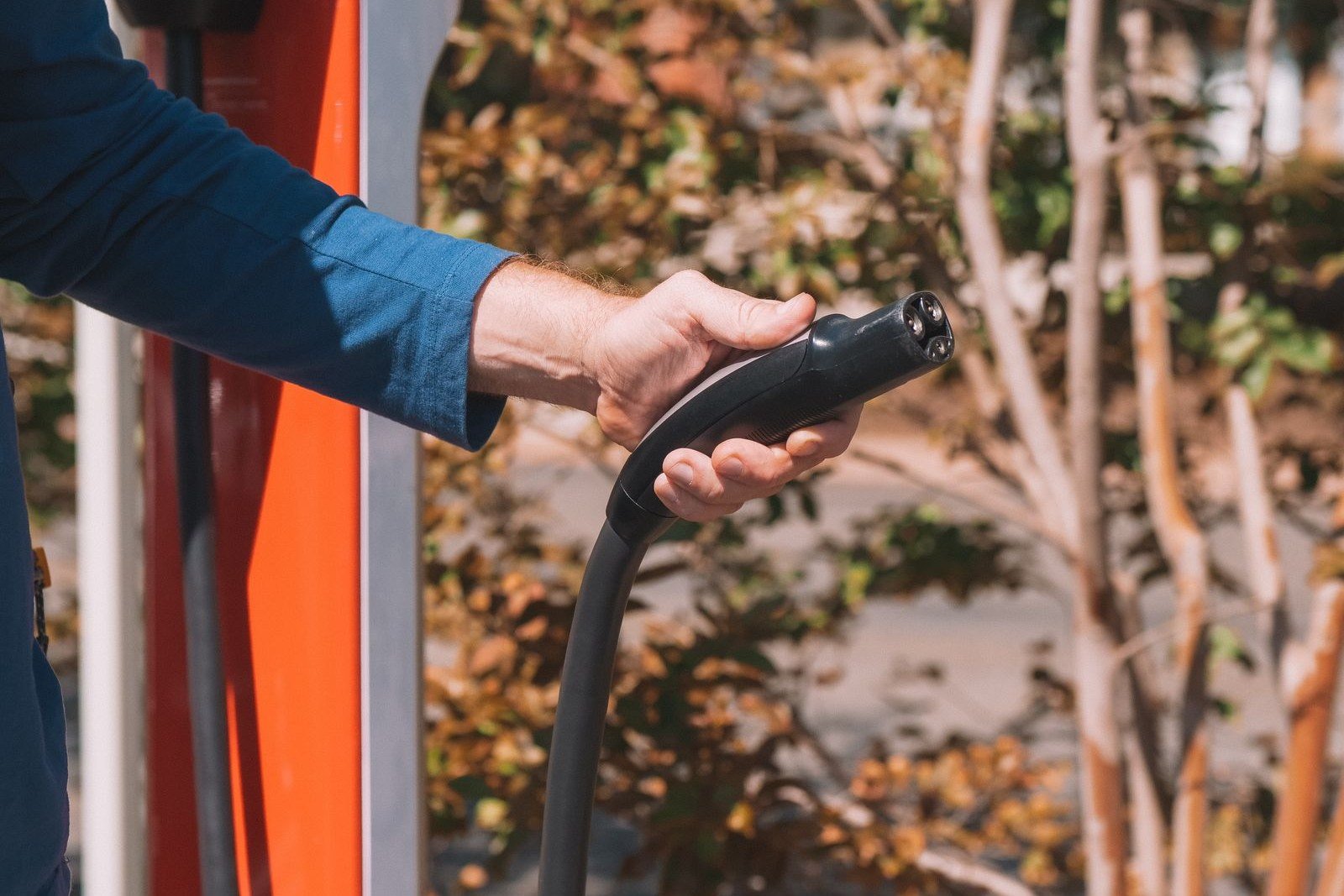
Photo by Kindel Media on Pexels. A charger plug in hand: the green light on yours means the charger is waiting, not charging.
Rule of thumb: if the light never turns red and the battery LEDs never pulse, no current is flowing. Work through the checks below instead.
Safety first: do not attempt jump-starting across the terminals with another battery, and do not bypass a fuse. Do not open the pack. The board-level jumper procedure is a workshop procedure — dealer-only.
How to find the fault, step by step
Check this first: look at the charging port. Frequent plugging can bend a pin or push the prongs back so they fail to make contact. If a pin is bent or recessed, that is your fault — stop here and read the fix table. Also feel the pack: if it is hot from a long ride, let it cool to room temperature first.
What you’ll need: the original manufacturer charger, a multimeter, a dry cloth, and a fire-resistant surface such as concrete or tile.
- Cold BMS reset. Leave the battery disconnected from the bike and the charger for at least 15 minutes, so the capacitors bleed down and temporary faults clear. If it has a power or indicator button, press and hold it for 15–20 seconds.
- Charger wake-up. Place the battery on a fire-resistant surface away from flammables. Plug the original charger into the wall first, then into the battery. Leave it connected for 30–60 minutes. Even if the light stays green, a low trickle current may signal the BMS to exit hibernation. It has worked when the charger LED switches from green to red, or the battery’s charge-level LEDs start pulsing.
- Test the charger output. Set the multimeter to DC volts and measure the charger plug: a 48V charger should output around 54.6V, a 36V charger around 42V. If it reads 0V, or far below nominal, the charger has failed — its sensing circuit still shows green, but the output stage delivers 0 volts.
- Read the pack voltage. Measure the pack: a 36V pack should read above 30V, a 48V pack above 40V, a 52V pack above 42V. If it reads 0V or single-digit volts, the BMS is locked in protective cut-off, or the cells have dropped below their safe recovery threshold (less than 2.5V per cell). That is professional service or replacement, not a home fix.
- Check the charge fuse. Many lithium e-bike batteries have two separate fuses — one for discharge and one for charging, often 5A–10A. If the charge fuse blew, the charger cannot sense the battery and stays green. If the battery has an accessible external fuse cap, remove it and pull the fuse. If the wire element inside is broken or charred, replace it with the exact same amperage — never a higher one, and never bypass it.

What the numbers mean

Photo by Artem Balashevsky on Pexels. A charged pack means a ride; these readings tell you whether yours is charging at all.
Two readings settle most green-light cases — compare yours before you buy anything.
| Reading | What it means |
|---|---|
| 48V charger about 54.6V; 36V charger about 42V | Charger is healthy — the fault is in the pack, the fuse or the port |
| Charger output 0V or far below nominal | Charger output stage has failed — replace the charger |
| 36V pack above 30V; 48V above 40V; 52V above 42V | Pack voltage is in the normal range |
| Pack reads 0V or single-digit volts | BMS locked in protective cut-off, or cells below the safe recovery threshold (less than 2.5V per cell) — professional service or replacement |

What changes the answer: which system you have
The checks above work the same way on most generic packs. What changes is what happens when the BMS itself has locked out.
What works: on a generic pack, the cold reset, the wake-up charge and the fuse check are all jobs you can do yourself. A blown charge fuse is a part you can replace, and a deep-discharged pack will often wake up after 30–60 minutes.
What to watch: on proprietary systems — Bosch, Shimano, Specialized and Bafang — a serious fault can write a software lockout into the pack’s non-volatile memory. Hardware jumpers will not reset these; they need dealer diagnostic software, such as the Bosch DiagnosticTool. If your pack reads 0V and the wake-up charge does nothing, book a dealer instead of trying board-level tricks.
Worth knowing: temperature limits are not the same on every system. The guide this article is based on blocks charging below 0°C (32°F) or above 45°C (113°F). Shimano’s charging limit is 40°C — use the figure that belongs to your pack, and let a hot pack cool before you plug it in.
Settings and checks that affect charging
Photo by KINGBULL Bike on Pexels. How you store and charge the pack between rides decides whether the BMS stays happy.
What works: charge at room temperature, on a fire-resistant surface, with the original charger. Let a hot pack cool before you plug it in. Do not leave a battery uncharged for weeks — a pack that drains past its safe limit trips the BMS lockout, and that leaves your charger green.
What to watch: the BMS locks charging for under-voltage (below about 2.8V–3.0V per cell), cell imbalance (more than 0.1V–0.3V between groups), short circuit or overcurrent, and temperature extremes — below 0°C or above 60°C for discharge, charging blocked below 0°C or above 45°C. If your pack is cold from winter storage, bring it indoors first; charging a frozen pack is blocked by design.
When the fix needs a part or a dealer
| Fix | Best use | Limit |
|---|---|---|
| Cold BMS reset | First step for any green-light pack | Will not help a blown fuse or a dead charger |
| Charger wake-up, 30–60 minutes | Deep-discharged pack in BMS hibernation | Needs the original charger and patience |
| Charge fuse replacement | Blown charge fuse, if the cap is accessible | Exact same amperage only; never bypass the fuse |
| Charger replacement | Dead output stage — charger reads 0V | Must match the pack voltage |
| Dealer diagnostics | Proprietary software lockout, 0V pack, cells below 2.5V per cell | Needs dealer software |
What works: start free and work up — reset, wake-up, then the two multimeter readings, then the fuse. Most green-light cases end at one of those five steps: the light turns red, or the battery LEDs start pulsing.
What to watch: a fuse that blows again straight after replacement is not a fuse problem — something downstream draws too much current. That is a dealer job. The same goes for a pack that still reads 0V after a full wake-up attempt: no home procedure brings it back.
The common mistake: reading a steady green light as proof the battery is charging and leaving it plugged in for days. Green means the charger is waiting. If the light never turns red and the battery LEDs never pulse, no current is flowing.

The verdict
A green charger light means no current is flowing — usually a blown fuse, a BMS lockout, bent pins, a dead charger or a temperature block. Work through the reset, the wake-up charge and the two meter readings to find which one.
Readers also ask
Does a green charger light mean the battery is full?
Not necessarily. A solid green light means no current is flowing. The charger may think the pack is already full, or it may be unable to sense the battery because of a blown fuse, a BMS lockout or a broken connection.
How long should I leave it on a wake-up charge?
Leave it connected for 30–60 minutes on a fire-resistant surface. Even if the light stays green, a low trickle current may signal the BMS to exit hibernation. It has worked when the charger LED turns red or the battery LEDs start pulsing.
What voltage should my charger output?
A 48V charger should output around 54.6V and a 36V charger around 42V. If it reads 0V, or far below nominal, the charger has failed and needs replacing.
What voltage should my pack read?
A 36V pack should read above 30V, a 48V pack above 40V, a 52V pack above 42V. A reading of 0V or single-digit volts means the BMS is locked in protective cut-off, or the cells are below their safe recovery threshold.
Can I jump-start the battery with another battery?
No. Do not attempt jump-starting across the terminals with another battery, and do not bypass a fuse. Both can damage the pack and create a fire risk.
Why does the charger stay green after a long ride?
Most likely a temperature lockout. Modern BMS units block charging if the pack is above 45°C right after a long, hard ride (Shimano’s limit is 40°C). Let the pack cool, then plug it in again.
Additional Details
Name: E-Bike Charger Light Stays Green and the Battery Is Not Charging: Causes and Fixes
Description: Your e-bike charger light stays green but the battery is not charging? A blown fuse, BMS lockout or dead charger is usually behind it — here is how to check.
Published: November 23, 2026