Part of our guide on Parts, Maintenance and Fixing
Your e-bike’s speed sensor magnet has fallen off the spoke, and now the display shows no speed — or the wrong speed — and the motor may have stopped helping. The fix is usually a small magnet and ten minutes, but only if you fit the right magnet, in the right place, lined up with the sensor. This guide works through it in order: magnet, sensor and error code, alignment, replacement, test.

The diagnosis at a glance
| Question | If YES | If NO |
|---|---|---|
| Does the display show speed when you spin the wheel? | The magnet is being read — check for error 504. | Stage 1: find the magnet. |
| Is the magnet still on the spoke? | Stage 4: check the alignment. | Stage 5: fit a replacement. |
| Is the sensor damaged, or its cable cut? | Stage 7: replace the sensor. | Stage 6: restart and test. |
| After refitting, does the error clear? | Fixed. Note the date and magnet type. | Stage 7: sensor or wiring is faulty. |
Stage 1 — Is the magnet gone, or has it just moved?
Before you buy anything, look at the wheel. The magnet is a small part clipped to a spoke, usually on the rear wheel, passing the sensor once per turn. Often it has not fallen off at all — it has slid along the spoke, or turned so its face no longer points at the sensor.
Spin the wheel slowly and watch the sensor area — the sensor sits on the chainstay or fork, with a cable to the motor. If you can see the magnet pass it, it is still there. If not, check the whole spoke, the floor, and inside the mudguard: a loose magnet often ends up stuck to something metal nearby.
If it has moved, slide it back and tighten the clip. If the clip is cracked or will not hold, do not reuse it — a magnet that moves once will move again, usually on a ride.
Stage 2 — Is the sensor still there and undamaged?
Next, look at the sensor: a small black box on the chainstay, near the rear wheel, or on the fork by the front wheel, with a thin cable to the motor. It should sit firmly in its mount, cable uncut, connector seated.
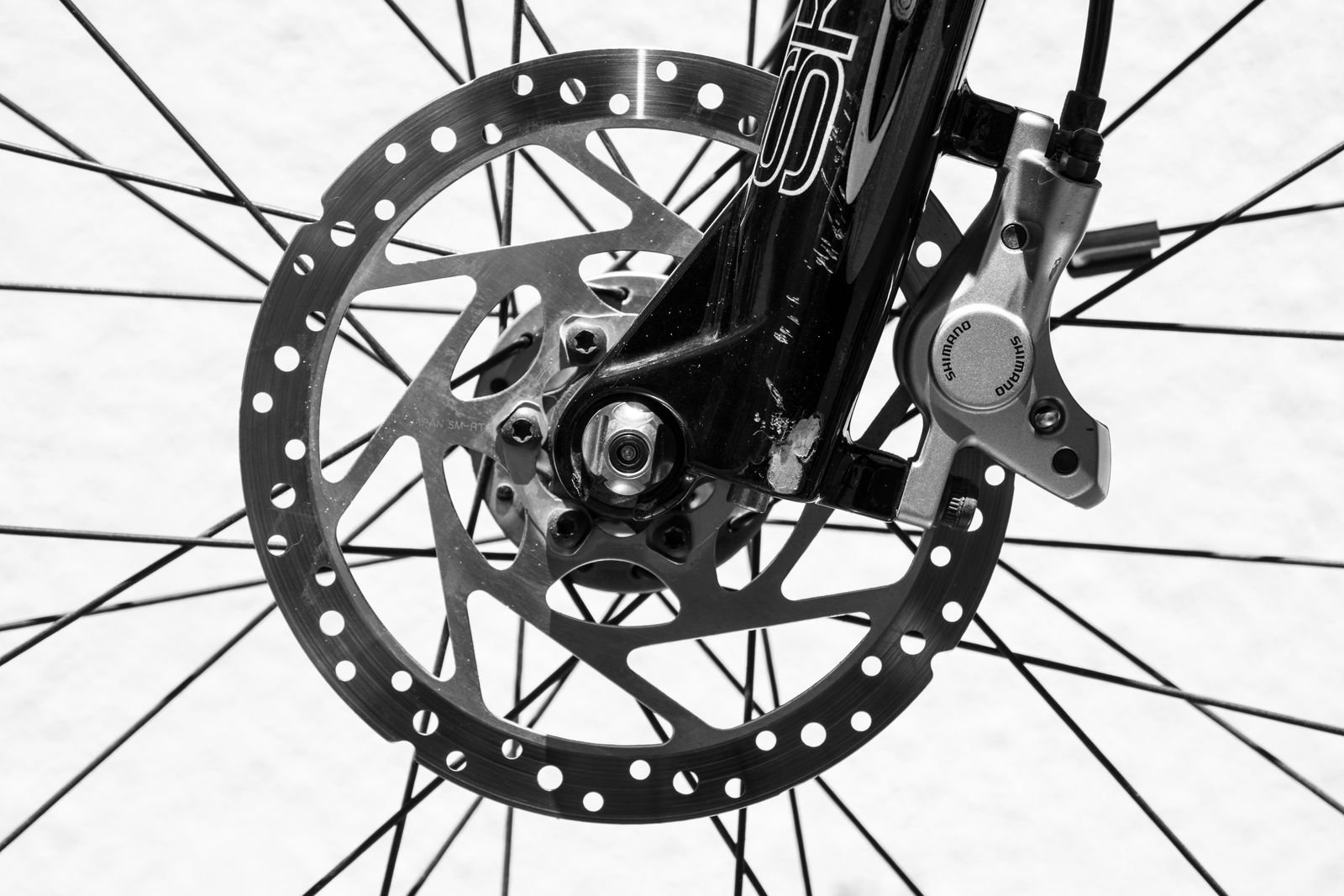
Check three things: is the sensor still in its mount, or knocked loose by a stick, a kerb, or a fall? Is the cable cut, pinched, or pulled from its connector? Is there mud or damage on its face? A sensor turned away from the wheel cannot read the magnet.
If the sensor is loose, push it back into its mount and tighten it. If the cable is cut or the sensor is cracked, no magnet will fix it — go to Stage 7. If it looks fine, move on to the error code.
Stage 3 — What is the display telling you?
Switch the bike on and read the display first. Bosch systems report speed-sensor faults with specific codes: error 503 is a speed sensor error, error 102 is also a speed sensor error, and error 504 means manipulation of the speed signal was detected — the Bosch table’s advice for 504 is to check the magnet’s position and adjust it.
The codes separate a missing magnet from a misplaced one. A missing magnet or dead sensor gives no speed reading and a sensor error — 503 or 102. An offset magnet can still be read, but wrongly, and that is what 504 is for: if the magnet passes the sensor at the wrong point, the system can show half speed, and newer motors detect it and throw an error.
Note the code, then switch the bike off before you work on the wheel. Do not ride with an active sensor error to “see what happens”: with no speed input the system cannot tell how fast the wheel is turning, and on most systems the motor assistance stops.
Stage 4 — Does the magnet pass the sensor?
This is the stage most people skip, and where most “new magnet, still broken” stories come from. The magnet must pass close by the sensor, once per turn, lined up with its reading mark. Too far away, or past the wrong part, and it reads nothing — or reads it late.
Turn the wheel slowly and watch the magnet pass the sensor’s face without touching it. If it is on a different spoke line than the sensor, move it to one that lines up. If the sensor is on the chainstay and the magnet is on the far side of the wheel, the gap is too big and the sensor will miss it.
This guide gives no millimetre figure for the gap, because none of the sources used states one. Line the magnet up with the sensor’s mark and pass it as close as the mount allows without touching. If they cannot be brought into line, the mount is bent — that is a shop job.
Do not cheat the reading: offsetting the magnet to show half speed is detected by newer motors, and removing it does not make the bike faster — with no speed input the system stops.

Stage 5 — Is the replacement magnet the right one?
If the magnet is lost or its clip is broken, you need a replacement — and not every magnet fits every system. A spoke magnet clips to a spoke and passes a sensor on the chainstay or fork; a disc magnet, such as the slim Bosch magnet for six-bolt hubs, mounts on the brake disc and passes a sensor near it. They are not interchangeable.

Match the replacement to your system: Bosch spoke sensor takes the Bosch spoke magnet; a disc sensor needs its disc magnet; a Bafang mid-drive takes its matched sensor and magnet pair. A universal wheel magnet works where the sensor reads a spoke-mounted magnet and the spoke shape matches — round or bladed — but check the fit first.
Fit the new magnet on the spoke that lines up with the sensor, face toward the sensor, and tighten the clip fully — a magnet loose enough to slide is loose enough to fall off again. Turn the wheel slowly and confirm it passes the sensor squarely, as in Stage 4, before you switch the bike on.

Stage 6 — Does the error clear after a restart?
Switch the bike on and watch the display. If the error is gone and the speed reads correctly when you spin the wheel, the fix worked. Lift the rear wheel, spin it by hand, and check the speed rises smoothly.
If the error is still there, switch the bike off, wait a few seconds, and switch it on again — some systems hold the error until a full power cycle. If the speed reads correctly on the stand but the error returns on a ride, the magnet is moving under load: stop and tighten the clip again.
Do a short test ride close to home: ride slowly, watch the speed reading, and check the motor assists normally. If the speed drops out over a bump, the magnet or the sensor is still loose.
Stage 7 — Is the sensor itself faulty?
If a known-good magnet, correctly lined up, still gives no reading and the error will not clear, the fault is in the sensor or its wiring. Check the cable once more, end to end, including the connector at the motor: pinched at the chainstay, full of water, or rubbing on the tyre.
If the cable and connector look fine, the sensor itself has likely failed. A speed sensor is a sealed unit: you cannot repair it, and you should not open it. Replace it with the sensor made for your motor system — Bafang for Bafang, Bosch for Bosch — because the connector and signal are matched to it. Fit it in the same mount, route the cable the same way, and test it as in Stage 6.
If a new sensor still does not fix it, the fault is further in — the wiring inside the frame, or the motor controller. That is a dealer job: tell them the error code and what you have replaced, and you save them the first hour of diagnosis.

The thinking behind the procedure
The order matters: magnet, sensor, code, alignment, replacement, test. Most people start by buying a magnet, but a magnet cannot fix a broken sensor, and a new sensor cannot fix a magnet that passes in the wrong place. Checking in order means you only buy the part you need.
The system is deliberately strict: it needs one clean speed pulse per wheel turn to know your speed and how much assistance is legal. A missing, double, or mistimed pulse all look like tampering to the controller — which is why an offset magnet triggers error 504 and a missing magnet stops assistance entirely.
On safety: never work on the wheel with the bike switched on, and never test a repair by riding fast. A speed reading that drops out mid-ride can cut the assistance without warning. Test on a stand, then on a short slow ride near home.
In short
A speed sensor magnet that fell off the spoke is usually a ten-minute fix: check the magnet, the sensor and the error code, line the magnet up, fit the right replacement if you need one, and test it. If a good magnet in the right place still gives no reading, the sensor or its wiring is faulty — replace that instead.
Readers also ask
Can I ride my e-bike with the speed sensor magnet missing?
Not with motor assistance. With no speed input the system cannot measure wheel speed, and on most systems the assistance stops. You can still pedal it as a normal bike.
Will any spoke magnet work on my e-bike?
No. A spoke magnet works with a spoke sensor, and a disc magnet with a disc sensor — they are not interchangeable. Match it to your motor system: Bosch spoke magnet for a Bosch spoke sensor, matched sensor and magnet pair for a Bafang motor.
What gap should I leave between the magnet and the sensor?
No millimetre figure is given in the sources used, so none is stated here. Line the magnet up with the sensor’s mark and pass it as close as the mount allows without touching. If they cannot be brought into line, the mount is bent — that is a shop job.
Why does my display show half speed after I moved the magnet?
The magnet is passing the sensor at the wrong point, so the system reads only some of the wheel turns. Newer motors detect it and throw error 504 — manipulation of the speed signal was detected. Put the magnet back in line with the sensor’s mark.
What do Bosch errors 503, 504 and 102 mean?
Error 503 and error 102 are both speed sensor errors — the system is not getting a speed signal. Error 504 means manipulation of the speed signal was detected; the Bosch table’s advice is to check the magnet’s position and adjust it.
Additional Details
Name: E-Bike Speed Sensor Magnet Fell Off the Spoke: What Magnet, What Gap, Where to Buy
Description: Your e-bike speed sensor magnet fell off the spoke? Here’s how to tell if it’s the magnet, the sensor or the alignment — and which replacement magnet fits.
Published: November 22, 2026