Part of our guide on Parts Maintenance and Fixing.
Short answer: Rad Power Error 21 means the speed sensor is not reading the spoke magnet, and the fix is usually alignment, not a new part. The magnet must pass within 1/8 inch of the sensor tip and sit centred on the sensor’s flat face. If the gap is wider than 1/4 inch, the sensor cannot see the magnet at all, and the controller cuts motor power as a safety measure.
This guide works through the fix as a flowchart: each check has a yes or no answer, and the answer tells you the next step. Work through it in order and most Error 21 faults are fixed in minutes.
The Error 21 flowchart: follow the yes or no
| Check | If yes | If no |
|---|---|---|
| Is the display showing Error 21? | It is a speed-sensor fault. Go to Stage 1. | This guide does not apply. |
| Can you see the spoke magnet and the sensor? | Go to the gap check. | Find them first in Stage 2. |
| Does the magnet pass within 1/8 inch of the sensor tip? | Go to the centring check. | Loosen the bracket bolt and slide the sensor closer. |
| Is the magnet centred on the sensor’s flat face? | Go to the connector check. | Rotate the magnet on the spoke until it lines up. |
| Is the connector seated, with no bent pins or corrosion? | Go to the wire check. | Unplug it, check the pins, and reseat it. |
| Is the wire free of pinch marks and cuts? | Go to the spin test in Stage 6. | Repair or replace the wire first. |
| Does the speed climb smoothly from zero in the spin test? | Fixed. Note the magnet position. | Try the Julet connector fix in Stage 6 first. |
Stage 1: Read the error and understand what it means
Error 21 is a speed sensor malfunction. The speed sensor is a small magnetic disc fixed to the rear wheel spokes, paired with a sensor unit mounted on the frame or chainstay. Every time the wheel turns, the magnet passes the sensor, and the sensor counts those passes to work out the bike’s speed. When the controller stops getting that signal, it shows Error 21 and cuts motor power as a safety measure.
That safety cut is the part riders misunderstand. The motor is not broken, and the battery is not dead. The controller has simply decided it has no speed reading, so it refuses to provide power until the reading comes back. Fix the reading and the power comes back with it.
Stage 2: Find the magnet and the sensor on the rear wheel
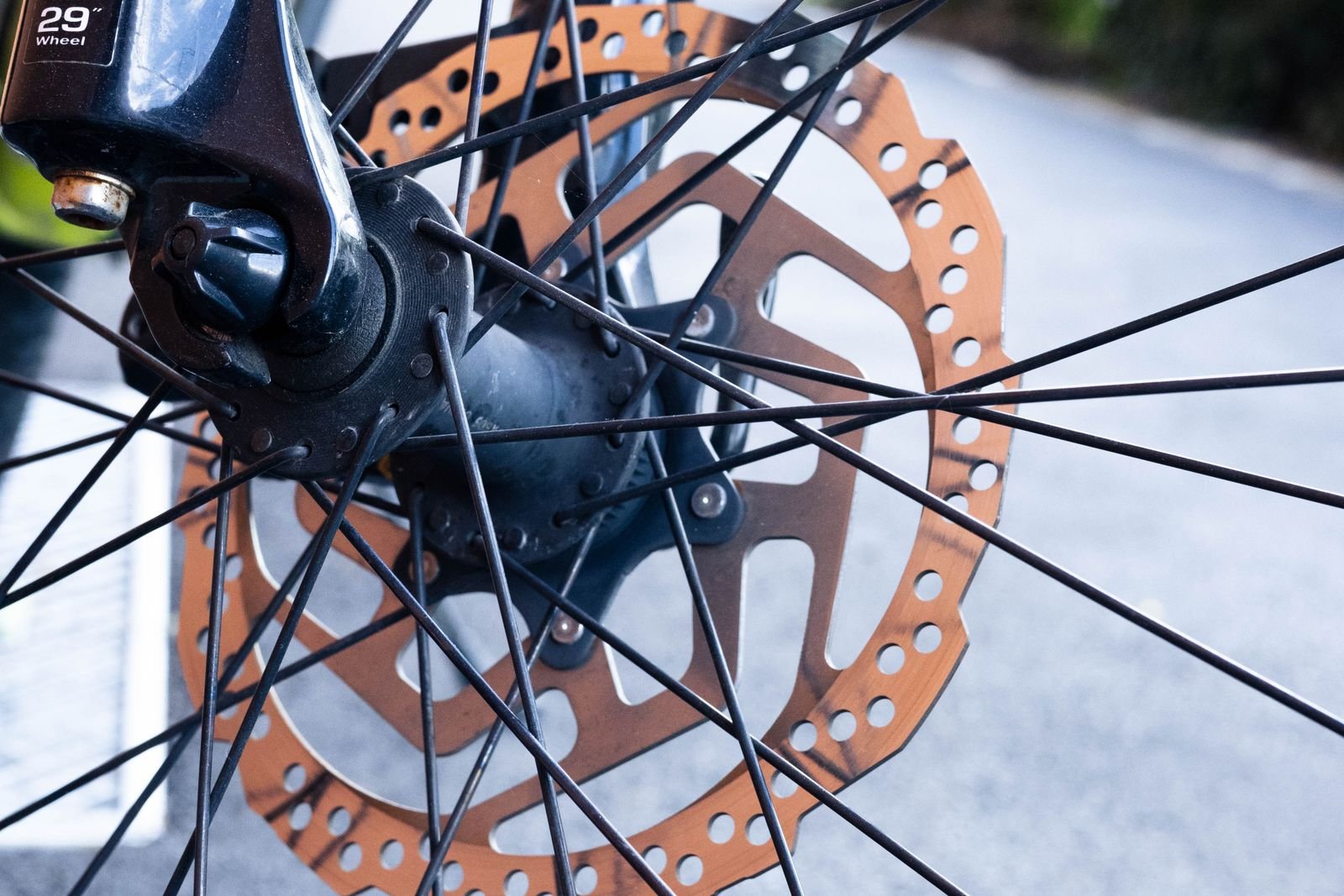
Turn the bike over or lift the rear wheel, and look where the spokes meet the frame. The magnet is a small disc clamped to one of the spokes. The sensor is a small unit fixed to the chainstay or the frame near the wheel, with a wire running from it along the chainstay toward the controller. The two parts are small and dark, so look slowly and follow the wire if the sensor is hard to spot.
If you cannot find either part, stop and look again rather than moving on to buying parts. The common causes of Error 21 are all visible once both parts are found: a magnet rotated out of alignment, a sensor shifted on the frame, a loose connector, or a wire damaged after a rear wheel removal or a chain snap.
Stage 3: Check the 1/8-inch gap
The magnet must pass within 1/8 inch of the sensor tip. That is a small gap, about the thickness of two coins, and it is the single most common cause of Error 21. More than 1/4 inch away is too far: the sensor cannot pick up the magnet at all, and the display reads zero speed even while the wheel is spinning.
Measure the gap with the wheel turned so the magnet is right beside the sensor. If the gap is too wide, loosen the sensor bracket bolt and slide the sensor closer to the magnet, then tighten the bolt again. Do not bend the bracket or force the sensor: the sensor bracket is the part made to adjust.
After moving the sensor, turn the wheel by hand and watch the magnet pass the sensor tip. It should sweep past closely without touching: a magnet that clips the sensor will wear or break, and one that passes wide will not be read.
Stage 4: Centre the magnet on the sensor’s flat face
The gap is only half the alignment. The magnet must also be centred on the sensor’s flat face, not above it and not below it. A magnet that passes the edge of the sensor instead of its centre gives a weak or missed reading, and the speed jumps or drops to zero even when the gap is correct.
Look at the sensor from behind the bike, square on, with the magnet beside it. The magnet should sit in line with the middle of the sensor’s flat face. If it sits high or low, loosen the magnet on the spoke and rotate it until it lines up, then tighten it again. It is a small job, but it is the difference between a sensor that reads every pass and one that reads every second pass.

If the magnet itself is cracked, loose on the spoke, or missing entirely, alignment cannot fix it and a replacement is the answer. A universal spoke magnet is the right replacement when the original is damaged or lost, and a two-pack leaves a spare for the next time.
Stage 5: Check the connector and the wire
If the magnet is close and centred and Error 21 is still showing, the fault is in the connection, not the alignment. Start at the connector: unplug it, look for bent pins or corrosion, and reseat it firmly. A connector that is not fully home is a common cause after the rear wheel has been off for a flat repair.
Then follow the wire along the chainstay and check for pinch marks and cuts. A wire pinched by the wheel, the chain, or a zip tie that is too tight can break inside its insulation while looking fine outside, so feel along its length as well as looking at it. Pay attention to the stretch near the controller, where the wire is most likely to have been pulled during a wheel removal or a chain snap. A cut wire needs repair or replacement.
Stage 6: Confirm the fix, and what to do if it still reads zero
Lift the rear wheel off the ground, spin it by hand, and watch the speed reading on the display. It should climb smoothly from zero as the wheel speeds up. A smooth climb means the sensor is reading the magnet on every pass and the fix is done. An erratic reading, or one that stays at zero while the wheel spins, means the problem is still there and the earlier stages need another pass.
If the magnet is aligned and the reading is still zero, the sensor itself may be dead, but try one more thing first: rotate the Julet connector 180 degrees at the controller. Some Julet connectors have a one-sided pin contact issue, and turning the connector around makes a contact that was not touching.

When the fix is confirmed, note the magnet position before the next time the rear wheel comes off. A photo on your phone, or a small mark on the spoke, is enough. After any flat repair or wheel removal, re-check the alignment before riding.
Thinking it through: what Error 21 is and is not
Error 21 is a measurement fault, not a motor fault. The motor cuts out because the controller has no speed signal, and that is a deliberate safety measure, not a failure of the motor itself. Riders who replace the motor, the battery or the controller for an Error 21 are replacing parts that were never at fault.
The fix does not need a new display, a new controller, or a software reset. When the magnet is close, centred, connected and wired, the sensor reads it.

The Bosch magnet above is a different case worth a clear word: it is a slim speed-sensor magnet for Bosch e-bike systems with 6-bolt hubs, not a Rad Power part. It belongs here only for riders whose bike runs a Bosch system. If your bike is a Rad Power bike, the universal spoke magnets above are the matching replacement.
Summary: the fix in one paragraph
Error 21 means the controller is not getting a speed reading, so it cuts motor power. Find the spoke magnet and the frame sensor, set the gap to 1/8 inch or less, centre the magnet on the sensor’s flat face, reseat the connector and check the wire, then spin the wheel and watch the speed climb smoothly from zero. If it still reads zero, rotate the Julet connector 180 degrees at the controller.
Readers also ask
What does Rad Power Error 21 mean?
Error 21 is a speed sensor malfunction: the controller is not getting a speed reading from the spoke magnet, so it cuts motor power as a safety measure until the reading comes back.
How close should the e-bike spoke magnet be to the sensor?
Within 1/8 inch of the sensor tip, and centred on the sensor’s flat face. More than 1/4 inch away is too far.
Why does Error 21 appear after a flat repair?
The rear wheel was removed and refitted, and the magnet or the sensor moved in the process. Re-check the gap and the centring after every wheel removal.
Can a loose connector cause Error 21?
Yes. A connector along the chainstay or near the controller that is not fully seated, or has bent pins or corrosion, stops the speed signal reaching the controller.
What if Error 21 stays after alignment?
Check the connector and the wire first, then the spin test. If the reading is still zero with good alignment, try rotating the Julet connector 180 degrees at the controller. If that does not work, the sensor may be dead.
Does Error 21 mean the motor is broken?
No. The motor cuts out because the controller has no speed signal, which is a safety measure. Fix the alignment, the connector or the wire, and the power comes back.
Affiliate Disclosure: We may earn a commission when you buy through links on this site, at no extra cost to you.
Additional Details
Name: E-Bike Spoke Magnet Alignment: The 1/8 Inch Rad Power Error 21 Fix
Description: Rad Power Error 21? Your e-bike spoke magnet must pass within 1/8 inch of the sensor. Alignment, centring and connector checks that fix the fault fast.
Published: November 26, 2026