For most commuters, a folding e-bike is the better buy. It folds small enough to carry onto a train or store under a desk, and it usually costs less to buy and service than a mid-drive e-bike. A mid-drive e-bike wins only when your commute has steep hills or a long, loaded ride, because its motor works through the gears and climbs more efficiently. Flat route with a train or a small flat: fold it. Hills every day: go mid-drive.
Introduction
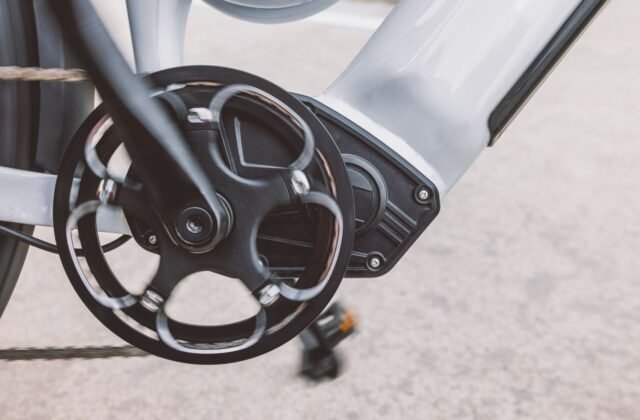
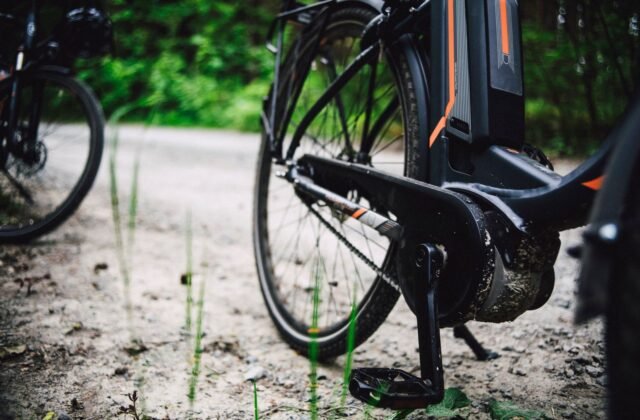
A folding e-bike and a mid-drive e-bike solve different problems. A folding e-bike folds at the frame so you can carry it, store it in a small space and take it on public transport. A mid-drive e-bike puts the motor at the pedals, where it drives the chain and uses the gears, which makes it stronger on hills and smoother at speed.
That is why they suit different commutes: ride to a station and take a train, and the folder is hard to beat; ride a hilly road all the way, and the mid-drive earns its price. The wrong choice shows up fast: a bike you cannot carry, or one that struggles on your hill.
This guide compares the two side by side, gives you a short test to run before you buy, and shows what to do if you already bought the wrong one. For the wider picture, see the E-Bikes Hub, the folding e-bike guide and the mid-drive motor guide.
Folding E-Bike vs Mid-Drive E-Bike: The Comparison
| Attribute | Folding E-Bike | Mid-Drive E-Bike | What to watch |
|---|---|---|---|
| Storage and carrying | Folds to fit under a desk, in a car boot or on a train | Full size; needs a rack, garage or bike room | Measure the folded size |
| Climbing steep hills | Hub motor works alone, so steep climbs feel harder | Motor uses the gears, so climbs feel easier and steadier | Test your steepest hill |
| Ride feel | Small 20-inch wheels feel quick but twitchy at speed | Balanced weight at the pedals; feels like a normal bike | Ride at your normal pace |
| Range per charge | Smaller battery is common, so range is usually shorter | Uses battery more efficiently, especially on hills | Compare range on your route |
| Maintenance | Folding hinges and latches need regular checks | Chain and gears wear faster because the motor drives them | Budget for chains and hinges |
| Cost | Usually cheaper to buy and to repair | Usually dearer, with costlier motor and drivetrain work | Add servicing to the price |
| Weight | Heavy for its size, but you only carry it folded for short spells | Often lighter overall, but awkward to carry up stairs | Lift it before you buy it |
When the Answer Changes
The verdict above holds for a typical flat commute, but four things can flip it:
- Steep hills. A long or steep climb swings the choice to a mid-drive, because the motor can use a low gear instead of straining on its own.
- A train or bus in the journey. If part of the trip is public transport, a folding e-bike wins, even if the ride is hilly, because a full-size bike may not be allowed on board.
- Storage space. A flat with no bike room or a desk-side parking spot favours a folder. A garage or secure bike room removes that advantage.
- Weight and luggage. A heavier rider or loaded panniers makes a mid-drive more useful, because the gears spread the load on climbs.
Test Both Types Before You Buy

Run this five-step test on both types before you spend anything, and run it on your own route, not in a shop car park.
- Fold and carry it. Fold the bike, pick it up, and carry it for a minute. If you cannot manage it, it will not work on a train platform.
- Ride your steepest hill. Take the steepest climb on your commute at your normal pace and note how hard the motor works.
- Check the folded size. Put the folded bike where it will live at home and at work. If it does not fit, the folding feature is worthless.
- Test the range. Ride your full route to work and back on one charge. If the battery is close to empty, the range is too tight.
- Ride in real traffic. Stop, start and turn at junctions. Small wheels feel different in traffic, so this step matters.
What a fail looks like
| Symptom | Cause | Fix |
|---|---|---|
| You cannot lift the folded bike | Too heavy for you when folded | Pick a lighter folder |
| The motor labours on your hill | Hub motor has no gears to help it | Try a mid-drive on the same hill |
| Battery is nearly flat after one trip | Battery too small for your distance | Choose a bigger battery or charge at work |
| The folded bike will not fit at work | Folded size is bigger than the space | Try a more compact folder |
Myth: A folding e-bike is always slow.
Fact: Small wheels accelerate quickly, and the motor does the work; top speed depends on the motor and the local rules, not on the fold.
Myth: A mid-drive e-bike needs no effort on hills.
Fact: It still needs you to pedal and to pick the right gear; it only makes your effort go further.
Before you test: Test on flat ground away from traffic first. Check the brakes and the folding latches before you ride, wear a helmet, and keep your speed down until you know how the bike handles. Never test a hill on a bike whose brakes you have not checked.

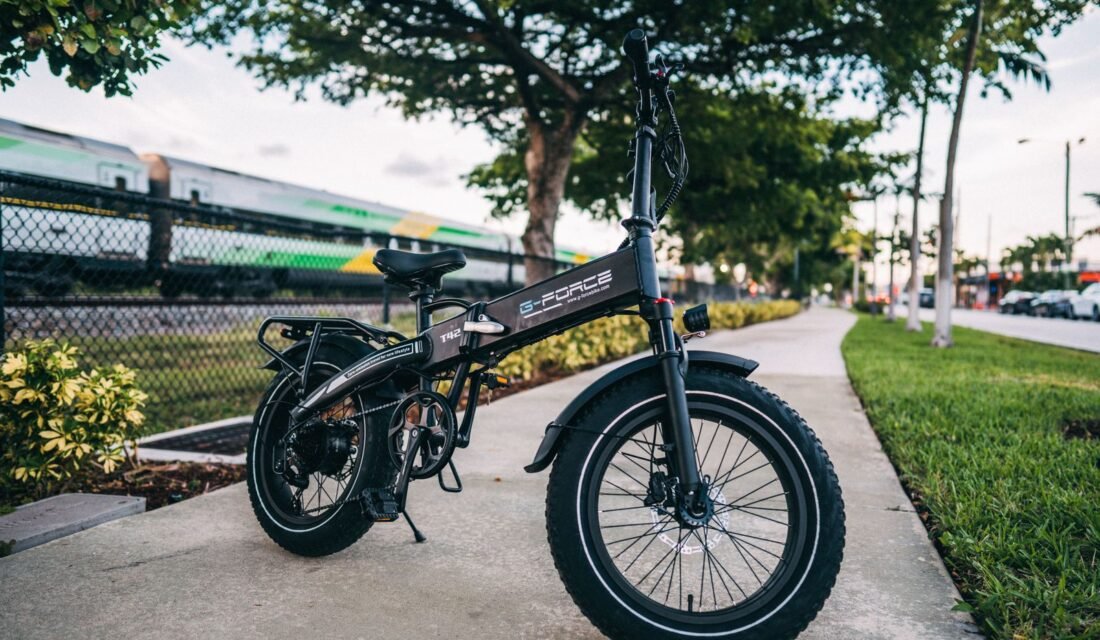
Folds for trains and small flats, with a 48V 20.8Ah removable battery.
How to Choose the Right One for Your Commute
What you will need
- A tape measure
- Your commute route, with its steepest hill marked
- The rules for bikes on your train or bus
- Measurements of your storage space at home and at work
- A helmet
- A test ride on both types
The method
- Map the commute. Write down the distance, the steepest hill and whether you use a train or bus.
- Measure the space. Measure where the bike will live, and compare it with the folded size of each folder on your list.
- Check transport rules. Check whether your train or bus takes full-size bikes. If it does not, only a folder works.
- Test ride both types. Ride the same route on both types, and note the hill, the comfort and the battery left at the end.
- Price the upkeep. Ask a bike shop what a chain, brake pads and a latch check cost for each type.
- Decide on the hardest part of the route. Choose the bike that handles the hardest part, not the easiest part, of your commute.
E-bikes: A mid-drive kit such as the BAFANG 48V 750W conversion kit can turn a normal bike into a mid-drive e-bike, but fitting it needs tools and mechanical care. If you are not comfortable fitting a motor to a frame, buy a complete e-bike instead. See the mid-drive motor guide for the details.

Mid-drive kit with a torque sensor and a colour display for hill climbs.
When the Damage Is Already Done
If you already bought the wrong type, do not write the bike off. Match the problem to the fix:
- You bought a folder, but the hills beat it. Use the lowest assist on the flat and save battery for the climb. If the hill still wins, trade it for a mid-drive.
- You bought a mid-drive, but you cannot carry it. Wheel it instead of carrying it, and park it where you can roll it in. If your commute needs a train, you likely need a folder instead.
- Your battery runs out before home. Charge at work if you can, use a lower assist level, and keep the tyres at the right pressure.
- Your folder is too big when folded. Remove the battery and any bags before folding, and check whether the handlebars turn to save space. If it still does not fit, only a more compact folder will do.
- Your mid-drive eats chains. Chains wear faster when a motor drives the gears, so check the chain for stretch often, keep it clean and oiled, and change it early.
For folding options, read the folding e-bike guide before you swap, and compare the folded sizes carefully.

Peak 750W motor, 48V battery and 26-inch wheels for longer commutes.
The Safe Alternative: Switch to a Mid-Drive E-Bike
If the folding e-bike cannot handle your route, the mid-drive e-bike is the full alternative: a full-size bike with the motor at the pedals, built to climb and to ride at speed on the open road.
The method
- Test the same hill. Ride your steepest climb on a mid-drive and feel how the gears spread the work.
- Sort the storage. Find a home for a full-size bike: a garage, a bike room or a secure rack at work.
- Ride your full route. Do the whole commute on the mid-drive, and check the battery left at the end.
What to Do Next, in Order
- Map your commute, including the hill and any train or bus.
- Measure your storage space at home and at work.
- Test ride a folding e-bike and a mid-drive e-bike on the same route.
- Check the folded size, the lift weight and the battery left after the ride.
- Buy the bike that handles the hardest part of your route — see the E-Bikes Hub for more guides.
Never Do These When Choosing a Commuter E-Bike
- Never buy without a test ride on your own route. A shop car park will not show you the hill that matters.
- Never trust the headline range figure. Hills, weight and wind cut range, so test your real route.
- Never ignore the folded size. A folder that does not fit your flat is a full-size bike with hinges.
- Never ride with a loose folding latch. Check every latch and hinge before every ride.
In short
A folding e-bike is the better commuter for most people: it folds away, suits trains and small flats, and costs less. A mid-drive e-bike is better when steep hills or a long, loaded ride are part of every day. Match the bike to the hardest part of your route and test both on it.
The essentials
- Folding e-bikes win on storage, trains and small spaces; mid-drive e-bikes win on hills.
- A mid-drive motor uses the gears, so it climbs more efficiently than a hub motor.
- Test your steepest hill and your full route before you buy, on both types.
- Buy the bike that handles the hardest part of your commute.
More Questions, Answered
Which is better for commuting, a folding e-bike or a mid-drive e-bike?
A folding e-bike is better for most commuters, because it folds for trains and small spaces and usually costs less. A mid-drive e-bike is better when your commute has steep hills or a long, loaded ride.
Are folding e-bikes good for hills?
They cope with gentle slopes, but a steep hill is hard work because the hub motor cannot use the gears. Test a mid-drive on the same hill before you decide.
Can I take a folding e-bike on a train?
Usually, yes, when it is folded, but the rules differ by operator and by time of day. Check your operator’s bike rules before you buy.
Additional Details
Name: Folding E-Bike vs Mid-Drive E-Bike: Which Is Better for Commuting?
Description: Folding e-bike vs mid-drive e-bike: which is better for commuting? Compare folding, hill climbing, range, cost and storage, then pick the right e-bike.
Published: November 9, 2026