Part of our guide on E-Bikes.
E42 on an Aventon display means one thing: a torque sensor fault. The bike has detected a problem with the sensor that measures how hard you are pedalling, and it will not give you normal pedal assist until the fault clears. The good news is that the most common cause is not a broken sensor at all — it is the way the bike was switched on.
This guide works through the fix in order: a restart with no pressure on the pedals, a 60-second hard reset, a check of the rear wheel speed sensor magnet, and an inspection of the bottom bracket torque sensor wiring. Each step takes a few minutes, and none asks you to open the sensor itself. Test the bike after each one.
Jump to: Step 1: Restart with no pressure on the pedals · Step 2: The 60-second hard reset · Step 3: Check the speed sensor magnet · Step 4: Inspect the torque sensor wiring · Why E42 happens · Tips that stop E42 coming back · Readers also ask
Step 1: Restart with no pressure on the pedals

Switch the bike off, then stand beside it — do not sit on it, and do not rest a foot on either pedal. Keep your hands off the throttle too. Now switch the bike back on and wait for the display to finish starting up before you touch anything.
This is the fix for E42 more often than any other. Torque sensors run a zero-offset calibration when the bike powers on: the sensor measures its resting state and treats that as zero. If a foot is on a pedal, or a hand is on the throttle, the sensor reads that pressure as its zero point, and the mismatch shows up as a torque sensor fault.
If the code clears and the bike rides normally, you are done — but remember how it happened, because the same mistake will bring E42 back. If the code is still on the display, move to step 2.
Step 2: The 60-second hard reset

Power the bike off. Take the battery out of the frame. Then press and hold the display power button for ten seconds. This discharges the residual power held in the controller capacitors, so the controller fully resets instead of waking up in the same state it was in.
Put the battery back in firmly, until it clicks into place. A battery that is not fully seated can cause its own faults, so the click matters. Then power the bike back on — again with no feet on the pedals and no hand on the throttle — and check whether E42 is gone.
The whole reset takes about a minute, and it is worth doing properly. Skipping the ten-second hold leaves residual power in the capacitors, and the controller may keep the fault. If the code clears here, the fault was a stuck state in the controller, not a broken part.
Step 3: Check the speed sensor magnet

Look at the rear wheel. The speed sensor magnet is fixed to a spoke, and it must pass close to the sensor marking on the frame or fork as the wheel turns. If the magnet has slipped along the spoke, or the sensor has moved, the gap grows and the sensor stops reading the wheel reliably.
Spin the wheel slowly by hand and watch the magnet pass the sensor. The magnet must pass within 2mm to 4mm of the sensor marking. If the gap is wider than that, loosen the magnet, slide it back into position, and tighten it again so it sits square to the sensor. If the magnet is missing or cracked, it needs replacing — a spoke magnet is a small, cheap part, and the one below is the kind of replacement that fits this job.

This step matters for E42 because the torque sensor and the speed sensor work together: the bike needs to know both how hard you are pedalling and how fast the wheel is turning. A speed sensor that cannot read the wheel can leave the system confused. The related code is E43, the speed sensor fault, which uses the same 2mm to 4mm magnet gap.
Step 4: Inspect the bottom bracket torque sensor wiring
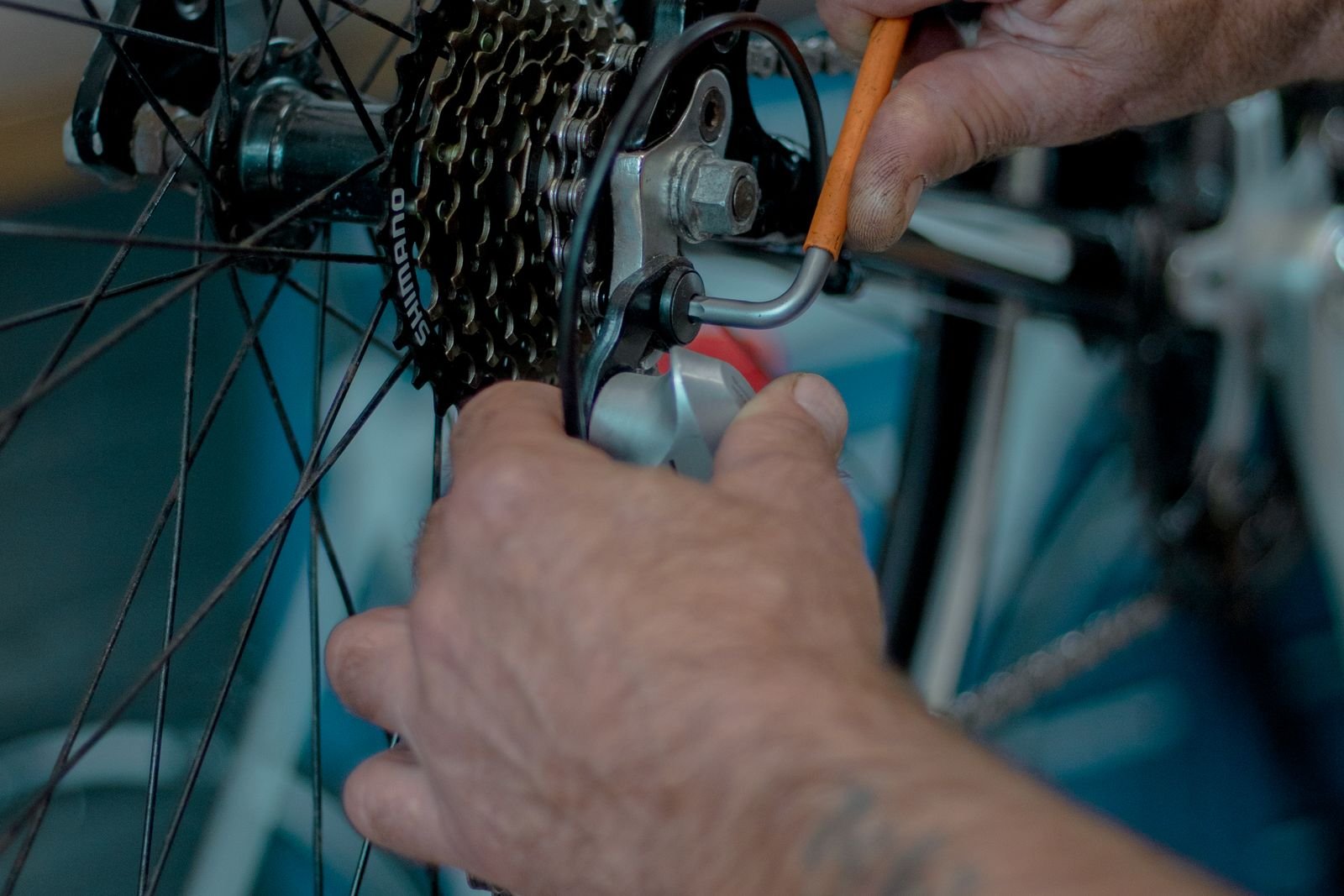
If the error persists after the first three steps, the bottom bracket torque sensor wiring may need inspection. The sensor sits at the bottom bracket, behind the crank, and its cable runs from there to the controller. Look for a cable that has been pinched, pulled loose, or rubbed through where it passes the frame, and check that the connector is fully seated.
Do not force the connector or the cable. If the wiring looks damaged, or the connector will not seat firmly, the sensor itself may need replacing rather than repairing. The two products below are bottom bracket torque sensors of the kind that fits this job: generic replacement parts, not Aventon-original sensors. Check that the bottom bracket width and the connector match your bike before ordering.

If the wiring looks sound and the connectors are seated, but E42 is still on the display after all four steps, the sensor itself is the most likely cause. A sensor that has failed internally will not clear with a restart or a reset, and no amount of recalibration will bring it back. At that point the fix is a replacement sensor, fitted by someone who can confirm the part matches your bike.
Why E42 happens
The three most common causes are all in this guide. The first is the zero-offset calibration at start-up: the sensor measures its resting state when the bike powers on, and any pressure on the pedals or the throttle at that moment corrupts the reading. That is why the first fix is a restart with nothing touching the pedals or the throttle.
The second cause is a controller that has kept a fault state. The controller holds residual power in its capacitors even after the bike is switched off, so a normal restart does not always clear it. Holding the display power button for ten seconds with the battery out discharges that residual power, and the controller starts clean. That is the whole point of the 60-second hard reset.
The third cause is hardware: a speed sensor magnet that has drifted out of its 2mm to 4mm gap, or torque sensor wiring at the bottom bracket that has been damaged or worked loose. These are the only causes the guide you are reading covers, and they are the ones to check in order before assuming the sensor itself has failed.
Tips that stop E42 coming back
Three habits, one for each golden rule. First, the zero-pressure start-up: never rest a foot on the pedals or touch the throttle while powering on. Stand beside the bike, switch it on, wait for the display to settle, and only then climb on. Foot pressure at boot is the single most common trigger for E42.
Second, the hard reset is worth remembering as a general tool, not just for E42. If the display ever shows a fault that will not clear with a normal restart, power off, take the battery out, hold the display power button for ten seconds to discharge the residual power in the controller capacitors, reinstall the battery firmly until it clicks, and power the bike back on. It takes a minute and it clears the stuck states that a normal restart leaves behind.
Third, check the rear wheel speed sensor magnet alignment whenever the bike has been knocked, transported, or had a wheel removed. The magnet must pass within 2mm to 4mm of the sensor marking, and it is easy for a spoke magnet to slip a few millimetres without anyone noticing. A quick spin of the wheel by hand, watching the magnet pass the sensor, is enough to catch it.

One more thing to watch: E43, the speed sensor fault, is the code that appears when the magnet gap is the problem. If you ever see E43 instead of E42, go straight to the magnet check in step 3 — the fix is the same 2mm to 4mm alignment.
The verdict
Most E42 faults clear with a restart that has no pressure on the pedals, or with the 60-second hard reset. If the code is still there after the magnet check and the wiring inspection, the sensor itself has most likely failed and needs replacing.
Readers also ask
What does Aventon error code E42 mean?
E42 is a torque sensor fault. The bike has detected a problem with the sensor that measures how hard you are pedalling, and it will not give normal pedal assist until the fault clears.
Can I fix E42 by restarting the bike?
Often, yes — but only with no feet on the pedals and no hand on the throttle. The torque sensor runs a zero-offset calibration at boot, and foot pressure during start-up is the most common trigger.
What is the 60-second hard reset for E42?
Power off, remove the battery, press and hold the display power button for ten seconds to discharge residual power in the controller capacitors, reinstall the battery firmly until it clicks, and power the bike back on. The ten-second hold is the part that makes it a hard reset rather than a normal restart.
How close must the speed sensor magnet be?
The magnet must pass within 2mm to 4mm of the sensor marking as the wheel turns. If the gap is wider, slide the magnet back into position on the spoke and tighten it so it sits square to the sensor.
What is E43, and how is it different from E42?
E43 is the speed sensor fault, and it appears when the rear wheel speed sensor cannot read the magnet — usually because the magnet has slipped out of its 2mm to 4mm gap. E42 is the torque sensor fault. The two sensors work together, so check the magnet whenever either code appears.
When should I replace the torque sensor?
When E42 is still showing after the restart, the hard reset, the magnet check and the wiring inspection. At that point the sensor itself has most likely failed, and the fix is a replacement sensor that matches your bike’s bottom bracket width and connector.
Additional Details
Details
Name: Aventon E42 Torque Sensor Fault: Reboot or Replace the Sensor?
Description: Aventon E42 torque sensor fault: reboot with no feet on the pedals, try the 60-second hard reset, then check the speed sensor magnet and bottom bracket wiring.
Published: November 22, 2026