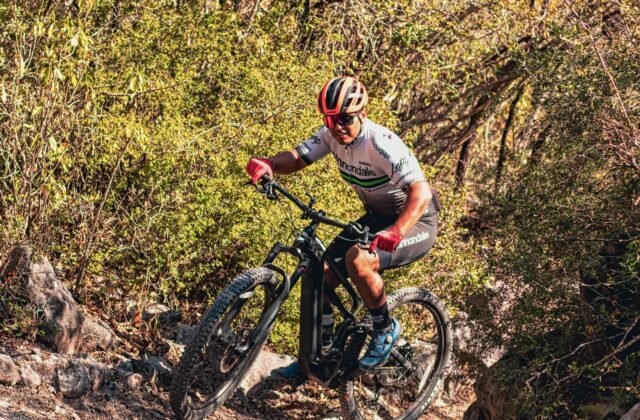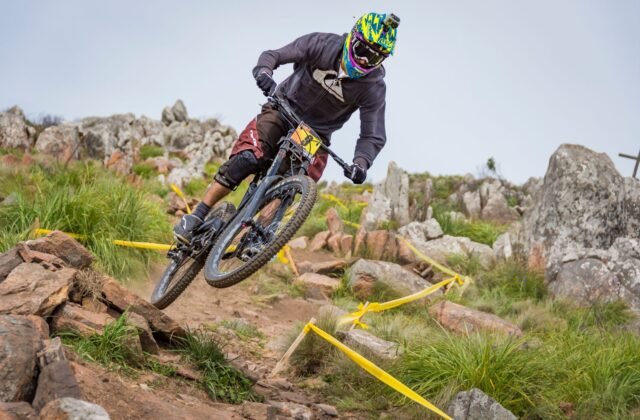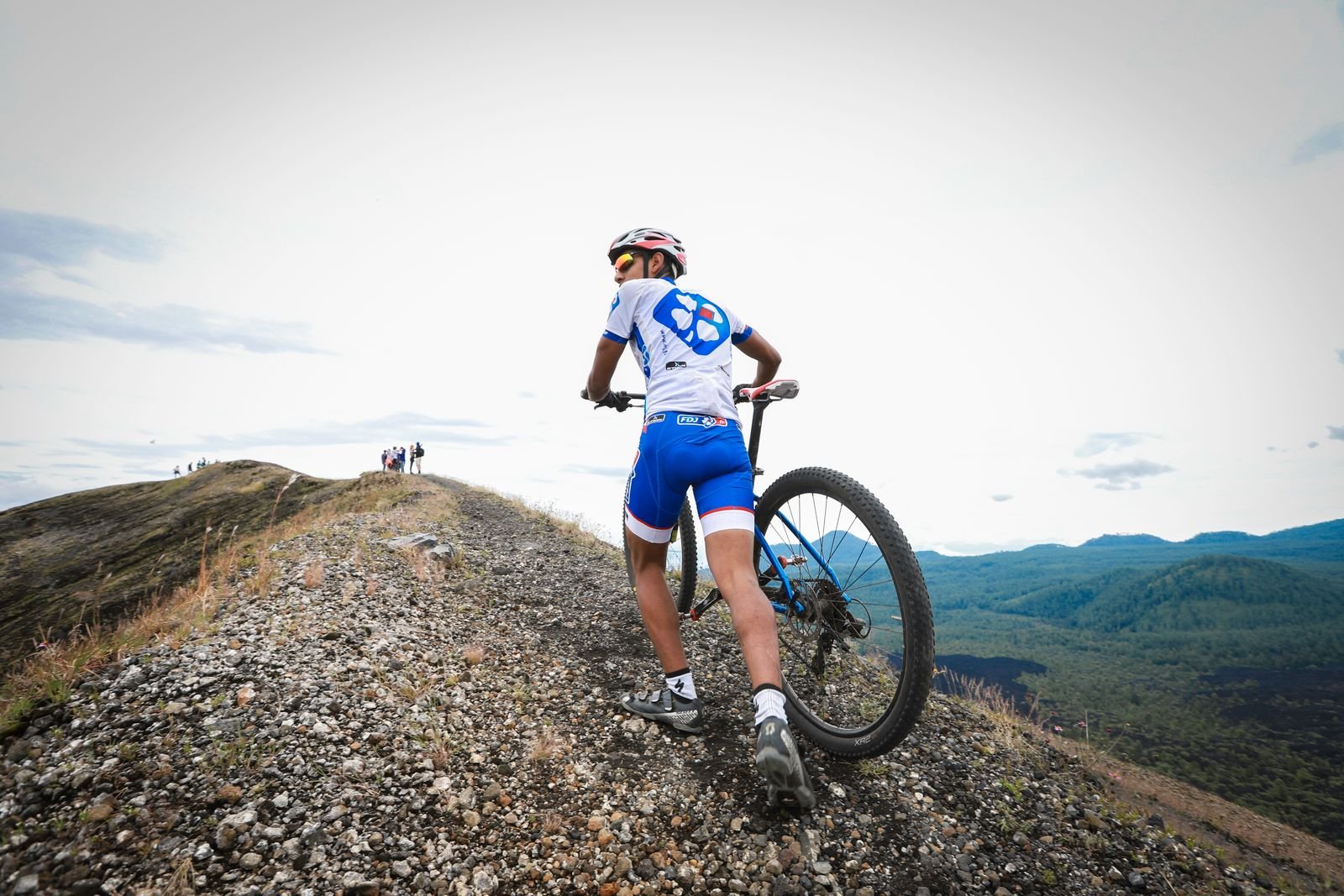
Straight answer: On most climbs, a hardtail mountain bike is the better choice. It is lighter, it wastes less of your pedalling effort, and it keeps a steady line on smooth, steep ground. An enduro mountain bike wins when the climb is rough, loose, or steep enough that rear-wheel grip matters more than weight.
A hardtail has a fork at the front and a rigid rear, so your power goes straight to the back wheel. An enduro bike adds a rear shock and longer travel, so the back wheel stays on the ground over rocks and roots — at the cost of extra weight and pedalling efficiency.
At first glance, in this hardtail mountain bike vs enduro mountain bike comparison, a hardtail and an enduro mountain bike look like close cousins. Both have wide bars, knobbly tyres, and a low, ready riding position. The difference is at the back: the hardtail has none of the suspension the enduro bike carries, and that single difference changes how each bike climbs.
Climbing is where the difference shows up first. A climb asks a bike for three things at once: to turn your effort into forward motion, to keep the rear tyre pressed into the ground, and to hold a line you can steer. The hardtail is stronger at the first of those three. The enduro bike is stronger at the second. Which one matters more depends on the climb in front of you.
This article compares the two on climbs only — smooth fire-road climbs, steep pitches, and loose, rocky ascents — so you can match the bike to the trails you actually ride. For the wider picture, see the Mountain Bikes Hub, and our comparisons of a hardtail vs a full-suspension mountain bike and a hardtail vs a downhill mountain bike.
Hardtail vs Enduro for Climbs: The Core Comparison
| Attribute | Hardtail Mountain Bike | Enduro Mountain Bike | What to Watch |
|---|---|---|---|
| Rear suspension | Rigid rear, no rear shock | Rear shock with long travel | A shock that bobs on smooth climbs is wasting your effort. |
| Weight | Lighter, with fewer moving parts | Heavier frame, shock, and burlier parts | The gap grows on long climbs and at the end of a ride. |
| Climbing efficiency | More of each pedal stroke reaches the rear wheel | Some effort is absorbed by the suspension | Lock the shock out on a smooth climb if the bike allows it. |
| Grip on loose ground | Rear wheel can skip and spin over rocks and roots | Rear wheel stays planted over rough ground | Tyre pressure matters as much as suspension — see our guide to mountain bike air pressure. |
| Seated steep climbs | Composed and easy to steer on smooth grades | Can feel long and wandery when the front wheel lightens | A dropper post helps keep weight forward. |
| Standing and sprinting | Stiff and direct when you stand and push | Softer feel, and the bike can bob under hard efforts | Watch for the shock moving as you stand. |
| Comfort on long climbs | Harsh on rough surfaces; your legs absorb the bumps | Much kinder to your back and hands over hours | Comfort keeps you fresh enough to keep climbing. |
| Maintenance | Fewer parts to wear out or service | Shock, bearings, and pivots need regular care | A neglected pivot can sap climbing speed. |
| Cost for the same quality | Usually less money for the same groupset and brakes | More money goes into the frame and shock | Spend the saving on a better fork and tyres. |

When the Answer Changes
The climb is rough, loose, or rocky
On a climb covered in loose stones, roots, or broken rock, the enduro bike’s rear shock keeps the tyre pressed down, while a hardtail’s rear wheel bounces and spins. Grip beats weight here, and the enduro bike can be the faster climber. If your local climbs look like a stream bed, the hardtail’s efficiency lead disappears.
The gradient is very steep
On a very steep pitch, barely moving, traction is the whole game. An enduro bike holds grip at low speed and lets you stay seated longer, while a hardtail can spin out when the rear wheel unloads. The steeper the climb, the more the enduro bike’s advantage grows.
Your skills are still developing
A less experienced rider leans on the bike’s forgiveness. An enduro bike forgives a wrong line, a late gear change, and a bump hit too fast. A hardtail punishes those mistakes with a skipped wheel and a lost rhythm. As your technique improves, the hardtail’s efficiency matters more.
Test Both Bikes on the Same Climb: A 20-Minute Decision Ride
- Pick your steepest regular climb — one with a mix of smooth and rough ground — and ride it first on the bike you already own.
- Ride it on the hardtail, seated and steady, in a gear you can hold for the whole climb. Note the time and how your legs felt.
- Ride the same climb on the enduro bike at the same effort, with the shock open on the rough parts and locked out on the smooth parts.
- Ride the roughest 100 metres of the climb twice on each bike, and note where the rear wheel slipped or skipped.
- Compare the times and your effort: the bike that was faster on the ground you ride most is the right answer.
- Repeat the test on a calm day, at the same tyre pressure, before you decide. Wind and tired legs can fake a result.
What a fail looks like:
- The rear wheel spins and hops on loose ground → your weight is too far forward, or the tyre is too hard → shift your hips back and drop the pressure a little.
- The front wheel lifts and wanders on a steep pitch → your weight is too far back → stay seated, bend your elbows, and keep your chest low.
- You finish fast but beaten up → the bike passed the grip test but failed the comfort test → try wider tyres or a suspension setup change before giving up on the bike.
Myth: Enduro bikes cannot climb. Fact: An enduro bike climbs well. It is simply slower and heavier than a hardtail on smooth ground, and its rear grip can make it faster on rough ground. The gap is a trade, not a failure.
Myth: A hardtail is always faster uphill. Fact: A hardtail is faster on smooth climbs, but on a loose, rocky climb a spinning rear wheel can cost more time than the extra weight of an enduro bike.
Before you test: Wear a helmet, gloves, and eye protection. Check that both bikes’ brakes work, the quick releases or thru-axles are tight, and the tyres are pumped up. Walk the climb once first if you have never ridden it, and ride with a friend the first time you test a borrowed bike.

How to Set Up Either Bike for Climbs
What you will need:
- A floor pump and a pressure gauge, or a pump with a gauge built in.
- A shock pump if the bike has a rear shock.
- The right tyre pressure for your weight and the trail — our mountain bike air pressure guide explains how to choose it.
- A multi-tool for saddle and handlebar adjustments.
- A dropper post, or the habit of moving the saddle down for steep pitches.
The method:
- Set the saddle height so your leg is almost straight at the bottom of the pedal stroke.
- Set tyre pressure for the trail: lower for loose and rocky ground, higher for smooth and fast ground.
- On a full-suspension bike, set the shock sag, and lock it out on smooth climbs.
- Match your position to the ground: sit on smooth grades, and hover over the saddle on broken ground.
- Keep your weight centred: too far back and the front wheel lifts; too far forward and the rear wheel spins.
- Climb in a gear you can spin for the whole pitch. Grinding in a hard gear wastes energy and breaks grip.
Note: Make only one change at a time. Change the tyre pressure, then ride the climb, then change something else. Two changes at once leave you guessing about which one worked.
Warning: Stop and get off if a climb is beyond your level. Walking the steepest section is faster than carrying a broken bike home, and much safer.
When the Damage Is Already Done
- Name the problem: if you spin out on every loose climb, you have a grip problem. If you are slower than friends on smooth climbs, you have an efficiency problem.
- Fix the cheap things first: tyres and pressure, saddle position, and locking out the shock on smooth climbs cost little and often close most of the gap.
- If the gap is still large, trade the bike while it is in good condition. A bike that does not suit your trails will not become the right bike with one more part.

The Safe Alternative: Start with an Enduro Mountain Bike
- Pick the lightest enduro bike you can afford, with a shock lockout — the lockout closes most of the climbing gap on smooth ground.
- Sort the fit first: saddle height, bar height, and tyre pressure matter more on climbs than any upgrade.
What to Do Next, in Order
- Write down your three most-ridden climbs, and how rough and steep each one is.
- Hire or borrow both bikes and run the 20-minute test on your steepest climb.
- Decide on the bike that was faster on your usual ground, not on one climb.
- Buy the bike, set it up as in the method above, and re-test the same climb in a month.
Never Do This on Climbs
- Never stand and sprint on a loose surface: it breaks rear grip and you slide back down the same ground.
- Never ride a climb with a shock that leaks air: check it before the ride, not at the bottom of the climb.
- Never push through pain in your back or wrists: stop, check your saddle and bar position, and walk the rest if it does not settle.
In Short
For most climbs, a hardtail is the better bike: lighter, more efficient, and simpler to keep. An enduro bike takes over when the climb is steep, loose, or rocky, because its rear grip is worth the extra weight. Choose the bike for the climbs you ride every week, test both on your hardest climb, and let the ground decide.
The Essentials
- A hardtail is usually the faster climber on smooth, steep ground.
- An enduro bike is the better climber on rough, loose, and rocky ground.
- Tyre pressure, saddle height, and a shock lockout close most of the gap between the two.
More Questions, Answered
Is a hardtail better than an enduro bike for climbing?
On smooth climbs, yes. On rough climbs, the enduro bike’s grip can make it faster. The ground decides, not the badge on the frame.
Is an enduro bike bad at climbing?
No. It is heavier and less efficient than a hardtail, but it climbs well, and a shock lockout removes much of the disadvantage on smooth ground.
Additional Details
- Name: Hardtail Mountain Bike vs Enduro Mountain Bike: Which Is Better for Climbs?
- Description: Hardtail mountain bike vs enduro mountain bike: which climbs better? Compare grip, weight, gears and effort, then test both on your steepest climb first.
- Word count: 1,996 words
- Published: November 10, 2026