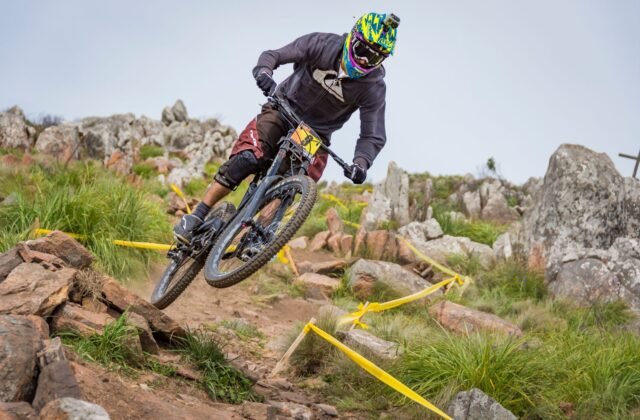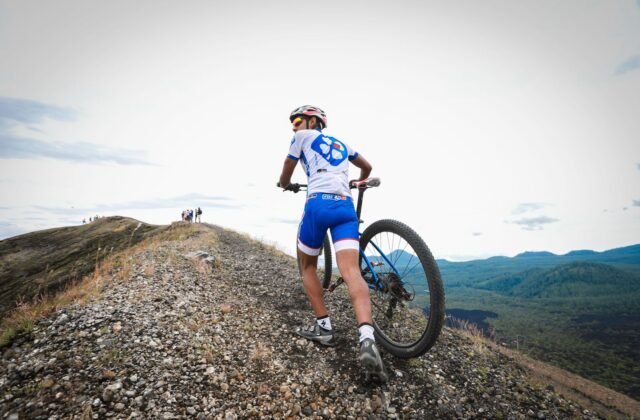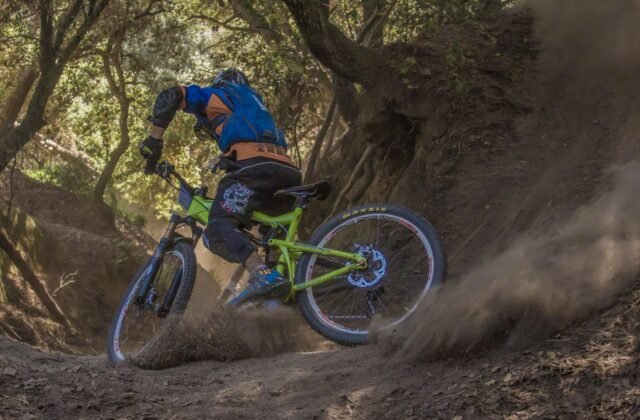
Straight answer: For mud, the enduro mountain bike wins — on genuinely deep, rutted, steep mud. Its longer travel, slacker head angle and wider, more aggressive tyres keep the front wheel tracking when an all-mountain bike starts to wander and wash out. But that win is narrow: on the damp, tacky or lightly muddy trails most riders actually ride, the all-mountain bike is lighter, easier to pedal out of the slop and easier to live with — and it is the better buy for most riders.
Key facts: Enduro bikes carry more suspension travel and slacker geometry built for steep, rough descents. All-mountain bikes sit in the middle of the trail spectrum, balancing climbing and descending. In mud, grip comes mostly from the tyre tread and the pressure you run, not from the frame badge — but the enduro’s geometry makes that grip easier to use when the trail turns steep and rutted.
The nuance matters. Mud is not one condition: a thin film of wet clay over hardpack behaves nothing like a deep, soft bog, and the bike that wins in one can lose in the other. The sections below show how to tell which kind of mud your trails have, how to test both bikes on the same stretch, and what to do if you already bought the wrong one.
Introduction
Mud changes everything about a trail. A climb you spin up easily in summer becomes a slipping, stalling grind; a corner you trust at speed turns into a slide; and a descent that feels controlled turns into a fight with the front wheel. The bike that copes best is the one whose geometry, travel and tyres keep it moving forward instead of sideways — and that is where enduro and all-mountain bikes part ways.
An enduro mountain bike is built for steep, rough descents, with long suspension travel and a slack head angle that keeps it calm at speed. An all-mountain bike sits in the middle of the trail range: enough travel for rough ground, but lighter and easier to pedal, with geometry that climbs as well as it descends. Both are full-suspension bikes, both can take mud tyres, and both are sold as do-everything trail bikes — so the difference is in the details, and in the mud you actually ride. This guide compares them for mud, tests them the same way, and shows how to fix a wrong choice. For the wider picture, see the Mountain Bikes Hub.
Enduro Mountain Bike vs All-Mountain Bike for Mud: The Comparison
| Attribute | Enduro mountain bike | All-mountain bike | What to watch |
|---|---|---|---|
| What it is | A long-travel bike built for steep, rough descents. | A mid-travel trail bike built to climb and descend. | Check the travel, not the label. |
| Suspension travel | More travel, built to soak up big hits and deep ruts. | Less travel, firmer and easier to pedal. | More travel helps in ruts; less helps on climbs. |
| Geometry | Slack head angle, long wheelbase; calm at speed. | Steeper head angle, shorter wheelbase; easier to steer. | Slack is calmer on steep, muddy descents. |
| Mud grip | Wide, aggressive tyres with open tread clear mud well. | Tyres vary; open tread matters more than the bike. | Fit mud tyres on either bike for deep mud. |
| Muddy climbs | Heavy; the front wheel can wander on steep, wet climbs. | Lighter, so wet climbs cost less effort. | Ride your muddiest climb on both. |
| Muddy descents | Very stable; the suspension tracks through ruts. | Quicker to steer but less forgiving in deep ruts. | Ride your steepest muddy descent on both. |
When the Answer Changes
- Thin, tacky mud over hard ground: The all-mountain bike wins. Its lighter weight and quicker steering let you change line and carry speed, and there is not enough depth for the enduro’s travel to matter.
- Steep, rutted descents in heavy rain: The enduro wins by more. This is the mud the bike was built for: the slack geometry keeps the front wheel planted and the suspension keeps the tyres in contact through the ruts.
- You only ride mud once or twice a year: The all-mountain bike wins on value. Buying an enduro for two wet weekends means carrying its weight on every dry ride for the rest of the year. See Enduro Mountain Bike vs Fat Mountain Bike: Which Is Better for Beginners? for how tyre width changes the same choice.

Test Both Bikes on a Muddy Trail: A 20-Minute Decision Ride
Do not buy on travel numbers alone. The test below takes about 20 minutes and uses one muddy stretch you already ride. Ride both bikes on the same stretch, in the same conditions, with the same tyre pressure.
- Pick your muddiest local stretch — one wet climb, one flat boggy patch and one muddy descent, all on the same loop.
- Set both bikes to the same tyre pressure (see the mountain bike air pressure guide) and the same suspension sag, so you compare bikes, not setups.
- Ride the climb on the all-mountain bike first, then on the enduro. Note which one keeps the front wheel down and which one spins the rear wheel.
- Ride the descent on each bike. Note which one tracks through the ruts and which one needs more corrections.
- Stop in the boggy patch and try a standing start on each bike. Note which one gets moving without the rear wheel digging in.
- Ride the same corner on each bike at the same speed. Note which front wheel holds its line.
- Pick the bike that felt calmer on the descent and easier on the climb. If neither felt calm, the mud tyres matter more than the frame.
What a fail looks like
| Symptom | Cause | Fix |
|---|---|---|
| Front wheel washes out in corners | Tyre tread packed with mud, or head angle too steep for the speed | Fit open-tread mud tyres; slow down before the corner |
| Rear wheel spins on wet climbs | Too much weight over the front, or tyre pressure too high | Move your weight back; drop pressure a little |
| Bike sinks and stalls in a bog | Tyres too narrow for the soft ground, or gear too high | Fit wider tyres; use a lower gear and keep pedalling |
Myth: More suspension travel always wins in mud. Fact: Travel helps in ruts, but tyre tread and pressure decide grip.
Myth: A heavier bike grips better in the wet. Fact: Weight adds drag in a bog; grip comes from the tyre, not the mass.
Myth: You need an enduro bike for any mud. Fact: Most muddy trails are ridden faster on an all-mountain bike.
Before you test: Wear a helmet and gloves, and test on a trail you know. Tell someone where you are going. Do not test a bike you cannot stop: check the brakes before the descent, and walk any section you would not ride on your own bike.
Set Up Either Bike for Mud
What you will need
- Open-tread mud tyres, or the same all-round tyre on both bikes
- A floor pump and a pressure gauge
- A shock pump
- Wet-conditions chain lube
- A bucket, a brush and rags for cleaning
The method
- Wash both bikes and dry the drivetrain first, so old mud does not skew the test.
- Fit the same type of tyre to each bike — mud tyres on both, or the same all-round tyre on both. Do not compare a mud tyre with a dry-conditions tyre.
- Set tyre pressure with the gauge, following the mountain bike air pressure guide. Write the numbers down.
- Set the suspension sag on both bikes to the manufacturer’s recommended setting for your weight.
- After the ride, wash both bikes, dry the chain and re-lube. Mud left on seals and pivots wears them out between rides.
If the tyres pack with clay, stop, clear the tread by hand and try a wider-spaced tread. No bike setup fixes a clogged tyre.

When the Damage Is Already Done
- Fit mud tyres first. Tyres are the cheapest big change. A pair of open-tread mud tyres transforms either bike in deep mud.
- Drop the pressure a little and check it with a gauge, following the mountain bike air pressure guide.
- Fit a mudguard to keep spray off your eyes and the worst of the mud off the seals.
- Clean the bike after every muddy ride and re-lube the chain, so one wet ride does not turn into a worn drivetrain.
- Only then think about a swap. If the bike still washes out on your descents after mud tyres and a proper setup, ride the test loop again on the other style of bike before you spend anything.

The Safe Alternative: Choose the All-Mountain Bike
If the enduro bike feels like too much bike — too heavy, too slack, or too much money for the mud you ride — the all-mountain bike is the safe alternative. It is the better default choice for most riders, and it handles mud well once it is set up right.
The method
- Choose an all-mountain bike with room for wide tyres and a mudguard.
- Fit open-tread mud tyres for the wet months and keep your faster tyres for summer.
- Set the pressure with the mountain bike air pressure guide and write it down.
- Ride your muddiest loop and note where the front wheel washed out, if anywhere.
- If it washed out on steep descents only, slow down earlier and brake before the corner, not in it.
- Keep the chain clean and lubed after every muddy ride.
If the all-mountain bike still struggles on your steepest, ruttiest descents after mud tyres and a proper setup, that is the point where the enduro bike earns its keep — and the test loop in the section above will show it.
What to Do Next, in Order
- Ride the test loop on your current bike.
- Fit mud tyres and set the pressure with a gauge.
- If the front wheel still washes out on descents, try the other style of bike.
Never Do These on a Muddy Trail
- Never ride a closed trail when it is wet. It damages the surface.
- Never brake hard in a muddy corner. Slow down before it.
- Never buy on travel numbers alone. Ride the test loop first.
In short
For deep, rutted mud on steep ground, the enduro wins; everywhere else, the lighter all-mountain bike is the better buy.
The essentials
- Enduro wins deep, steep mud.
- All-mountain wins damp, tacky mud.
- Mud tyres and pressure decide grip.
- Test both bikes on your own muddy loop.
More Questions, Answered
Do mud tyres matter more than the bike?
Yes, for grip. An open tread that sheds mud changes either bike far more than swapping frames. Set the pressure with the mountain bike air pressure guide.
Which bike should a beginner choose for muddy trails?
The all-mountain bike. It is lighter, easier to pedal out of trouble and cheaper to run. See Trail Mountain Bike vs Enduro Mountain Bike: Which Is Better for Beginners?.
Does more suspension travel always win in mud?
No. Travel helps in ruts, but tyre tread and pressure decide grip.
What should I do when my rear wheel spins on a wet climb?
Move your weight back, drop the pressure a little, and use a lower gear.
Additional Details
Name: Enduro Mountain Bike vs All-Mountain Bike: Which Is Better for Mud?
Description: Enduro mountain bike vs all-mountain bike for mud: the enduro wins steep mud, but the lighter all-mountain bike suits most riders. Test both before you buy.
Published: November 10, 2026