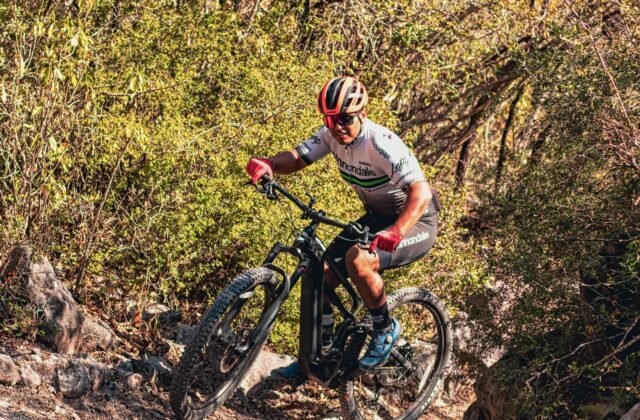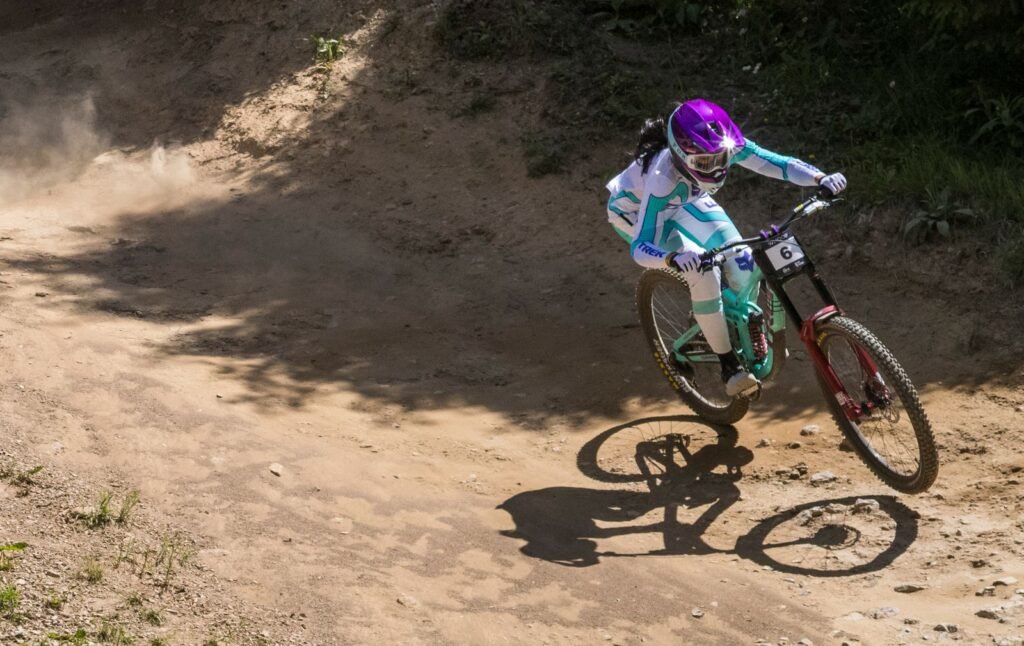
Straight answer: In the hardtail mountain bike vs cross country mountain bike comparison for steep descents, a hardtail is the better choice for most riders. Its slacker head angle, longer-travel fork and wider tyres keep the front wheel planted and give you room to move behind the saddle, so you stay in control with less braking. A cross-country (XC) mountain bike is built for speed uphill and on smooth ground: lighter and more efficient, but its steeper geometry and narrower tyres make steep, rough descents harder work. Choose the hardtail if descents decide your rides, the XC bike if climbs and racing do.
A hardtail and a cross-country bike can look almost the same in a shop: two wheels, flat bars and knobbly tyres. The difference is what each one is built to do. A hardtail is a trail bike with a suspension fork and a rigid rear end, made to stay calm when the ground drops away. A cross-country bike is a race-bred machine built to climb fast and carry speed across smooth ground, so it trades downhill confidence for speed.
This guide compares the two on steep descents only, so you can judge the choice on the ground that matters most to you. Both are regular picks in our Mountain Bikes Hub, and the wider suspension question is covered in our Hardtail Mountain Bike vs Full Suspension Mountain Bike comparison. If you are weighing an electric mountain bike too, see our Electric Mountain Bike vs Throttle E-Bike guide.
Hardtail Mountain Bike vs Cross Country Mountain Bike: The Core Comparison
On the same steep descent, the two bikes trade control for climbing speed. Here is how they line up.
| Attribute | Hardtail Mountain Bike | Cross Country Mountain Bike | What to watch |
|---|---|---|---|
| What it is | Trail hardtail: fork only, rigid rear, built for rough trails | Light race bike built for climbing speed | Many XC bikes are hardtails too – check geometry. |
| Geometry | Slacker head angle; room to move behind the saddle | Steeper head angle; weight sits further forward | A steep head angle feels nervous. |
| Suspension travel | Longer fork travel for drops, rocks and roots | Short travel, often 100-120 mm, to save weight | Short travel bottoms out sooner. |
| Tyres and grip | Wider, grippier tyres for loose ground | Narrower, faster tyres with less grip | Grip decides descent speed. |
| Weight | Heavier fork, tyres, usually a dropper | Lighter frame and parts | Weight counts most on climbs. |
| Climbing | Capable, less efficient on smooth climbs | Faster and more efficient on climbs | Mostly climbing? The XC bike wins. |
| Steep descents | More stable, more grip, more room to move | Fast on smooth descents, nervous on steep ones | Test on your steepest descent. |
| Maintenance | Simple rear; longer fork needs servicing | Light parts wear faster on rough ground | Rough use costs more in parts. |
| Best for | Steep, rough, technical descents | Climbing, racing, smooth fast trails | Buy for your hardest descent. |
When the Answer Changes
The hardtail verdict holds for steep, rough descents, but three variables can flip it:
- The gradient and the surface. On a smooth, gentle descent the XC bike is just as fast. Add rocks, roots or loose gravel, and the hardtail pulls ahead.
- Your skill. An experienced rider can pick a smooth line down a steep slope on an XC bike. A newer rider goes faster and safer on a hardtail.
- The dropper post. A dropper lets you lower the saddle and move your weight back. A hardtail with a dropper is far more confident, and an XC bike with a dropper closes some of the gap.

Test Both Bikes on a Steep Descent
A short test on the same slope beats any specification. Use the same descent, the same tyre pressure and the same effort for both bikes, and judge them by control, grip and how you feel at the bottom.
- Pick your real descent and walk it first. Choose the steepest descent on your regular route and pick a safe line.
- Set both bikes up the same way. Match the saddle height and tyre pressure, and check the brakes on both bikes before you roll.
- Descend both bikes the same way. Ride the same line at the same effort and note whether the front wheel felt planted or nervous.
- Keep the bike that felt safer. The faster bike on your steepest descent is the one that left you braking less and feeling calmer at the bottom.
What a fail looks like
| Symptom | Cause | Fix |
|---|---|---|
| Front wheel feels nervous and light | Weight too far forward; geometry too steep | Move your weight back; lower the saddle |
| Tyres slide on loose ground | Narrow, fast-rolling tyres with too little grip | Fit wider, grippier tyres; drop the pressure a little |
| Fork bottoms out on drops | Too little travel for the descent | Slow down before drops; a longer fork is the fix |
Myth: A lighter bike is always faster downhill.
Fact: Grip and geometry decide speed on a steep descent. A heavier hardtail with wider tyres is often faster down than a lighter XC bike.
Myth: A hardtail cannot descend because it has no rear suspension.
Fact: A hardtail descends well with a slack head angle, a good fork and grippy tyres. Your legs are the rear suspension.
Before you test: Wear a helmet, check both brakes and your tyre pressure, and test on a quiet trail with no one behind you. Walk the descent first, keep your weight back on the steep parts, and never test a bike on a descent above your skill level.
How to Set Up Either Bike for a Steep Descent
Either bike descends far better with a basic setup. Do this first – wrong tyre pressure or a saddle that is too high will make any bike feel wrong on steep ground.
What you will need
- A floor pump with a pressure gauge
- A multi-tool with Allen keys
- A helmet and gloves
- Your usual riding load, so the test matches your real ride
The method
- Lower the saddle. Drop it before a steep descent so you can move your weight behind it.
- Set the tyre pressure for grip. Use the lower end of the sidewall range for loose ground, and the same pressure on both bikes.
- Check the brakes. Each lever should feel firm well before it reaches the handlebar. Test both brakes on flat ground before the first descent.
- Stand on the pedals. On steep ground, stand with level pedals, knees bent and weight back.
Note: On a hardtail, your legs do the work of a rear shock. Standing through a rock garden is tiring, and aching hands, feet and back end rides early. If long rough descents leave you beaten up, that is a sign to look at a full-suspension bike, not a lighter XC bike.
Warning: Never ride down a steep descent with a hot, fading brake or a loose load. Stop at the top, check the brakes and the load, and descend slowly with both brakes. If the brakes feel weak, walk the bike down.

When the Damage Is Already Done
If you already bought the wrong bike for your descents, you do not always need a new one. Work through the likely fixes first, cheapest first.
- You bought an XC bike, but your descents are steep and rough. Fit wider, grippier tyres at lower pressure and add a dropper post. If the front wheel still feels nervous on every steep section, the geometry is the limit – a trail hardtail is the fix.
- You bought a hardtail, but you mostly climb and race. Fit faster-rolling tyres at higher pressure and lock the fork out on smooth climbs. Only change bikes if climbs, not descents, decide your rides.
- Your fork bottoms out on drops. Set the sag properly and slow down before drops. If it still bottoms out, the travel is too short – a longer fork or a different bike is the answer.

The Safe Alternative: A Cross-Country Bike
If your rides are mostly climbs, smooth trails and long days out, the cross-country bike is the full alternative to a trail hardtail.
- Check your hardest descent first. If it is smooth and short, an XC bike will cope. If it is steep or rough, the hardtail stays the safer pick.
- Test the XC bike on your own climb. Ride your longest climb and judge it by speed and effort at the top.
- Fit the right tyres. Choose fast-rolling tyres for smooth trails, and keep a grippier set for loose or wet days.
- Add a dropper post if you can. It closes much of the downhill gap and makes steep sections far less worrying.
What to Do Next, in Order
- List the descents you ride most, and name the steepest section on each.
- Run the test on that descent, on both bikes, with the same setup.
- Compare control and grip on the descent, then weight and climbing speed.
- Pick by your hardest descent first and your budget second.
Never Do These on a Steep Descent
- Never descend with your saddle up and your weight forward. You will go over the bars on the first sharp drop.
- Never grab the front brake alone on loose ground. The front wheel locks and slides, and you lose steering.
- Never test a bike on a descent above your skill level. Walk it first, and ride only the sections you can see clearly.
- Never judge a bike by a flat test ride. Steep descents are the test that matters here.
In Short
On steep descents, a hardtail is better for most riders: slacker geometry, a longer-travel fork and wider tyres keep the front wheel planted, so you descend with more grip and less braking. An XC bike wins on smooth ground, where climbing and speed matter.
The essentials
- A hardtail has a fork and a rigid rear; an XC bike is built light for climbing speed.
- On steep, rough descents, the hardtail wins on grip, geometry and control.
- On smooth climbs, the XC bike wins on weight and efficiency.
- Test both on your steepest descent before you buy.
More Questions, Answered
Is a hardtail better than a cross-country bike for downhill?
Yes, on steep and rough descents. A trail hardtail is more stable and grippier. On smooth descents the difference is small.
Can a cross-country bike handle steep descents?
Yes, if the descent is smooth and you are an experienced rider. On steep, loose or rough ground, a dropper post and wider tyres help.
Are cross-country bikes always hardtails?
No. Many XC bikes are hardtails, but short-travel XC full-suspension bikes exist too.
Additional Details
Name: Hardtail Mountain Bike vs Cross Country Mountain Bike: Which Is Better for Steep descents?
Description: Hardtail mountain bike vs cross country mountain bike: which is better for steep descents? Compare geometry, travel, grip and control before you buy now.
Published: November 10, 2026