Rad Power Bikes error 24 means a motor Hall fault, and Rad publishes no step-by-step guide for it: its Help Center covers errors 21, 22 and 23 only. For 24, all Rad gives is the manual’s definition and the advice to stop riding and contact Rad. This article works through the fault in order: confirm the code and rule out the recalled battery, restart the bike, inspect the visible motor cable, test the Hall signal with a multimeter, then decide whether the fault is the sensor, the motor, or a shop job. Each stage is a yes-or-no gate: pass it and move on; fail it and stop there.
The diagnosis at a glance
Each box is one stage, explained in full below.
| Stage 1 — Confirm Display shows 24. Check the battery label. |
↓ | Yes — battery OK Stage 2. |
No — battery recalled Stop. Do not charge or ride. |
| Stage 2 — Restart Switch off and on. Does 24 return? |
↓ | Yes — clears Test ride. Returns? Stage 3. |
No — stays Stage 3. |
| Stage 3 — Motor cable Is the visible cable seated and undamaged? |
↓ | Yes — fine Stage 4. |
No — loose or damaged Reseat it. Damaged? Book a shop. |
| Stage 4 — Hall test Does each wire flip 0V to 5V as the wheel turns? |
↓ | Yes — all flip Go to Stage 5. |
No — wire stuck Sensor dead. Stage 5. |
| Stage 5 — Sensor or motor? Sensor board, motor, or wiring? |
↓ | Sensor Replace the board or book a shop. |
Motor or wiring Replacement motor or shop repair. |
Stage 1 — Confirm the code and check the battery label
The check: read the display and note the exact code, then look at the battery label. Error 24 is the code Rad’s 2019 RadWagon manual lists as a “motor Hall fault” — the whole definition Rad gives. Rad’s Help Center has no guide for 24. First, check the battery against the U.S. Consumer Product Safety Commission warning of 24 November 2025: stop using Rad batteries RP-1304, RAD-S1304Y and HL-RP-S1304 — a fire risk.
If normal → go to Stage 2. The display shows 24 and the battery is not recalled. Carry on.
If abnormal → stop here. If the battery is recalled, do not troubleshoot the code, charge it, or ride. Follow the CPSC advice and contact Rad about the battery first — no cable check fixes a battery problem.
Stage 2 — Switch off and on again
The check: switch the bike off, wait a few seconds, and switch it back on. For error 21, Rad says this “can often” clear the code, and the restart is the first step for the other codes too. A code that appears once after a wet ride, a knock, or a low battery can be a one-off glitch, not a dead part.
If normal → test ride, gently. The code clears and the motor assists as usual. Ride a short loop near home; if it stays clear, it was a glitch. If it returns, move to Stage 3: a returning code has a cause, and restarting will not remove it.
If abnormal → go to Stage 3. The code is still there after a restart, so the fault is real. Next, look at the wiring.
Stage 3 — Is the visible motor cable seated and undamaged?
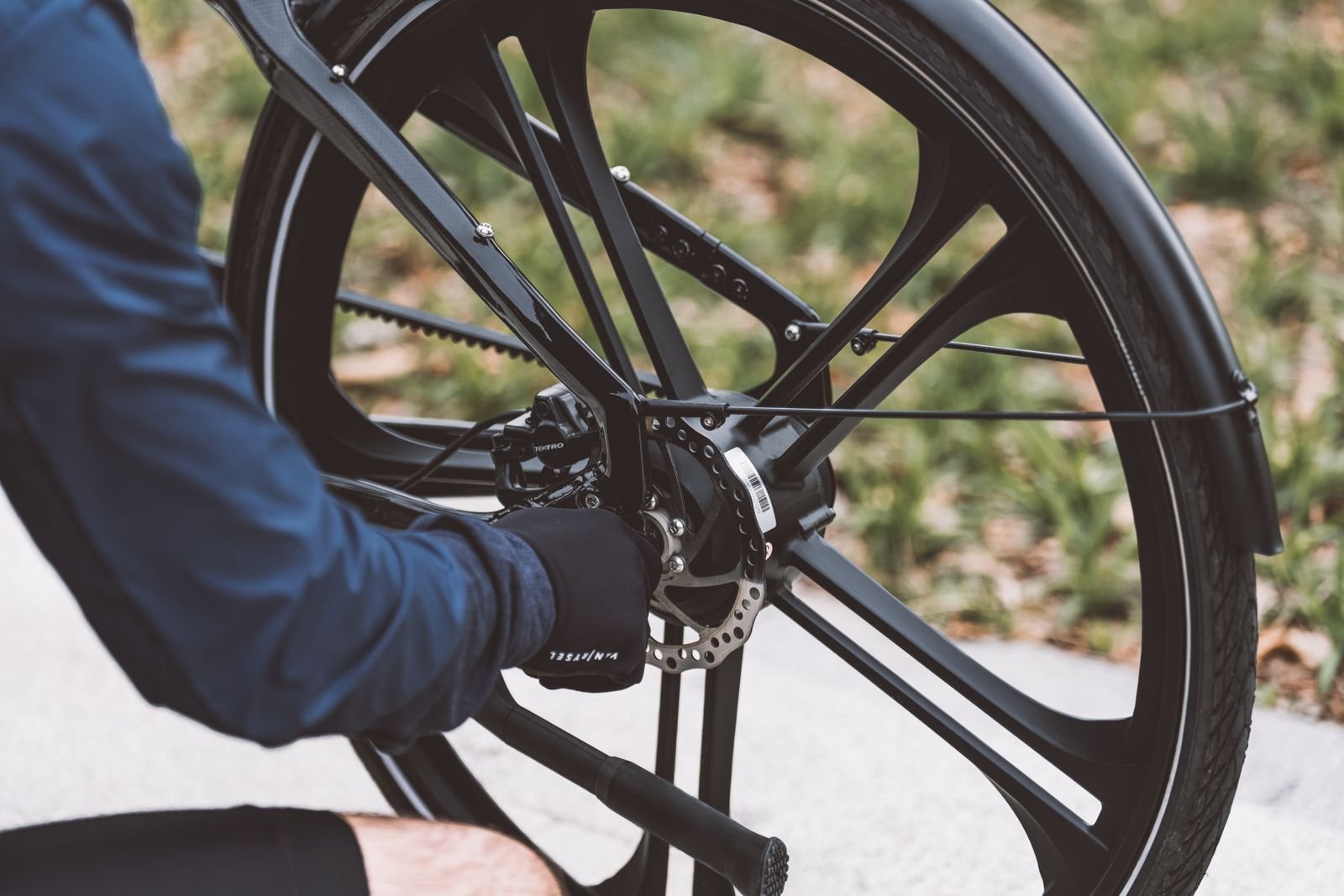
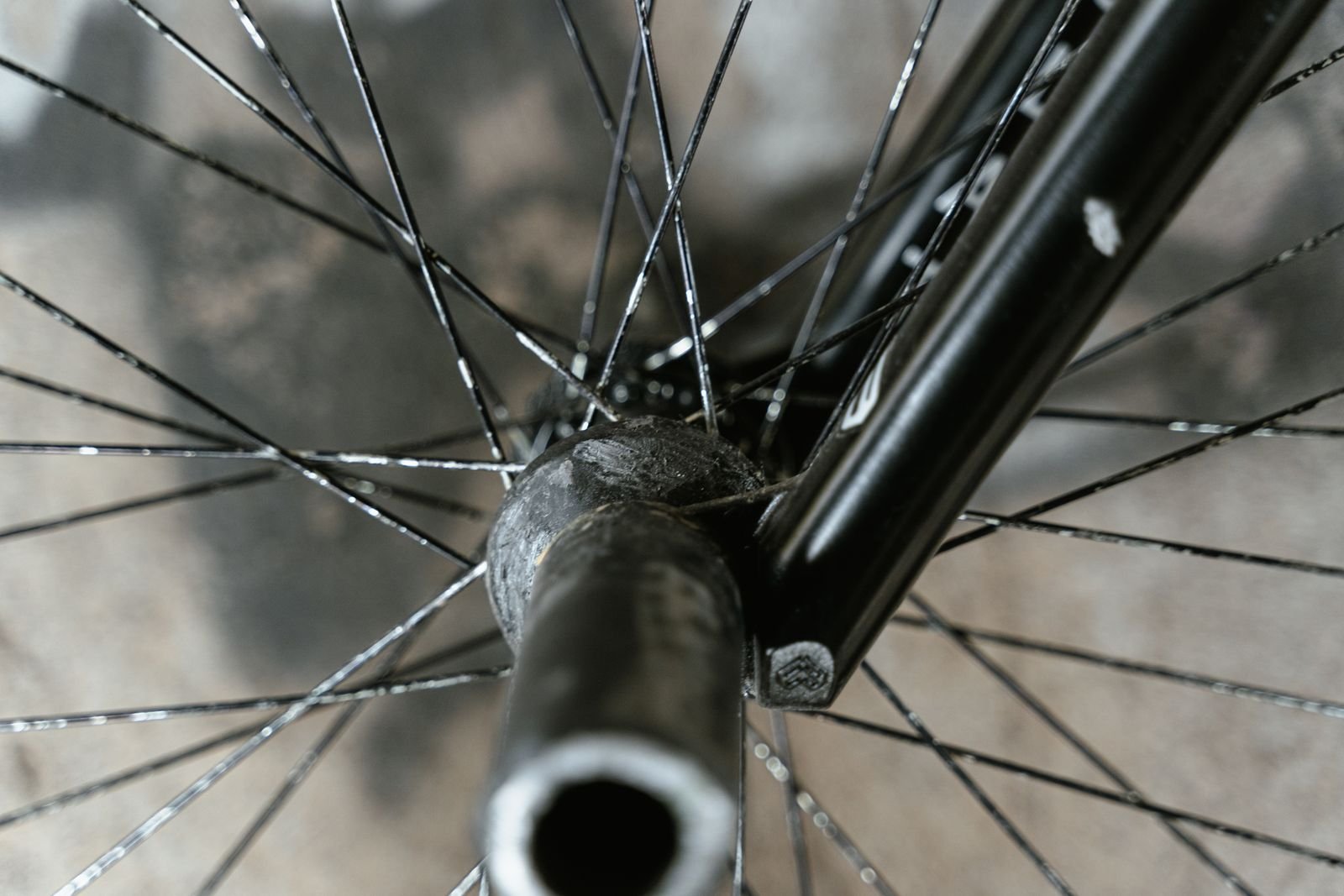
The check: with the bike off and the battery removed, look at the motor cable where it runs to the rear wheel. Rad’s guidance for the related motor codes is to check the visible motor connector is seated, and to look for moisture, dirt, or damage. Is the connector fully home? Is the cable pinched where it leaves the axle? Rad’s guides say to pull the halves directly apart, without twisting, look inside, then line up the notch and arrows and push them straight back together — only at the visible connector, and only if you are comfortable.
If normal → go to Stage 4. The cable is seated, dry and undamaged. The wiring you can see is not the problem, so the fault is inside the motor or in the signal.
If abnormal → fix what you found, then retest. A loose connector, reseated, can clear the code: it starves the controller of the sensor signal. If it is wet, dry it and let it air before reconnecting. If the cable is cut or crushed, or the pins are bent or corroded, do not tape it up and ride. That cable carries the sensor signals, and a damaged one needs a proper repair. Book a shop: tell them the code is 24 and the cable is damaged.
Stage 4 — Does the Hall sensor signal flip?
The check: this stage needs a multimeter, and it separates a sensor fault from everything else. A Hall sensor tells the controller where the rotor is. It runs on 5 volts, and each of its three signal wires should flip between near 0 and near 5 volts as you turn the wheel slowly by hand. Set the meter to DC volts. With the bike on and the wheel off the ground, measure the supply wire against ground: about 5 volts. Then measure each signal wire while turning the wheel a quarter turn at a time. Pin layouts differ between motors, so check your model’s wiring before probing.

If normal → go to Stage 5. All three wires flip cleanly. The sensors work, so the fault is downstream: the controller, the wiring to it, or the motor’s windings. That is shop territory.
If abnormal → go to Stage 5, sensor branch. One wire stays stuck at 0 or 5 volts while the others flip. That sensor is dead: the controller cannot tell where the rotor is. Do not keep riding: a dead Hall sensor can make the motor run rough, lose power, or fail to start.
If you are not comfortable metering live wiring, skip to Stage 5. Rad’s guides end by recommending a professional bike mechanic, and a wrong probe can damage the controller.
Stage 5 — Is the fault the sensor, the motor, or the wiring?
The check: put Stages 3 and 4 together. Three endings; only one is a job for an owner with tools.
Sensor branch — one Hall wire stuck in Stage 4. The fix is a new Hall sensor board, in a type that must match the motor: common ones are 120-degree parts such as the 41F type, with wire, for direct-drive hub motors. Match spacing and part type before ordering; fitting one means opening the hub motor, a shop job for most owners.

Motor branch — sensors test fine but the code stays. If the Hall signals flip correctly and the cable is sound, the fault is in the windings, the controller, or the wiring inside the frame — not an owner repair. The options are a replacement hub motor or a shop diagnosis. A hub motor kit is the part involved if the motor itself failed; it is not a Rad original part, so check fit before buying.
Wiring branch — the cable was damaged in Stage 3. The fix is the cable, not the sensor or the motor. A crushed cable at the axle is a known failure after a wheel removal, and it gives the same code as a dead sensor. Replacing it is a shop job on most Rad models.
When to stop and contact Rad or a shop
Rad’s manual says to stop riding and contact Rad whenever an error code shows, and that holds for error 24 most of all. If the code survives a restart and a cable check, if Stage 4 is beyond you, or if the bike is in warranty, stop and contact Rad or a professional e-bike mechanic. Tell them the model, model year, and that the display shows error 24. Rad’s manual points to radpowerbikes.com/help for more on codes, and your model’s manual may list the code differently — check it before you call. Do not open the battery, controller, or display, and do not unplug the main power wiring under the frame: Rad’s error 21 guide goes that far, but a mistake there is worse than the fault you started with.

The thinking behind the procedure
Sequence. The stages run cheapest and safest first. A restart costs nothing and clears glitches. A cable check costs nothing and finds the most common real cause. The meter test costs a tool and some care, and only it proves a sensor is dead. Opening the motor comes last: it costs the most and cannot be undone. Replace the sensor first and you may fix nothing and still have a loose connector.
Isolation. Each stage removes one suspect: the battery check removes the recalled battery, the restart a glitch, the cable check the wiring you can see, the Hall test the sensors. By Stage 5 the list has three items: sensor, motor, or wiring.
Substitution. Substitute the smallest part first: a connector reseat is free, a sensor board is small, a whole motor is the last substitution. If a shop offers to replace the motor before testing the sensor, ask for the Hall test first: it takes minutes and decides between a small part and a big one.
Safety notes. Switch off and remove the battery before touching a connector. Keep fingers clear of the wheel while testing. Do not ride with error 24 showing: the manual says to stop, and a motor that cannot sense its rotor can behave unpredictably. Check the battery label first, every time — the recalled batteries are a fire risk.
In short
Error 24 is Rad’s motor Hall fault code, and Rad publishes no guide for it, so this diagnosis is built from the manual’s definition and the checks Rad documents for its other codes. Confirm the code, rule out a recalled battery, restart, inspect the cable, test the Hall signals: the result says whether the fix is a sensor board, a motor, or a shop visit. Most owners find the answer in the first three stages.
Readers also ask
What does Rad Power Bikes error 24 mean? Rad’s 2019 manual lists it as a “motor Hall fault” and says nothing more. Rad has no Help Center guide for error 24, so this article follows the checks Rad documents for its other motor codes.
Can I keep riding with error 24 showing? No. Rad’s manual says to stop riding and contact Rad whenever a code shows. A Hall fault means the controller cannot tell where the rotor is, so the motor can run rough, lose power, or fail to start.
Is error 24 the same as error 23? No. Error 23 is a motor phase fault, a problem with the phase wires. Error 24 is a motor Hall fault, a problem with the sensors or their signals. They share the first checks, but point at different parts.
Additional Details
- Name: Rad Power Bikes Error 24 Motor Hall Fault: What to Check When There Is No Official Guide
- Description: Rad Power Bikes error 24 means a motor Hall fault, and Rad publishes no guide for it. Follow this five-stage diagnosis to find whether it is the cable, the sensor or the motor.
- Published: 2026-11-22