Straight answer: for most seniors, a step-through e-bike is better. Its low, open frame lets you step through and sit down instead of swinging a leg over a high bar, you sit upright, and both feet reach the ground easily at stops. Step-throughs are also usually lighter, so they are easier to walk, lift onto a rack and store. A fat tyre e-bike is better only when loose ground is your main problem: its wide tyres grip gravel, grass and sand, and they steady the bike at a crawl. So the rule is simple: if getting on, stopping and handling matter most, buy the step-through; if grip on loose surfaces matters most, buy the fat tyre.
That split comes down to what actually stops seniors riding. Most give up a bike because mounting feels risky, the bike feels heavy at a stop, or lifting it is too much — and all three favour the step-through. Fat tyres solve a different problem: confidence on ground that moves under the wheels.
A step-through e-bike is built around a low frame you walk through, with an upright riding position and a saddle you can reach the ground from. A fat tyre e-bike is built around tyres about 4 inches wide, run at low pressure, which spread your weight and grip surfaces a normal tyre would slide on. The first is designed for easy access; the second is designed for grip.
This guide compares the two on the things that decide a senior’s ride: mounting, balance at low speed, comfort, weight, stopping and range. It ends with a ten-minute test, a fair comparison method, and a checklist that turns the result into a decision. For the wider picture, start with the E-Bikes Hub, which covers motor types, batteries and fit before you narrow the choice to a model.
Step-Through E-Bike vs Fat Tyre E-Bike: The Core Comparison
The table gives the short version. The sections after it explain when each row matters most.
| Attribute | Step-Through E-Bike | Fat Tyre E-Bike | What to Watch |
|---|---|---|---|
| Mounting and dismounting | Step through the low frame and sit down | Swing a leg over a high top tube | If swinging a leg over hurts or feels unsteady, the step-through wins outright |
| Balance at low speed | Upright position, feet near the ground | Wide tyres steady the bike at a crawl | If you wobble below walking pace, fat tyres help — but a lower saddle helps more |
| Comfort on rough ground | Narrower tyres pass bumps through to you | Wide, soft tyres smooth gravel and grass | Ride the roughest surface you actually use, not the smoothest |
| Weight and handling | Lighter, easier to walk, lift and store | Heavier, harder to lift onto a rack | Lift the bike before you buy; if you cannot, the lighter bike decides it |
| Stopping and starting | Both feet reach the ground quickly | Stable at stops, but heavy to hold up | Practise stopping on a gentle slope before you commit |
| Range on a charge | Less rolling resistance on paved paths | More rolling resistance, so the battery works harder | On flat paved routes the step-through goes further on the same charge |
| Best for | Paved paths, errands and daily rides | Loose gravel, grass, sand and rough tracks | Match the bike to the surface you ride most |
When the Answer Changes
Your balance is the deciding factor. If mounting is the hard part — stiff hips, a replaced knee, poor balance standing on one leg — the step-through wins whatever the tyres are. If mounting is easy but you feel the bike wander at very low speed, the fat tyre wins. Test mounting before you test tyres.
Where you ride flips the result. Mostly paved paths, lanes and parks: the step-through. Mostly gravel tracks, grass, canal towpaths or sandy lanes: the fat tyre. Ride both on your own worst surface, not on a shop car park.

Long-range step-through comfort with fat tyres and a low frame.
The 10-Minute Test That Decides It
Do this on each bike, on the same ground, in the same shoes. The bike that passes more steps is the right one.
- Mount and dismount five times, without rushing. If you have to hop, twist or grab something for balance, that is a fail.
- Ride at walking pace for 20 metres. If you wobble, put a foot down or grab the brakes, note it.
- Stop on a gentle slope, then pull away again. If you cannot put both feet down flat, the bike is too tall or too heavy for you.
- Ride over the roughest patch you normally ride — gravel, grass or a broken path. If the front wheel wanders or jars your hands, note it.
- Lift the front wheel onto a kerb, then walk the bike 10 metres. If you cannot do it comfortably, think about racks and storage.
What a Fail Looks Like
You have to hop to get on → the frame is too high for your hips → choose a step-through frame or a smaller size.
The bike wanders at walking pace → narrow tyres and a high centre of gravity → try a fat tyre, or lower the saddle so both feet reach the ground.
Your hands sting on rough ground → the tyres are too narrow or too hard → let a little air out, or move to a fat tyre.
Myth vs Fact
Myth: Fat tyres are always safer for seniors. Fact: They are steadier at low speed, but their extra weight can make stopping, lifting and slow turns harder.
Myth: A step-through is only for people with mobility problems. Fact: It is an access feature — anyone who wants easy mounting and a low step-over benefits.
Before you test: wear a helmet and closed shoes, ride on flat ground away from traffic, keep the assist low, and take a phone. Test with the saddle at the height you would actually ride. If anything hurts or feels unstable, stop — the test has already given its answer.
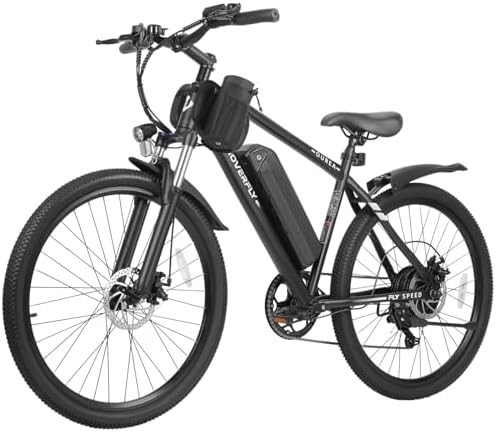
Mountain-ready 26-inch fat-tyre e-bike with a 750W peak motor.
How to Compare the Two Bikes Fairly
A shop ride can flatter either bike. Compare them on the same route, the same day, with the same settings, and the differences you feel are real.
What You Will Need
- Two bikes to compare — one step-through, one fat tyre — set to the same assist level.
- Your normal shoes, helmet and any bag or basket you ride with.
- A short route with a paved stretch, a rough stretch and a gentle slope.
- A watch or phone to time the route, and a note of how tired your legs feel.
The Method
- Set both saddles to the same height relative to your hips, and both bikes to the same assist level.
- Ride the same 10-minute route on each bike: pavement, then rough ground, then the slope.
- Lift each bike onto the kerb and walk it 10 metres. Note which one you would happily lift every day.
- Score each bike from 1 to 5 for mounting, balance, comfort and lifting. The higher total is your answer — not the bike that looked best in the shop.
Note: tyre pressure changes everything. Ask the shop to set both bikes to the pressure in the manual before you compare — a soft fat tyre and a hard narrow tyre will not give a fair result.

Folding 20-inch fat-tyre e-bike with a low step-through frame.
When the Damage Is Already Done
If you already bought the wrong type, you can usually make it workable without buying again. Match the fix to the symptom.
- The bike is too heavy to lift → store it at ground level, fit a ramp to the shed, or use a tow-bar rack that takes the weight for you.
- You cannot mount it comfortably → lower the saddle, lean the bike towards you as you step over, and practise mounting beside a wall.
- Nothing helps → sell or trade the bike while it is still new, and put the money towards the type the test pointed to. A wrong bike ridden twice is worth more than one gathering dust.
The Safer Alternative: A Fat-Tyre Step-Through
Some bikes give you both answers at once: a low step-through frame with fat tyres. If you ride mixed ground and mounting matters, this is the combination to try before you choose one side.
- Check the frame first: step through it in the shop. If you still have to lift your leg high, it is not a true step-through.
- Check the weight: lift it onto a kerb. A fat-tyre step-through is heavier than a normal step-through, so the lift test matters more, not less.
- If it passes the mounting, balance and lift tests, it is a genuine alternative — buy the one that fits, not the one with the biggest motor.
What to Do Next, in Order
- Write down where you ride most — paved, gravel, grass — and which problem bothers you more, mounting or grip.
- Do the 10-minute test on a step-through and a fat tyre, on the same route.
- Lift each bike onto a kerb and check you can store and transport it.
- Ride the winner once more, at your normal assist level, on your normal route.
- Check the return policy before you pay, so a bike that fails at home can go back.
Never Do These
- Never buy without mounting it five times. A bike you cannot get on is a bike you will not ride.
- Never judge a fat tyre on a smooth shop floor. Its advantage only shows on loose ground.
- Never ride a new e-bike in traffic first. Learn the brakes and the assist on quiet ground.
- Never ignore the weight. If you cannot lift it, you cannot rack it, carry it or store it.
In Short
In short, the step-through wins for most seniors because mounting, stopping and lifting are the problems that actually end rides, and it solves all three. The fat tyre wins when loose ground — gravel, grass or sand — is where you ride most, because its grip and low-speed steadiness are real.
The Essentials
- Step-through first if mounting, stopping or lifting is your problem.
- Fat tyre first if loose gravel, grass or sand is your daily surface.
- Test mounting, slow riding, stopping and lifting — in that order.
- Lift the bike before you buy it.
- A fat-tyre step-through can give you both, if the weight passes your lift test.
More Questions, Answered
Which is easier for a senior with bad knees?
The step-through. You do not lift your leg over a bar, and you can put both feet down at stops. Look for a low frame and a saddle you can reach the ground from.
Are fat tyres safer for seniors?
They are steadier at low speed and on loose ground, which helps balance. But they add weight, and a heavy bike is harder to hold up, lift and stop. Safety depends on your strength as much as on the tyres.
Can a step-through handle gravel?
Light gravel and firm tracks, yes. Deep gravel, soft sand and muddy grass are where fat tyres earn their keep. If your route is mostly paved with short gravel stretches, a step-through is fine.
Additional Details
| Name | Step-Through E-Bike vs Fat Tyre E-Bike: Which Is Better for Seniors? |
| Description | Step-through e-bike vs fat tyre e-bike: which is better for seniors? Compare mounting, balance, comfort and weight, then take the 10-minute test before buying. |
| Published | November 9, 2026 |