Straight answer: for carrying loads, a long range e-bike is the better choice for most riders. Range is the deciding number: a loaded bike uses more battery. An electric mountain bike, such as the HOVERFLY OUREA 26″, covers up to 40 miles per charge at up to 20 MPH. A long range e-bike, such as the GOKEEP 1300W folding e-bike, covers up to 75 miles per charge at up to 28 MPH, with a 330 lb load capacity. Choose the mountain bike only if most of your loaded riding is on rough ground.
Introduction
Carrying a load changes what an e-bike has to do. A weekly shop, a child’s seat or a work bag all add weight, and that weight asks more of the motor, the battery, the brakes and the frame. The bike that feels lively empty can feel short of range and stopping power once it is loaded.
An electric mountain bike is built for rough ground: suspension, fat tyres and a strong frame that shrug off ruts and kerbs. A long range e-bike is built for distance: a bigger battery, a comfortable position and, on many models, a rack already fitted. This guide compares the two for carrying loads, with a test to run before you buy. It sits in the E-Bikes Hub with the rest of our e-bike comparisons.
Below: the comparison, the five variables, the load test, the setup method and what to do next.
Electric Mountain Bike vs Long Range E-Bike: The Comparison
| Attribute | Electric mountain bike | Long range e-bike | What to watch when carrying loads |
|---|---|---|---|
| Range per charge | Shorter; built for rough ground. The HOVERFLY OUREA 26″ covers up to 40 miles per charge. | Longer; a bigger battery is the point. The GOKEEP 1300W covers up to 75 miles. | Judge by your longest loaded day; load, hills and wind cut stated range. |
| Load capacity | Built strong, but racks are often an extra to fit. | Often ready, with a fitted rack and a stated rating — the GOKEEP 1300W is rated for a 330 lb load. | Check the frame, rack and tyre ratings before you load up. |
| Motor and top speed | Strong for climbs; up to 20 MPH in our mountain example. | Strong for distance; up to 28 MPH in our long range example. | Torque on hills matters more than top speed when loaded. |
| Comfort and setup | Suspension and fat tyres smooth out rough ground and kerbs. | Upright, comfortable position, 7-speed gears and a removable battery on many models. | Test the saddle and position loaded, not on a quick empty lap. |
| Best for | Loaded riding on rough tracks, trails and broken surfaces. | Loaded riding on roads and paths, where distance matters more than terrain. | Over 40 loaded miles, the mountain side will let you down. |
When the Answer Changes
The verdict above holds for most riders on roads and paths. Five variables can move it:
- Longest loaded day: Under 40 miles with home charging, a mountain bike is enough. Over 40 miles, the long range side wins.
- Rough ground: On trails, ruts or broken surfaces, the mountain bike’s suspension and fat tyres matter more than extra range.
- How much you carry: A heavy load asks more of the motor and battery. Check the load rating first with a child or a large shop.
- Charging stops: If you can plug in at work or mid-ride, a smaller battery is fine. With no socket on your route, buy range first.
- Getting on and off: If you struggle to swing a leg over a loaded bike, a step-through frame helps. Read our electric mountain bike vs step-through e-bike comparison.
The Load Test: Five Checks That Decide It
Do not buy on range figures alone. Two e-bikes with the same stated range can feel very different loaded, so run this test on both bikes, on the same route, with the same load.
- Load it as you will ride it. Fit the rack, panniers or child seat you will actually carry.
- Ride your longest loaded day. Note the battery left at the end; if it dies first, the bike is too small.
- Climb your steepest hill loaded, in a low gear. Note whether the motor keeps up without you pushing.
- Brake from speed, loaded, on a quiet stretch. Feel for fade, squeal or a long stopping distance.
- Sit on it for 30 minutes. Check your hands, back and knees for numbness or pain.
What a fail looks like
| Symptom | Cause | Fix |
|---|---|---|
| Battery dies before the end | Battery too small for the loaded route, or full assist used throughout | Switch to a long range e-bike |
| Motor struggles on loaded hills | Motor too weak for the climb with a load, or battery nearly flat | Choose a stronger motor or a bigger battery |
| Brakes feel weak when loaded | Pads worn, or brakes not strong enough for the extra weight | Fit fresh pads and check the brake type |
| Bike feels unstable with a load | Weight too high, too far back, or rack overloaded | Keep the weight low and centred, and stay within the rack rating |
Myth: A bigger motor always means a better e-bike for loads. Fact: Range comes from battery size and assist level, and a load rating matters more than motor size.
Myth: Stated range is what you will get with a load. Fact: Stated range is measured without a heavy load — hills, wind and weight all cut it.
⚠ Before you test: Wear a helmet for every test ride, and check the brakes before you set off. If the brakes feel weak, or the load shifts, stop and fix it first.

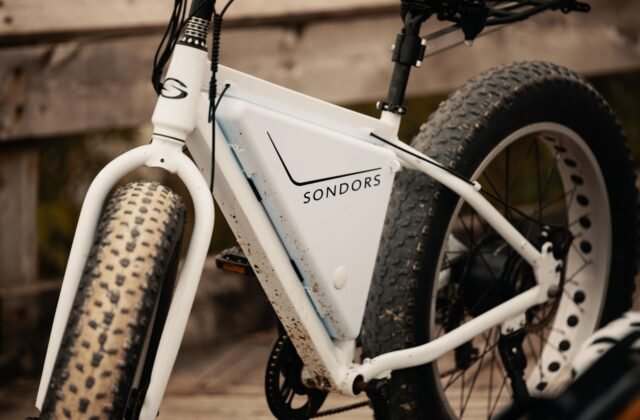
Mountain-ready 26-inch fat-tyre e-bike with a 750W peak motor, up to 40 miles per charge and 20 MPH.
How to Carry a Load on a Long Range E-Bike
A long ride with a load is won in the setup, not on the road. Both bikes need the same preparation, but the long range side starts ahead: more battery to spend on the extra weight.
What you will need
- A full charge — start at 100%.
- A rack and panniers rated for your load, or a fitted basket.
- A tyre pump with a pressure gauge.
- A multi-tool for saddle, handlebar and rack adjustments.
- Straps or bungees to stop the load shifting.
- Water, a snack and a phone.
The method
- Charge fully and note the starting battery, so you can compare rides.
- Fit the rack tightly, load the heaviest items low and close to the centre, and strap everything so nothing moves.
- Set the tyres to the pressure shown on the sidewall. Soft tyres waste battery and feel unstable loaded.
- Adjust the saddle so your leg is almost straight at the bottom of the stroke, and check you can reach the brakes loaded.
- Ride your usual loaded route and note the battery left after 10 miles. That tells you whether the range covers your longest day.
- Repeat the route with the other bike, at the same assist level, or the comparison means nothing.

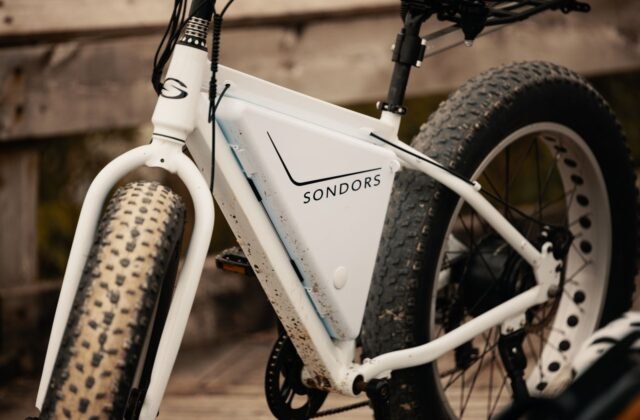
2000W peak motor, up to 32 MPH, full suspension and 20-inch fat tyres — the long-range pick for rough, loaded rides.
When the Damage Is Already Done
Bought the wrong side? Both can be improved — up to a point.
- Battery dies on loaded rides: Plan a charging stop, carry the charger, or use a lower assist level.
- No rack or load rating: Fit a rack rated for your load, and keep within the frame and tyre ratings.
- Bike feels unstable loaded: Lower the load, move it closer to the centre, and check the tyre pressure.
- Range keeps falling: An ageing battery loses capacity; a replacement battery restores most of it.
If none of that fixes it, change the bike. Buy the side that matches your longest loaded ride.
The Electric Mountain Bike as a Full Alternative
If most of your loaded riding is on rough ground, the mountain bike is the right alternative: its suspension and fat tyres keep the load steady, and its frame is built for hard use. Read our electric mountain bike vs hybrid e-bike comparison first.
- Work out your roughest regular route, not your longest. If the rough ground is the hard part, range comes second.
- Pick a bike with suspension, fat tyres and rack mounts. A rack is essential for loads — without mounts, carrying is awkward.
- Test it loaded on rough ground for 30 minutes, and check the brakes stop it cleanly.
- Plan charging around the shorter range, and know where you can plug in.

1300W peak motor, up to 75 miles per charge and a 330 lb load capacity — the load-carrying pick.
What to Do Next, in Order
- Measure your longest regular loaded ride.
- Check the load rating and rack mounts on any bike you consider.
- Test both bikes loaded, on the same route, at the same assist level.
- Compare the battery left after 10 loaded miles.
- Check where you can charge mid-ride.
- Buy the side that covers your longest loaded day.
Never Do These When Carrying Loads
- Never start a loaded ride half-charged. A load uses more battery than you expect.
- Never overload the rack. Past its rating, a rack can bend, and a shifting load unbalances the bike.
- Never carry a load loose. Strap everything down; a moving load changes the handling.
- Never skip the brake check. Extra weight means longer stopping distances.
- Never trust stated range alone. Stated range is measured without a load.
In short
For carrying loads, range decides. Under 40 loaded miles with charging at home, an electric mountain bike is enough — and it is the better pick on rough ground. Over 40 loaded miles, or with no charging stop, choose the long range e-bike.
The essentials
- Buy range first, not top speed, when you carry loads.
- Test loaded, at your longest distance, at the same assist level.
- Check the load rating, rack mounts and tyre pressure before you buy.
- Keep the load low, centred and strapped down.
- Check the brakes before every loaded ride.
More Questions, Answered
Which e-bike is better for carrying heavy loads?
A long range e-bike, for most riders: its bigger battery keeps its range when loaded, and the GOKEEP 1300W is rated for a 330 lb load.
How much range do you lose with a load?
It depends on the weight, the route and the assist level. Ride your longest loaded route and note the battery left, rather than trusting the listing.
Can an electric mountain bike carry loads?
Yes, if it has rack mounts and a rack rated for your load. Its shorter range is the limit: up to 40 miles per charge, against up to 75 miles for the long range bike.
Do I need a bigger motor to carry loads?
Not on its own. Torque on hills matters, but range comes from battery size and assist level, and a load rating matters more than motor size.
What should I check before buying an e-bike for loads?
The load rating, rack mounts, battery size, brakes and riding position — then test the bike loaded on your real route.
Additional Details
Name: Electric Mountain Bike vs Long Range E-Bike: Which Is Better for Carrying loads?
Description: Electric mountain bike vs long range e-bike: which carries loads better? Compare range, motor, racks and weight, then test both on your route before you buy.
Published: November 9, 2026