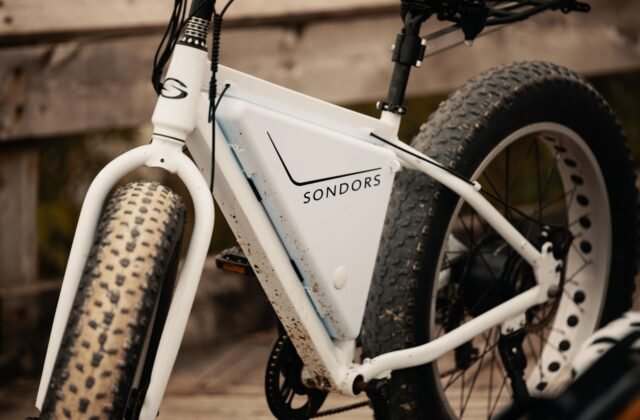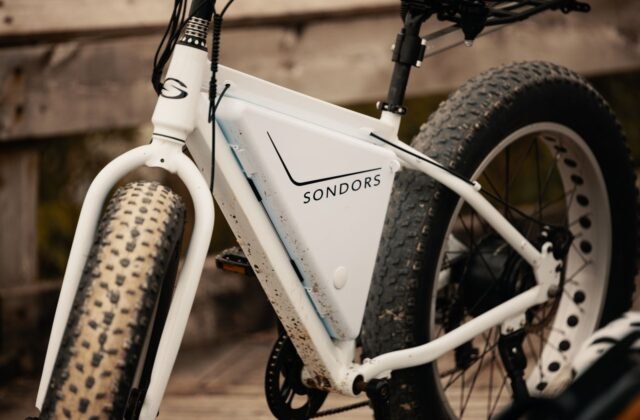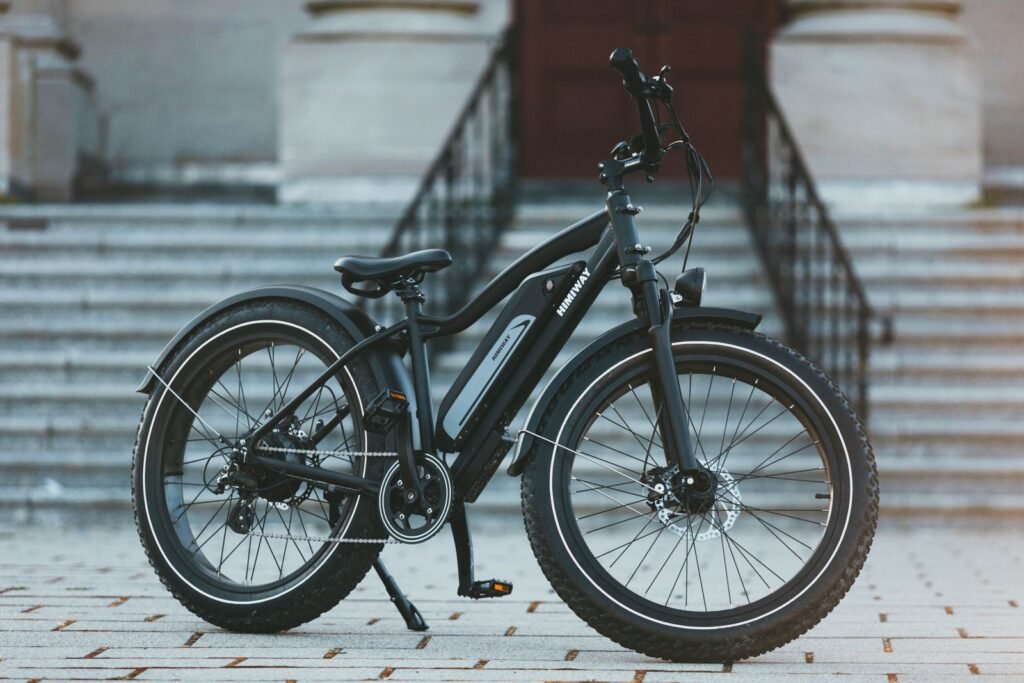
For most daily riders, the step-through e-bike is the better choice. It is easier to mount and stop on, easier to ride in work clothes, and easier to load with bags. The road e-bike wins only when your daily route is a longer, smooth-road ride and you want the most speed and range from every pedal stroke. If your ride has many stops, kerbs and errands, buy the step-through. If it is one long, open stretch of tarmac, buy the road e-bike.
The step-through e-bike vs road e-bike question comes down to how you ride every day. A step-through e-bike and a road e-bike both move you through the city on electric assist, but they suit different days. The step-through has a low, open frame, an upright position and wide tyres. The road e-bike has a diamond frame, drop handlebars, narrow tyres and a low, stretched-out position.
That difference shows up at every light, rack and shopping trip. This guide compares the two on the daily jobs, then gives you a short test for any demo ride.
If you are still choosing a category, start with the E-Bikes Hub, and see how the step-through compares with a mountain e-bike and how the road e-bike compares with a mountain e-bike.
Step-Through E-Bike vs Road E-Bike: The Core Comparison
Daily use is mostly stopping, starting, turning and carrying — not top speed. A step-through is built for access; a road e-bike for efficiency.
| Attribute | Step-Through E-Bike | Road E-Bike | What to Watch |
|---|---|---|---|
| Mounting and stopping | Step over a low frame; feet reach the ground | Swing a leg over a high top tube | Low frames matter if you stop often |
| Riding position | Upright; weight on the saddle | Low and stretched; weight on the bars | Upright suits traffic; low suits open roads |
| Speed and effort | Slower on open road; upright position catches wind | Faster on smooth tarmac for the same effort | Judge speed on your own route |
| Comfort on rough streets | Wide tyres absorb bumps | Narrow tyres pass bumps to the rider | Rough roads favour the step-through |
| Carrying loads | Racks fit easily; loads stay steady | Less rack room; loads sit high | Test with your actual bag |
| Weight and lifting | Usually heavier; harder to lift | Usually lighter; easier to carry | Lift it yourself first |
| Who it suits best | Commuters, errands, frequent stops | Long, smooth commutes, confident riders | Match the bike to your stops |
When the Answer Changes
The verdict flips with the route. A flat, smooth commute of several miles with few stops plays to the road e-bike: you hold speed with less effort, while the upright step-through feels like pushing against wind.
It flips the other way on a short, stop-start route — school runs, shops, stations and lights. The step-through saves time at every stop, and its upright position gives a better view of traffic.
Your body matters too. If a high frame is hard to mount, or your back, wrists or knees complain when low, the step-through is the right answer whatever the route looks like.
Set-up rule: Compare the two at the same saddle height, tyre pressure and load. A bike one size out will feel wrong for reasons that have nothing to do with its frame.

How to Decide in One Test Ride
Ride both bikes on the same loop, in the same clothes, with the same bag. One short ride beats a week of reading.
- Pick a 10-minute loop like your real ride: a light, a kerb, a hill, and a place to park.
- Ride the step-through first; count your stops and how easy each felt.
- Ride with your normal load — bag, lock and shopping — on both bikes.
- Ride the road e-bike second, same loop. Judge wrists, neck and back at the end.
- Park both as you will at home: lock, lift or carry them. The one you dread handling is wrong.
- Choose the bike that felt easy at stops and kerbs, not the one that felt fast on open road.
What a Fail Looks Like
- You wobble at every stop → frame too tall or saddle too high → lower the saddle; try a step-through frame.
- Wrists or neck ache in ten minutes → position too low → raise the bars or choose the step-through.
- You cannot lift the bike → too heavy for your storage → pick the lighter bike, or store it at ground level.
- You arrive sweaty on a short ride → check assist level and tyre pressure before blaming the bike.
Myth: A road e-bike is always faster, so it is always better for commuting.
Fact: A road e-bike is faster on an open, smooth road — but a commute with lights, junctions and kerbs is not an open road. The easier bike to stop, start and load often arrives in the same time, with less effort.
Before You Test: Wear your normal clothes and shoes, and bring your usual bag. Test on a quiet street first, check the brakes before you roll, and never test in traffic you do not know. If a demo bike has a fault — loose brakes, a wobbling wheel, a dead battery — stop and tell the shop.
The Daily-Use Method: Set Up and Ride Both the Same Way
Use this routine on the bike you are leaning towards, after the test ride. It checks fit, controls and daily jobs.
What You Will Need
- Your usual bag and lock
- A helmet
- A tyre pump and a pressure gauge, or a shop pump
- A tape measure
- Your work clothes, including the shoes you will ride in
The Method
- Set the saddle so your heel rests on the pedal at its lowest point with a straight leg, then drop it a few millimetres.
- Set the bars so you can reach the brakes with two fingers. On a road e-bike, check the levers from the hoods and the drops.
- Pump both tyres to the sidewall pressure, and check it before every test — soft tyres make any bike feel slow.
- Ride your full route, not a car park loop: include the worst hill, worst surface and tightest parking spot.
- Stop and restart five times in a row — the test most buyers skip, and where the step-through usually wins.
- Carry it up your home steps and lift it onto its rack. Too heavy? Say so now, not after delivery.
- Ride the same route again the next day — it should still feel comfortable.
Note: If the road e-bike feels too long or too low, ask the shop to try the smaller size or a shorter stem first. One size change often fixes a bike that felt almost right.

When the Damage Is Already Done
Bought the wrong one? The fix depends on the symptom. Most mismatches can be eased — a few mean trading in.
- Mounting is a daily struggle: lower the saddle; if the frame is still too tall, trade it for a step-through.
- Back or wrists hurt on the road e-bike: raise the bars or fit a shorter stem — if pain stays after a week, change the bike, not your body.
- Step-through feels slow on a long commute: check tyre pressure and assist first; if the route is truly long and smooth, a road e-bike is the honest fix.
- You cannot carry what you need: add a rack and panniers to the step-through, or a frame bag to the road e-bike — then test the load.
- Battery dies before home: charge nightly, use a lower assist on flat ground, and climb early in your route.
The Safe Alternative: A Road E-Bike Set Up for Comfort
If the step-through is not for you but the road e-bike feels too aggressive, soften it. A comfort set-up keeps most of its speed and loses most of its harshness.
- Pick the smallest frame that fits, with a shorter stem, so you sit more upright.
- Fit the widest tyres the frame allows, slightly softer than maximum pressure.
- Add a rear rack and small pannier instead of a backpack.
- Fit flat pedals and walkable shoes, so stops are easy.
- Ride your real route for a week — comfort changes as your body adapts.
If it still hurts after a week, the road position is not for you. A step-through with the same rack and tyres will do the same jobs — see how it compares with a cruiser e-bike.

What to Do Next, in Order
- Write down your real route: distance, stops, hills and parking.
- Test ride a step-through and a road e-bike on the same loop, with the same load.
- Note which bike was easier at the stops, the kerbs and the parking.
- Check the size and saddle height on the bike you prefer — most “wrong bikes” are the wrong size.
- Compare the daily jobs — carrying, locking, lifting — not just the speed.
- Buy the bike that is easiest on your worst day, not your best day.
Never Do This
- Never buy without a test ride. A frame that looks right can feel wrong in five minutes.
- Never judge a bike empty. Ride it with your bag, your lock and your shopping.
- Never size up for speed. A frame that is too big is hard to stop on and hard to lift.
- Never ignore pain on a test ride. Discomfort on day one rarely disappears by day thirty.
- Never choose by top speed alone. Daily use is stops, starts and loads — not a race.
- Never skip the parking test. If you cannot lock it or lift it where you live, it is the wrong bike.
In Short
For daily use, the step-through suits most riders: easier to mount, stop, load and ride in normal clothes, and comfortable on rough streets. The road e-bike is better only for longer, smooth-road rides where speed and range matter. Choose the bike easiest at your stops, not fastest on open road — see the best electric bike round-up.
The Essentials
- Step-through: easy mounting, upright position, best for stops and errands.
- Road e-bike: faster and more efficient on smooth, open roads.
- Test both on the same loop, with the same load and clothes.
- A wrong size feels like a wrong bike — check saddle height and reach first.
- Buy for your worst day, not your best: stops, rain, loads and parking.
More Questions, Answered
Is a step-through slower than a road e-bike? On a smooth, open road, yes — the upright position catches more wind. In stop-start city riding, the gap shrinks.
Can a road e-bike carry shopping or a laptop? Yes, with a rear rack and panniers, kept low and tested loaded first. A step-through carries the same load with less effect on balance.
Which is better in rain or winter? The step-through: the low frame eases mounting in wet clothes, and the upright position gives a better view. Either way, fit mudguards and check brakes more often.
Are step-through e-bikes only for older or shorter riders? No. It suits anyone who stops often, carries loads or wears work clothes.
Can I make a road e-bike comfortable for daily use? Partly: a shorter stem, wider tyres and a rack help a lot. But you cannot lower a diamond frame — if mounting is the problem, only a step-through fixes it.
Additional Details
Name: Step-Through E-Bike vs Road E-Bike: Which Is Better for Daily use?
Description: Step-through e-bike vs road e-bike: which is better for daily use? Compare comfort, speed, mounting and range, then pick the right one for your commute.
Published: November 9, 2026