Part of our guide on E-Bikes.
Your new Aventon showed E22 on its third ride. The bike is barely broken in, and the display is already flashing a throttle error. It feels wrong — a new bike should not have faults — and it raises the question: is the bike a lemon, or is this something small?
E22 on a nearly new bike usually points at something small: a lever that does not snap back, a connector never fully seated, or a cable nicked before you ever rode it. But “usually small” is not “ignore it”. This article tests the 8 most common things riders believe about E22 against what Aventon actually says, and gives you the check for each one.
The short answer: E22 is a throttle error, and on a new bike it points at the throttle itself
E22 means the throttle has an error. Aventon says the throttle cable or the throttle hall sensor may be damaged. When you press and release the throttle, it should return to the original position. The fix is a short list: remove obstructions, check the throttle and cable for damage such as a cut or frayed cable, and if that fails, replace the assembly.
On a bike only three rides old, that short list points in a specific direction. A new bike has not had time to wear a cable out, so a damaged cable is less likely than a connector never seated or a lever that sticks. The checks are the same either way, and Aventon gives no other fixes: no reset step, no setting to change, no part to test first.
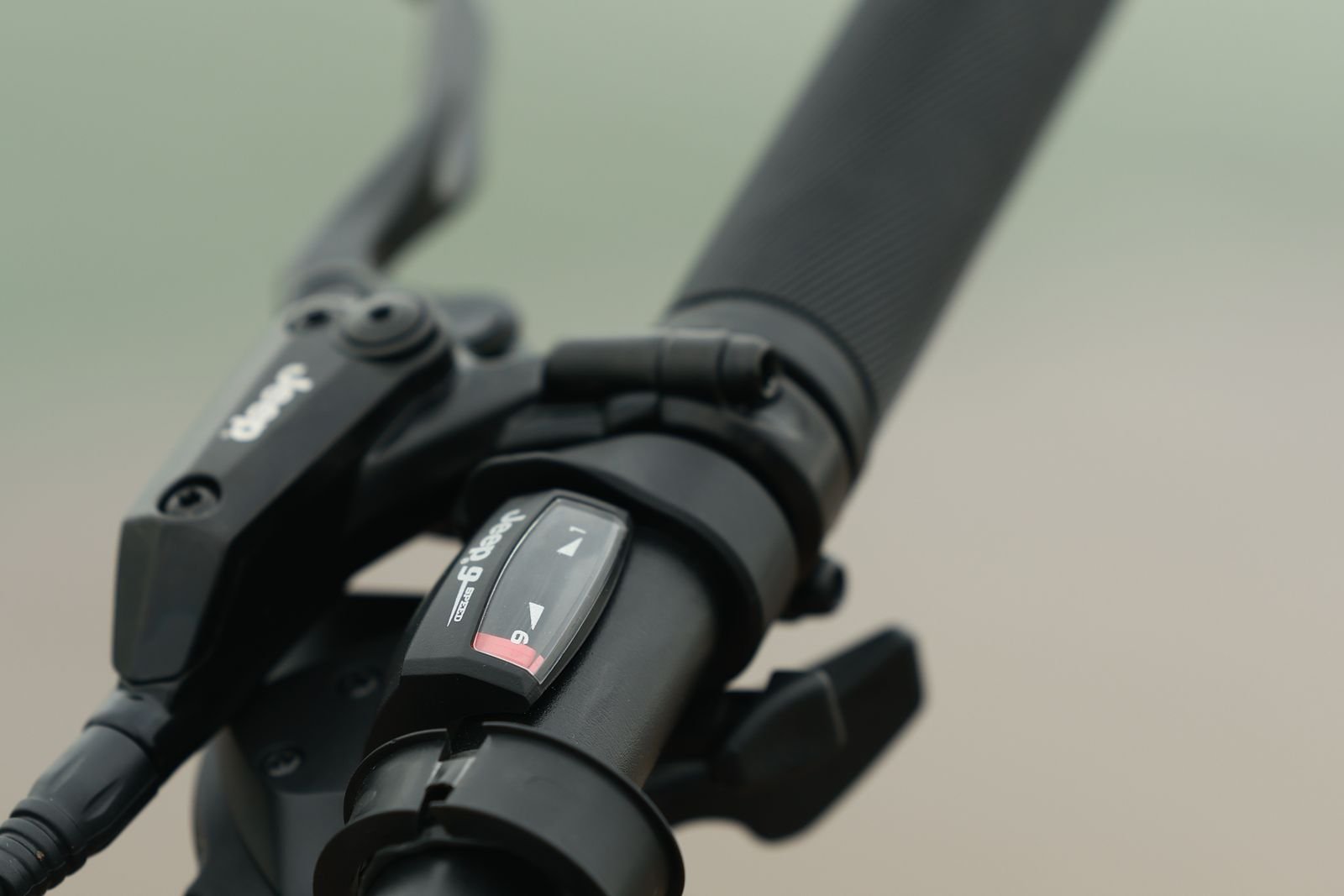
Rule of thumb: press the throttle and let go. If it does not snap straight back, do not ride until you have found why. A sticking throttle is the first thing Aventon tells you to check — and the check costs nothing.
Myth 1: “E22 means the motor is dead.”
What is actually true: E22 is a throttle error, not a motor error. Aventon says the throttle cable or the throttle hall sensor may be damaged. The motor is not part of the E22 guidance at all. Riders jump to the motor, but the code is telling you where to look: the handlebar, not the wheel.
Try this: forget the motor for now. Press the throttle and let it go, then look at the cable. If the lever returns cleanly and the cable looks whole, you have ruled out the two things Aventon names first. If either is wrong, you have found your fault without touching the motor.
Myth 2: “A new bike cannot have a throttle fault.”
What is actually true: it can, and on a bike with three rides on it, a new-bike cause is the most likely one. A connector never fully seated, a lever that sticks from the start, or a cable nicked during assembly will show up in the first few rides, not after a year. New does not mean fault-free — the fault is more likely in how the bike was put together than in how it has been ridden.
Try this: check the throttle connector where it plugs in. If it is not fully seated, push it firmly home until it clicks. Then press and release the throttle several times and watch it return. If the bike behaves after the connector is seated, you have your answer.
Myth 3: “E22 always means you need a new throttle.”
What is actually true: replacing the throttle assembly is the last step Aventon gives, not the first. Before that, remove any obstructions, check that the throttle returns to its original position when pressed and released, and check the throttle and cable for damage such as a cut or frayed cable. Only if those checks fail do you replace the assembly — jumping straight to a new throttle skips three free checks and spends money on a part you may not need.
Try this: work the list in order: clear anything caught around the throttle, press and release it and watch it return, and run your eyes along the cable for cuts or fraying. If all three check out and E22 is still there, the assembly is the answer.

Myth 4: “If the throttle works sometimes, the fault is gone.”
What is actually true: a throttle that works some of the time can still have a damaged cable or hall sensor. A cut or frayed cable does not always fail the same way: it can make contact, lose it, then make it again, and the error comes and goes with it — same for a lever that sticks only sometimes. Working sometimes is not fixed. The checks still apply.
Try this: do not wait for the error to come back on its own. Press and release the throttle ten times and watch it every time. Then flex the cable gently along its length while you watch the display. If the lever sticks even once, or the error flickers as you move the cable, you have found the fault “works sometimes” was hiding.
Myth 5: “You can fix E22 by resetting the display.”
What is actually true: Aventon gives no reset step for E22. The guidance lists exactly four things: remove obstructions, check the throttle returns to its original position, check the throttle and cable for damage, and replace the assembly if that fails. There is no button combination, no power cycle, and no setting that clears a throttle fault. A reset might hide the code for a moment, but it cannot fix a sticking lever, a cut cable, or a damaged sensor.
Try this: skip the reset and do the checks instead. They take minutes, cost nothing, and are the only fixes Aventon gives. If the code is still there after the checks, the assembly needs replacing.
Myth 6: “Any throttle problem means the whole bike needs a dealer.”
What is actually true: the checks Aventon gives for E22 are things you can do yourself. Removing an obstruction, pressing the throttle to see if it returns, and looking along a cable for a cut or a fray need no tools and no special knowledge. Only the last step, replacing the assembly, involves a part. Aventon gives no dealer-only step for this code. Do the checks first, and you will know whether a part is needed before anyone else touches the bike.
Try this: run the full check list at home before you book anything: clear obstructions, test the lever return, inspect the cable. If the assembly does need replacing, you will know exactly why.
Myth 7: “A throttle that sticks a little is normal on a new bike.”
What is actually true: it is not normal. Aventon says when you press and release the throttle, it should return to the original position. A lever that sticks, drags, or returns slowly is not breaking in. It is obstructed, or it is faulty. A new bike is the worst place for a sticking throttle: the rider is still learning the bike and may not notice the assist staying on a moment too long.
Try this: look for what is stopping the lever. Check for anything caught around the throttle, and check that nothing is pressing against it. If nothing is in the way and the lever still does not snap back, the throttle itself is the problem: check it for damage, and replace the assembly if the checks fail.
Myth 8: “E22 is caused by the battery.”
What is actually true: E22 is a throttle error. Aventon names the throttle cable and hall sensor as the parts that may be damaged. The battery is not part of the E22 guidance at all. Blaming the battery sends you the wrong way: you would check charge levels and connections that have nothing to do with the code, while the throttle goes unchecked.
Try this: keep your attention on the handlebar. The throttle, its cable, and its sensor are the whole of Aventon’s E22 guidance — check them first, and properly.
Before you ride again: the E22 checklist

- Press and release the throttle ten times — it should return to its original position every time. If it sticks, drags, or returns slowly once, do not ride until you have found why.
- Clear any obstructions. Look for anything caught around the throttle or pressing against the lever, and remove it.
- Inspect the throttle cable along its full length for cuts, fraying, or damage, especially where it bends or passes near the handlebar.
- Check the throttle connector is fully seated. On a three-ride-old bike, a connector never pushed firmly home is a likely cause. Seat it firmly.
- Ride a short test loop close to home. If the checks pass and E22 is gone, use the throttle often on that loop. If the code returns, the assembly needs replacing.
- If the checks fail, replace the throttle assembly. That is Aventon’s own last step. Do not keep riding on a throttle that failed its checks.
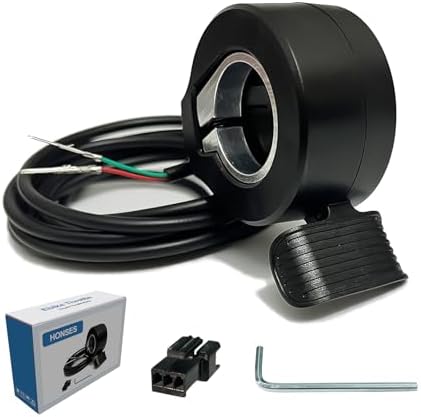
One honest note: no Aventon-original throttle is listed on Amazon, so the throttles shown here are generic replacements, not Aventon parts. Same type of part the fix points at — but check connector type and voltage match before buying.

Readers also ask
What does Aventon E22 mean?
E22 is a throttle error. Aventon says the throttle cable or the throttle hall sensor may be damaged.
Why is my new Aventon showing E22 after only 3 rides?
A new bike showing E22 on ride three points at a factory or connector seating fault, or a sticking lever — not at wear. Check the throttle returns, clear obstructions, and check the cable for damage. A connector never fully seated is a likely cause on a bike this new.
How do I fix Aventon E22?
Remove obstructions, check the throttle returns to its original position when pressed and released, and check the throttle and cable for damage such as a cut or frayed cable. If that fails, replace the throttle assembly. Aventon gives no reset step for this code.
Should the throttle snap back when I let go?
Yes. When you press and release the throttle it should return to the original position. A lever that sticks, drags, or returns slowly is faulty or obstructed — do not ride until you have found why.
Does E22 mean I need a new motor?
No. E22 is a throttle error, and Aventon names the throttle cable and hall sensor as the parts that may be damaged. The motor is not part of the E22 guidance. Check the throttle first.
Conclusion
E22 on a three-ride-old Aventon is annoying, but also informative. A new bike has not had time to wear anything out, so the fault is almost certainly in the throttle itself: a lever that sticks, a connector never seated, or a cable damaged before the bike was ever ridden. Run Aventon’s checks — obstructions, lever return, cable damage — and replace the assembly only if they fail. That is the whole fix, and the only fix Aventon gives.
Additional Details
Name: Aventon E22 Throttle Error After 3 Rides: What It Means on a New Bike
Description: Aventon E22 throttle error after 3 rides? E22 is a throttle error. Check the lever returns, clear obstructions, inspect the cable, replace the assembly.
Published: November 23, 2026