Part of our guide on Scooters
Rental Ninebot Max scooters turn up for sale everywhere — ex-fleet machines, cheap, and tempting. Before you buy one to ride as your own, there is one question that decides everything: which SNSC version is it? The ScooterHacking FAQ, the community’s own reference for this job, has a short answer for rental Max conversion, and it is much narrower than most sellers suggest. This article works through the ten myths that cause the most trouble, using only what that FAQ actually says — and it says plainly where the FAQ stops.
If you are still choosing a scooter rather than converting one, read our Segway Ninebot Kickscooter Max guide first. What follows is for a rental Max you already have in front of you.

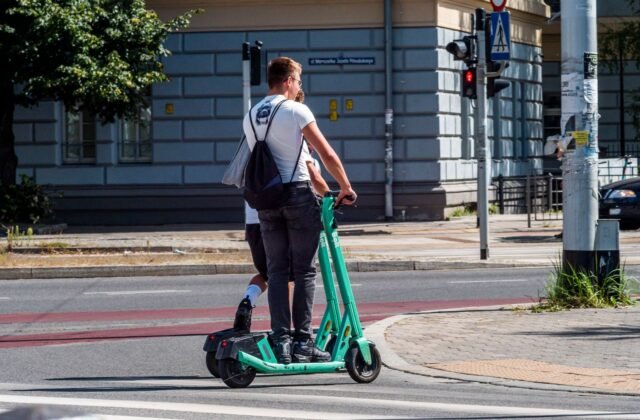
Photo by Ivett M on Pexels — a row of shared electric scooters parked outdoors.
10 myths about converting a rental Ninebot Max — and what is actually true
Myth 1: “Any rental Ninebot Max can be converted for personal use.”
Fact: No. The ScooterHacking FAQ answers the rental conversion question with a version check, not a yes. If the scooter is an SNSC 2.0, the FAQ points to a published guide. If it is a Max Plus (SNSC 2.3 or SNSC 2.4) or a Max Pro (SNSC 2.2), ScooterHacking does not publicly support those models. There is no published conversion path for them in the FAQ.
Practical tip: Find the SNSC version before you spend anything. It is the single fact that decides whether conversion is even on the table.
Myth 2: “If the app says the scooter is bound to another account, the scooter is useless.”
Fact: The FAQ gives a direct answer for this exact situation: change the serial number. A rental Max tied to the operator’s account is not a dead scooter — the binding is handled by changing the serial, not by recovering the old account.
Practical tip: If the app reports the scooter as bound to another account, treat the serial number as the next step, not the end of the road.
Myth 3: “You can flash custom firmware from your iPhone.”
Fact: No. The FAQ is explicit: custom firmware (CFW) cannot be flashed from an iPhone. Flashing works from Windows or Android only. An iPhone-only setup cannot do this job.
Practical tip: Borrow or set up a Windows PC or an Android phone before you start. Do not begin the job with only an iPhone in hand.

Myth 4: “Flashing the wrong firmware just means trying again.”
Fact: Flashing the wrong firmware can brick the scooter, and the way back is not another over-the-air flash — it is ST-Link recovery, which is a hardware job. The FAQ names ST-Link recovery as the consequence of wrong firmware, and it adds that the BLE555 can only be ST-Link’ed. A wrong flash is not a free retry.
Practical tip: Have an ST-Link programmer ready before you flash anything, and double-check that the firmware matches your exact model and version.
Myth 5: “A rental Max and a shop-bought Max are the same scooter inside.”
Fact: They are not the same starting point. A rental Max is tied to the operator’s account — the FAQ’s bound-account answer exists because of that — and its SNSC version decides whether a public conversion path exists at all. A retail Max does not carry the rental binding, and a rental Max Pro or Plus does not carry a public conversion guide either.
Practical tip: Judge a rental Max by its SNSC version and its account binding, not by the Ninebot Max badge on the stem.
Myth 6: “ScooterHacking supports every Ninebot Max model.”
Fact: It does not. The FAQ states plainly that ScooterHacking does not publicly support the Max Plus (SNSC 2.3 and SNSC 2.4) or the Max Pro (SNSC 2.2). Support is published for the SNSC 2.0, and the other versions are left out.
Practical tip: Do not buy a rental Max Pro or Max Plus expecting a guide to appear. If the seller cannot show you the SNSC version, walk away.
Photo by Kaabo USA on Pexels.

Myth 7: “Custom firmware comes from the Ninebot app.”
Fact: It does not. The FAQ points to community sources, not the app: custom firmware for the Max is at max.cfw.sh, and stock firmware comes from files.scooterhacking.org. The Ninebot app is where the binding problem shows up — it is not where the conversion firmware comes from.
Practical tip: Get your firmware only from the sources the FAQ names. A random firmware file from anywhere else is exactly how scooters get bricked.
Myth 8: “Bluetooth flashing works for every part of the scooter.”
Fact: Not for the BLE555. The FAQ states that the BLE555 can only be ST-Link’ed, which means hardware flashing through an ST-Link programmer, not an over-the-air Bluetooth flash. Some parts of the job are wireless; this one is not.
Practical tip: If your plan assumes everything can be flashed over Bluetooth, stop and re-plan around the ST-Link step.
Myth 9: “You need the rental company’s account or permission to ride a converted Max.”
Fact: The FAQ’s conversion path is technical, not administrative. The bound-account problem is answered by changing the serial number, and the firmware comes from community sources (max.cfw.sh and files.scooterhacking.org) — not from the rental company’s account. Nothing in the FAQ says to contact the operator or recover their login.
Practical tip: Follow the technical path the FAQ describes. And note what it does not say: the FAQ says nothing about whether converting a rented scooter you do not own is allowed by the rental operator, so do not read permission into it.
Myth 10: “Converting a rental scooter is a quick software job with no hardware risk.”
Fact: The FAQ’s own warnings say otherwise. Wrong firmware means ST-Link recovery — a hardware job — and the BLE555 can only be ST-Link’ed at all. A conversion that goes wrong stops being a software job the moment the scooter bricks.
Practical tip: Treat the ST-Link programmer as part of the job, not as a rescue you will never need. Buy or borrow one before you flash.
What the FAQ does not cover
Two things are worth saying plainly. First, the FAQ’s answer points to the SNSC 2.0 guide — it does not itself spell out the conversion steps, the tools, or the exact flashing order, so this article cannot spell them out either; the steps live in that linked guide. Second, the FAQ says nothing about whether converting a rented scooter you do not own is allowed by the rental operator, and nothing about deposits, contracts, or what happens if the operator asks for the scooter back. Do not read permission into the FAQ — it answers the technical question only.
Before you start: the checklist
- Identify the SNSC version. If it is not SNSC 2.0, stop — the Max Pro (2.2) and Max Plus (2.3, 2.4) have no public support.
- Check the app. If it says the scooter is bound to another account, plan on changing the serial number.
- Use Windows or Android for flashing. An iPhone cannot flash CFW.
- Get firmware from the named sources only: CFW at max.cfw.sh, stock firmware at files.scooterhacking.org.
- Have an ST-Link programmer ready before you start. Wrong firmware means ST-Link recovery, and BLE555 can only be ST-Link’ed.
- Do not flash firmware meant for a different model or version.
Photo by Eyüpcan Timur on Pexels.

Readers also ask
Can I convert any rental Ninebot Max for personal use?
No. Only the SNSC 2.0 has a published conversion guide in the ScooterHacking FAQ. The Max Pro (SNSC 2.2) and Max Plus (SNSC 2.3 and 2.4) are not publicly supported.
What do I do if the app says the scooter is bound to another account?
Change the serial number. That is the FAQ’s answer for a scooter tied to another account.
Can I flash custom firmware from my iPhone?
No. CFW cannot be flashed from an iPhone. Use Windows or Android.
What happens if I flash the wrong firmware?
The scooter can brick, and recovery is through ST-Link — a hardware job, not another wireless flash.
Where do I get the firmware for a Ninebot Max?
Custom firmware is at max.cfw.sh and stock firmware is at files.scooterhacking.org, according to the FAQ.
What is the BLE555, and why does it matter?
The BLE555 is a part that can only be ST-Link’ed, so it needs hardware flashing through an ST-Link programmer rather than an over-the-air flash.
Conclusion
Converting a rental Ninebot Max is a narrow job, not a general one: SNSC 2.0 has a published guide, the 2.2, 2.3 and 2.4 versions do not, the bound-account fix is a serial number change, and the flashing itself needs Windows or Android plus an ST-Link programmer on standby. Check the version first, and if it is not 2.0, the honest answer is to leave the scooter alone.
Additional Details
Name: Convert a Rental Ninebot Max for Personal Use (SNSC 2.0)
Description: Convert a rental Ninebot Max for personal use (SNSC 2.0): which versions have a guide, which do not, and the ST-Link risk if you flash wrong.
Published: November 22, 2026