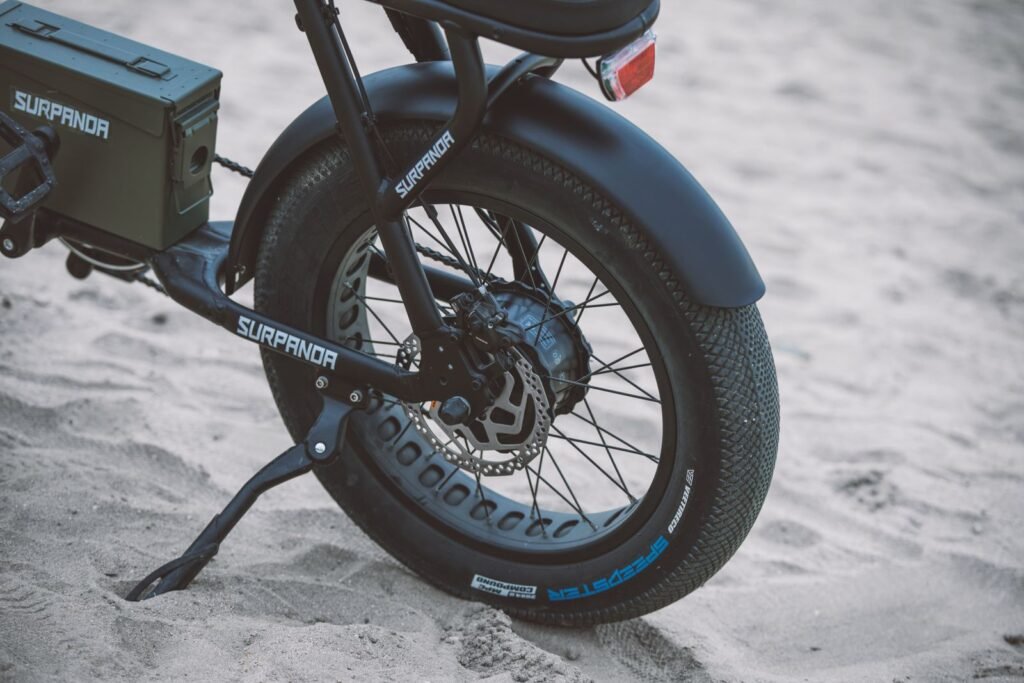
Straight answer: When you compare a cross country mountain bike vs fat mountain bike for weekend trail riding, the cross country mountain bike is the better choice for most riders on firm, rolling trails. It is lighter, pedals faster and climbs easier, so a two-hour loop feels like a ride rather than a fight against the bike. A fat mountain bike wins only where the trail is soft — sand, deep mud or snow — because its wide 3.8–5-inch tyres float where a narrow tyre sinks. On dry hardpack, the fat bike’s extra weight and rolling resistance make it the slower bike for the same effort.
Introduction
A weekend trail ride asks two things of a bike: it must climb steadily, then turn and descend safely. Cross country and fat mountain bikes answer that brief in opposite ways. One is built to be light and fast; the other is built to float over ground that most tyres sink into.
Say it plainly: a cross country mountain bike, or XC bike, runs narrow 2.1–2.4-inch tyres on a light frame with a short-travel fork, so it covers ground quickly. A fat mountain bike runs 3.8–5-inch tyres at very low pressure, so the tyre itself becomes the suspension and the contact patch spreads the bike’s weight over soft ground.
Below you will find the side-by-side comparison, the four variables that can flip the verdict, a 20-minute test ride you can run on your own trail, and what to do if you already bought the wrong one.
Cross Country Mountain Bike vs Fat Mountain Bike for Weekend Trail Riding: The Comparison
| Attribute | Cross Country Mountain Bike | Fat Mountain Bike | What to watch |
| Tyre width | 2.1–2.4 in, fast-rolling | 3.8–5.0 in, high float | Wide tyres grip soft ground but drag on hardpack. |
| Weight | Lighter, easier to carry and climb with | Heavier, harder work on long climbs | Extra weight is felt most on climbs. |
| Climbing | Faster and easier on climbs | Slow and tiring on climbs | If your loop climbs a lot, the XC bike wins. |
| Grip on soft ground | Sinks and slips in sand and mud | Floats over sand, mud and snow | Match the tyre to your softest trail section. |
| Comfort on rough ground | Suspension fork absorbs bumps | Wide, low-pressure tyres absorb bumps | Both work — the fat bike needs no fork service. |
| Speed on hardpack | Faster for the same effort | Slower; rolling resistance is high | A fat bike feels noticeably slower on firm trails. |
| Handling | Nimble, quick steering | Stable, slower steering | The fat bike suits wide, open trails. |
When the Answer Changes
The verdict above holds for firm, mixed weekend trails, but four variables can flip it:
- Your local trail. If your loop crosses sand, a beach, deep mud or snow, the fat bike is the better choice — the XC bike will bog down there.
- Your fitness and load. A heavier rider, or one carrying camping gear, benefits more from the fat bike’s float and comfort on rough ground.
- Your pace. If you want to ride fast and cover the most ground in two hours, the XC bike still wins — it is built for speed.
- Winter riding. In snow, a fat bike is not just better; it is often the only bike that works. A cross country bike’s narrow tyres cut through snow and stop.
Test Both Bikes on the Same Weekend Trail: A 20-Minute Decision Ride
Do not decide from a shop floor. Ride both bikes back to back on the same trail, and let the trail decide.
- Pick the loop. Choose a loop with a climb, a soft section and a firm descent, about 20 minutes long.
- Ride the cross country bike first. Ride at your normal pace. Note where it slips, where it climbs well, and how tired your hands and arms feel.
- Ride the fat bike second. Ride the same loop the same way. Note where it floats, where it feels heavy, and how much slower the climbs feel.
- Repeat the softest section. Ride the softest patch twice on each bike. The difference between floating and sinking is the whole decision.
- Choose the feeling, not the stopwatch. Pick the bike that leaves you fresher at the end — a weekend ride should end with energy to spare.
What a fail looks like
| Symptom | Likely cause | Fix |
| Wheels spin and sink on soft ground | Tyres too narrow for the trail | Switch to the fat bike, or fit the widest tyres your frame takes. |
| Legs burn out on every climb | Bike too heavy for the loop | Choose the cross country bike, or cut weight and gearing. |
| Hands go numb on rough ground | Tyres too hard or too narrow | Drop the pressure, or use wider tyres with more volume. |
| Bike feels slow on firm trails | Fat tyres dragging on hardpack | Use the cross country bike — or accept the pace and ride shorter loops. |
Myth: Fat bikes are slow everywhere.
Fact: Fat bikes are slow on hardpack, but on sand, mud and snow they are faster than a cross country bike, which cannot move at all there.
Myth: A cross country bike cannot handle rough trails.
Fact: A cross country bike handles rough trails well at the right tyre pressure. It struggles where the ground is soft, not where it is rough.
Before you test: Test on a trail you know, away from other riders and walkers. Wear a helmet, gloves and eye protection. Check the brakes, bolts and tyre pressure before each ride, and carry a pump and a multi-tool.

How to Set Up Either Bike for Weekend Trail Riding
Set up either bike the same way before you judge it — a good setup is worth more than tyre width.
What you will need
- A floor pump with a gauge
- Your helmet, gloves and eye protection
- A multi-tool
- A shock pump, if the bike has air suspension
- A clean rag
The method
- Set the tyre pressures. Start at the pressure your bike’s manual suggests for your weight. Fat tyres run far lower than cross country tyres — never swap the two pressures.
- Set the saddle height. Adjust it so your leg is almost straight at the bottom of the pedal stroke.
- Set the suspension sag. If the bike has a fork, sit on it in your riding gear and check the sag against the manual.
- Check the brakes. Pull each lever — it should feel firm well before the handlebar.
- Lube the chain and check the bolts. Clean the chain, apply chain lube and wipe off the excess. Check the axle, stem and seatpost bolts.
Do not pump fat tyres to the pressure a cross country tyre’s sidewall suggests. Over-hard fat tyres bounce off roots and lose the float that makes them work.
Note: A cross country bike with the right tyres and pressure will often beat a fat bike on firm trails — and a fat bike will beat it on soft ones. The trail, not the bike, decides.

When the Damage Is Already Done
If you already bought the wrong one, you do not always need a new bike.
- Cross country bike that sinks in sand and mud. Fit the widest, knobbiest tyres your frame and fork will take, and drop the pressure. You will gain float, but you will not match a fat bike on truly soft ground.
- Fat bike that feels slow and heavy on firm trails. Fit the narrowest, smoothest fat tyres available, raise the pressure a little, and keep your loops shorter and flatter.
- A frame that is the wrong size. No part fixes a wrong-size frame. Sell or trade the bike for the right size.
- Tyres that are the wrong width for your trail. Check your frame’s maximum tyre clearance before buying wider tyres.
For the full setup, see the Mountain Bike Air Pressure guide, and compare the other fat-bike match-ups in Trail Mountain Bike vs Fat Mountain Bike and Downhill Mountain Bike vs Fat Mountain Bike.

The Safe Alternative: Start with the Fat Mountain Bike
If your trails are soft, sandy or snowy, the fat mountain bike is the safe alternative — it works on the ground where a cross country bike stops. If you ride mostly firm trails, the cross country bike stays the better choice.
The method
- Inspect. Check the frame size, tyre width and brakes first, and make sure the bike fits you.
- Set the tyres. Fit the knobbiest tyres for your trail and set a low pressure that still avoids rim strikes.
- Set the cockpit. Adjust the saddle and levers so you feel centred on the bike.
- Test. Ride the same loop as the decision ride. Commit only when the soft sections feel comfortable and the climbs feel manageable.
What to Do Next, in Order
- Ride the 20-minute decision ride on both bikes.
- Note where each bike gains and loses.
- Check the brakes and the bolts before your next ride.
- When you are ready to change bikes, read Trail Mountain Bike vs Cross Country Mountain Bike and browse the Mountain Bikes Hub.
Never Do These on a Weekend Trail Ride
- Never ride a new bike at full speed on a trail you have not ridden.
- Never pump your tyres to the sidewall maximum. Over-hard tyres skip over roots and grip less.
- Never buy a bike without riding it on your own trail.
- Never keep riding a frame that does not fit. A wrong-size frame cannot be fixed with parts.
- Never ride without a helmet, gloves and eye protection. Trail riding throws up stones and branches.
In short
For most weekend riders on firm, mixed trails, a cross country mountain bike is the better choice: it is lighter, faster and easier to climb on. A fat mountain bike is the better choice only where the trail is soft — sand, mud or snow — because there its wide tyres float while narrow ones sink. Ride both on your own trail before you buy.
The essentials
- A cross country mountain bike suits most weekend riders; a fat mountain bike suits soft, sandy or snowy trails.
- Tyre width is the whole difference: narrow tyres are fast on hardpack, wide tyres float on soft ground.
- Test both bikes on the same loop before you buy — a shop car park tells you nothing.
More Questions, Answered
Is a cross country mountain bike better than a fat mountain bike?
For most weekend riders on firm trails, yes. The cross country bike is lighter, climbs better and covers more ground for the same effort. The fat bike only wins where the ground is soft.
Is a fat mountain bike good for beginners?
Yes, on soft or rough trails. Its wide tyres are stable and forgiving, and they absorb bumps without suspension. On firm trails a beginner may find the bike heavy and slow. For more, see Hardtail Mountain Bike vs Fat Mountain Bike: Which Is Better for Beginners?
What tyre pressure should I run on a trail?
Start with the pressure in our Mountain Bike Air Pressure guide for your weight and tyre width, then adjust a little at a time. Fat tyres run far lower than cross country tyres.
Additional Details
Name: Cross Country Mountain Bike vs Fat Mountain Bike: Which Is Better for Weekend trail riding?
Description: Cross country mountain bike vs fat mountain bike: compare weight, grip, speed and comfort for weekend trail riding, then test both on your local trail.
Published: November 10, 2026