Part of our guide on Scooters.
An e-scooter can feel legal on one street and illegal on the next. The same scooter, the same speed, the same rider — and the rule changes because you crossed a city line, or because the scooter is a rental instead of your own. There is no single e-scooter law. Countries, states and cities each write their own.
This guide shows how to check the law where you ride, what the common rules are in the US, the UK and the EU, and what to do when the answer is not clear. Read it before you buy, and before you ride somewhere new.
Quick facts
| Fact | What it means for your ride |
|---|---|
| Question this guide answers | Where you can legally ride an e-scooter, and what rules to follow |
| The short answer | It depends on where you ride. There is no single law for e-scooters. |
| Check first | Your city and state rules, your scooter’s top speed, and whether it is private or a rental |
| Most common limits | Speed cap of 15 to 20 mph (25 km/h in much of Europe), no pavements, lights at night |
| Biggest difference | Private scooters are illegal on UK public roads; rental scooters in trial areas are legal |
| Related guides | Electric Scooter Won’t Charge, Three-Wheel Moped for Adults, Wheelie Bar for Scooter |
Quick recap
- There is no one e-scooter law. Country, state and city can each set a different rule.
- Most places cap speed at 15 to 20 mph, or 25 km/h, and ban riding on pavements.
- In the UK, private e-scooters are illegal on public roads. Only rental scooters in trial areas are legal.
- In the US, rules are set state by state and city by city.
- Rental and private scooters are often treated differently on the same street.
- When the rule is unclear, check your local transport authority first.
The short answer: it depends on where you ride
An e-scooter is legal in most of the United States and much of Europe, and illegal on public roads in the United Kingdom if it is your own scooter. That is the closest thing to a general rule. In the US, a city can ban what its state allows. In the UK, the rental scooter next to you may be legal while your identical private scooter is not.
So the question is never just “are e-scooters legal?” It is “are e-scooters legal here, on this road, at this speed?”
The check section finds the law that applies to you, and the reference section matches common situations with what to do.
How to check the law where you ride, step by step
Work through these steps in order before a ride in a new place.
- Find the city rule. Cities often set their own bans and speed caps.
- Find the state or national rule. Note the speed cap, the minimum age and whether a licence is needed.
- Check where you may ride. Most places allow roads and cycle lanes. Pavements are banned in most places.
- Check your scooter’s speed and power. Many laws only cover scooters under a set speed and power, often 15 to 20 mph.
- Check rental against private. Rental scooters in a trial scheme can be legal where a private scooter is not.
- Check the night and helmet rules. Lights are required at night in most places, and helmet rules vary by age and place.
If any step gives no clear answer, treat the scooter as restricted and ask the local transport authority.
What you’ll need
- Your scooter’s spec sheet, for top speed and power
- Your city and state transport authority pages
- Your rental app, for the local riding zone
- A helmet, lights and reflectors
One Amazon product in this section only: the commuter scooter below is the kind most city rules are written for — low power, under 20 mph.

What the rule usually means
Use this table to match what you plan to do with what the law usually says.

| Situation | What you’ll notice | What to try |
|---|---|---|
| Riding on the pavement | Banned in most places | Use the road or cycle lane. |
| Riding in a cycle lane | Allowed in most places that allow scooters | Keep under the speed cap. |
| Riding at night | Lights and reflectors required in most places | Switch the lights on before dark. |
| Carrying a passenger | Banned in most places | Ride alone. |
| Riding after drinking | Treated like drink-driving in many places | Do not ride. |
| Police stop or a seized scooter | Usually a speed or pavement stop | Show the spec sheet, and check the rule before riding again. |
One Amazon product in this section only: the Segway below is a common road-legal commuter scooter.

How country, state and city rules change the answer
In the United States there is no single federal e-scooter law: each state writes its own, and cities can add their own bans. In the EU, each country sets its own cap and insurance rule. In the United Kingdom, private e-scooters are illegal on public roads, and only rental scooters in official trial areas may be ridden there.
California allows scooters on roads and cycle lanes at up to 15 mph, with a helmet required under 18 and no licence needed. Germany allows them on cycle paths and roads at up to 20 km/h, with an insurance plate required and a minimum age of 14. France caps speed at 25 km/h and requires insurance. These are examples.
What works
- Check the rule for the exact city, not just the country
- Keep your scooter under the local speed cap
- Treat rental and private scooters as different cases
- Carry the spec sheet
What to watch
- City bans and trial areas start and end without much notice
- A scooter over the local limit can count as a motor vehicle
- Insurance rules differ, and a rental usually includes cover
- Do not take a forum answer as the law
Settings and controls that affect where you can ride
Before you ride somewhere new, check the settings that decide whether your scooter fits the local rules. Top speed is the main one: many scooters have a road-legal or eco mode that caps the speed. Lights are the second: they are required at night.
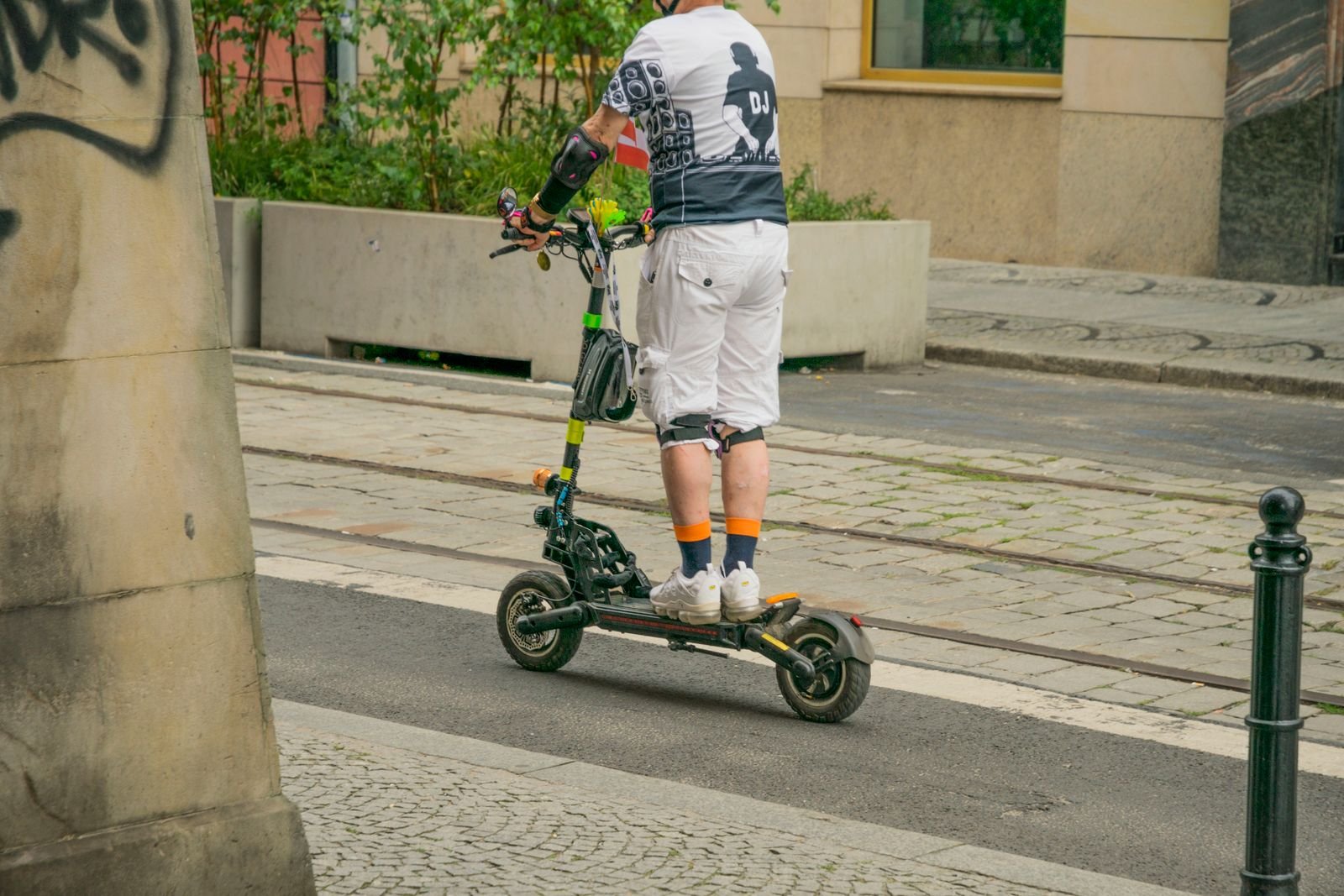
The display matters too: a speedometer helps you stay under the cap. Check the brakes and the bell before the ride as well.
What works
- Use the road-legal or eco mode that caps speed at the local limit
- Switch the lights on before dark
- Keep the display visible so you can watch your speed
- Test the brakes and the bell before you set off
What to watch
- A sport or unlocked mode can push the scooter outside the local law
- A dead display or dead lights are not a small fault at night
- Do not ride with worn brakes or bald tyres and trust the speed cap to keep you safe
When a problem needs a different scooter or a permit
Some law problems have a simple fix, and some need a different scooter or a permit.
| Fix | Best use | Limit |
|---|---|---|
| Use the road-legal or eco mode | Scooter is faster than the local cap | Will not help if the motor power is over the limit |
| Get insurance or registration | Your country or state demands it | Takes time; check the plate and cover first |
| Use a rental scooter in a trial city | Private scooters are banned where you are | Only inside the trial area |
| Choose a compliant scooter | Your scooter is over the limit for good | Match speed and power to the cap |
| Ask the local authority | No clear rule, or a fine you do not understand | Do not ride until you have the answer |
What works
- Keep the manual and spec sheet with the scooter
- Ask the local authority before buying
- After any change, start with a short, slow ride
What to watch
- A scooter with no capped mode can be unusable where the limit is low
- A second-hand scooter with no papers can carry the same problem
- Do not keep riding a scooter the police told you to stop using
One Amazon product in this section only: the folding scooter below is light enough to carry onto a train.

The verdict
E-scooter laws change by place, not by scooter, so check the city rule before you ride and keep the scooter under the local speed cap. When the rule is unclear, ride as if the strictest nearby rule applies, and get the answer from your local transport authority.
Readers also ask
Are e-scooters legal in the US?
In most states, yes, with conditions. There is no single federal rule, so each state sets its own speed cap and riding places.
Are private e-scooters legal in the UK?
No, not on public roads, pavements or cycle lanes. Only rental scooters in trial areas may be ridden on public roads. A private scooter may only be used on private land.
Do I need a licence to ride an e-scooter?
Usually not for a low-power scooter under the local speed cap. Faster scooters can count as motor vehicles, which can need a licence and insurance.
Can I ride an e-scooter on the pavement?
Almost never. Pavement riding is banned in most places, even where road riding is legal. Use the road or the cycle lane.
What is the speed limit for e-scooters?
It depends on the place. Common caps are 15 mph in many US states, 15.5 mph in the UK trials, 20 km/h in Germany and 25 km/h in France.
Do I need insurance for an e-scooter?
It depends on the place. Germany requires liability insurance and an insurance plate, and France requires insurance. Rentals usually include cover.
Affiliate Disclosure: We may earn a commission when you buy through links on this site, at no extra cost to you.
Additional Details
Name: E Scooter Laws: Where You Can Ride and What to Know
Description: E-scooter laws change by city, state and country. Learn where you can ride, the common speed and age rules, and how to check the local law before you ride.
Published: November 17, 2026