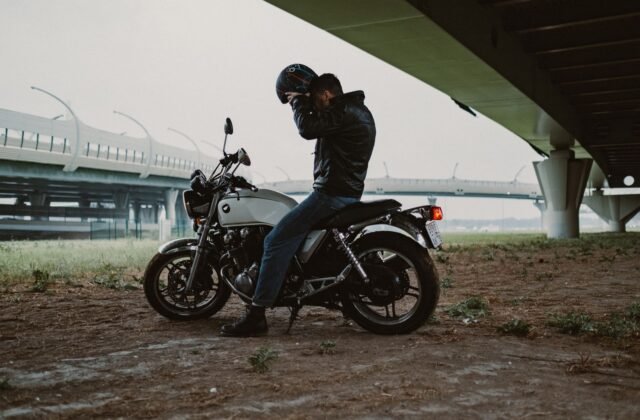
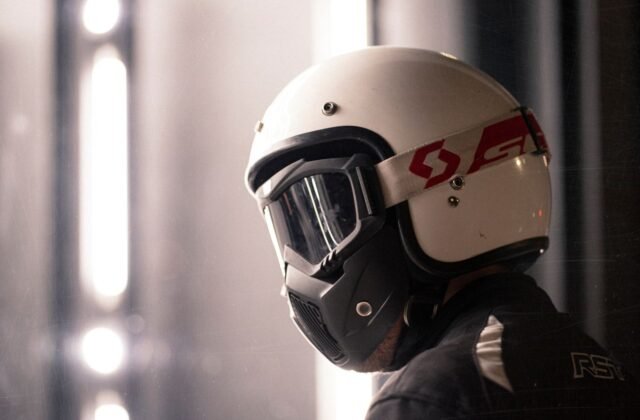
Part of our guide on Helmets and Safety Gear.
Rain tests every piece of gear at once. A rider in a sealed rain suit with dry gloves and a clear visor rides almost normally, while a rider in a jacket that wets through in twenty minutes gets cold, loses grip, and stops seeing the road. The difference is rarely the rain: it is the gear.
This guide shows how to check motorcycle rain gear before you ride, what each wet-ride symptom means, and when a repair or a replacement is the right answer. For gloves, read Best Gloves for Winter Motorcycle Riding; for helmets, read Best Budget Full-Face Motorcycle Helmet.
Quick facts
| Fact | What it means for your ride |
|---|---|
| Problem this guide fixes | Gear that lets rain in, fogs the visor, soaks gloves and boots, and leaves the rider cold |
| Check first | Seams, zips and cuffs; glove cuffs; boot covers; the visor and its seal |
| Most common causes | A suit that is water-resistant, not waterproof; open vents and cuffs; worn seam tape; gloves with no waterproof layer |
| What you need | Rain suit, waterproof gloves, boot covers, a dry cloth, a dry bag |
| Do not ride on | Standing water you cannot see through, hail, or lightning: pull over somewhere safe and wait |
| Related guides | Best Gloves for Winter Motorcycle Riding, Best Budget Full-Face Motorcycle Helmet |
Quick recap
- Waterproof means sealed seams, not a coating that beads water for a while.
- Most leaks start at the cuffs, zips and seams, not in the middle of a panel.
- Cold, wet gloves lose grip and feel on the levers.
- A fogged visor is a gear problem: treat the visor, not the rain.
- Slow down and double your following distance on wet roads.
- A suit that leaks at the same seam after a reproof needs replacing.
The short answer: seal the layers, keep your hands dry, and slow down
Good rain gear works as a system: a two-piece waterproof suit with sealed seams, waterproof gloves with gauntlets over the cuffs, boot covers, and a visor that stays clear. If one layer fails, the water finds the gap and the rest stops mattering. Check the cuffs, zips and seams, close every vent, and carry a dry cloth. Then slow down: wet roads double stopping distances.
Most wet rides go wrong in three places: the jacket cuff, where a glove worn under the sleeve lets water run down the arm; the seat, where pooled water soaks a worn panel; and the visor, which fogs from the inside.
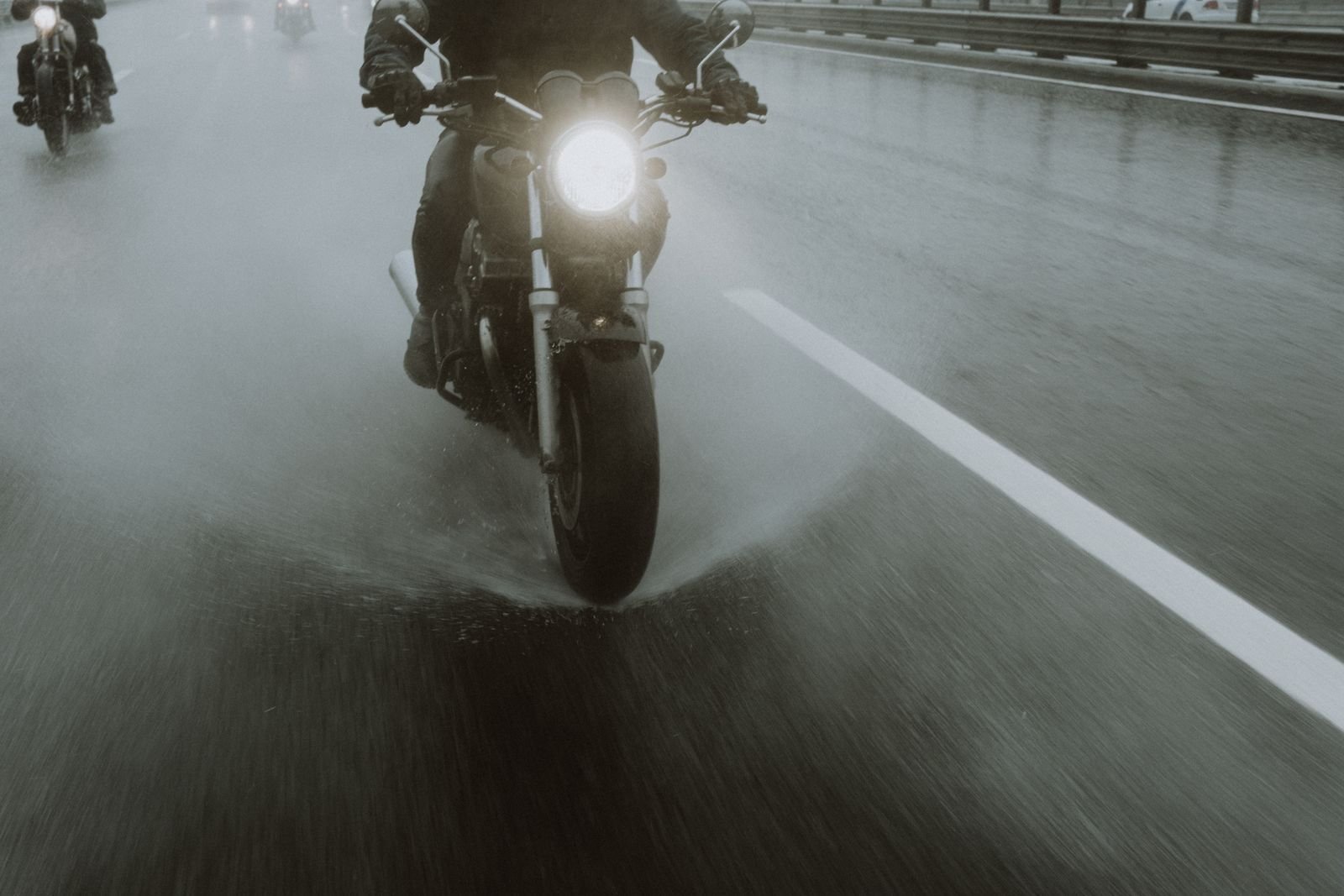
The checks below take about five minutes at home and save a miserable hour on the road.
How to check your rain gear before you ride, step by step
Work through these steps in order, and note where the water gets in: a seam, a zip or a cuff.
- Close every vent and zip. Check the vents move freely, then close them fully.
- Check the cuffs. Wear the gloves over the jacket cuffs, not under them.
- Look at the seams. Turn the suit inside out and check the tape covering each stitched seam.
- Test the zips. Run each zip up and down and check the storm flap covers it.
- Check the visor. Open and close it, check the seal sits flat, and wipe the inside dry.
- Pack the dry bag. Put your phone and documents in a dry bag and test that it closes.
If every step looks normal and the suit still leaks, change one thing at a time on a short ride.
What you’ll need
- Your rain suit, or the jacket and trousers you ride in
- Waterproof gloves with gauntlets that cover the cuffs
- Boot covers, or waterproof boots with sealed seams
- A dry cloth for the visor, and a spare in a pocket
- A dry bag for your phone and documents
- The care label on the suit, for washing and reproofing
One Amazon product in this section only: the two-piece rain suit below is the same kind of sealed-seam suit this guide checks against.

What the wet ride usually means
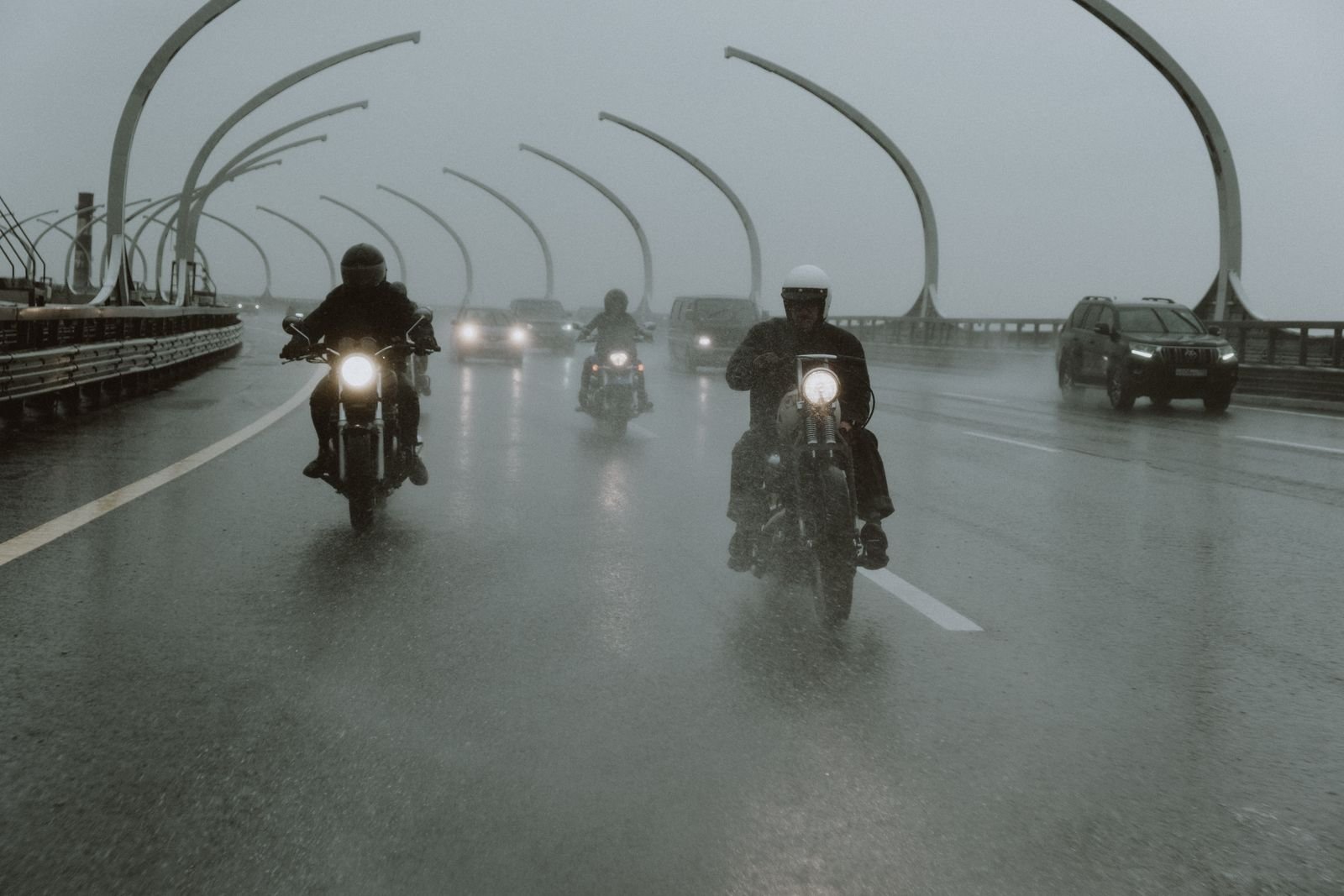
Use this table to match what you notice with what to try first. If water is getting in through a torn panel, no adjustment will fix it.
| Situation | What you’ll notice | What to try |
|---|---|---|
| Water down the arms | Sleeves wet inside, hands cold | Wear gauntlets over the cuffs |
| Wet seat and legs | Trousers soaked at the seat | Check the seat seams for worn tape |
| Visor fogs from inside | Cloudy visor at every stop | Open the vents, crack the visor, use an anti-fog wipe |
| Rain inside the visor | Drops running down inside | Check the seal; replace a hard or split seal |
| Cold, numb hands | Fingers stiff on the levers | Wear insulated waterproof gloves |
| Wet feet | Socks soaked, boots heavy | Wear boot covers over the boots |
Gloves are the part most riders get wrong in the rain. A glove that is only water-resistant will soak through, and cold, wet hands brake slower.

How rain, speed and cold change the answer
The same suit can feel like a different suit in light drizzle, in steady rain, and in a cold downpour. Light rain tests the coating. Steady rain tests the seams and zips. Cold rain tests the rider, because cold hands brake late.
Speed changes the answer too. At town speed, rain falls from above. At highway speed, rain is driven sideways into the zip, the cuffs and the visor seal, and a gap that did not matter at 30 mph becomes a leak at 60 mph.
What works
- Close every vent before the rain starts
- Wear gauntlets over the cuffs and cuffs over the boots
- Slow down in the first ten minutes of rain
- Keep a dry cloth in a sealed pocket
What to watch
- A suit that beads water in light rain and soaks through in steady rain is water-resistant, not waterproof
- Cold, wet hands lose grip; stop and warm them before they go numb
- A visor that fogs at every stop needs treating or a new insert
- Standing water you cannot see through can hide a pothole
Settings and controls that keep you dry
Before deciding a suit has failed, check the settings that decide how much water it lets in. Vents are the biggest one: an open chest vent is a direct route to a wet chest. A loose cuff lets water run down the arm.
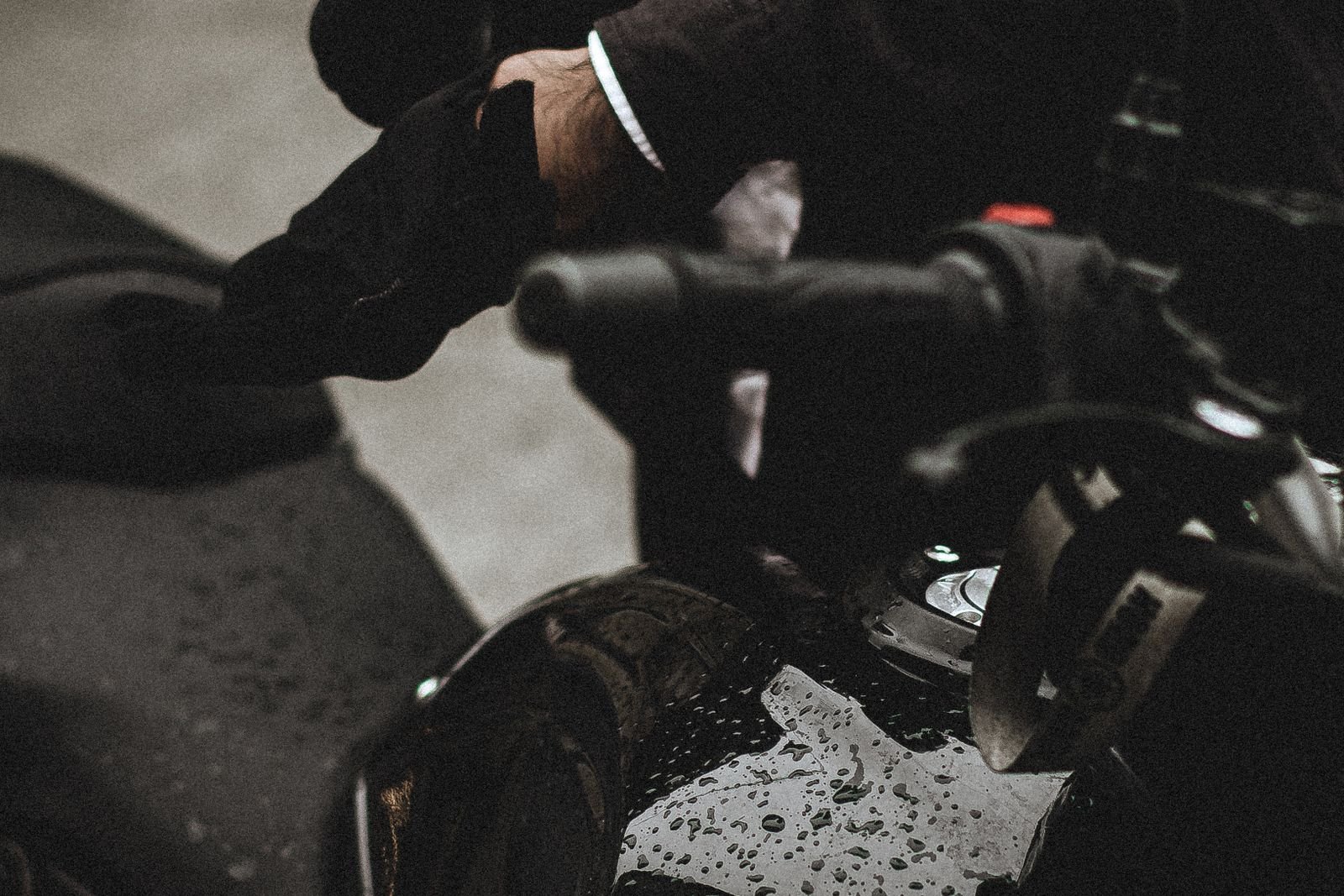
Gloves decide how much control you keep. A glove that fits tightly when dry can feel stiff when wet, and a loose glove slips on the grip. Put them on before you ride and check you can still feel the brake and the clutch.
What works
- Close all vents before the rain, and open them only when it has stopped
- Tighten the cuff and ankle straps so no gap is left
- Keep the visor cracked at stops, and close it fully at speed
- Check the glove fit with the levers before you ride
What to watch
- A vent that will not close fully is a leak; get it repaired
- A visor seal that is hard, split or flattened will not keep rain out
- Do not ride with a visor or a control that sticks or will not close
When a fix needs a replacement
Some rain gear problems have a simple fix, and some need a replacement. A loose cuff can be tightened, a zip can be waxed, and a coating can be reproofed. A seam with failed tape cannot be fixed by washing.
| Fix | Best use | Limit |
|---|---|---|
| Reproof the coating | Water stops beading and the fabric wets out | Will not help if the seam tape has failed |
| Repair seam tape | One seam leaks while the rest stays dry | Needs a proper heat repair; glue rarely holds |
| Replace the visor seal | Rain runs down the inside of the visor | Must match the helmet model exactly |
| New waterproof gloves | Hands get wet and cold on every rainy ride | Must fit the levers and cover the cuffs |
| New rain suit | Leaks at several seams, or wets through everywhere | Check the size and riding position first |
What works
- Wash with the cleaner its label recommends, then reproof it
- Repair one failed seam and test it on a short wet ride before replacing the suit
- After any fix, start with a short ride in light rain and check you stay dry
What to watch
- A reproof that only restores beading has not fixed a failed seam
- A second-hand suit with no history can carry the same leak
- Do not keep riding in a suit that soaks through; cold hands brake late
A two-piece suit is the simplest replacement when the old one has failed at several seams, because the jacket and trousers can be sized separately.

The verdict
Most wet rides are fixed by sealing the cuffs, closing the vents, and wearing waterproof gloves with gauntlets over the sleeves. When a suit leaks at the same seam after a wash and a reproof, the seam has failed and it is time to replace it.
Readers also ask
Can I ride a motorcycle in the rain with normal gear?
You can, but normal gear soaks through and leaves you cold, and cold hands brake late. A waterproof suit, gloves and boot covers keep you dry.
What is the best rain gear for a motorcycle?
A two-piece waterproof suit with sealed seams, waterproof gloves with gauntlets, and boot covers. The gloves and boots close the gaps at the cuffs.
How do I stop my visor fogging up in the rain?
Keep the vents open slightly, crack the visor at stops, and treat the inside with an anti-fog wipe. If it still fogs at every stop, the insert is worn out.
Do waterproof gloves really keep hands dry?
Yes, if the gloves have a waterproof layer and the gauntlets go over the cuffs. Gloves worn under the cuffs let water run down the arm.
When should I replace a motorcycle rain suit?
When it leaks at the same seam after a wash and a reproof, when several seams leak at once, or when the fabric wets through everywhere. One failed seam can be repaired.
Affiliate Disclosure: We may earn a commission when you buy through links on this site, at no extra cost to you.
Additional Details
Name: Motorcycle Gear for Rain: How to Ride Dry and Stay Safe
Description: Motorcycle gear for rain: how to check your rain suit, waterproof gloves and visor before you ride, fix leaks fast, and stay dry and safe on wet roads.
Published: November 17, 2026