Part of our guide on Scooters.
A private electric scooter looks harmless, and it is legal to buy and own one in the UK. The trouble starts the moment its wheels touch a public road, pavement or park. Under UK law a privately owned e-scooter is a motor vehicle, and riding one in public can cost £300, six penalty points on your car licence, and the scooter itself.
This guide works through the penalty as a formula: what the law says, what happens to a new driver, why having no licence is no protection, and the only lawful ways to ride in public in Great Britain.
Quick facts
| Fact | What it means for you |
|---|---|
| Legal status | Motor vehicle (Road Traffic Act 1988); riding in public is illegal |
| Where you may ride | Private land only, with the landowner’s permission |
| Fixed penalty | £300 fine and 6 penalty points on your licence |
| Seizure | Police can seize it, and sometimes destroy it |
| If it goes to court | Unlimited fine and possible disqualification |
| New drivers | 6 points within two years of passing revokes your licence |
| Legal way to ride | A rental scooter in a trial area, with a licence |
| Scope | Great Britain; Northern Ireland is separate |
Quick recap
- A privately owned e-scooter is a motor vehicle in law, even with no engine, number plate or tax disc.
- Riding one on a road, pavement or in a park is illegal. Private land with the landowner’s permission is the only lawful place.
- The standard penalty is a £300 fine, 6 points on your licence, and seizure of the scooter.
- The points land on your car licence. Hold it under two years and six points revokes it.
- Rental scooters in the 18 live trial areas are the only legal way to ride in public.
The short answer: £300, 6 points, and the scooter seized
A UK private electric scooter seized by police in public is a motoring offence with a fixed formula: a £300 fixed penalty notice, 6 penalty points on your driving licence, and seizure of the scooter, which can sometimes be destroyed. In court, the fine becomes unlimited and disqualification is possible.
A privately owned e-scooter is a motor vehicle under the Road Traffic Act 1988, so it needs insurance, tax and type approval. No insurer meaningfully offers cover, and a private scooter cannot be type-approved. The ride itself is the offence.
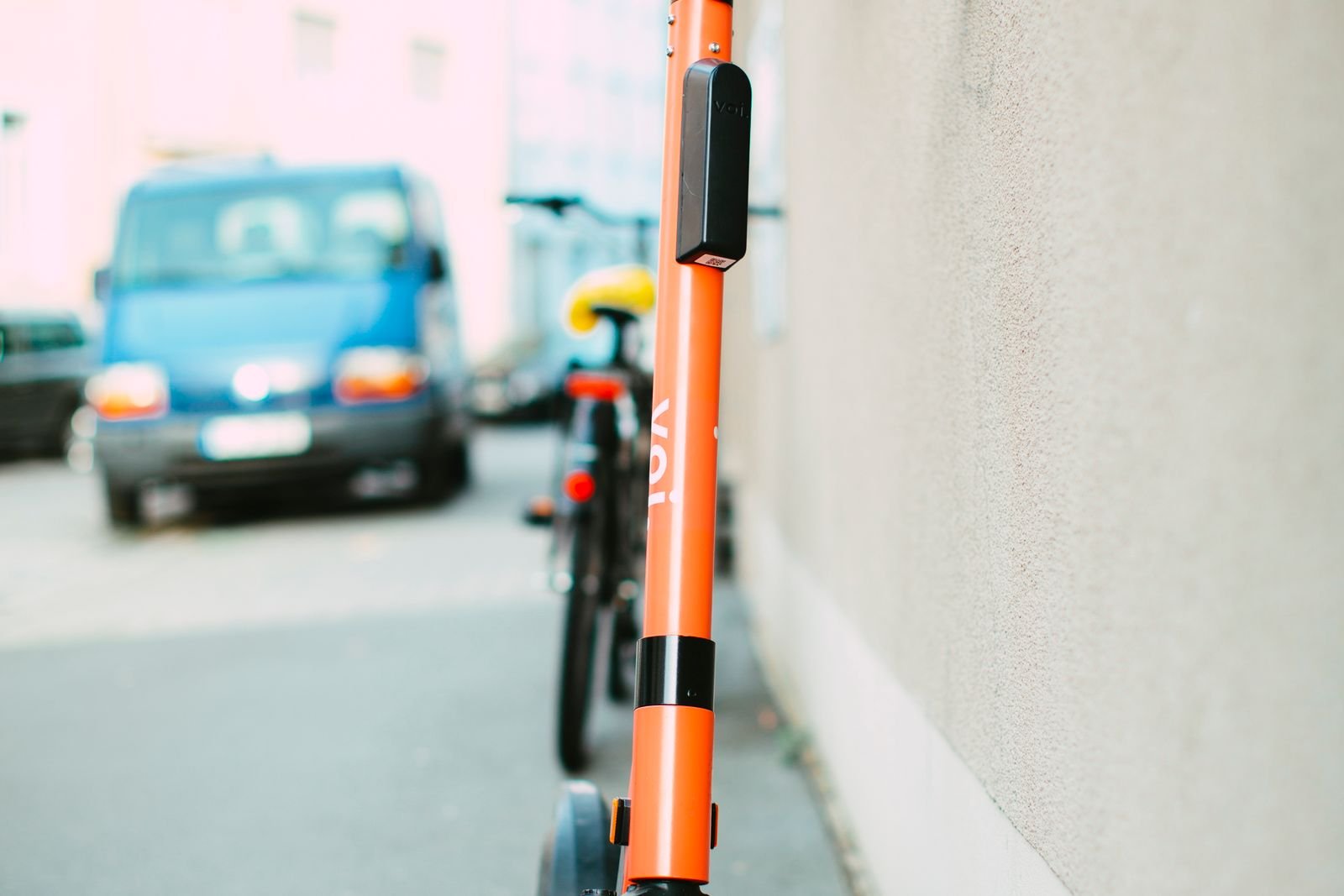
An orange electric scooter parked on a city sidewalk. Photo by Markus Spiske on Pexels.
Rule of thumb: If the scooter is yours and the ground is public, the ride is illegal.
The penalty formula, in numbers
Think of the penalty as a formula with three parts that always apply together:
£300 + 6 points + seizure = the standard outcome for riding a private e-scooter in public.
The key numbers behind the formula:
- £300 — the fixed penalty for driving without insurance.
- 6 points — added to your driving licence for the same offence.
- 2 years — the new-driver window. Six points inside it revokes your licence.
- 18 — live rental trial areas across England.
- 31 May 2028 — the date the rental trials are due to end.
- 15.5 mph (25 km/h) — where motor assistance must stop on a compliant e-bike, and the top speed of a legal rental scooter.
- 250W — the maximum continuous power of a compliant e-bike (an EAPC).
The law in a table: what counts as what
E-scooters are often treated as toys or bicycles. The law treats them as neither. This table sets out how each category is classified, and what follows from it.
| Vehicle | Classification | Riding in public | What you need |
|---|---|---|---|
| Private e-scooter | Motor vehicle | Illegal — roads, pavements, parks | Insurance, tax, type approval — none obtainable |
| Rental e-scooter (trial) | Motor vehicle, covered by trial | Legal in a trial area — roads and cycle lanes only | Full or provisional UK licence; insurance from the operator |
| Compliant e-bike (EAPC) | Bicycle | Legal anywhere a bicycle may go | No licence, tax or insurance; rider 14+ |
| Non-compliant e-bike | Motor vehicle | Illegal without registration and insurance | The same requirements as a scooter |
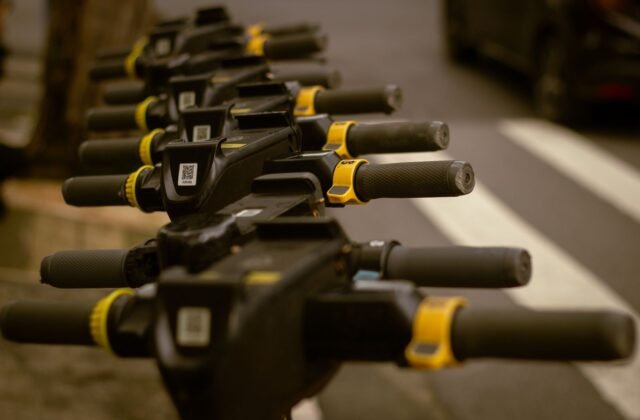
These are the scooters this law covers. In the UK they may only be ridden on private land, or as a rental in a trial area.

What makes it worse: the factors, ranked
The fixed penalty is the standard outcome, but some factors push a case towards court, where the fine is unlimited. Ranked from most serious to least:
- No licence at all. A separate problem on top of the insurance offence — and no shield. Points can be recorded and applied when you later obtain a licence.
- Riding on the pavement. Pavements are public land too, so riding there adds a pavement offence and puts pedestrians at risk — which courts notice first.
- Speed or dangerous riding. Riding fast, weaving through traffic or carrying a passenger makes it look like dangerous driving, not a paperwork offence.
- Being a new driver. Six points inside your first two years revokes your licence, so the same stop that costs an experienced driver points costs a new driver their licence.
Worked example: a new driver, six points, one ride
Alex passed their driving test fourteen months ago and bought a private e-scooter for a two-mile trip to work. One Tuesday morning they ride it along a cycle lane on a public road at about 12 mph, wearing a helmet. A police officer stops them.
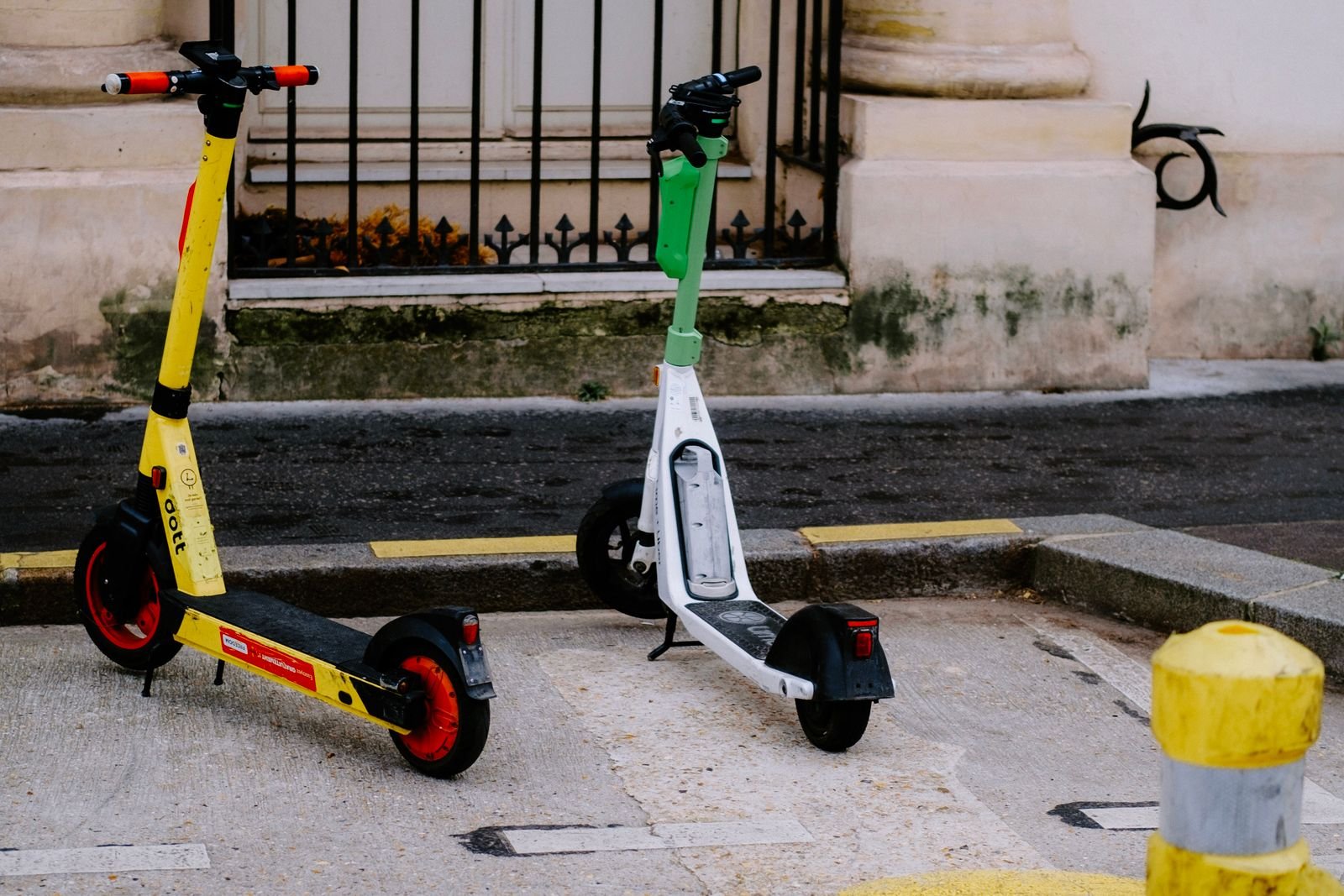
Two brightly coloured electric scooters parked on an urban sidewalk. Photo by Mathias Reding on Pexels.
| Step | What happens | Running total |
|---|---|---|
| The stop | Scooter is privately owned, on a public road | Offence confirmed |
| Insurance check | No insurance exists for a private scooter | Driving without insurance |
| Fixed penalty | £300 fixed penalty notice issued | £300 |
| Points | 6 points added to Alex’s car licence | 6 points |
| New-driver rule | Licence held 14 months, so 6 points revokes it | Licence revoked |
| Seizure | Scooter seized at the roadside | Scooter gone |
| Aftermath | Alex must reapply and retake both tests | Months of cost and delay |
Nothing here involves speed, danger or bad behaviour. Alex rode carefully, yet the outcome is the same as for a careless rider, because the offence is the ride itself. One ordinary commute costs £300, a licence, a scooter, and the price of retaking two driving tests.

Why “everyone rides them” is optimistic
The most common defence at the roadside is that everyone rides private scooters, so the law must not really be enforced. That reading is optimistic in three ways.
First, visible does not mean legal. Scooters are sold openly, and shops are under no obligation to mention that riding one in public is illegal. Buying and owning one is lawful; the offence only begins when it is ridden in public.
Second, enforcement is patchy, not absent. Police seize private scooters regularly, and seizures rise whenever a force runs a targeted operation. A rider who has passed the same police car ten times without being stopped has been lucky ten times; the eleventh stop carries the full penalty.
Third, the argument has no legal weight. It does not reduce the fine, remove the points or return the scooter. It also ignores the insurance gap: a private scooter cannot be insured, so a rider who hits a pedestrian has no insurer to pay for the injury. That is why the penalty is built around the insurance offence.
Seven ways to stay legal
- Use a rental scooter in a trial area. The only legal way to ride a scooter on public roads in Great Britain. Check your town is one of the 18 live trial areas first.
- Carry the right licence for a rental. You need a full or provisional UK driving licence to hire a trial scooter. The operator provides third-party insurance.
- Stay off pavements and motorways. Even a legal rental may only use roads and cycle lanes — never the pavement, and never a motorway.
- Ride private scooters on private land only. A car park, farm track or garden is lawful only with the landowner’s permission. A public park is not private land.
- Switch to a compliant e-bike. An EAPC — 250W at most, assistance stopping at 15.5 mph, with pedals, rider 14+ — is a bicycle in law.
- Check before you buy. If a scooter is sold as road-ready for the UK, ask which law makes it so. A private scooter cannot be type-approved.
- Do not lend your scooter to a new driver. Six points revokes a licence held for under two years, so lending one to someone who has just passed risks their licence as well as your scooter.

What do you actually need?
If you want to ride a scooter in public in the UK, you need one of two things, and neither of them is a private scooter.
The first is a rental in a trial area. There are 18 live trial areas across England, and the trials are due to end on 31 May 2028. You hire through the scheme operator, you need a full or provisional UK driving licence, and third-party insurance comes from the operator. You ride on roads and cycle lanes only, with top speed capped at 15.5 mph.
The second is a compliant e-bike. An EAPC needs no licence, tax, registration or insurance, and it can go anywhere a bicycle can — including cycle lanes and parks where a private scooter is banned. For a short commute it does the same job as a scooter without any legal risk. A more powerful private scooter does not help: power and range do not change the legal position.
The verdict
A private e-scooter in public in the UK means a £300 fine, 6 points on your licence and seizure of the scooter — and for a new driver, the loss of the licence itself. Until the law changes, ride a rental in a trial area or ride an EAPC instead.
Readers also ask
Can police seize a private e-scooter in the UK?
Yes — and in some cases it can be destroyed — alongside the £300 fine and 6 points.
Do you get points on your car licence for riding an e-scooter?
Yes. The 6 points for driving without insurance land on your car licence. Held for under two years, six points revokes it under the new-driver rule.
I have never held a licence. Can I still be fined?
Yes. The fine and seizure apply whether or not you hold a licence, and the points can be recorded and applied when you later obtain one.
Is it legal to buy an e-scooter in the UK?
Yes. Buying and owning one is legal. Only riding it in public — on roads, pavements or in parks — is illegal.
Where can I legally ride an e-scooter in the UK?
On private land with the landowner’s permission, or on a rental scooter in one of the 18 official trial areas in England. Rentals may use roads and cycle lanes only, never pavements or motorways.
Is an e-bike treated the same as an e-scooter?
No. A compliant e-bike (EAPC) — 250W at most, assistance stopping at 15.5 mph, with pedals, rider 14 or older — is treated as a bicycle, so it needs no licence, tax or insurance.
Additional Details
Name: UK Private Electric Scooter Seized: Points on Your Car Licence Explained
Description: Riding a UK private electric scooter in public can mean a £300 fine, 6 points on your car licence and seizure. New drivers lose their licence outright.
Published: 26 November 2026
Plain-English summary of the rules in Great Britain, not legal advice. Northern Ireland has separate rules.