Short answer: If your “e-bike” has a 500W motor or a throttle that drives it without pedalling, it is not legally an e-bike in the UK — it is a moped, and it needs a licence, insurance, a number plate, and a crash helmet. A real e-bike, an electrically assisted pedal cycle (EAPC), has a motor of no more than 250W continuous power, assistance that cuts out at 15.5 mph, and assistance only while you are pedalling. Fail any one of those three tests and the machine belongs in a different legal category. This article is a summary of the rules, not legal advice — the authority is GOV.UK.
The confusion is everywhere, because online sellers advertise machines that look like e-bikes but do not meet the UK definition. The listing says “e-bike”, the bike arrives with a twist throttle and a 500W sticker, and the buyer only finds out the difference when something goes wrong. These five checks, done at home in order, tell you which side of the line your machine sits on before you ride it on the road.
Jump to: Step 1: Read the motor plate | Step 2: Test the throttle | Step 3: Check the 15.5 mph cut-off | Step 4: Check the pedals and the lights | Step 5: Decide what to do | Why the law draws the line here | Tips | FAQ
Step 1: Read the motor plate
Start with the motor itself, because the power rating is the first of the three EAPC tests. Look for a sticker or a plate on the motor or frame listing the power in watts. A motor rated at 250W or below passes. A motor rated at 500W or 750W fails it: in UK law, that machine is a moped, whatever the seller called it.
One detail matters: the 250W limit is for continuous power. Motors can deliver more in short bursts, for example climbing a steep hill, and that does not make the bike illegal. What makes it a moped is a motor rated above 250W, not a momentary peak. If the plate is missing or unreadable, treat that as a failed check: a legal EAPC should have its rating visible.
Step 2: Test the throttle
Now test the throttle — the check most people fail without knowing it. Stand the bike up, twist or press the throttle without pedalling, and see what happens. On a legal e-bike, a throttle may only give you walk assist — about 4 mph — without pedalling, and only on bikes sold since 2016. A throttle that propels the bike at speed without any pedalling is a moped feature: the machine needs a licence, registration, insurance, a number plate, and a helmet.
There is one historical exception. Full-speed throttles were legal on e-bikes sold before 2016 and remain legal on those bikes with their original throttle. If your bike was sold after 2016 and the throttle drives it at speed without pedalling, it does not pass. Check the date on your purchase receipt or the frame number, and do not take the seller’s word for either.


Step 3: Check the 15.5 mph cut-off
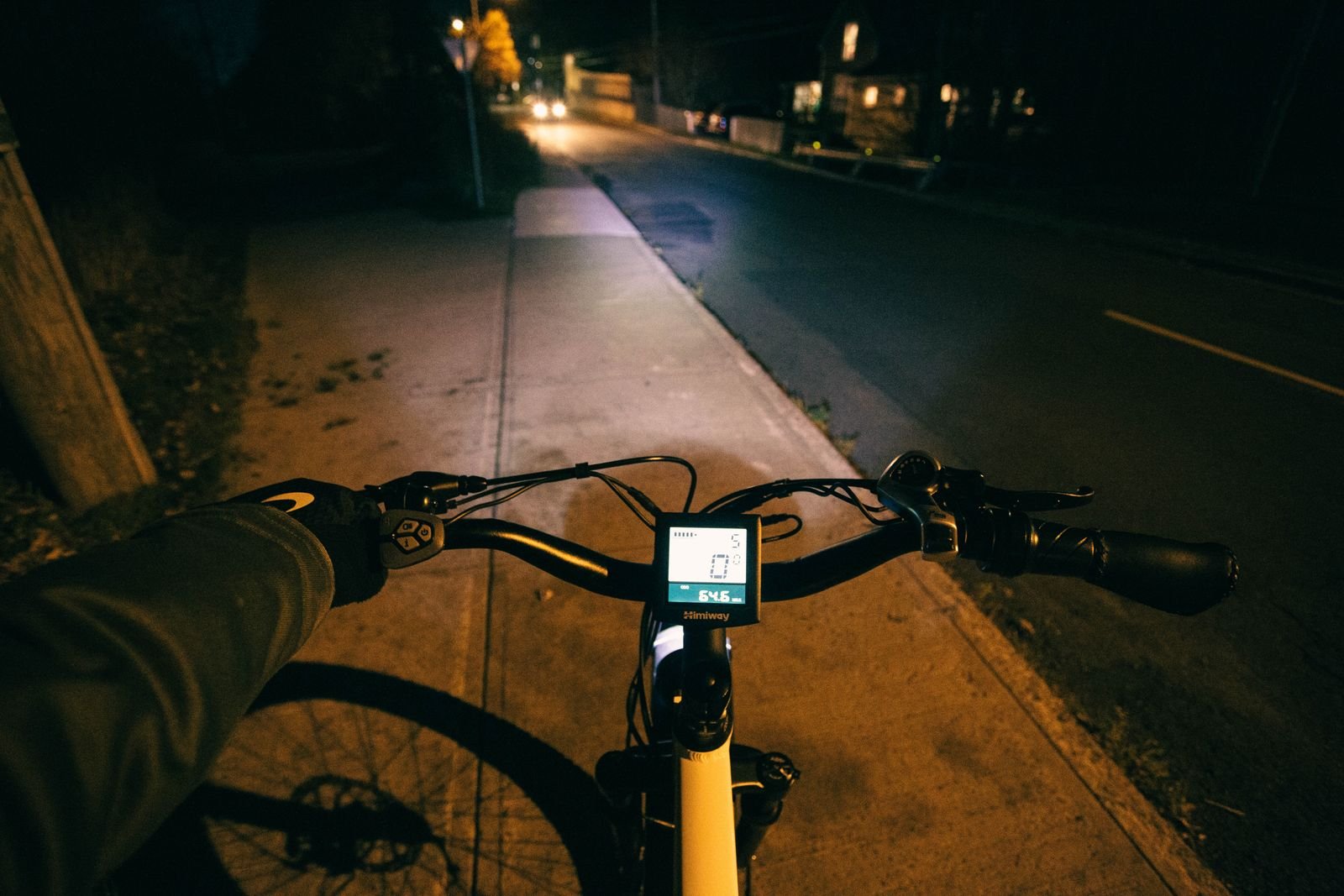
The third test is the speed at which the motor stops helping. Ride on a flat, quiet road, pedal up to speed, and watch the display. On a legal e-bike, the assistance must cut out at 15.5 mph (25 km/h). You can go faster by pedalling, but the motor must stop adding power at that speed. If it keeps pushing you past 15.5 mph, the machine fails.
This is the easiest check to get wrong, because 15.5 mph feels slow, and a tailwind or a downhill stretch can take you past it without the motor doing anything. Test on the flat, with the display showing the motor’s contribution, not just your speed. If the motor is still delivering power at 17 or 18 mph, it is not an EAPC.
The cut-off and the 250W rating work together: a 250W machine that keeps assisting to 20 mph fails just as surely as a 500W machine that cuts out on time. All three tests have to pass.
Step 4: Check the pedals and the lights
Check that the bike has working pedals that actually drive it. An EAPC is a pedal cycle with assistance, not a motorcycle with pedals bolted on as decoration. If the pedals are missing, decorative, or do not drive the wheel, the machine is not an e-bike.
Then check the lights. Both must work from a single switch — a specific condition of the DVSA low-powered moped approval in the next step, and required for night riding on any e-bike anyway.

Step 5: Decide what to do
If your machine passed all four checks — 250W or less, walk-assist throttle at most, cut-off at 15.5 mph, working pedals — it is an EAPC. You can ride it anywhere a bicycle can go, with no licence, insurance, registration, or number plate needed, and you must be 14 or older. No helmet is legally required, though wearing one is strongly advised, and insurance is worth considering: the average e-bike costs more than £2,000, which makes it a theft target.
If it failed any check, you have two legal options. The first is the DVSA route: put the machine through DVSA approval and register, plate and insure it as a moped — licence, insurance, number plate, and crash helmet. There is also a narrower exception for low-powered mopeds: working pedals, a motor of no more than 250W, assistance cutting at 15.5 mph, and front and rear lights on a single switch. A DVSA test results in a British National Vehicle Approval certificate linked to your frame number, after which the machine is legal on roads and cycle paths up to 15.5 mph with a throttle, and needs no registration, insurance or licence. Some sellers, such as Wisper, handle the paperwork. The second option is the honest one: do not ride it on the road. Ignoring the rules risks a fine, penalty points, and confiscation.
Decide before your next ride. Riding a machine you know is a moped while treating it as a bicycle is the worst of both worlds: no insurance, no plate, no defence if something happens. For the licence side, see our guide on whether you need a licence for a moped, plus our best mopeds for adults round-up and the e-scooter laws guide.
Why the law draws the line here
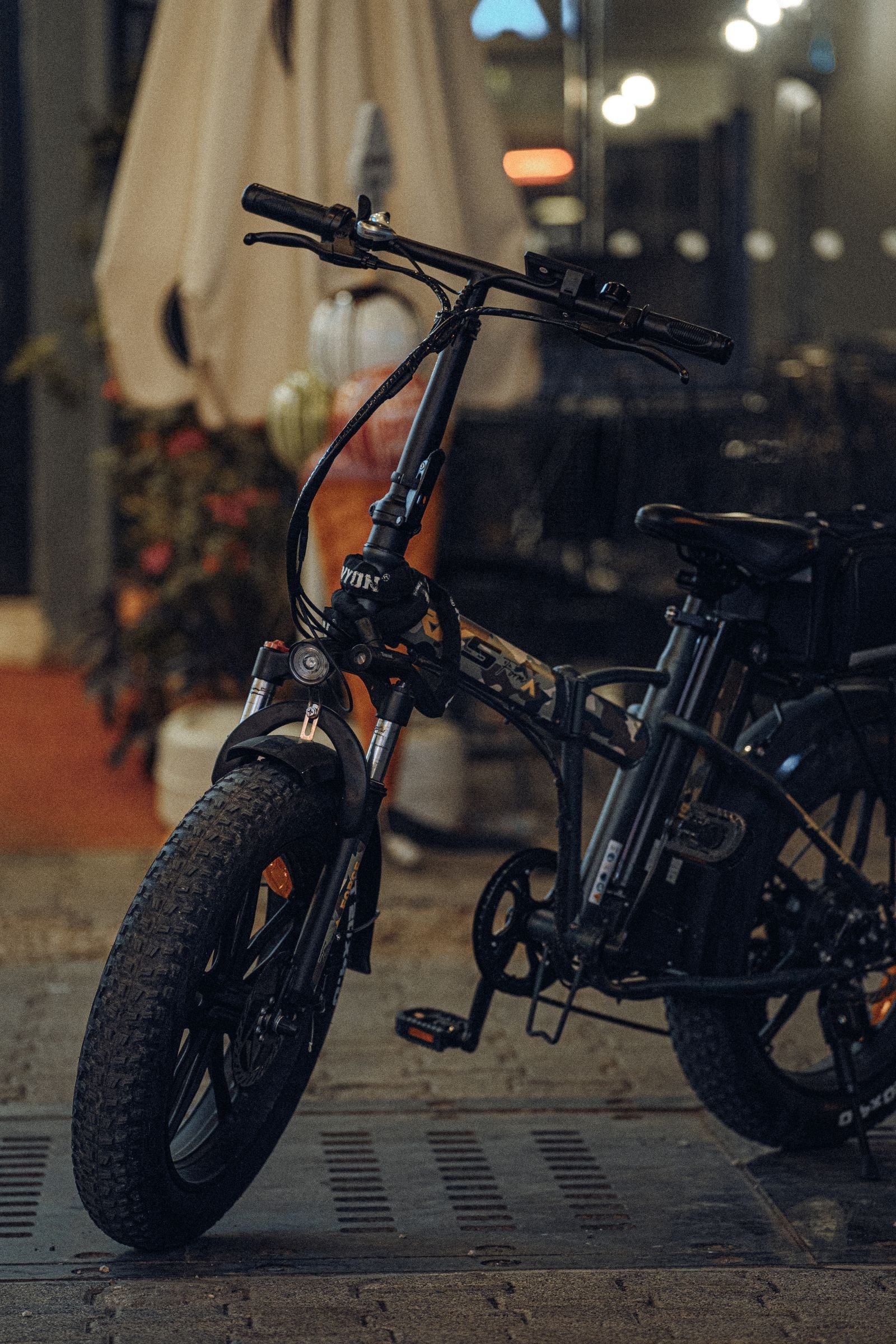
An EAPC is treated as a bicycle because it behaves like one: the rider is pedalling, the motor is small, and the speed is limited to 15.5 mph. A machine that does not need pedalling, or that keeps pushing past that speed, behaves like a motor vehicle, and the law treats it as one.
The throttle rule is where most people get caught, because a throttle feels like a convenience rather than a legal boundary. But a throttle that drives the bike without pedalling turns the pedals into decoration, and that is not a pedal cycle.
| E-bike (EAPC) | Electric moped | Electric motorcycle | |
|---|---|---|---|
| Motor | 250W continuous or less | Bigger motor, works without pedalling | Faster and more powerful |
| Speed | Assistance cuts at 15.5 mph | Faster than an e-bike | Motorbike speeds |
| Pedalling | Assistance only while pedalling | Not required | Not required |
| Licence | None | Yes | Yes |
| Insurance | Not required | Yes | Yes |
| Number plate | None | Yes | Yes |
| Helmet | Not required by law | Crash helmet required | Crash helmet required |
| Minimum age | 14 | Not published in the source | Not published in the source |
The table above is a summary, not legal advice — GOV.UK is the authority. It shows how sharply the requirements change once your machine crosses the line.

Tips that save a fine
Ask before you buy. Before you pay, ask the retailer to confirm in writing that the bike meets the EAPC definition. A retailer who will not confirm it is telling you something. Online sellers advertise machines that look like e-bikes but do not meet the UK definition, and the listing’s word for it is not a legal defence.
Check the plate before you pay. The motor’s power rating is printed on a sticker or plate. Read it yourself, on the bike, before money changes hands. No readable rating — walk away.
Remember the battery. A typical e-bike battery gives 25–60 miles of range — 300Wh manages 20–30 miles, 500Wh or 700Wh manages 50 miles or more — lasts 500–1,000 full charge cycles, and costs roughly 10–15p to charge.
Conversion kits are legal if the finished bike is legal. Fitting a conversion kit to an ordinary bicycle is fine as long as the finished bike meets all three EAPC tests: 250W or less, cut-off at 15.5 mph, assistance only while pedalling. A kit that breaks any of them produces a moped, not an e-bike.

The verdict
Run the five checks, and believe what they tell you. Pass all of them and it is an e-bike. Fail any of them and it is a moped — make it legal through the DVSA route, or do not ride it on the road. There is no third option that ends well.
Frequently asked questions
Can I ride a 500W e-bike on the road in the UK? No. A 500W motor makes the machine a moped in law. You can put it through DVSA approval and register, plate and insure it as a moped, or choose not to ride it on the road. Riding it as if it were a bicycle risks a fine, penalty points, and confiscation.
Is a throttle ever legal on an e-bike? Yes, in three cases. Full-speed throttles were legal on e-bikes sold before 2016 and remain legal on those bikes. Since 2016, only slow walk-assist throttles of about 4 mph are allowed without approval. A low-powered moped that has passed DVSA approval may also have a throttle, under its British National Vehicle Approval certificate.
Do I need a licence for a 250W e-bike? No, as long as it meets all three EAPC tests: 250W continuous or less, cut-off at 15.5 mph, and assistance only while pedalling. You must be 14 or older. No insurance, registration or number plate is required, though insurance is worth considering given the value of the bike.
What happens if the police stop me on a machine that is actually a moped? Ignoring the rules risks a fine, penalty points, and confiscation of the machine — the consequence for riding an unregistered, uninsured moped on the road, whether or not you knew the rules when you bought it.
Does a 250W motor handle hills? Yes. The 250W limit is for continuous power, and motors can deliver more in short bursts, for example climbing a steep hill. A legal e-bike is not underpowered for normal riding.
Additional Details
Name: Electric Moped vs E-Bike UK: 250W, Throttle and Registration
Description: Is your ‘e-bike’ legally a moped in the UK? Check the 250W motor, the throttle and the 15.5 mph cut-off before you ride it on the road.
Published: November 24, 2026