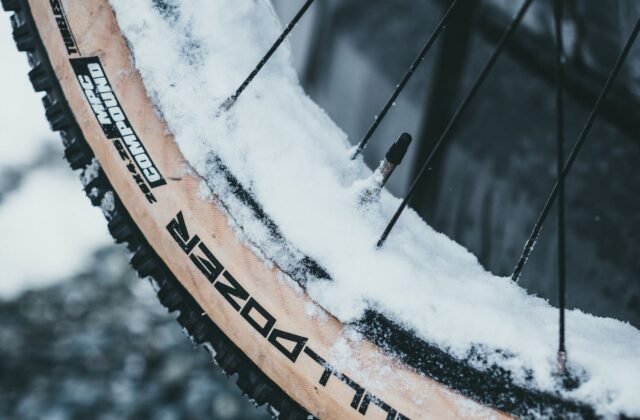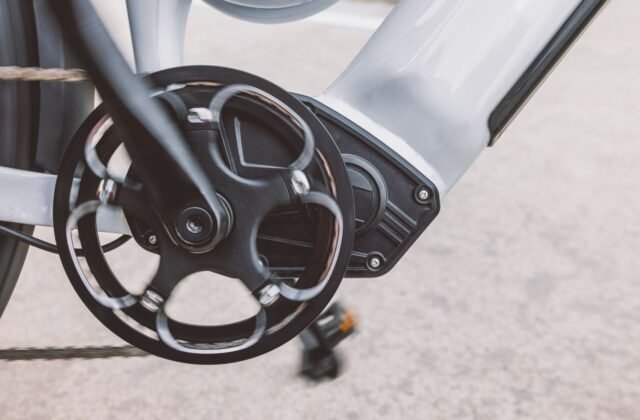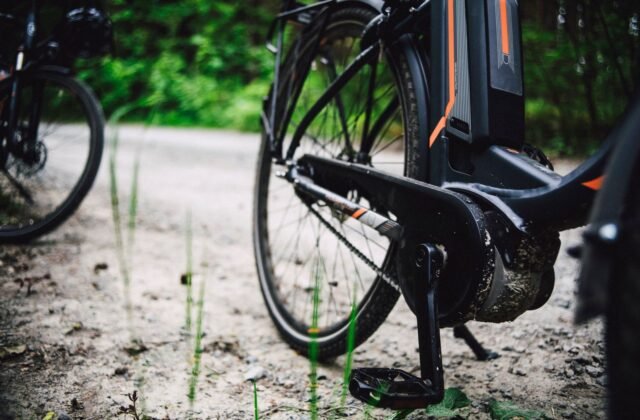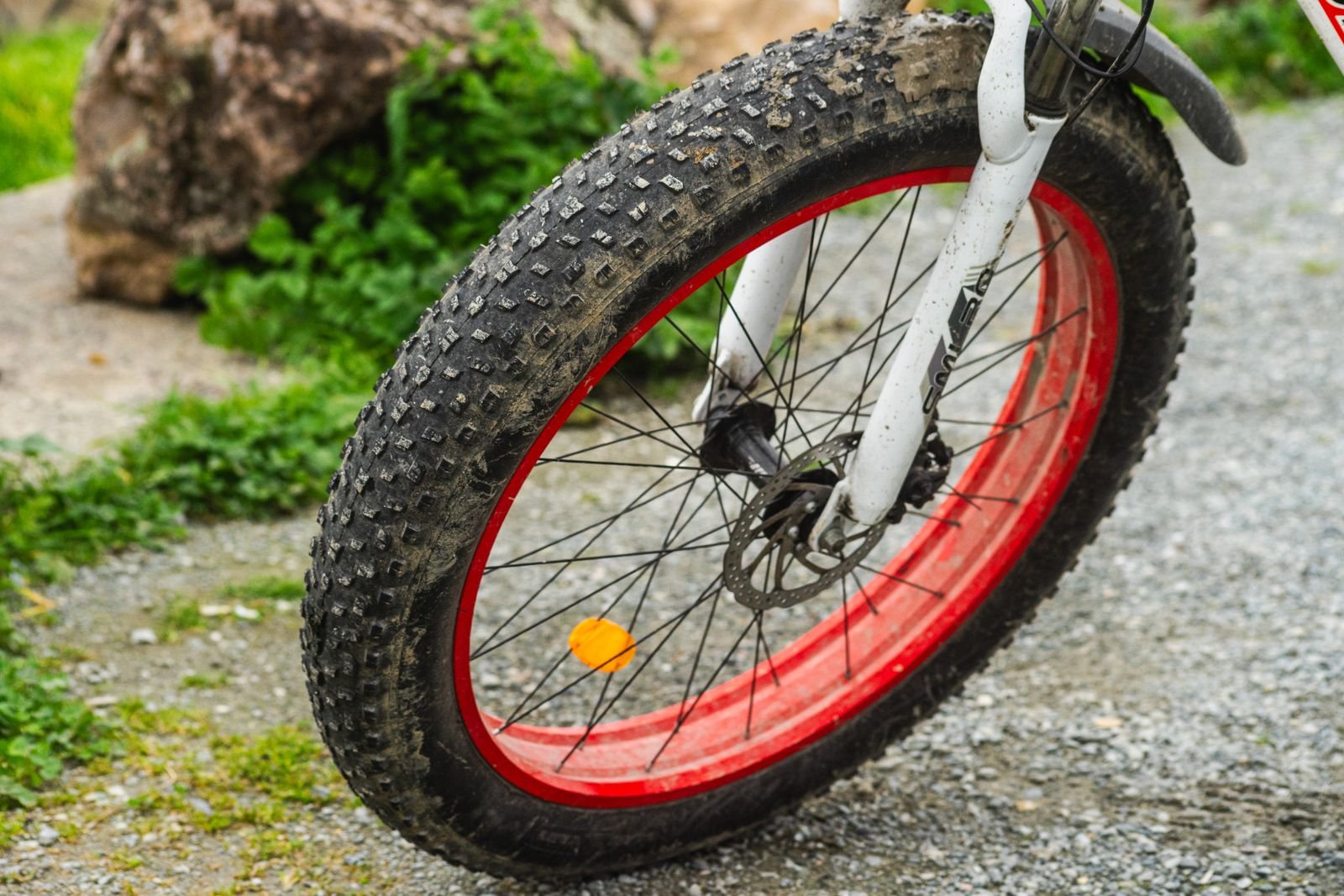
The easy answer is: for carrying loads, a fat tyre e-bike is usually better. Its wide tyres, upright position and steady grip keep a heavy load calm at low speed, on rough ground and in wet weather, so it suits shopping, a child seat and uneven surfaces best.
A road e-bike wins when the load is light, the road is smooth and the ride is long. It is lighter, easier to pedal without power and quicker on tarmac. Choose the fat tyre if the load is the hard part; choose the road e-bike if the distance is.
Carrying loads changes how an e-bike feels. A bag that is easy to lift can still make the front wheel wander, the brakes work harder and the bike feel top-heavy at a junction. That is why the bike that is fastest empty is not always the bike that is safest loaded. This guide compares a fat tyre e-bike with a road e-bike for the same job: carrying loads on real rides, not on a test track.
The two bikes solve different problems. The fat tyre e-bike is built for grip and stability. The road e-bike is built for speed and efficiency on smooth tarmac. Both can carry a load, but they do it in different ways, and the wrong choice shows up as wobble, poor braking and a load that moves when you do not want it to.
Introduction
Start with the load, not the bike. A fat tyre e-bike spreads weight over a wide contact patch, so it is less likely to sink into soft ground or slip on a wet patch. Its upright riding position also makes it easier to look around and to put a foot down at a stop. Our guide to fat tyre e-bikes explains the type in more detail, and the E-Bikes Hub brings the site’s e-bike guides together.
A road e-bike takes the opposite approach. It keeps the bike light and the tyres narrow, so less effort is wasted rolling along a smooth road. That helps on a long, flat commute, but it leaves less margin when the load is heavy, the surface is rough or the weather turns. Our Commuter E-Bike vs Road E-Bike guide looks at the same road side for carrying loads, and the comparison below puts the two side by side.
Fat Tyre E-Bike vs Road E-Bike for Carrying Loads
The table below is the decision in one place. Read the “What to watch” column first if you already know your usual load, because it is where a good-looking bike most often fails.
| Attribute | Fat Tyre E-Bike | Road E-Bike | What to watch |
|---|---|---|---|
| Stability with a load | Wide tyres and an upright stance keep the bike steady at walking speed | Narrow tyres and a lighter frame feel quicker but less planted when loaded | A top-heavy load on narrow tyres |
| Grip on rough or wet surfaces | Wide tread bites into loose, wet and uneven ground | Smooth, narrow tread can slip on gravel, leaves and wet patches | The surfaces on your usual route |
| Carrying points | Often built for racks, panniers and a child seat | Often needs a rack added, and the frame may have fewer mounts | Rack mounts and the rack’s stated limit |
| Weight and effort | Heavier, so it uses more charge once a load is added | Lighter, so it rolls further on the same charge on smooth roads | Battery use once a load is added |
| Comfort over bumps | Wide tyres smooth out potholes and kerbs | Narrow tyres pass more bumps to the rider and the load | How rough your route really is |
When the Answer Changes
The fat tyre e-bike is the better load carrier in most cases, but four things can flip the verdict. Check them before you decide, because they change the bike you need, not just the bike you like.
- A light load on a long, smooth commute. If the load is a laptop and a change of clothes, and the road is flat tarmac, the road e-bike’s lighter weight and lower effort win.
- Rough, loose or wet ground. Gravel, mud, sand and wet leaves favour the fat tyre. Its grip and stability matter more than speed when the surface cannot be trusted.
- A heavy or tall load. Shopping, a child seat and bulky bags put more weight high up. The fat tyre’s wide stance keeps that weight calmer at low speed and at junctions.
- A long ride with no charging point. A heavier bike with wide tyres uses more charge, so a road e-bike may be better if you must cover a long distance and cannot charge at the other end.
Test Before You Buy: The Load Test
Do not judge a load carrier by how it feels empty. Use the load you actually carry, on roads you actually ride, and compare both bikes the same way. A short test with a real load tells you more than any brochure.
- Pack your usual load. Use the same bags, shopping or work kit you carry on a normal day, and weigh it if you can.
- Fit the rack and straps first. Check that the rack is bolted tight, the straps are short and the load cannot swing or catch the wheel.
- Ride a short loop with stops. Include a junction, a turn, a kerb and a gentle hill, and stop and start at least three times.
- Brake from a slow speed. Brake gently at first, then a little firmer, and note how far the bike travels and whether it pulls to one side.
- Try a slow turn. Turn at walking speed and see whether the front wheel feels steady or wants to flop.
- Park and lift the bike off its stand. See how it balances with the load on, and whether you can steady it with one hand.
What a fail looks like
| Symptom | What it usually means | What to do |
|---|---|---|
| The load sways at low speed | The load is too high or too loose | Lower the load and tighten the straps |
| The front wheel feels light | Too much weight is behind the rear axle | Move part of the load forward or use panniers |
| Stopping takes longer | The load is heavy for the brakes and tyres | Slow down earlier and let the motor do less of the work |
Myth: A road e-bike always carries loads better because it is lighter.
Fact: A lighter bike is easier to pedal, but load carrying also needs grip, stability and a rack that is built for the job. A light bike with a wobbling load is not the better carrier.
Before you test: Wear a helmet, keep the load clear of the wheels and brakes, and test in a quiet place first. Stop at once if the load moves, a strap comes loose or the brakes feel weak.

Peak 750W, 48V 13Ah, 7-speed, dual disc brakes and 20 x 4.0 fat tyres
How to Set Up a Bike for Carrying Loads
What you will need
- A rack that fits your bike and has a stated weight limit
- Two panniers or a strong rear bag, plus short straps or bungees
- A pump and a pressure gauge, so the tyres are set for the load
The method
- Fit the rack. Use the frame mounts, tighten every bolt and check that the rack does not touch the tyre or the brake.
- Keep the load low. Put heavy items at the bottom of the panniers and close to the centre of the bike.
- Balance left and right. Load both sides evenly, so the bike does not pull to one side when you turn.
- Set the tyre pressure for the load. Pump the tyres to the pressure shown on the tyre sidewall for a loaded ride, and check them again the next day.
- Strap everything twice. Fasten the load, then tug it hard. Add a second strap if anything can swing, slide or catch the wheel.
- Do a slow ride first. Ride around the block, brake, turn and stop, and fix anything that moves before you head out.
Note: A rack that is rated for a light bag will not become stronger because the bike has a motor. The rack, the frame mounts and the straps all share the load, so the weakest part sets the limit. Check the stated limit for each part, not just for the bike.
Warning: Never strap a load to the handlebars, a child seat to a rack that is not made for it, or a bag where it can catch the front wheel. A load that moves in a turn can steer the bike for you.

A lightweight city commuter e-bike for daily rides.
When the Damage Is Already Done
If you already bought the wrong bike, do not replace it before trying these fixes. Most load problems come from how the bike is set up, not from the bike itself.
- Lower and centre the load. Heavy items low, both sides even, and nothing tall on top.
- Fit a proper rack. Use frame mounts and a rack rated for the load, not a seat-post clamp.
- Change the tyres if they slip. Wider, treaded tyres help a road e-bike on rough ground, and the right pressure helps both.

750W peak, up to 20 MPH, up to 40 miles, and a fat-tyre commuter
The Safe Alternative: A Road E-Bike, Set Up Properly
A road e-bike is a good alternative when your load is light and your route is smooth. Set it up for carrying, rather than just riding it as it came.
- Fit a rack and panniers. Use frame mounts, not a seat-post clamp, if you can.
- Keep the load low and even. Heavy items at the bottom, both sides balanced.
- Test the slow turn and braking. Do the load test above before a long ride.
What to Do Next, in Order
- List your usual load and where you ride.
- Check the rack mounts and stated limits.
- Do the load test on both types.
- Fix the set-up, then test again.
- Buy the bike that passed, not the one you liked empty.
Never Do These Things
- Never overload the rack. The weakest part sets the limit.
- Never strap a load to the handlebars. It can steer the bike for you.
- Never let a bag touch the wheel. It can jam the wheel without warning.
- Never test a new load on a busy road. Use a quiet place first.
- Never ride with a loose strap. Stop and refasten it at once.
In short
For carrying loads, a fat tyre e-bike is usually better: it is steadier, grippier and kinder to heavy loads, while a road e-bike wins only for light loads on smooth, long roads.
The essentials
- Fat tyre for heavy, rough or wet loads.
- Road e-bike for light, smooth, long rides.
- Test with your real load first.
More Questions, Answered
Can a road e-bike carry a child seat?
Only if the frame and rack are made for one, and the load stays within their stated limits.
Do fat tyres use more battery?
Yes, usually, because wider tyres and a heavier bike need more charge with a load.
Which is better for a flat commute?
A road e-bike, if the load is light and the road is smooth.
Additional Details
Name: Fat Tyre E-Bike vs Road E-Bike: Which Is Better for Carrying loads?
Description: Fat tyre e-bike vs road e-bike: which is better for carrying loads? Compare racks, grip, weight and handling, then test both with your load before you buy.
Published: November 10, 2026