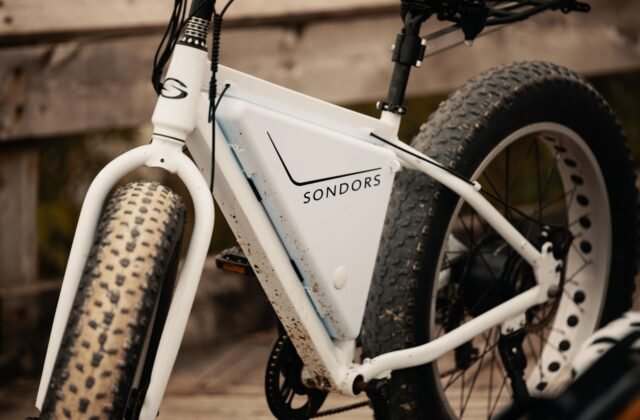
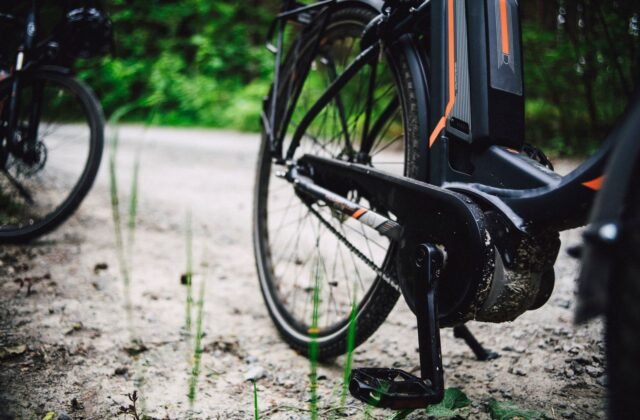
Commuter e-bike vs road e-bike: for carrying loads, the commuter e-bike is the better choice. It is built around a rack, an upright riding position and wider tyres, so a normal work or shopping load sits low, stays stable and does not fight the steering. A road e-bike is better only when the load is light — a small bag or a laptop in a slim pack. The deciding question is how much you carry, how often, and where the weight sits.
In the commuter e-bike vs road e-bike choice, the two bikes look similar at first glance: both have a motor, a battery and a frame built for tarmac. Their jobs are different. A commuter e-bike is made for daily trips with things on board — a laptop, clothes, groceries, a lock and a rain jacket. A road e-bike is made for going fast and far on smooth roads with as little weight as possible. That difference shows up most clearly the moment you add a load.
This guide compares the two for carrying loads only: racks, riding position, tyres and handling with weight, and what to do if you already own the wrong one. See the E-Bikes Hub for the rest of the e-bike comparisons.

Commuter e-bike vs road e-bike for carrying loads
The table is the whole comparison in one place. Read the rack row first: if a bike has no rack mounts, everything else about carrying gets harder or less safe.
| Attribute | Commuter e-bike | Road e-bike | What to watch |
|---|---|---|---|
| Rack and mounts | Usually fitted or ready, rear and often front | Often none, or mounts for a light rack only | Check mounts before buying |
| Where the load sits | Low, on a rear rack, in panniers | On your back, or in a small bag | Low weight handles better than high weight |
| Riding position | Upright, with a wide view of traffic | Low and forward, more weight on your hands | Upright is easier with a heavy rear load |
| Tyres | Wider, with more grip on rough streets | Narrow and smooth, built for speed | Check pressure with the load on |
| Handling with weight | Stable at low speed, steady in turns | Can feel twitchy, especially with weight high up | Test with your real load |
| Best for | Daily loads: work, shopping, school runs | Light loads on a fast, mostly unloaded ride | Match the bike to your usual load |
The pattern is consistent: the commuter e-bike carries the load on the bike, low down. The road e-bike carries it on you, high up, or not at all. A backpack full of groceries changes posture, balance and braking — but far less when the weight is on a rack instead of on your shoulders.
When the answer changes
Five variables can flip the verdict. Load size: if you only carry a phone, keys and a light jacket, a road e-bike with a small frame bag is fine. Frequency: a once-a-month shop is not the same as a daily laptop and clothes run. Hills: a long, hilly commute with a heavy load favours the commuter, because stability matters most when you are tired. Weather: wet streets and winter darkness favour the commuter, with its fenders and wider tyres. Lifting: if you must carry the bike up stairs or onto a train, the road e-bike’s lighter build helps — but only if the load stays light. In short, the road e-bike wins only when the load is light, rare and small. For more on how bags and panniers compare, see Bike Bags vs Panniers: Which Carries Better for Your Ride?

Test it before you decide
Do not decide from a showroom spin with an empty bike. Bring your real load and ride the route you actually use.
- Pack your normal heavy-day load: laptop, clothes, lunch, lock and water.
- Fit it the way you would really carry it: panniers for the commuter, a backpack for the road e-bike.
- Ride a quiet street first. Start, stop, turn both ways and ride slowly. Note sway, steering and braking.
- Climb a short hill from a standing start, then stop on it and start again.
- Ride over rough ground, check nothing moved loose, then take the load off and put it back on.
What a fail looks like
- The bike pulls to one side → the load is heavier on one side → rebalance it, or use two panniers instead of one.
- Steering feels vague or heavy → too much weight high up → move weight low, to the rear rack.
- Your heel hits the bag → the pannier sits too far forward → slide it back, or choose a smaller pannier.
- Braking feels long and unsure → the load is too heavy or too high → reduce and lower it, and check brakes and tyre pressure.
Myth vs Fact
Myth: A road e-bike carries just as well if you use a good backpack.
Fact: A backpack works for a light, occasional load, but it puts weight high on your body and changes your balance and braking. A rack and panniers keep the same load low on the bike.
Before you test: Check brakes, tyre pressure and rack bolts first, wear a helmet, and choose a quiet route for the first loaded ride. Never test a heavy, unfamiliar load in busy traffic.
How to carry a load well on a commuter e-bike
A commuter e-bike only carries well if the load is packed well. Weight that is low, centred and tied down rides almost unnoticed.
What you will need
- A rear rack that fits your frame, with all bolts tight.
- Panniers, a rack bag or a basket that hooks firmly to the rack.
- A waterproof pouch for electronics and papers.
- A strap for odd-shaped items, plus a lock, lights and a pump.
The method
- Fit the rack and check it does not touch the tyre, brake or mudguard.
- Hook the panniers on so they cannot bounce off, and check heel clearance while pedalling.
- Pack heavy items low, split evenly between the two sides.
- Put electronics in the waterproof pouch, and keep essentials in a small top bag.
- Strap down anything loose, keep straps clear of the wheel, chain and brakes, and keep lights visible from behind.
- Ride a short test, stop, and recheck every bolt, hook and strap.
Packing rule: Heavy and low, light and high. If you can feel the load pulling you around, stop and repack — it is in the wrong place.

When the damage is already done
If you already bought a road e-bike and now need to carry more, work through this list first — most problems have a fix short of a new bike.
- No rack mounts: Ask a bike shop whether a clamp-on or seatpost rack fits. If none fits safely, use a light backpack and keep the load small.
- Sway and wobble: Split the load into two panniers, lower the weight, and check that the rack itself is tight.
- Sore back and shoulders: The backpack is doing too much work. Move part of the load onto the bike — a small rack bag helps more than it looks.
- Nothing fits and the load keeps growing: That is the sign to change bikes. A commuter e-bike, or a step-through with a rack, will carry the same load with far less fuss — see the commuter vs step-through comparison and Small Panniers for Folding Bikes.
The road e-bike as a safe alternative
There is one honest case for the road e-bike: your load is light, your ride is fast and mostly smooth, and you value speed over carrying capacity. In that case, do not force it to be a load carrier — keep the carrying setup simple and light.

- Keep the load to one small bag: phone, keys, a light jacket and a repair kit.
- Use a frame bag or a small saddle bag, and keep the weight low and centred on the bike.
- If you must use a backpack, choose a small one, pack it light, and tighten the straps.
- Check brakes, steering and your view of the road before every ride, and leave heavy shopping and the laptop for a commuter setup.

What to do next, in order
- Write down your real load for a normal heavy day, and how often you carry it.
- If the load is daily, bulky or heavy, choose a commuter e-bike with rack mounts.
- If the load is light and rare, a road e-bike with a small bag is a fair choice.
- Test with the real load, on your real route, before you buy.
- Fit a rack and panniers, pack heavy items low and evenly, and check heel clearance.
- Recheck the rack, hooks and straps monthly, and after any knock.
Never do this
- Never hang a heavy bag from the handlebars — it ruins steering and can block the brakes.
- Never carry a heavy load on one side only — the bike will pull and your back will pay for it.
- Never let a strap, bag or coat reach the wheel or chain — it can lock the wheel without warning.
- Never cover your rear light or reflectors with a bag — other road users need to see you.
- Never ride with a loose rack or a pannier that can bounce off — stop and refit it first.
In short
For carrying loads, the commuter e-bike wins because it puts the weight on the bike, low down: rack mounts, an upright position, wider tyres and a steady feel with a load on board. The road e-bike is faster and lighter, but a poor load carrier, and it only makes sense when the load is light and rare. Choose by your heaviest normal day, test with that load, and pack it low and evenly.
The essentials
- Commuter e-bike: best for daily, bulky or heavy loads.
- Road e-bike: best only for light, rare loads and fast rides.
- Rack mounts decide the comparison — check them first.
- Pack heavy items low and evenly, and keep straps clear of the wheel.
- Test loaded, on your real route, before you buy.
More Questions, Answered
Can a road e-bike carry panniers?
Some can, if the frame has rack mounts and clearance, but many do not. Check mounts and heel clearance before buying a rack, and keep the load light.
What is the best way to carry a laptop on an e-bike?
In a padded sleeve, inside a pannier or rack bag, kept low and protected from rain. Balance the other pannier with a similar weight.
Additional Details
- Name: Commuter E-Bike vs Road E-Bike: Which Is Better for Carrying loads?
- Description: Commuter e-bike vs road e-bike for carrying loads: see which carries better, what flips the verdict, and how to pack and test a loaded e-bike safely every day.
- Published: November 9, 2026