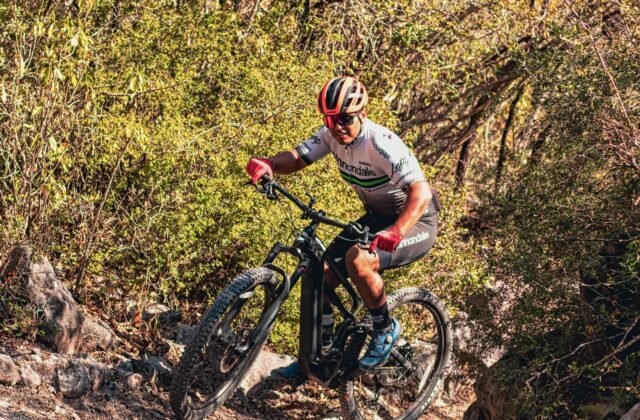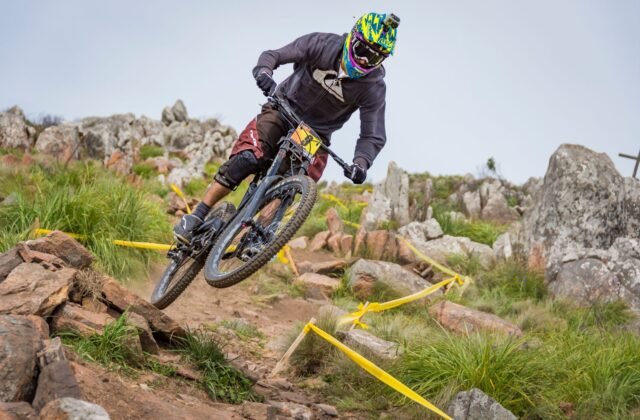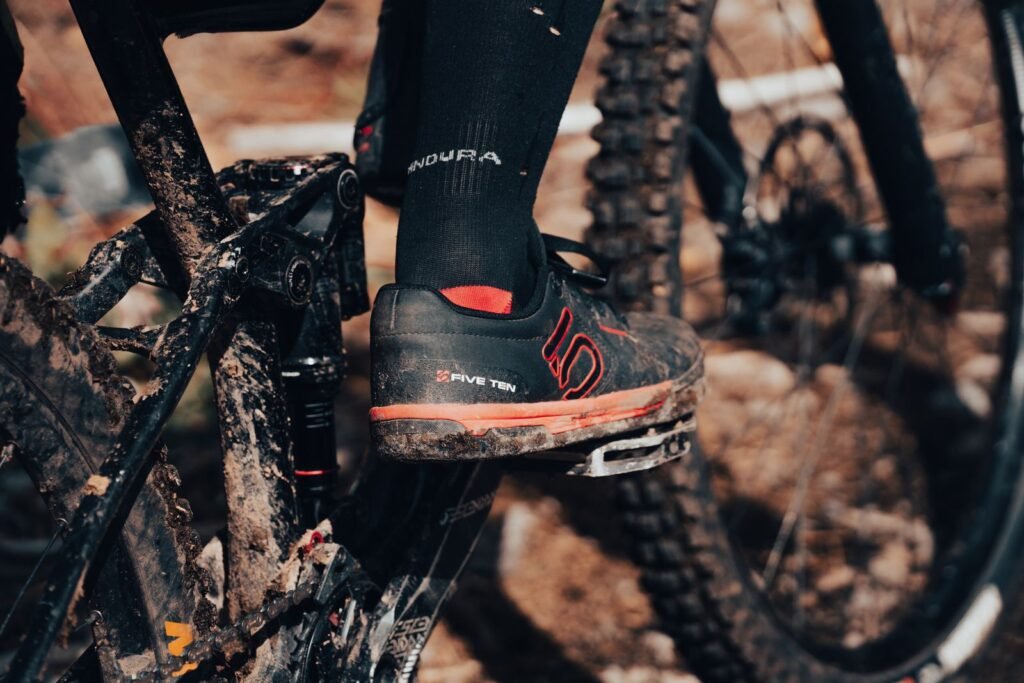
Straight answer: For mud, the full suspension mountain bike is better for most riders. Its rear suspension keeps the tyre in contact with soft, rutted ground, so it holds grip where the dirt jump bike’s rigid rear end skips. Choose the full suspension bike for muddy trails.
Mud changes what a mountain bike has to do. On dry trails, a firm, light bike feels fast. On wet trails, the same bike can lose grip on roots and slide in ruts. Comparing a full suspension mountain bike vs a dirt jump mountain bike for mud is really about grip, control and how much work the bike does for you. This guide is part of the Mountain Bikes Hub.
A full suspension mountain bike has suspension front and rear. Its rear shock lets the back wheel move over mud, roots and ruts, so the tyre stays pressed into the ground. A dirt jump mountain bike is built for jumps and pump tracks, with a rigid rear end and stiff, direct handling. In mud, though, the difference is about the ground, not the jumps.
The short version is simple: if the trail is soft, rutted and slippery, suspension and grip win. If the surface is firm and smooth, the dirt jump bike wins. For more on the other side, see our comparison of the hardtail mountain bike vs the dirt jump mountain bike.
Full Suspension Mountain Bike vs Dirt Jump Mountain Bike: The Core Comparison
The table below compares the two bikes on the points that matter in mud.
| Attribute | Full Suspension Mountain Bike | Dirt Jump Mountain Bike | What to Watch |
|---|---|---|---|
| Rear suspension | Rear shock, over 100 mm of travel | Rigid rear end, or very short travel | More rear movement keeps the tyre on the ground |
| Grip on wet roots and ruts | Tyre stays in contact, so it slips less | Rear wheel skips and loses contact | Watch the back wheel sliding sideways on roots |
| Mud clearance | Tight clearance around the shock can pack with mud | Open rear triangle sheds mud | Check clearance around the rear tyre |
| Cleaning and care | More pivots and seals to wash and dry | Fewer moving parts, faster to wash | Dry pivots and the chain after every ride |
| Control on steep, wet descents | Rear suspension absorbs drops and keeps the wheel down | Rigid rear end bounces and can kick the rider | Brake earlier and keep weight low |
| Comfort on long, muddy rides | Softer ride, less fatigue over roots and ruts | Harsher ride; the body takes every bump | Fatigue makes late mistakes more likely |
| Best for in mud | Long, soft, rutted trails and wet descents | Short, firm dirt lines, jumps and pump tracks | Match the bike to the trail, not the weather |
| Cost and upkeep | More parts to service, and the shock needs care | Simpler and cheaper to keep running | Budget for a shock service if you ride mud |

When the Answer Changes
These five changes can flip the verdict — check them before you decide.
Firm ground under a thin layer of mud. If the ground underneath is hard, the dirt jump bike works again.
Short, smooth dirt lines and jumps. On a pump track or a jump line that drains well, the dirt jump bike is the right tool.
Very deep, sticky mud. When mud packs around the rear shock and linkage, a full suspension bike can lose clearance.
A rider who wants the simplest bike to clean. If you hate washing pivots, seals and linkages, the dirt jump bike is faster to clean.
Wet, steep descents and long rides. This is where the full suspension verdict gets stronger. Rear suspension keeps the tyre down.
A 20-Minute Test on One Muddy Trail
Ride both bikes on one short, muddy loop and let the grip decide.
- Pick a short loop with mud, a root section and one wet descent, about 10 minutes to ride.
- Fit both bikes with the same tyre pattern and similar pressure. Different tyres would decide the test.
- Ride the loop on the full suspension bike first, at a comfortable pace. Note where the rear tyre gripped.
- Ride the same loop on the dirt jump bike at the same pace. Note where the rear wheel skips and slides.
- Choose the bike that held grip on the root section and felt controlled on the descent.
What a fail looks like
| Symptom | Likely Cause | Fix |
|---|---|---|
| Rear wheel slides sideways on wet roots | Rigid rear end or suspension too firm | Soften the rear setup and lower tyre pressure |
| Rear tyre packs with mud and stops rolling | Tight clearance around the shock or linkage | Stop and clear the mud |
| Rider is thrown forward on a wet drop | Rear wheel bounces off the ground | Slow down and keep weight low and back |
| Hands and shoulders ache after a short ride | Harsh ride with no rear suspension | Ride the full suspension bike |
Myth: A lighter bike is always faster in mud. Fact: A lighter bike is easier to lift and move, but in mud, the bike that keeps its tyre on the ground is the one that keeps moving. Rear suspension does that job, and it matters more than a small weight saving when the trail is soft and rutted.
Before you test: Ride only where you have permission, and never ride a closed trail — they are damaged fastest in the wet. Wear a helmet and gloves, tell someone your route, and check your brakes before you roll into the mud.

How to Set Up Either Bike the Same Way
Set both bikes up the same way before the test.
What you will need
- Two bikes with the same tyre pattern
- A pump and a pressure gauge
- A bucket, a brush and a rag
- A short, muddy loop you can ride twice
- A notebook, or a phone, to record where each bike slipped
The method
- Wash both bikes and dry the chain and pivots. Start clean, so old mud does not change the grip.
- Set the same tyre pressure on both bikes, a little lower than your dry setting, and never below the sidewall minimum.
- Set the full suspension bike’s rear shock to its normal trail setting. Do not lock it out.
- Ride the loop on each bike and write down where the rear tyre slipped and where you had to slow down.
- Clean both bikes after the ride, dry the chain and pivots, and check the brakes.
Note: Tyre pressure is the cheapest change you can make. It will not turn a dirt jump bike into a full suspension bike.
Warning: Never ride a closed trail, and never ride around a closed gate or barrier. Wet trails are at their most fragile, and riding a closed one can damage the trail and your right to use it.
When the Damage Is Already Done
If you already bought the wrong bike for mud, you do not need to sell it. Change how you use it.
Rear wheel slides on every wet root: Your bike is not holding the tyre on the ground. Lower the pressure a little and fit a mud tyre.
Mud packs around the shock and the rear tyre stops rolling: The clearance is too tight for deep mud. Stop and clear it.
You finish every muddy ride exhausted: The harsh ride is wearing you out. Shorten your muddy rides.
The chain and pivots wear out fast: Mud is grinding them down. Clean and dry them after every wet ride.

The Safe Alternative: Start with the Dirt Jump Bike
If you are not sure which bike to buy, the dirt jump bike is the safer first choice — if your muddy riding is short and the ground is firm under the mud. It is simpler and cheaper to keep clean.
- Fit a mud tyre with an open tread that clears mud.
- Lower the pressure a little from your dry setting, above the sidewall minimum.
- Ride the firm lines, not the deepest ruts, and keep your weight low on descents.
- Brake earlier on wet roots, and walk any section you would not ride.
- Clean the bike after every ride and dry the chain. A well-cleaned simple bike lasts longer in mud.
What to Do Next, in Order
- Walk your local trail after rain and decide if the mud is thin and firm or deep and sticky.
- Read the core comparison table and mark the rows that match your trail.
- Run the 20-minute test on both bikes if you can borrow one.
- Set both bikes up the same way — same tyres, same pressure.
- Choose the bike that held grip and felt controlled on the descent.
- Buy mud tyres and cleaning kit before your first wet ride.
Never Do This
- Never ride a closed trail in wet weather. Closed trails are damaged fastest in the wet.
- Never lock out the rear shock for a mud test. It turns a full suspension bike into a hardtail.
- Never compare bikes with different tyres. The tyre decides grip in mud, so a fair test needs the same tread.
- Never ride the test loop at race pace. You are testing grip, not speed.
- Never leave either bike muddy overnight. Wet mud traps moisture against the chain, pivots and brakes.
In short
For mud, the full suspension mountain bike is better for most riders, because its rear suspension keeps the tyre on soft, rutted ground. The dirt jump bike is better only on short, firm, smooth dirt lines and jumps. Test both on one muddy trail, and let the grip decide.
The essentials
- Full suspension wins on grip and control in mud; the dirt jump bike wins on weight and cleaning.
- Rear suspension keeps the tyre in contact with soft, rutted ground.
- The answer changes if the ground under the mud is firm, or the mud is very deep.
- Run one 20-minute test on the same muddy loop, with the same tyres and pressure.
- Clean and dry both bikes after every wet ride, whichever bike you chose.
More Questions, Answered
Can a dirt jump mountain bike handle mud at all?
Yes, on short, firm dirt lines. It slides more on wet roots and ruts, so ride slower and fit a mud tyre with an open tread.
Is a full suspension bike always better in the wet?
On long, soft, rutted trails, yes. On firm ground under thin mud, or in very deep, sticky mud, the gap shrinks.
What matters more in mud: the bike or the tyre?
The tyre decides grip in mud, and pressure is the cheapest change. But no tyre can replace rear suspension on soft, rutted ground.
How do I clean a full suspension bike after a muddy ride?
Wash the frame, wheels and linkage with a bucket and brush, dry the chain and pivots, and check the brakes before you put the bike away.
Additional Details
Name: Full Suspension Mountain Bike vs Dirt Jump Mountain Bike: Which Is Better for Mud?
Description: Full suspension mountain bike vs dirt jump mountain bike for mud: compare grip, suspension and control, then test both on one wet trail before you buy.
Word count: 1971 words.
Published: November 10, 2026
Affiliate Disclosure: As an Amazon Associate, Reviews Motor Cycle earns from qualifying purchases made through links on this page.
Written by: Muse Cycle
Written by the Reviews Motor Cycle team and edited for accuracy.
See all our mountain bike guides on the Mountain Bikes Hub.