Straight answer: For most climbs, a full suspension mountain bike climbs better than a trail hardtail bike. Its rear shock keeps the back tyre pressed into rough ground, so it holds traction where a hardtail spins and stalls.
In a full suspension mountain bike vs trail hardtail bike comparison, a trail hardtail is lighter, simpler and cheaper, and on smooth, steady climbs it can match a full-suspension bike. The gap opens only when the surface gets rough: roots, rocks and loose gravel.
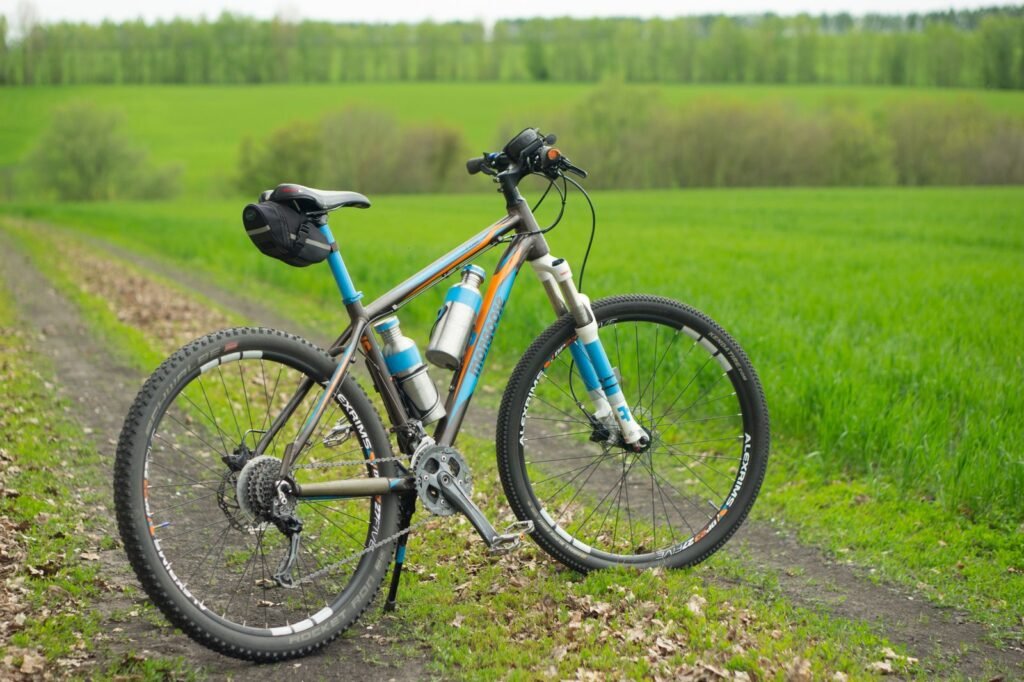
A full suspension mountain bike and a trail hardtail bike look similar at the trailhead. Both have wide tyres, a suspension fork and a wide gear range. The difference is at the back: a full-suspension bike has a rear shock that lets the back wheel move over bumps, while a trail hardtail has a rigid rear end. On a climb, that difference decides whether your tyre grips or spins.
This guide compares the two on the same climbs, shows you how to test them before you buy, and explains what to do if you already own the wrong one. For the wider picture, start with the Mountain Bikes hub, then see Hardtail Mountain Bike vs Full Suspension Mountain Bike and Full Suspension Mountain Bike vs Trail Mountain Bike.
Full Suspension Mountain Bike vs Trail Hardtail Bike: The Core Comparison
The table compares the two bikes as they are normally sold and ridden.
| Attribute | Full Suspension Mountain Bike | Trail Hardtail Bike | What to watch |
|---|---|---|---|
| What it is | Suspension front and rear — a rear shock absorbs bumps | Suspension fork only — a rigid rear end | Check for a rear shock, not just a fork |
| Climbing traction | Strong on rough ground — the rear shock keeps the tyre in contact | Weaker on rough ground — the rear wheel bounces and spins | Test on roots and loose rock, not smooth tarmac |
| Pedalling efficiency | Some energy goes into the shock, unless it has a lockout | Almost all your effort reaches the wheel | A lockout or firm shock setting closes the gap |
| Weight | Heavier — shock, linkage and a stronger frame add weight | Lighter, and easier to carry and lift | Weight costs effort on every gradient |
| Maintenance | More pivots, seals and bearings to service | Fewer moving parts; simpler and cheaper to run | Budget for shock servicing |
| Cost | Costs more for the same parts | More bike for the money at the same price | Compare the parts, not just the price tag |
| Best for | Rough, rocky climbs and long technical rides | Smooth climbs, lighter riders and tighter budgets | Match the bike to your hardest climb |
When the Answer Changes
The verdict above holds for most riders on most climbs, but these variables can flip it:
- Smooth, steady climbs. On a smooth fire road or a paved hill, there is nothing for the rear shock to do. The hardtail’s lower weight and direct pedalling win.
- Rough, loose climbs. On roots, rocks and loose gravel, traction beats weight. The full-suspension bike keeps its rear tyre on the ground and keeps moving where the hardtail spins out.
- Long climbs. Weight adds up over an hour of climbing, so a lighter hardtail suits long, steady ascents. But a long, rough climb still favours the full-suspension bike.
- Your budget. At a fixed price, a hardtail usually has better gears, brakes and tyres than a full-suspension bike. A cheap full-suspension bike with a poor shock can climb worse than a good hardtail.
- Rider weight and skill. A lighter rider bounces a hardtail less, and a skilled rider can pick a smooth line through rough ground. Both narrow the gap.

Test Both Bikes on the Same Climb
Do not choose from a spec sheet. One short ride on a climb you know well tells you more than any table.
- Pick your real climb: a climb you ride often, 10 to 20 minutes long, with smooth and rough ground.
- Ride it on the hardtail first: note where the rear wheel spins, where you stand, and where you walk.
- Rest, then ride the same climb on the full-suspension bike: same effort, same line, same tyre pressure.
- Compare how your legs feel at the top: not just the time — note which bike left you fresher.
- Repeat the roughest part if it was close: the rough half is the real test.
What a fail looks like:
- Rear wheel spins on loose ground → the tyre is losing contact → stay seated and lower the rear tyre pressure a little. See the mountain bike air pressure guide first.
- You have to stand and strain → the gear is too high → shift to an easier gear earlier and pace the climb.
- The bike bounces you out of the saddle → the rear end is too stiff → soften the shock on a full-suspension bike, or lower the tyre pressure on a hardtail.
Myth vs Fact
Myth: More suspension always climbs better.
Fact: Suspension helps traction on rough ground, but it adds weight and bob. On a smooth climb, a hardtail is faster.
Myth: A hardtail cannot climb rough trails.
Fact: It can — with grippy tyres, low pressure and a smooth line. It just works harder on the same ground.
Before you test: Walk the climb first, wear a helmet and gloves, and test on a dry day. Carry a pump, a multi-tool and water. If a section looks dangerous, walk it — a test ride is never worth a crash.

How to Set Up Your Bike for Climbs
Either bike climbs better when it is set up for climbing. These steps take one evening and cost nothing.
What you will need:
- A shock pump and a tyre gauge
- A multi-tool
- Your riding shoes and pack
- A climb you know well
The method:
- Set the sag: on a full-suspension bike, set the rear shock sag with your riding gear on.
- Firm up the shock: add a little more air, or switch the shock to its middle or climb setting.
- Set tyre pressures for grip: lower at the rear than the front if the trail is loose.
- Slide the saddle forward a little and keep the bars low, to weight the front wheel.
- Shift into an easy gear before the gradient bites: not after your legs have stopped.
- Ride the same climb again and note what changed: keep what helped, undo the rest.
Note: Change one setting at a time, ride the same climb, and write down what you felt. Two changes at once tell you nothing.
Warning: Never ride with the rear shock fully locked out on a rough descent, and never let tyre pressure drop so low the rim can strike a rock. Open the suspension back up before you point the bike downhill.
When the Damage Is Already Done
Already bought the wrong bike for your climbs? Work through these fixes in order.
- Bought a hardtail and it spins on rough climbs: fit the widest, grippiest rear tyre your frame allows, drop the pressure a little, and stay seated.
- Bought a full-suspension bike and it bobs on smooth climbs: use the shock’s climb switch or lockout, add a little air, and check the sag.
- The gearing is too high: fit an easier lowest gear or a bigger cassette if the frame and derailleur allow it.
- The bike is too heavy for you: remove what you do not need for that ride, and check the tyres.
- If the bike still stalls on every climb: sell or trade it while it still has value, and test the replacement on your own hill first.

The Safe Alternative: Start with a Trail Hardtail
If your climbs are mostly smooth, or your budget is tight, the trail hardtail is the full alternative to a full-suspension bike.
- Buy the best fork and tyres you can afford: on a hardtail, they do the work the rear shock would have done.
- Set the tyre pressure low enough to grip: a hardtail’s only rear suspension is its tyre, so pressure matters more.
- Learn to ride light: unweight the saddle over roots and rocks, and keep your weight over the rear wheel on loose climbs.
- Save the money you did not spend: put it toward better brakes and a wider gear range.
If your climbs turn rough and technical, this is not your bike.
What to Do Next, in Order
- Write down your steepest regular climb and how rough it is.
- Decide whether traction or weight matters more on your climbs.
- Test both bikes on that same climb.
- Set up the winner properly — shock, tyres and saddle — before you judge it.
- Only then spend money: tyres and gearing first, a new bike last.
Never Do This on Climbs
- Never start a steep climb in a hard gear: your legs will stop before the top.
- Never lock the rear shock solid on rough ground: the tyre loses contact, and you lose traction and control.
- Never brake hard on a loose climb: the wheels lock and the tyres slide.
- Never ignore a wandering front wheel: your weight is in the wrong place.
- Never judge a bike by a flat test ride: the hills are the real test.
In Short
In short, a full-suspension mountain bike is usually better for climbs because its rear shock keeps the tyre on rough ground, while a trail hardtail is lighter, simpler and cheaper, and wins on smooth climbs. Test both on your steepest climb before you buy.
The essentials
- Full suspension wins rough climbs on traction; hardtail wins smooth climbs on weight.
- A rear shock helps only where the ground is rough — on smooth climbs it is carried weight.
- Set up matters: shock, tyre pressure and saddle position first.
- Test both bikes on the same climb before you buy.
More Questions, Answered
Is a full suspension mountain bike better than a hardtail for climbing?
Yes, on rough, technical climbs — the rear shock keeps the tyre in contact with the ground. On smooth climbs, a hardtail is lighter and can be faster.
Can a trail hardtail climb rough trails?
Yes — with grippy tyres, low pressure and a smooth line. It just takes more skill and effort.
Is a full suspension bike heavier than a hardtail?
Yes. The rear shock, linkage and stronger frame add weight, and that weight costs effort on every gradient.
Which bike should I buy if I climb and descend equally?
Buy the full-suspension trail bike if your trails are rough, or the hardtail if they are mostly smooth.
Can I make a hardtail climb better?
Yes — wider, grippier tyres, lower pressure, an easier lowest gear and a saddle position that keeps your weight over the rear wheel all help, and they cost far less than a new bike.
Additional Details
- Name: Full Suspension Mountain Bike vs Trail Hardtail Bike: Which Is Better for Climbs?
- Description: Full suspension mountain bike vs trail hardtail bike: which climbs better? Compare traction, weight, effort and cost, then test both on your steepest climb.
- Published: November 10, 2026