Straight answer: For most weekend trail riding, in the hardtail mountain bike vs dirt jump mountain bike choice, the hardtail is the better bike. It has gears, a longer and more stable frame, and a front suspension fork that takes the edge off roots and rocks, so you can climb, cruise and descend the same loop without running out of gears or beating yourself up. A dirt jump bike only wins when your weekend is mostly jumps, pump tracks and short, steep dirt lines: its short, stiff frame and single gear are built for airtime, not for pedalling a whole trail.
The two bikes look alike at a glance, but they are built for different jobs. A hardtail is a trail bike that can jump; a dirt jump bike is a jump bike that can only just trail ride.
A hardtail mountain bike is a mountain bike with suspension in the fork only and a rigid rear end, plus a wide range of gears. A dirt jump mountain bike is a short, low, stiff bike made for jumping: it usually has a short-travel fork or a rigid fork, one gear, smaller wheels and a very low saddle, so the rider can move around the bike in the air. Both sit in our Mountain Bikes Hub.
The choice decides how far you can ride, how fast you climb and how tired you feel at the end of a weekend loop. This guide compares the two side by side, then gives you a 20-minute test that settles the question on your own trails. If you are still choosing a first trail bike, read our guide to mountain bikes for beginners first.
Hardtail Mountain Bike vs Dirt Jump Mountain Bike: The Core Comparison
The table compares the two on what decides a weekend ride. Read the last column first: it says what to check before you buy.
| Attribute | Hardtail Mountain Bike | Dirt Jump Mountain Bike | What to watch |
|---|---|---|---|
| Suspension | Front fork only; rigid rear end | Short-travel fork, often rigid | Check the fork moves smoothly |
| Gears | Wide range for climbs and flats | Usually one gear | Ride a climb on the single gear first |
| Frame and fit | Longer, stable, built for pedalling | Short, low and stiff, built for jumps | Stand over the bike and check the reach |
| Wheels | Usually larger wheels that roll well | Usually smaller 26-inch wheels | Roll the bike over a rooty patch |
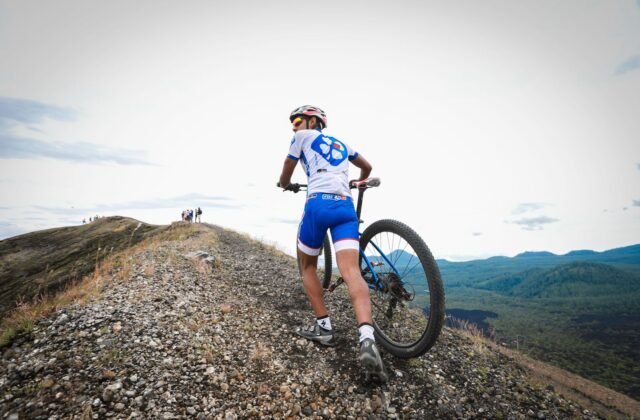
| Climbing | Gears and grip make climbs steady | Hard work on any long climb | Test your longest climb, not the shortest |
| Jumping | Fine on small jumps and drops | Made for jumps, pump tracks and tricks | Start small and check the landing |
| Comfort | Fork and gears spread the effort | Stiff ride; you feel every bump | Try a rough section on both |
| Best weekend ride | Mixed trails, climbs and descents | Jump lines, pump tracks and dirt parks | Buy for the trails you ride every week |

When the Answer Changes
The hardtail wins most weekends, but these two things flip the verdict.
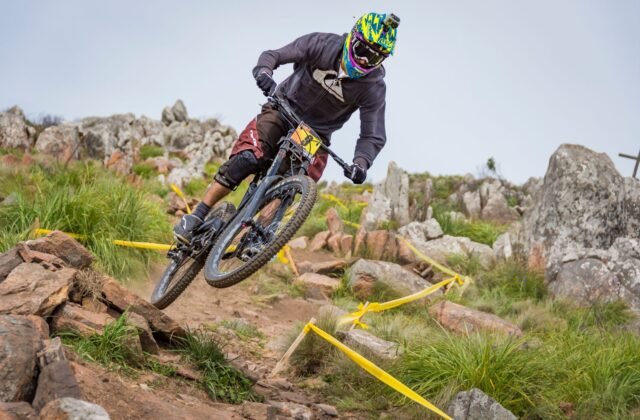
- Jumps most days: If your regular weekend is a dirt park, a pump track or a jump line, the dirt jump bike is worth more than the hardtail’s gears. Its short frame is easier to lift, turn and land, and its single gear cannot drop a chain on a landing.
- Your first jump session: If you plan to learn jumps properly, a dirt jump bike teaches you to pump, lift and land with the right body position. A hardtail forgives mistakes on the trail, but it is heavier to move in the air. Our hardtail vs full suspension comparison shows the same kind of trade-off.
Test Both Bikes on One Trail: A 20-Minute Decision Ride
Ride the same loop on both bikes, back to back, and let the trail decide. It takes about 20 minutes.
- Pick your loop: a short trail with one climb, one flat section, one descent and, if you can, one small jump or roller.
- Set the tyre pressure the same on both bikes – follow our guide to checking and setting bike tyre pressure – and match the saddle height as far as each bike allows.
- Ride the loop on the hardtail first. Note where you shift, where the fork works and where you feel in control.
- Swap to the dirt jump bike and ride the same loop. On the climb, note whether the single gear makes you stand, spin out or walk.
- Keep the bike that felt better on your worst section, not on the smoothest one.
What a fail looks like
| Symptom | Cause | Fix |
|---|---|---|
| You run out of gears on a climb | Single gear too tall for the hill | Choose the geared hardtail |
| Your hands and arms ache after 20 minutes | Stiff frame with little suspension | Ride the hardtail or lower the pressure a little |
| The bike feels twitchy on a descent | Short frame and steep position | Slow down and keep your weight back |
Myth: A dirt jump bike is just a small hardtail, so it rides the same. Fact: It is a different tool: one gear, a much shorter frame and a very low saddle make it brilliant in the air and hard work on a climb, where a hardtail’s gears and longer frame do the work for you.
Before you test: Wear a helmet, pump the tyres to the pressure on the sidewall, and test the brakes before you roll. Use a quiet trail, not a road, and walk any section you cannot see through. Read our disc brake vs rim brake guide if your brakes feel weak in the wet.

How to Set Up Either Bike the Same Way
Either bike rides far better with a basic setup. Do this before your first proper ride.
What you will need
- A floor pump with a pressure gauge
- A multi-tool with Allen keys
- Chain lube made for wet conditions
- Tyres with open tread for loose ground
The method
- Check the tyres for cuts and fit tread that suits loose trail ground.
- Set the tyre pressure a little lower than your dry setting for more grip, but never below the minimum on the sidewall.
- Set the saddle so your leg is almost straight at the bottom of the pedal stroke; on a dirt jump bike, keep it low enough to move behind it.
- On a hardtail, set the front suspension so the fork moves when you push your weight forward; on a dirt jump bike, check the fork and the single gear hold firm.
- Lube the chain, wipe off the excess, and check the brakes.
- Ride your test loop, and change one thing at a time until the bike feels right.
A note about pressure: Lower pressure gives a bigger contact patch and more grip on loose ground, but too little lets the tyre squirm and risks a pinch flat. Change a little at a time.
Warning: Never ride a descent with brakes you have not tested. Do a short roll on flat ground first; if the brakes feel weak, walk the bike until you find the cause.
When the Damage Is Already Done
Bought the wrong bike? Each of these has a fix.
- I bought a hardtail, but I keep wishing for jumps: Lower the saddle, fit wider bars and practise pumping on a pump track. If jumps are now your main riding, a dirt jump bike is the fix.
- I bought a dirt jump bike, but my trails have long climbs: Fit the easiest gear your frame allows and keep the saddle high enough to pedal. If climbs are the rule, a hardtail is lighter and far easier to ride – see our hardtail vs trail comparison.
- My brakes feel weak after wet rides: Clean the rotor or rim, check the pads for glazing, and replace worn pads. For the brake check, see our disc brake vs rim brake guide.

The Safe Alternative: Start with the Dirt Jump Bike
If you are not sure your weekends are jumpy enough for a dirt jump bike – or long enough for a hardtail – the dirt jump bike is the safe first buy only when jumps and pump tracks are common. It teaches you to ride loose ground and land properly.
- Work out your jumpy trail: how many jump lines and pump tracks does your usual weekend have?
- Ride it for a month on your real trails and jump lines.
- If long climbs still beat you, add a hardtail later – you will know from riding, not guessing.
What to Do Next, in Order
- List the trails you ride every weekend and mark which have jumps.
- Ride both bikes on the same loop, as above.
- Pick the bike that wins on your worst section.
- Set the tyre pressure and check the brakes.
- If the bike still fights you, read our hardtail vs fat comparison and our hardtail vs full suspension comparison.
Never Do This
- Never buy on jump looks alone: a bike built for airtime is hard work on a long trail.
- Never ride a dirt jump bike with the saddle too high: you need room to move behind it on a landing.
- Never skip the test ride: two bikes with the same label can feel very different.
- Never judge a bike in the car park: a bike that feels fine on tarmac can be miserable on a climb.
- Never ignore the gears: if you cannot climb your local hill, you will ride it less.
In short
For most weekend trail riding, the hardtail is the better bike: gears, a longer frame and a working front fork make the whole loop easier, from the first climb to the last descent. The dirt jump bike wins only when your weekend is mostly jumps, pump tracks and dirt parks. Ride both on the same loop and let your worst section decide.
The essentials
- The hardtail is geared, longer and easier on climbs and rough trails.
- The dirt jump bike is short, stiff and made for jumps and pump tracks.
- Test both bikes on the same loop and pick the winner on your worst section.
- Buy for the trails you ride every weekend, not the ones you dream about.
More Questions, Answered
Can I ride trails on a dirt jump bike?
Yes, for short, smooth trails with jumps. On long climbs and rough ground it is hard work, because it has one gear and little suspension.
Can I jump a hardtail mountain bike?
Yes, on small jumps and drops. It is heavier to lift than a dirt jump bike, so start small and land with both wheels level.
Which is better for a weekend beginner?
Usually the hardtail. Its gears and front fork make climbing and descending easier, so a beginner can ride longer and learn faster.
Do dirt jump bikes have gears?
Usually not. Most have a single gear, which is simple and strong for jumping, but it limits you on climbs and flat sections.
Additional Details
Name: Hardtail Mountain Bike vs Dirt Jump Mountain Bike: Which Is Better for Weekend trail riding?
Description: Hardtail mountain bike vs dirt jump mountain bike for weekend trail riding — compare geometry, gears, grip and comfort, then test both before you buy.
Word count: 1975
Published: November 10, 2026