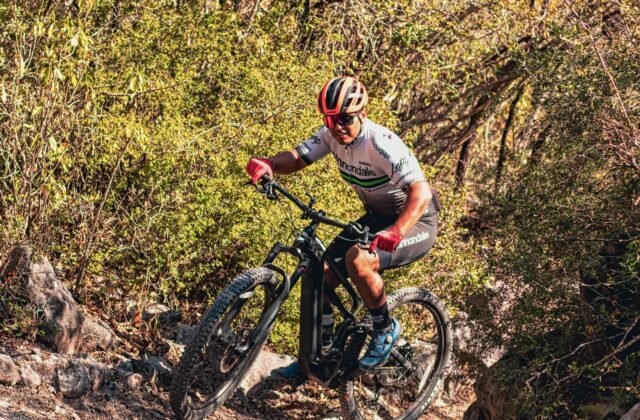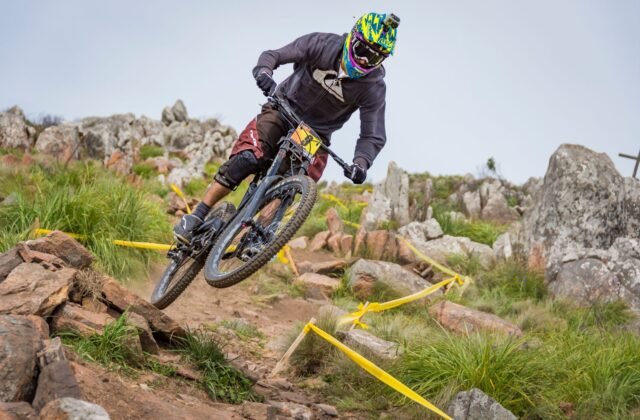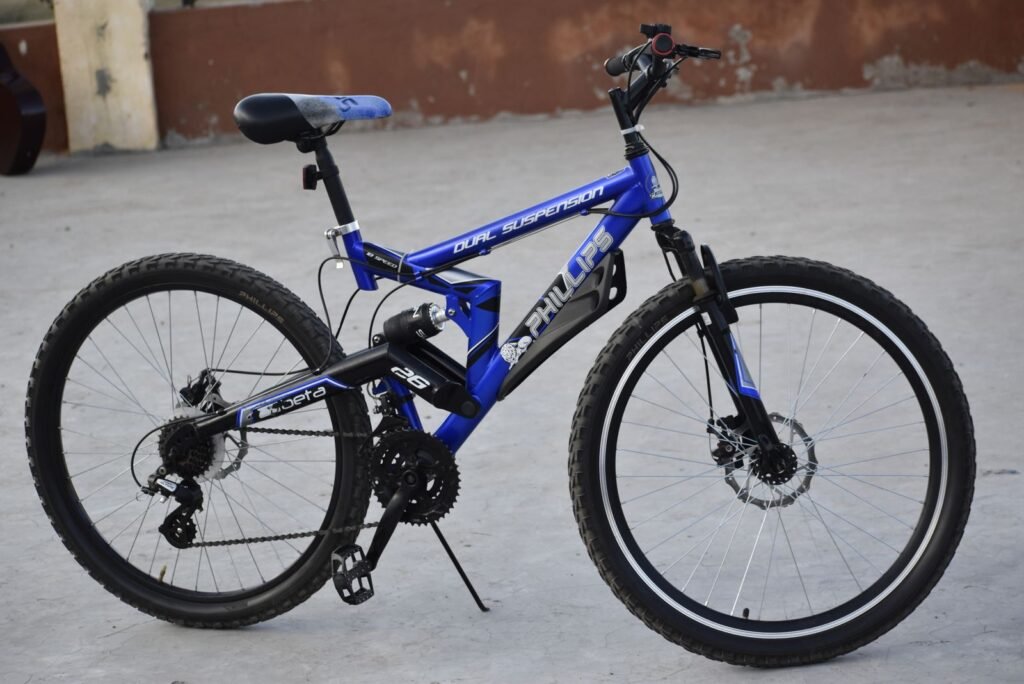
For steep descents, the full-suspension mountain bike is better. Its rear suspension keeps the rear wheel in contact with the ground over rocks, roots and drops, so you keep traction and control where a trail bike starts to skip and bounce. That means later braking and a more centred, relaxed position on rough ground. The trade is weight, cost and upkeep: a trail mountain bike is lighter, simpler and climbs better on smooth, rolling trail.
The names overlap, and that is where the confusion starts. Many modern trail mountain bikes also have rear suspension, so this is not a bike with suspension against a bike without it. It is about intent: a longer-travel full-suspension bike built for rough, steep ground, against a trail bike tuned for efficiency and all-round riding.
A steep descent punishes a bike in specific ways. The gradient loads the front wheel, rocks and roots try to throw the rear wheel off the ground, and the brakes have to work over uneven ground.
This guide compares the two types on the same ground, shows how to test them on one descent, and explains what to do if you already bought the wrong one. It sits in the Mountain Bikes hub.
Full Suspension Mountain Bike vs Trail Mountain Bike: The Core Comparison
On paper the differences look small. On a steep, rough descent they are not. The table compares the two types as they are normally sold and ridden.
| Attribute | Full Suspension Mountain Bike | Trail Mountain Bike | What to watch |
|---|---|---|---|
| Rear suspension | Longer travel, active under braking | Shorter travel, built for pedalling efficiency | Rear wheel planted or skipping? |
| Front suspension | Longer-travel fork, calmer over drops | Shorter-travel fork, lighter steering | Fork dive under braking? |
| Geometry | Slacker head angle, longer wheelbase | Steeper head angle, shorter wheelbase | Sliding forward onto the bars? |
| Traction and braking | Both wheels stay in contact longer | Rear wheel unweights sooner | Short stops beat one long skid. |
| Climbing | Heavier, suspension moves as you pedal | Lighter and more efficient | Scary downhill is the wrong tool. |
| Weight and upkeep | More pivots, seals and parts | Fewer pivots, less to service | Budget for servicing too. |
| Best terrain | Long, rocky, rooty or steep descents | Smooth to moderately rough rolling trail | Worst descent on your loop. |
| Who it suits | Riders whose trails are steep and rough | Riders who climb as much as they descend | Most common ride matters most. |
If the hardtail question is also on your mind, see the Hardtail Mountain Bike vs Full Suspension Mountain Bike guide and the Hardtail Mountain Bike vs Trail Mountain Bike guide.
When the Answer Changes
Your descents are short and smooth. A trail bike handles a short drop or a smooth, steep fire-road descent without drama, and its lighter weight pays off for the rest of the ride.
You climb more than you descend. On a loop with a long climb and a short descent, the trail bike’s efficiency matters more than its limits downhill.
The trail is wet or muddy. Grip becomes the limit before suspension does, and tyre choice and pressure matter more than travel. Check the guide to checking and setting bike tyre pressure before blaming the bike.
Your budget is tight. A well-set-up trail bike you can afford beats a cheap full-suspension bike with poor suspension and weak brakes. Braking matters as much as suspension, as the Disc Brake vs Rim Brake: Which Is Better After Rain? guide shows.

How to Decide in One Ride: The Steep-Descent Test
Reading tables will not tell you how a bike feels on your trail. One descent, ridden the same way on both bikes, will. Ride at your normal pace, not your fastest, and judge by control, not by speed.
- Pick one descent you ride often, with rocks or roots and a steady gradient.
- Ride it on each bike, with the same tyre pressure and the same protective gear.
- Note where you brake, where you stand or sit back, and where the bike feels nervous.
- Repeat it once more on the bike that felt better, to check the result was not a one-off.
- Choose the bike you would ride again tomorrow, not the fastest one on a stopwatch.
What a fail looks like
- Rear wheel skips over roots → rear suspension too firm, or travel too short → try a longer-travel full-suspension bike, or lower rear shock pressure slightly within the maker’s guidance.
- Front wheel dives under braking → fork too soft, or geometry too steep → move your weight back and brake earlier.
Myth vs Fact: Myth — more suspension always makes a bike faster downhill. Fact — suspension only helps if it is set up for your weight and the ground. Myth — a trail bike cannot handle steep ground. Fact — it can, at lower speed.
Before you test: wear a helmet and gloves, check your brakes and tyre pressure, and walk any section you have not ridden before. Test on a trail you know, at a pace you can stop from, and never test a new bike on the steepest descent first.
The Method: Set Up Both Bikes the Same Way
A fair test needs the same setup on both bikes. Different tyre pressure or saddle height will change the result more than suspension, so sort those first.
What you will need
- Two bikes to compare, or a borrowed or demo bike of the other type
- A tyre pressure gauge and a pump
- A helmet, gloves and eye protection
- A short, familiar descent with rocks or roots
The method
- Set both bikes to the same tyre pressure, using the guide to checking and setting bike tyre pressure.
- Set the saddle height the same on both bikes and check both brakes before you ride.
- Ride the chosen descent on the trail bike first, then on the full-suspension bike the same way, and record where you braked and felt nervous on each.
- Compare the notes, not the feeling of speed: the better bike left you with more control and more energy at the bottom.
Note: If you can only borrow one bike, test it against your own bike on the same descent, on the same day, while trail conditions are the same. A test on a different day, on a different trail, proves nothing.

When the Damage Is Already Done
If you already own the wrong bike for your descents, do not replace it at once. Work through this list first; most fixes are cheaper than a new bike.
- You bought a trail bike but your descents are long and rocky → fit the widest, grippiest tyres your frame takes and set pressure for grip, not speed.
- You bought a full-suspension bike but you mostly climb → lock out the rear suspension on climbs if your bike allows it; lighter tyres help too.
- Your rear suspension feels harsh on every hit → check the sag and tyre pressure first, and have the shock serviced if it never has been.
- Your brakes fade on long descents → fresh pads and a brake check matter more than extra travel; brake in short, firm bursts.
The Safe Alternative: Ride the Trail Bike Differently
The trail bike is not a failed full-suspension bike. It is the safe alternative when your riding is mostly flowing trail, when you climb a lot, or when your budget will not stretch to a good full-suspension bike.
- Slow down before the steep section, not in it, and choose your line while you can still change it.
- Drop your heels, bend your knees and elbows, and keep your weight centred over the bottom bracket.
- Brake in short, firm bursts before the rough ground, then release the brakes and let the wheels roll.
- Look ahead to the exit of the section, not at the rock in front of your wheel.

What to Do Next, in Order
- Ride your regular loop and write down the steepest, roughest descent on it.
- Read the comparison table above and match your worst descent, not your easiest one.
- Run the steep-descent test on the same descent, on the same day, on both bikes.
- Set the tyre pressure and suspension for your weight before you judge either bike.
- Choose the bike that gave you more control with less effort at the bottom.
Never Do These on a Steep Descent
Never ride a steep descent with brakes you have not checked, with tyres pumped hard for the road, or on a bike you have never ridden before.
- Never drag both brakes all the way down — the brakes overheat and the wheels lock; brake in short bursts instead.
- Never stare at the rock in front of your wheel — your bike follows your eyes, and you will hit it.
- Never ride a new bike’s first steep descent at full speed — learn how it brakes and steers on gentle ground first.
- Never ignore a knocking suspension pivot or a rubbing brake — stop, check it, and fix it before the next descent.
In short
For steep descents, the full-suspension mountain bike is better: its rear suspension keeps both wheels on rough ground, so you brake later and stay in control. The trail mountain bike is better when your riding is mostly smooth, rolling trail and you climb as much as you descend. Match the bike to the worst descent on your regular loop and let control — not speed — decide.
The essentials
- Full suspension wins on long, rocky, steep descents; the trail bike wins on smooth, rolling trail and climbs.
- Many trail bikes have rear suspension too; the real difference is travel, geometry and intent.
- Set tyre pressure and suspension for your weight before you judge either bike.
- Test both bikes on the same descent, on the same day, and judge by control, not by speed.
More Questions, Answered
Q: Can a trail mountain bike handle steep descents at all?
Yes, at a lower speed and with more rider input. It needs earlier braking and a more active body position.
Q: Is a full-suspension bike always heavier than a trail bike?
Usually, yes. The rear shock, linkage and pivots add weight, and longer-travel forks are heavier too.
Q: What matters more on a steep descent, suspension or brakes?
Both, and they work together. Suspension keeps the wheels on the ground so the brakes can work; without grip, even good brakes cannot stop the bike.
Q: Can I make my trail bike better on descents without buying a new bike?
Often, yes. Wider, grippier tyres, lower tyre pressure for grip, and a suspension check will help. If the descents are long and rocky, those fixes only go so far.
Additional Details
- Name: Full Suspension Mountain Bike vs Trail Mountain Bike: Which Is Better for Steep descents?
- Description: Full suspension mountain bike vs trail mountain bike for steep descents: which holds traction, brakes later and stays in control? The verdict, test and fix.
- Published: November 10, 2026