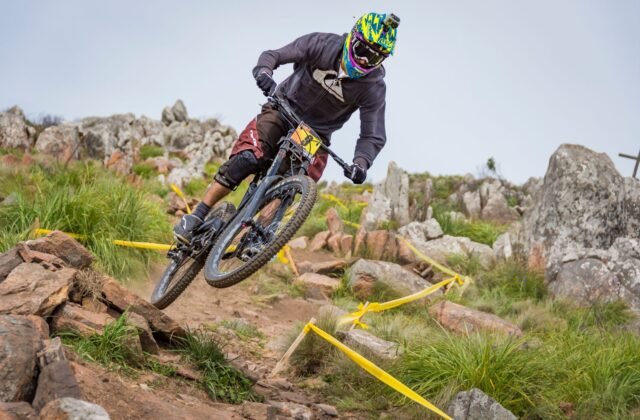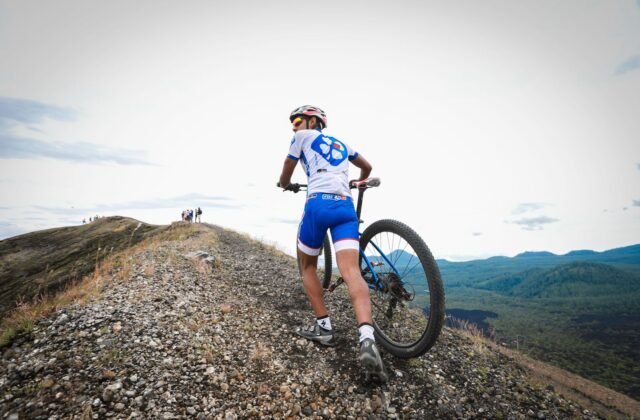
Straight answer: For most wet-weather trail riding, a trail mountain bike is the better choice. A trail bike (120-160 mm of travel) is lighter, pedals efficiently, and keeps moving across flat and rolling wet ground. A downhill bike (180-210 mm of travel) is heavier and harder to pedal, but on steep, slick descents its long travel and slack geometry keep the tyres planted – and there it wins.
Introduction
Rain changes what a trail asks of a bike. Grip drops on wet roots and rocks, mud fills the tread, ruts hold water, and braking takes longer. A bike that feels fast on a dry trail can feel heavy, slippery and slow after rain.
This guide compares the two bike types in wet weather only. This article sits in the Mountain Bikes Hub under Mountain Bike. For the climbs-only version, read Full Suspension Mountain Bike vs Downhill Mountain Bike: Which Is Better for Climbs?, and for wet weather on another pairing, see Full Suspension Mountain Bike vs Cross Country Mountain Bike: Which Is Better for Wet weather?.
Trail Mountain Bike vs Downhill Mountain Bike in Wet Weather: The Comparison
The short version is weight against grip.
| Attribute | Trail mountain bike | Downhill mountain bike | What to watch in the wet |
|---|---|---|---|
| Suspension travel | 120-160 mm. | 180-210 mm. | More travel helps on rough descents; adds weight on the flat. |
| Climbing in the wet | Lighter, with a steeper seat angle. | Heavier, with a slack front end. | On climbs, the trail bike gets up with less effort. |
| Descending in the wet | Stable on moderate descents. | Long travel keeps both tyres in contact. | On steep wet descents, the downhill bike is safer and faster. |
| Weight and handling | Noticeably lighter and easier to carry. | Noticeably heavier, with a reinforced frame and wheels. | Weight matters most when a wet trail forces you to walk. |
| Tyres and mud clearance | Trail tyres shed mud well, but tight clearance can clog. | Wider, more aggressive tyres and bigger clearance clear mud better. | In thick mud, check the tyres are not packed solid. |
| Braking in the wet | The lighter bike stops in a shorter distance. | The heavier bike needs more braking distance. | Test both brakes before you ride. |
| Best for | Mixed wet trails with climbs, flats and descents. | Steep, lift-served or shuttle-run descents. | Match the bike to the ride you do most. |
When the Answer Changes
- How steep your descents are. On short, rolling descents the trail bike wins. On long, steep, slick descents the downhill bike wins.
- How much climbing the loop has. Long wet climbs favour the trail bike; the downhill bike’s weight is a penalty on every climb.
- How deep the mud is. In thick, sticky mud, the downhill bike’s wider tyres and bigger clearance keep grip longer.
- Whether you shuttle or pedal. If you ride a lift or a shuttle to the top and only descend, the downhill bike’s climbing penalty disappears.
- Your speed on descents. A faster rider on steep wet ground gains more from the downhill bike; a slower rider gains more from the trail bike’s lighter handling.
Test Both Bikes on the Same Wet Trail: A 20-Minute Decision Ride
One short test ride on a wet trail you know well tells you more than any table. Use the same trail, load and pace for both bikes.
- Pick your real trail: a wet loop you ride often, 10 to 20 minutes long, with a climb, a flat stretch and a descent.
- Ride the trail bike first. Note where you spin out on the climbs.
- Rest, then ride the downhill bike the same way. Use the same effort and the same lines, not more speed.
- Compare how your legs feel at the top. If the downhill bike leaves you exhausted, the trail bike wins your loop.
- Choose the bike that got you up with the least wrestling. The right bike finishes your loop with grip and energy to spare.
What a fail looks like
| Symptom | Cause | Fix |
|---|---|---|
| Rear wheel spins on wet climbs | The tyre is losing contact on wet roots or rocks | Let a little air out, stay seated, and try an easier gear |
| Front wheel washes out on a wet descent | Too much speed, or the tyre is not gripping the wet surface | Slow down before the turn and brake earlier |
| Mud packs the tyres solid | Thick mud is filling the tread and the clearance | Stop and clear the mud from the tyres and the frame |
Myth: A downhill bike is always better in the wet because it has more suspension.
Fact: Travel helps traction on rough descents, but it adds weight and pedalling bob.
Myth: Wet weather means you should pump the tyres harder to cut through the mud.
Fact: Softer tyres grip better on wet roots and rocks. Lower the pressure for grip, not speed – see the mountain bike air pressure guide.
Before you test: Walk the trail first and check for loose rock, deep ruts and drop-offs. Wear a helmet and gloves. If the brakes do not bite, keep your speed down and walk the bike.

How to Set Up a Bike for Wet Weather
A bike rides best when it is set up for your weight and your trails, not the way it left the shop.
What you will need
- A shock pump
- A tyre pump or gauge
- A multi-tool
- Riding shoes and pack
- A wet trail you know well
- A clean rag and chain lube
The method
- Set rear shock sag with your riding gear on. Too firm skips over wet roots; too soft bobs on the climbs.
- Switch the lockout to its middle setting for a mixed trail. Use the firm setting only for flat, smooth climbs.
- Set tyre pressures for grip, not speed. Lower the rear a little more than the front on loose, wet ground. See our mountain bike air pressure guide for starting points.
- Slide the saddle forward a little and keep the bars low enough to weight the front wheel, so it grips on wet climbs.
- Ride the same trail again and note what changed. Keep what helped, undo the rest.
- After the ride, rinse the mud off, dry the chain and brakes, and lube the chain.
Do not ride a wet trail with a loose headset, slipping brakes or worn tyres. Wet weather makes every small fault worse. Check the bolts and the brakes before you leave.
Note: Change one setting at a time, ride the same trail, and write down what you felt. Two changes at once tell you nothing.

When the Damage Is Already Done
Already bought the wrong bike for your trails? Work through the likely causes first – a new bike is the last resort.
- You bought a downhill bike but your rides are short and flat. Use the lowest gears and save the bike for steep descents. If the climbs still beat you, sell it and put the money toward a trail bike.
- You bought a trail bike but the descents beat you. Fit an easier lowest gear and build fitness on shorter loops first.
- The suspension was never set up. Set the sag and tyre pressures before you judge the bike – most wet-weather complaints come from setup, not the frame.
For the climbing side, see Full Suspension Mountain Bike vs Downhill Mountain Bike: Which Is Better for Climbs?, and for the downhill side, see Hardtail Mountain Bike vs Downhill Mountain Bike: Which Is Better for Rocks?.

The Safe Alternative: Start with a Downhill Bike
A downhill bike is the safe alternative when your riding is mostly downhill. If you shuttle, race, or ride lift-served trails, it is the right bike. For more on downhill riding, see Fastest Downhill Mountain Bike Speed: Which 5 Will Leave You Breathless?
The method
- Pick the lightest downhill bike you can afford, and use its climb switch whenever the trail levels out.
- Set the suspension for the trails you ride, not the biggest drop you can imagine.
- Keep the saddle high enough to pedal, and raise it for climbs if your seat post allows.
- Learn the bike’s limits on a gentle climb first, before you commit to a steep one.
If the downhill bike still feels weak after setup, change the tyres or have the bike checked by a professional.
What to Do Next, in Order
- Ride the 20-minute test on your own wet loop.
- Set the sag and tyre pressures for grip before your next wet ride.
- Clean and dry the bike after every wet ride, and lube the chain.
- Replace worn tyres before the wet season.
- If the bike still beats you on the climbs, change the setup – or change the bike.
Never Do These in Wet Weather
- Never ride a steep wet descent with fading brakes or a loose load. Stop at the top, check both, and descend slowly with both brakes.
- Never brake hard on wet roots or rocks. Brake before the slippery section, then let the bike roll through it.
- Never pump the tyres hard for wet weather. Hard tyres slip on wet roots and rocks; set them for grip instead.
- Never leave mud on the bike after a wet ride. Mud wears the chain, brakes and suspension seals – rinse it off the same day.
In short
In wet weather, the trail mountain bike wins most rides: it is lighter, pedals efficiently, and keeps moving across the ground that fills most wet trails. The downhill bike only wins on long, steep, slick descents, where its long travel keeps the tyres planted. Test both on your own wet loop, set the sag and pressures for grip, and choose the bike that finishes with grip and energy to spare.
The essentials
- A trail bike (120-160 mm of travel) is the better choice for most wet-weather trail riding.
- A downhill bike (180-210 mm of travel) wins only on steep, slick descents.
- Wet roots and rocks cut grip – lower tyre pressures for grip, not speed.
- A heavier bike needs more braking distance; brake earlier.
- Set rear shock sag with your riding gear on, and change one setting at a time.
- Clean and dry the bike after every wet ride, and lube the chain.
More Questions, Answered
Which is better for wet weather, a trail bike or a downhill bike?
A trail bike, for most wet rides. It is lighter and pedals better across the climbs and flat ground that fill most wet trails. A downhill bike is better only on steep, slick descents.
Is a downhill bike harder to ride in mud?
It is easier on the descents, where its wide tyres and long travel keep grip, but harder on the climbs, where its weight makes the rear wheel spin.
Can I use a trail bike for downhill riding in the wet?
Yes, on moderate descents. For long, steep, rough descents at speed, a downhill bike is the safer choice.
What tyre pressure should I use in the wet?
Lower than on dry trails. Start from the pressures in our mountain bike air pressure guide and adjust one step at a time.
Additional Details
Name: Trail Mountain Bike vs Downhill Mountain Bike: Which Is Better for Wet weather?
Description: Trail mountain bike vs downhill mountain bike in wet weather: the trail bike wins most wet trails, but the downhill bike takes steep, muddy, slick descents.
Published: November 10, 2026