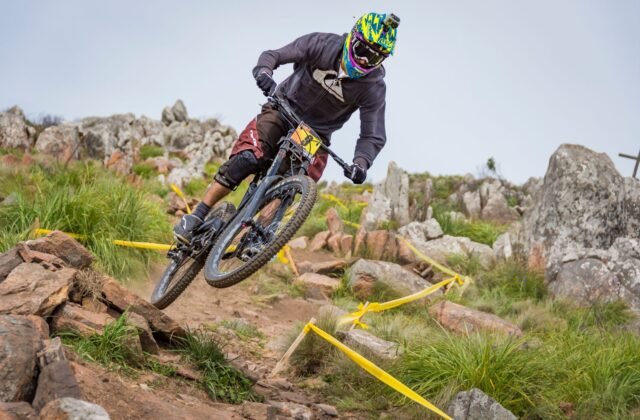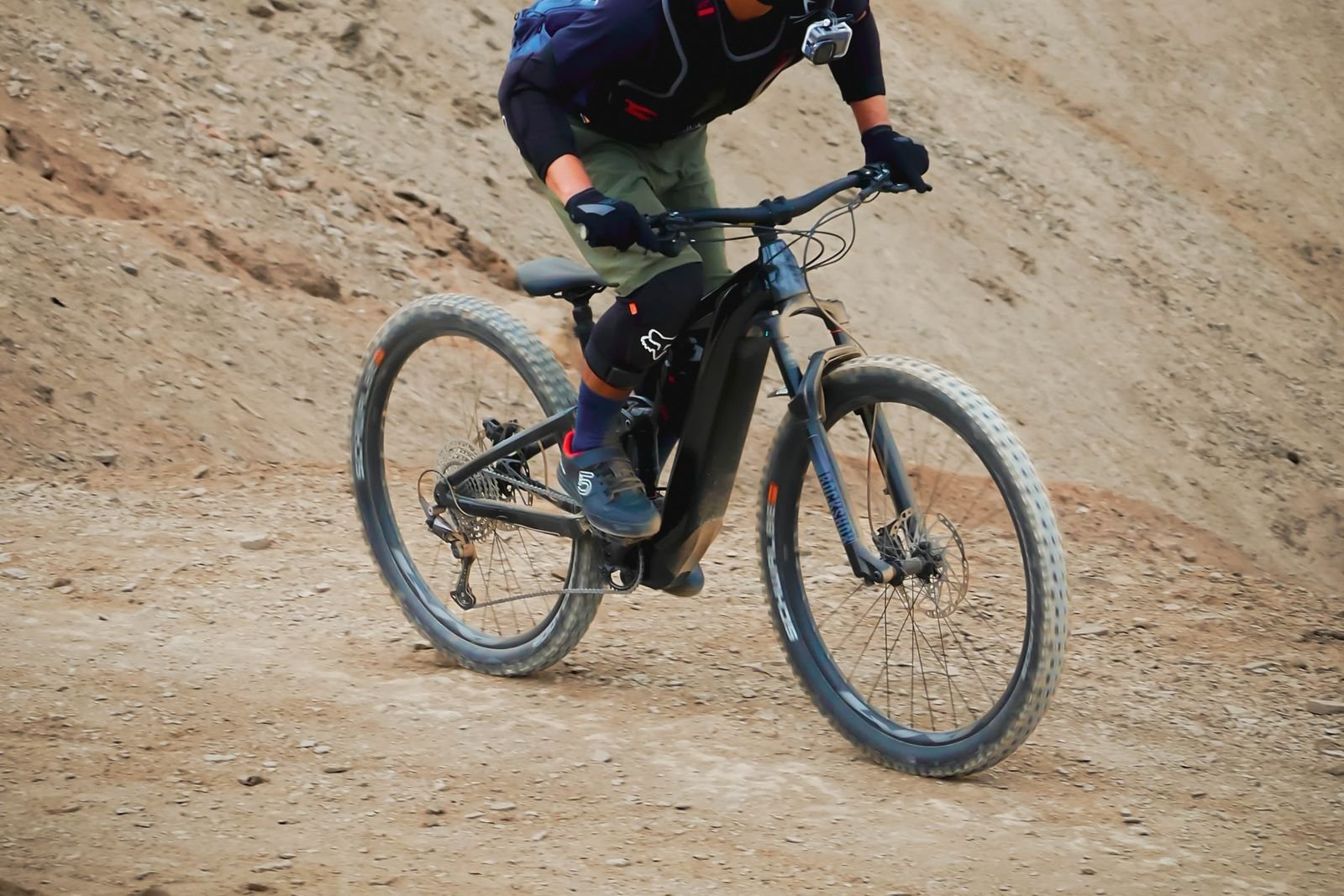
Straight answer: In a cross country mountain bike vs all-mountain bike contest on steep descents, the all-mountain bike is better. Its longer suspension travel (typically 140–160 mm against 100–120 mm on a cross-country bike), slacker head angle and stronger brakes keep the tyres on the ground where a cross-country bike gets nervous and starts to skip.
Introduction
A steep descent is the hardest test a trail can set a mountain bike. Gravity does the work, speed builds fast, and every rock, root and loose corner asks the bike to stay in contact with the ground while you brake. A cross-country mountain bike is built to climb fast and cover ground quickly; an all-mountain bike is built to stay composed when the trail points down. This guide compares the two for steep descents only, so you can choose the bike that keeps you in control.
A modern cross-country bike with a dropper post and wider tyres is far more capable going down than an older one, and a modern all-mountain bike climbs better than its weight suggests. In this guide, a cross-country bike means a lightweight bike with about 100–120 mm of suspension travel and a steeper head angle, and an all-mountain bike means a bike with about 140–160 mm of travel, a slacker head angle and stronger brakes. This article sits in the Mountain Bikes Hub, in the Mountain Bike category.
Below you will find the side-by-side comparison, the five things that can flip the verdict, a 20-minute test, and what to do if you already own the wrong bike.
Cross Country Mountain Bike vs All-Mountain Bike for Steep Descents: The Comparison
| Attribute | Cross-country bike | All-mountain bike | What to watch |
|---|---|---|---|
| Suspension travel | 100–120 mm. Efficient and light, but it runs out of travel on big hits. | 140–160 mm. Absorbs repeated hits, roots and drops without bottoming out. | Ride your steepest pitch and feel whether the fork uses all its travel. |
| Head angle and geometry | Steeper, about 67–69°, with a shorter wheelbase. Quick steering, but your weight sits forward. | Slacker, about 64–66°, with a longer wheelbase. Calmer at speed, and easier to move your weight back. | On the steepest pitch, note whether the front wheel feels twitchy or planted. |
| Braking | Lighter brakes and smaller rotors, enough for short, smooth descents — but they can fade on a long one. | Stronger brakes with bigger rotors and more stopping power for long, steep descents. | Watch for brake fade halfway down a long descent. |
| Wheels and tyres | Narrower, faster-rolling tyres with a lighter tread. Less grip on loose ground. | Wider, grippier tyres on stronger rims, made to hold a line on rock and roots. | Check the mountain bike air pressure guide and try lower pressures. |
| Dropper post | Often a fixed post or a short-travel dropper. A high saddle keeps your weight forward on steep ground. | A long-travel dropper is standard, so you can drop the saddle fully. | If your saddle stays high, you cannot shift your weight back. |
| Weight and climbing | Lighter, so it climbs faster and uses less energy. | Heavier, so it climbs more slowly and takes more effort. | If your ride is mostly climbing, weight matters more than travel. |
| Cost and upkeep | Simpler suspension and lighter parts, so it costs less to run. | More suspension to service, plus stronger wheels and brakes. | Budget for suspension servicing — it is part of owning the extra travel. |
When the Answer Changes
The verdict above holds for a steep, rough descent. Five variables can flip it:
- How steep is steep. On a short, smooth gradient, a cross-country bike descends fine and is faster overall. The steeper and rougher the pitch, the bigger the all-mountain advantage.
- Trail surface. Loose rock, roots, drops and wet ground favour the all-mountain bike. Smooth, dry hardpack narrows the gap.
- Descent length. A short drop suits either bike. A long descent with repeated braking and rough ground favours the all-mountain bike’s travel and brakes.
- Your skill. A confident, experienced rider can descend steep ground on a cross-country bike. A newer rider gains far more from the all-mountain bike, because it forgives mistakes.
- Climb-to-descent ratio. If you climb for an hour to descend for five minutes, the cross-country bike’s climbing speed may matter more than the few seconds it loses going down.
Test Both Bikes on the Same Steep Descent
Run this 20-minute test on the steepest descent you ride regularly. Walk it first, wear a helmet and gloves, and test alone.
- Pick the descent. Choose the steepest section of your usual trail. Walk the worst 50 metres first.
- Ride it on the cross-country bike. Descend at your normal pace. Note where the front wheel skips, where you brake hardest, and how tired your arms feel at the bottom.
- Ride it on the all-mountain bike. Ride the same lines at the same speed. Note the spots that felt rough before, and how calm they feel now.
- Repeat the steepest pitch. Ride the hardest pitch twice on each bike. The bike that holds its line without a foot down is the right one for this trail.
- Choose confidence over speed. If one bike is faster but scares you, and the other is slower but feels controlled, pick the controlled one. Control is speed you can repeat.
What a fail looks like
| Symptom | Cause | Fix |
|---|---|---|
| Front wheel skips and chatters | Not enough travel, or your weight is too far forward | Drop the saddle fully and shift your weight back |
| Brakes fade halfway down | Small rotors overheating on a long descent | Stop, let the brakes cool, and read the disc brake vs rim brake guide |
| Rear wheel locks and slides | Too much rear brake on loose ground | Use the front brake more, keep your weight centred, and drop tyre pressure |
| You keep putting a foot down | The geometry is too steep for the gradient, or the saddle is too high | Drop the saddle, try a shorter stem, or borrow an all-mountain bike |
Myth: A lighter bike is always faster downhill.
Fact: On a steep, rough descent a heavier, longer-travel bike is faster, because it stays in contact.
Myth: More suspension means the bike climbs badly.
Fact: Modern all-mountain bikes climb well; geometry and weight decide climbing speed more than travel.
Before you test: Test on a trail you know, away from other riders and walkers. If a line looks too steep to ride, walk it first.

How to Set Up Either Bike for a Steep Descent
Both bikes descend far better with the right setup. Do this once before your next steep ride.
What you will need
- A shock pump
- A tyre pressure gauge
- A multi-tool with Allen keys
- A clean cloth and chain lube
- Your helmet and gloves
The method
- Set tyre pressures. Use the mountain bike air pressure guide for your weight and conditions — lower pressures usually grip better on a steep, loose descent.
- Set the suspension sag. Sit on the bike in riding gear and set about 25–30% sag. Too stiff, and the wheel skips over roots.
- Drop the saddle. Fit a dropper post if you do not have one, or lower the saddle before every steep descent.
- Check the brakes. Pull each lever — it should feel firm well before the bar. If a lever pulls close to the bar, check the pads.
- Check the bolts, chain and wheels. Tighten the axles, stem and bars, and check the tyres for wear.
Do not set your suspension too stiff for a descent. A harsh fork skips over roots and rocks instead of following them.
Note: A cross-country bike with wider, grippier tyres and a dropper post closes much of the gap to an all-mountain bike.

When the Damage Is Already Done
Some problems cannot be fixed by setup alone. Match the problem to the fix.
- A cross-country bike that feels nervous on descents. Fit wider, grippier tyres, add a dropper post, and use a shorter stem.
- An all-mountain bike that is too heavy for your climbs. Fit lighter, faster-rolling tyres for normal rides and keep the grippy ones for steep days.
- Brakes that fade on every descent. Fit bigger rotors and fresh pads, and bleed hydraulic brakes that feel soft.
- A frame that is the wrong size. No part fixes this. A too-large or too-small frame puts your weight in the wrong place on steep ground.
For the other comparisons in this series, see the cross-country bike against the fat bike for weekend trail riding, and the downhill bike against the cross-country bike for the steepest terrain.

The Safe Alternative: Start with the Cross-Country Bike
If your trails are mostly climbing with short, smooth descents, the cross-country bike is the safe alternative. It climbs fast, it is simpler to run, and it still handles a short, smooth descent well.
The method
- Ride your normal loop. Note how long and steep each descent really is.
- Fit wider tyres. A grippier front tyre and a dropper post cost little.
- Learn the steep lines slowly. Walk a steep pitch first, then ride it slowly.
- Borrow before you buy. If your riding moves towards longer descents, hire an all-mountain bike for one ride first.
What to Do Next, in Order
- Ride your steepest trail and decide which side it sits on.
- Run the 20-minute test on the bike you own now.
- Set up the bike: pressures, sag, saddle down, brakes checked.
- If the bike still feels wrong on steep ground, fit wider tyres and a dropper post.
Never Do These on a Steep Descent
- Never grab the brakes hard on loose ground. Brake before the corner, then release.
- Never ride a steep descent with the saddle up. Drop it first, so you can move your weight back.
- Never look at your front wheel. Look ahead, where you want to go.
- Never ride a descent you have not walked. Walk the steepest 50 metres first.
In short
For steep descents, the all-mountain bike is better: its longer travel, slacker geometry, stronger brakes and grippier tyres keep it in control where a cross-country bike gets nervous.
The essentials
- All-mountain bikes suit steep descents: 140–160 mm of travel, a slacker head angle, stronger brakes.
- Cross-country bikes suit climbs and smooth trails: 100–120 mm of travel, lighter weight, faster rolling.
- Test both bikes on the same steep descent and pick the one you trust, not the lighter one.
More Questions, Answered
Is a cross-country bike good for steep descents?
It can handle short, smooth descents, but on steep, rough ground the travel runs out, the front wheel skips, and the brakes can fade.
Can I make a cross-country bike better for descents?
Yes — wider, grippier tyres, a dropper post and a shorter stem make the biggest difference. Set the sag and tyre pressures first; those are free.
Do all-mountain bikes climb badly?
No. Modern all-mountain bikes climb well, especially on technical climbs. They are heavier and slower than a cross-country bike.
Additional Details
Name: Cross Country Mountain Bike vs All-Mountain Bike: Which Is Better for Steep descents?
Description: Cross country mountain bike vs all-mountain bike for steep descents: compare suspension, geometry and braking, then test both on your steepest trail today.
Published: November 10, 2026