Straight answer: In road e-bike vs throttle e-bike for beginners, the road e-bike is the better first buy. You pedal, the motor adds power, and you learn balance, braking and traffic sense at a pace you control. A throttle e-bike is better only when you need to move without pedalling at all, on a flat, short route, and you accept shorter range and a heavier bike.
That gap matters most on a first bike. A road e-bike keeps you pedalling, so the battery lasts longer and the bike stays lighter. A throttle e-bike can drain a battery in about half the distance of gentle pedal assist.
On flat ground the difference shrinks; on hills, in headwinds and on rough ground it grows fast. Choose by the ride, not by the motor alone.
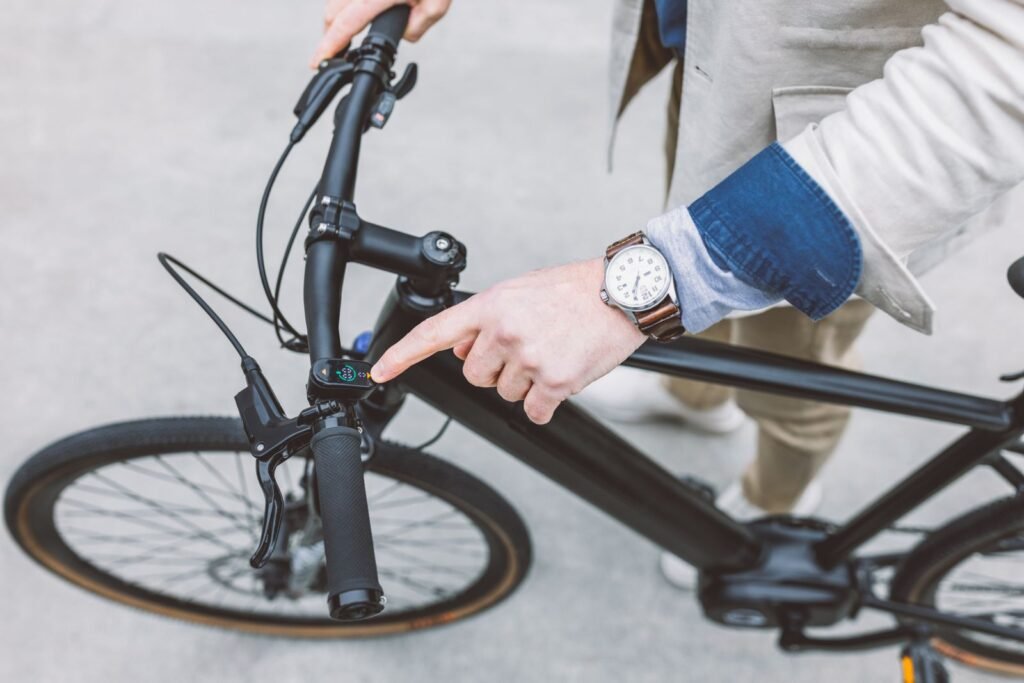
A road e-bike looks like a normal road or hybrid bike with a small motor and a battery in the frame or on the rack. You pedal, and the motor adds power when you do. A throttle e-bike works like a small scooter: twist a grip or press a thumb throttle and it moves with no pedalling at all.
For a beginner, the first bike should teach good habits, not hide them. It should be easy to start and stop, light enough to lift, and forgiving when the battery runs low.
Road E-Bike vs Throttle E-Bike for Beginners
A road e-bike rewards pedalling. A throttle e-bike rewards doing nothing. For a beginner, that is the whole difference: one builds fitness and control, the other removes effort and, with it, range. More comparisons in the same group are in the E-Bikes hub.
| Attribute | Road E-Bike | Throttle E-Bike | What to watch |
|---|---|---|---|
| Range per charge | Usually longer, because pedalling shares the work | Usually shorter, because the motor does all the work | Compare battery size and assist level, not motor watts alone |
| Rider effort | Steady pedalling | Little or no pedalling needed | Throttle is easier on knees and tired legs |
| Hills | Strong, if you pedal with the motor | Strong at first, then the battery drains faster | Long climbs are where throttle-only range falls fastest |
| Comfort and control | Lighter, easier to steer and lift | Heavier, and harder to pedal home if the battery dies | Check weight, and lift it before you buy |
| Braking and control | Usually stronger brakes and steadier handling | Adequate on flat roads, less settled off road | Test braking from speed on a safe, empty stretch |
| Weight | Usually lighter | Usually heavy | Check the weight if you must lift it or carry it |
| Best beginner ride | Mixed surfaces, hills and long days in the saddle | Flat, easy routes where you want to rest your legs | Match the bike to the route, not the other way round |

When the Answer Changes
Your fitness and joints: If pedalling for hours is impossible, a throttle e-bike wins, even with less range. A long ride you can finish slowly beats a long ride you cannot start.
The route: On flat, smooth roads with little wind, a throttle e-bike can be comfortable for a long, easy ride. Add hills, headwind, gravel or mud, and the road e-bike pulls ahead, because pedalling stretches the battery and the tyres and suspension keep you in control.
Battery size and charging: A large battery narrows the gap; a small one widens it. Check the battery size and whether you can remove it to charge.
Local rules: Some places limit throttle use, motor power or speed on paths. Check the rules where you ride.
How to Decide Before You Buy Either Bike
Do this short test on a route like the rides you plan. It shows which type suits you, your legs and your usual roads.
- Map a real route: Choose a route like the rides you plan, with the same hills, surfaces and stops, and note the total distance.
- Ride it at a steady pace: Ride in a low or medium assist level, or use the throttle only where you would really need it, and keep your speed steady.
- Watch the battery: Note the battery level at the start, halfway and at the end. If half the battery is gone at half the distance, the ride is too long for that setting.
- Check your legs and hands: Note tired legs, sore knees, numb hands and back pain at the end. A bike that leaves you sore will not get better on a longer day.
- Test the brakes and tyres: Brake firmly on a safe, empty stretch and ride over rough ground. The bike should stop straight and feel steady, not skittish.
- Decide with a margin: Choose the bike and setting that leaves at least a quarter of the battery and some energy in your legs at the end of the test ride.
What a Fail Looks Like
Legs give out halfway → you rode in too high a gear or too low an assist level → use a lower gear, raise the assist one level and take a short break.
Brakes feel weak on a descent → pads or discs are worn, or the bike is too heavy for the brakes → get the brakes checked before any long ride, and do not rely on the throttle to control speed downhill.
Throttle cuts out or surges → a loose connection, a low battery or a dirty contact → stop, check the battery connection and charge, and have the throttle checked if it happens again.
Myth vs Fact
Myth: A throttle e-bike always goes further, because you do not have to pedal.
Fact: The motor does all the work on throttle, so the battery usually drains faster. Pedalling with assist shares the work, which is why a road e-bike usually covers more distance per charge.
Before you test: Check brakes, tyre pressure and battery, wear a helmet, and carry a phone and water. Test on quiet roads you know.
How to Ride Either Bike for the First Time
Whichever type you ride, a first ride needs a plan for battery, water, rest and the way home.
What You Will Need
- A fully charged battery, and a charger or charging stop if the ride is long.
- A helmet, water, food and a basic repair kit with a pump, spare tube and multi-tool.
- A phone with the route saved, and a way to get home if the battery runs out.
The Method
- Charge fully and check the bike: Charge the battery to full, check brakes, tyre pressure, chain and lights, and note the starting battery level.
- Plan the route in legs: Split the ride into legs of about an hour, with a rest, water and charging point at each break where possible.
- Start in a low assist level: Use the lowest assist that feels comfortable, and save the highest level and the throttle for hills and headwinds.
- Check the battery at each stop: Compare the battery used with the distance left. If you are using more than planned, slow down, pedal more and shorten the route.
- Keep a turnaround point: Decide in advance where you will turn back if the battery or your energy drops too low, and stick to it.
Note: Claimed ranges are measured in easy conditions, usually with light pedalling on flat ground. Plan your ride on about two-thirds of the claimed range, and less again in hills, wind or cold weather.
Warning: Do not plan a ride that ends with an empty battery. A heavy e-bike is hard to pedal or push home, and a flat battery on a throttle e-bike leaves you with no assist at all.

When the Damage Is Already Done
If you already bought the wrong one, you do not need to start again. Change the way you ride it.
- Battery runs out too soon: Ride in a lower assist level, pedal more, and plan shorter legs with a charging stop.
- The bike is too heavy to lift: Keep it on the ground floor, use a ramp, or ask for help with stairs. Do not try to carry a heavy e-bike up steps alone.
- Your knees or back hurt: Raise the saddle, lower the assist, and take shorter rides with breaks. If pain keeps coming back, get a bike fit before you ride further.
- The throttle feels too fast: Start in the lowest power mode, practise starting and stopping on a quiet road, and do not use full throttle until you can stop straight every time.
The Safe Alternative: Start With a Road E-Bike
If you are still unsure, the road e-bike is the safer first step. It teaches the skills you will need on any e-bike.
- Choose a light, upright road e-bike: Pick a bike you can lift, with a low step-in height and a comfortable, upright riding position.
- Set the assist low: Start in the lowest assist level that feels comfortable, and learn to change gear smoothly before you raise it.
- Learn to brake first: Practise stopping from speed on a quiet road, with both brakes, until you can stop straight every time.
- Build up in short rides: Ride short routes first, then add distance a little at a time, and check the battery at each stop.
- Test a throttle bike later: Once you are confident on a road e-bike, test a throttle bike on the same route, and compare range, weight and control before you decide to change.

What to Do Next, in Order
- Write down your usual route, distance and hills.
- Test a road e-bike and a throttle e-bike on that route.
- Compare battery left, weight and how your legs feel.
- Check local rules, then choose the bike that fits the route.
- Set the saddle, practise braking, and ride short first.
Never Do This
- Never buy on motor watts alone: Battery size, weight and assist level matter more.
- Never use full throttle on a first ride: Learn the brakes and balance first.
- Never plan a ride on the full claimed range: Plan on about two-thirds.
- Never ride without a helmet: Wear one on every ride, even a short test.
In short
For most beginners, a road e-bike is the better first buy: lighter, longer range, and it teaches control. A throttle e-bike wins only when pedalling is hard and the route is short, flat and close to a charger.
The essentials
- Road e-bikes win on range, weight and control for most beginners.
- Throttle e-bikes win when you cannot pedal, on short, flat routes.
- Test both on your real route before you buy.
- Leave a quarter of the battery in reserve.
More Questions, Answered
Is a throttle e-bike easier for a complete beginner? Yes, to start, but it is heavier and shorter in range.
Can I ride a road e-bike with a flat battery? Yes, you can still pedal it home, although it will feel heavier than a normal bike.
Do I need a licence for a throttle e-bike? It depends on local rules, motor power and speed, so check where you ride.
Additional Details
Name: Road E-Bike vs Throttle E-Bike: Which Is Better for Beginners?
Description: Road e-bike vs throttle e-bike for beginners: which is better? Compare range, weight, control and cost, and test both on your real route before you buy.
Published: November 10, 2026