Introduction
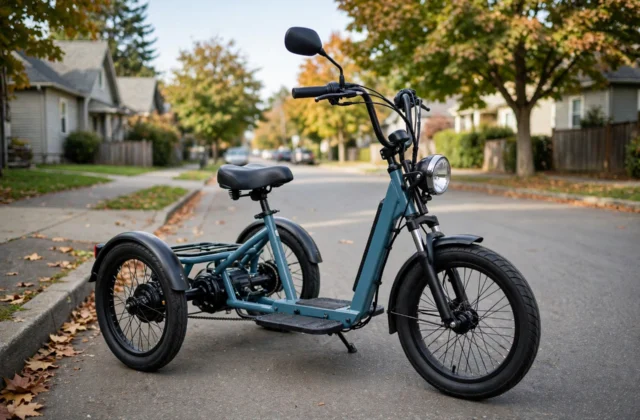
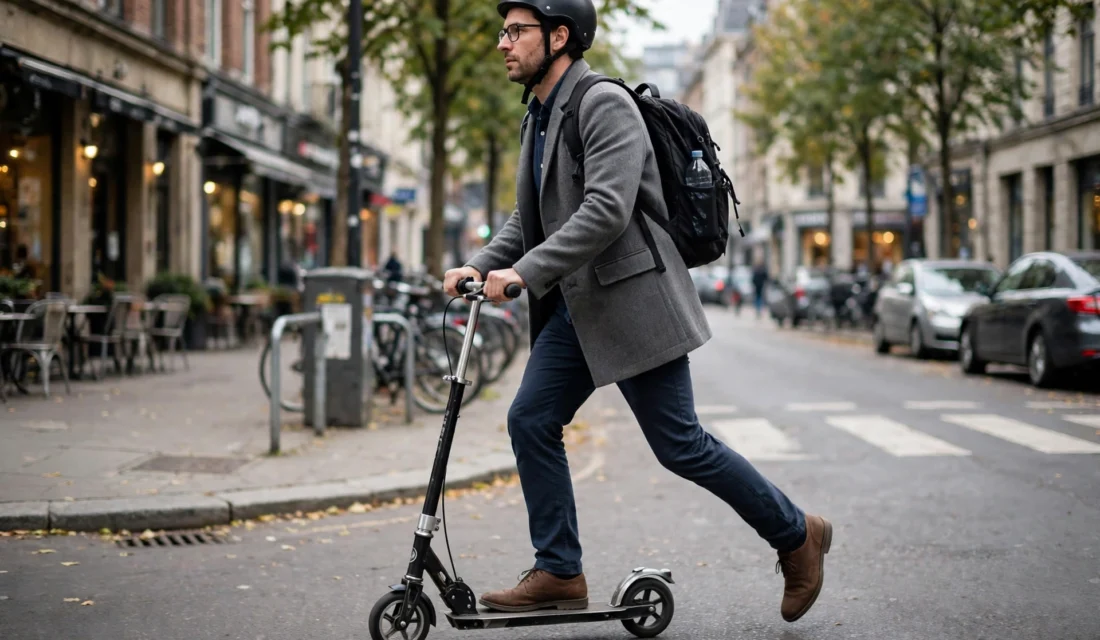
Scooters and e-bikes both beat traffic for many city commutes, but they feel very different. A scooter is compact and quick to park, while an e-bike is more stable, more comfortable over distance, and better for hills and loads.
This comparison helps you choose for commuting, not for leisure alone. It covers distance, hills, carrying, storage, weather, cost and care, without inventing prices or test results.
Scooter vs e-bike: quick comparison
| Factor | Scooter | E-bike |
|---|---|---|
| Best commute | Short, flat, city, frequent stops | Longer, hilly, load-carrying |
| Carrying and storage | Compact, often foldable, easy indoors | Larger, heavier, needs bike parking |
| Stability and comfort | Small wheels, more bumps felt | Larger wheels, more stable, more comfortable |
| Exercise | Standing, balance, less pedalling | Pedalling with assistance |
| Weather | Wet, small wheels need care | Better in wind, rain and rough surfaces |
What you will need to decide
- Your commute distance, hills, surfaces and number of stops
- Your carrying needs: stairs, train, lift, office storage, or bike parking
- Your load: bag, laptop, groceries, or work equipment
- Your weather: rain, wind, winter, and road surface quality
- Your local rules for scooters and e-bikes, including where each can legally ride and park
Step 1: Map your commute honestly
Note distance, hills, traffic, surfaces and stops, and note where you must carry, fold or park. A scooter wins when the last part of a journey involves a train, a lift or a small office, because it folds or stands in a corner. An e-bike wins when the journey is longer, hillier, or on rough roads, because larger wheels and a seated position are more comfortable and stable.
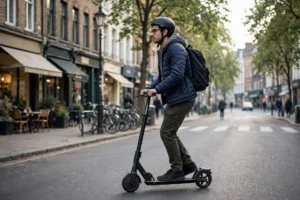 Check your local rules before choosing, because scooter rules vary by place, and some routes, parks or workplaces restrict scooters or e-bikes. A vehicle that is perfect in one city may not be legal or practical on your route, so check rules first, not after buying.
- Distance and hills: short and flat, or long and hilly?
- Carrying: train, stairs, lift, or secure bike parking?
- Load: light bag, or heavy work equipment?
- Rules: where can each vehicle legally ride and park?
Step 2: Compare comfort, stability and safety
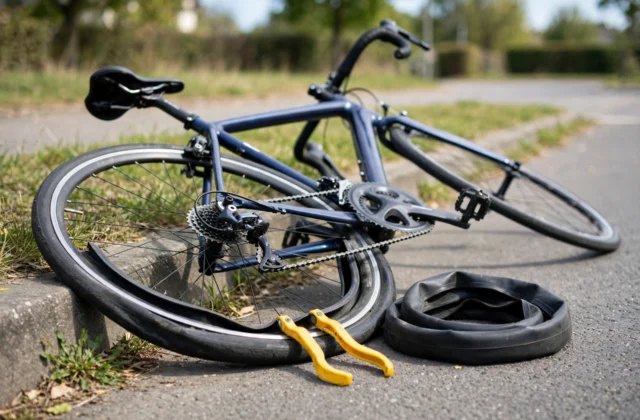
An e-bike gives a seated, stable ride, with larger wheels that handle potholes, kerbs and wet roads better. A scooter gives a standing ride, with smaller wheels that feel bumps more and need more attention on rough surfaces, drains and wet leaves. Both need a helmet, lights and good brakes, and both need extra care in the wet.
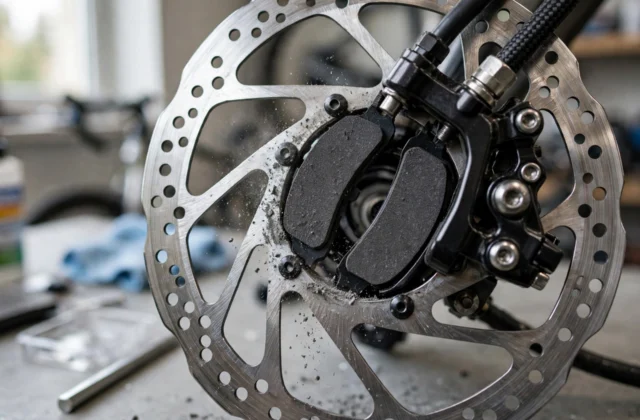
Think about braking: an e-bike has larger brakes and a seated position that helps control, while a scooter relies on smaller brakes and balance, especially at speed or downhill. Test braking at low speed first, and never assume a scooter will stop like a bike.
Step 3: Compare carrying, parking and storage
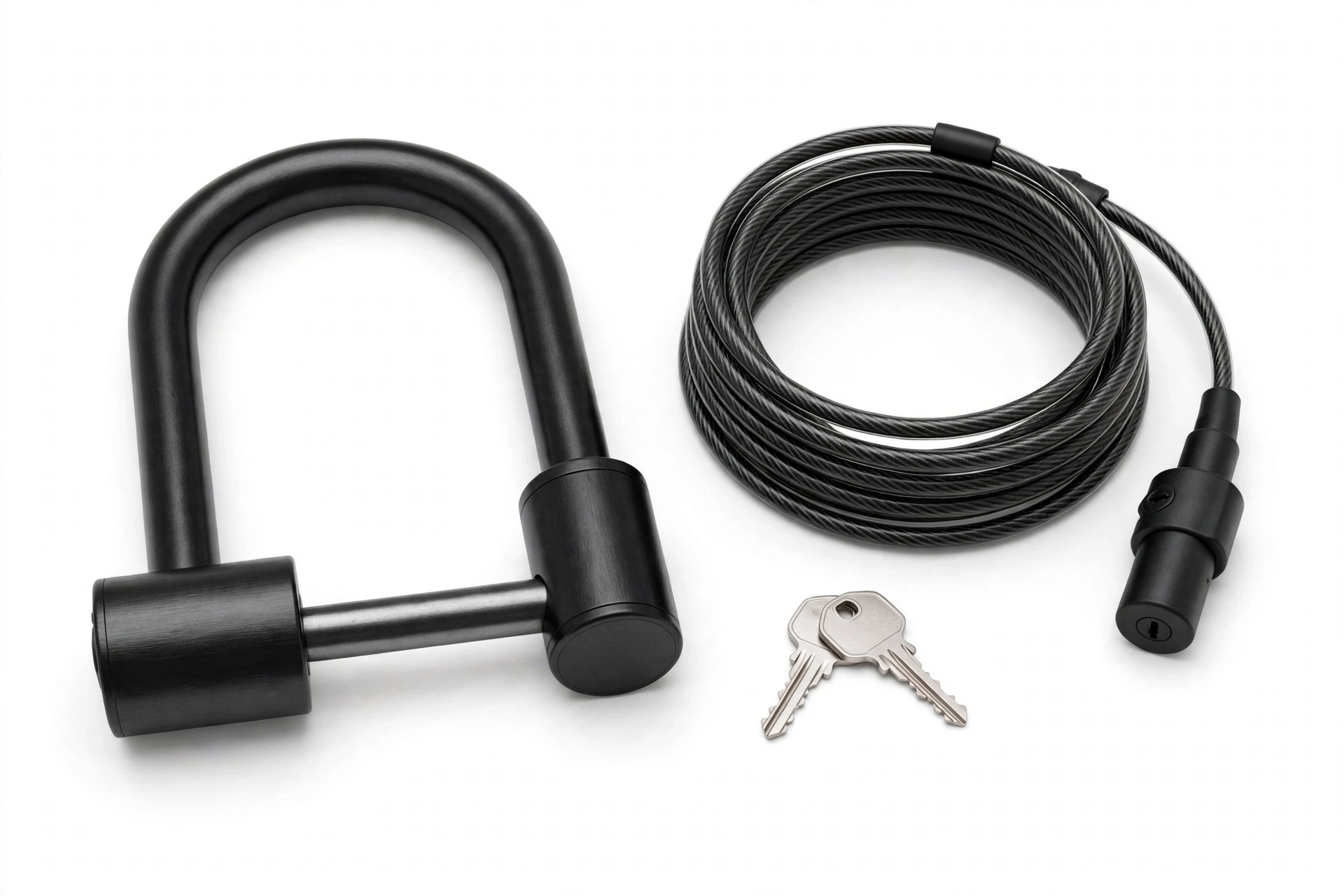
A scooter is usually easier to carry into an office, lift or train, and easier to store in a small flat. An e-bike needs secure bike parking, a lock, and often a ground-floor store, because it is larger and heavier. If your workplace has secure bike parking and showers, an e-bike becomes easier. If it has only a small office corner, a scooter becomes easier.
Check theft risk too: a scooter taken indoors is safer than a bike left outside, while an e-bike left outside needs a strong lock and a busy, well-lit stand. Factor in lock weight and time: a scooter you carry inside needs no lock, while an e-bike needs a lock routine every day.
| Parking check | Scooter | E-bike |
|---|---|---|
| Indoors | Often possible, compact | Harder, needs space |
| Outside | Needs lock, small wheels | Needs strong lock, fixed anchor |
| Train or bus | Often foldable, easier | Harder, check operator rules |
Step 4: Compare cost, charging and care
Both need charging and battery care, but e-bike batteries are larger and need safe charging and storage, while scooter batteries are smaller and often charge indoors more easily. Both need tyre, brake and cable care, with scooter tyres and brakes wearing differently because of small wheels and standing riding. Check service support for both, because a scooter with no local repairer can be hard to maintain.
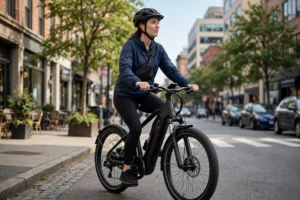
Do not compare purchase price alone: think about charging, battery replacement in the long term, tyres, brakes, locks and service. A cheaper vehicle that you do not use, because it is uncomfortable or hard to store, costs more per ride than a pricier vehicle you use daily.
- Charging: safe place, time, and battery removal.
- Service: local repairer for motor, battery, tyres and brakes.
- Tyres and brakes: small scooter wheels need frequent checks.
- Locks and storage: indoor scooter, or locked e-bike outside.
Step 5: Test both on your real commute
Test both on the same commute, at the same time of day, with your usual bag, if possible. Note comfort, braking, hill effort, carrying, parking and how you feel on arrival. A scooter may feel fast in a car park but tiring on a long, rough commute, while an e-bike may feel heavy to carry but comfortable over distance.
Test in wet weather if you will ride in rain, and test the exact stairs, lift and office corner you will use. A vehicle that passes a shop test but fails your office storage test is not the right commuter, even if it rides well.
 UL Certified 54.6V 2A Fast Electric Bike Charger for 48V Ebike Battery
A simple way to keep an e-bike charged and ready to ride.
Step 6: Decide and set up your commute
Score your top three factors: distance, hills, carrying, storage, load, weather or rules. The vehicle that wins your top factors is usually the right commuter, even if it loses on a less important factor. If distance and hills win, choose the e-bike. If carrying and storage win, choose the scooter. If both matter equally, consider a mixed commute, such as scooter to train, or e-bike for longer days and another option for short days.
Once you choose, set up for commuting: helmet, lights, lock, waterproof bag, tyre checks, brake checks and a safe charging routine. Ride gently at first, recheck tyres and brakes after the first few commutes, and keep a note of what worked in rain, wind and traffic.
| Decision checklist | Done |
|---|---|
| Real commute mapped, including stairs and storage | ☐ |
| Both tested on same route, with usual load | ☐ |
| Local rules checked for scooters and e-bikes | ☐ |
| Charging, parking and service checked | ☐ |
Common mistakes to avoid
- Choosing on a short flat test, not your real hilly commute.
- Forgetting stairs, trains and office storage.
- Ignoring local scooter rules until after buying.
- Underestimating small-wheel bumps and wet-weather braking.
- Buying without checking charging, parking and service support.
Related guides: Scooter Hub, Scooter category, E Bike Hub, How to Make Your E-Bike Battery Last Longer.
Frequently asked questions
Is a scooter or e-bike faster for commuting? It depends on route, stops and traffic. A scooter can be faster for short, stop-start trips with easy parking, while an e-bike can be faster over longer, hillier routes with fewer stops.
Which is better in rain? An e-bike is usually more stable and comfortable in rain, with larger wheels and a seated position. A scooter needs extra care on wet surfaces, drains and leaves, and slower, smoother braking.
Can I take a scooter on a train? It depends on the operator and on whether the scooter folds. Check train, bus and workplace rules before buying, because rules vary widely.
Which needs less maintenance? Both need tyre, brake and battery care. E-bikes have larger, more familiar bike parts, while scooters have smaller wheels and brakes that need frequent checks, and both need battery care.
Which is better for carrying a heavy bag? An e-bike, usually, because a seated position, larger wheels and racks handle load better than a standing scooter ride with a heavy backpack.
Should I choose a scooter if I live in a small flat? Often yes, because a scooter is compact and can be stored indoors, while an e-bike needs more space and secure parking. Check weight and folded size first.
What if my commute mixes train and road? A scooter often wins for mixed train and road commutes, because it folds, carries easily, and stores in a small space at the station or office, while an e-bike may need secure parking at the station and may not be allowed on crowded trains. Check train operator rules, folded size limits, and station parking before deciding, and test the full mixed journey, including stairs, platforms and the final walk, because a vehicle that is easy on the road but hard on the train will slow the whole commute. If your train part is short and your road part is long and hilly, an e-bike parked securely at the station, or a scooter for the short part, may each win on different days.