Introduction
An e-bike and a manual bike look similar, but they change how far you ride, how tired you feel, and how much care the bike needs. The right choice depends less on which is better in general, and more on your route, fitness, budget and storage.
This comparison explains the trade-offs in plain terms, without inventing prices or test results. It ends with a step-by-step way to choose, based on your own rides.
E-bike vs manual bike: quick comparison
| Factor | E-bike | Manual bike |
|---|---|---|
| Effort on hills | Motor assists, hills feel easier | Full effort, needs fitness and gears |
| Weight and lifting | Heavier, harder to carry upstairs | Lighter, easier to carry and store |
| Care | Battery, charger, motor, plus normal bike care | Normal bike care only |
| Charging | Needs safe charging place and time | No charging needed |
| Exercise | Still pedalling, less intense at same speed | More exercise for same distance |
What you will need to decide
- Your real route: distance, hills, surface, and traffic, not just a map distance
- Your load: bags, child seat, groceries, or work equipment
- Your storage: ground floor, lift, stairs, garage, or flat with no lift
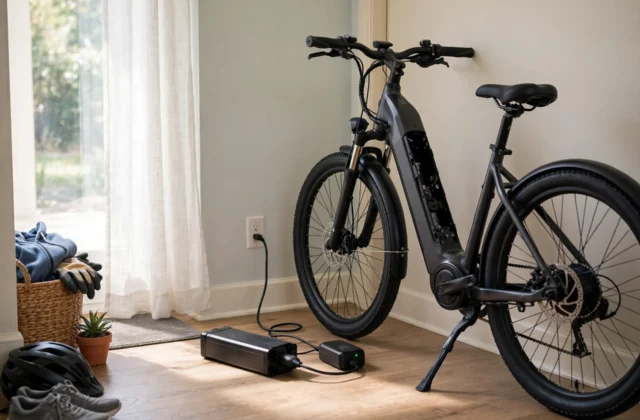
- Your charging place: safe, dry, ventilated, with a smoke alarm, for an e-bike
- Your budget for purchase and for ongoing care, including battery replacement in the long term
Step 1: Map your real ride
Ride or walk your route and note hills, stops, surfaces and places where you must carry the bike. A short flat ride and a long hilly ride point to different answers. If your route includes stairs, a train, or a small flat, weight matters more than motor power. If it includes long hills or a need to arrive without sweating, assistance matters more.
Note your typical load and time pressure. A rider carrying groceries up a hill, or commuting to a meeting, values assistance differently from a rider on a short leisure ride. Write down distance, hilliness and load in simple terms, so you can compare test rides fairly.
- Distance: short, medium or long for you, not just kilometres.
- Hills: flat, a few slopes, or steep and repeated.
- Carrying: stairs, train, lift, or ground-floor storage only.
- Time: relaxed, or must arrive on time and fresh.
Step 2: Compare effort, speed and fitness goals
An e-bike does not remove exercise: you still pedal, but the motor reduces the hardest parts. That can help you ride more often, ride further, or ride with a load, which can increase total activity over a week. A manual bike gives more exercise per ride, but if hills put you off riding, total activity may be lower.
Think about your fitness goal. If you want a workout, a manual bike is simpler and more direct. If you want transport first, and exercise second, an e-bike may help you choose the bike over a car or bus more often. Both can improve fitness, but in different ways.
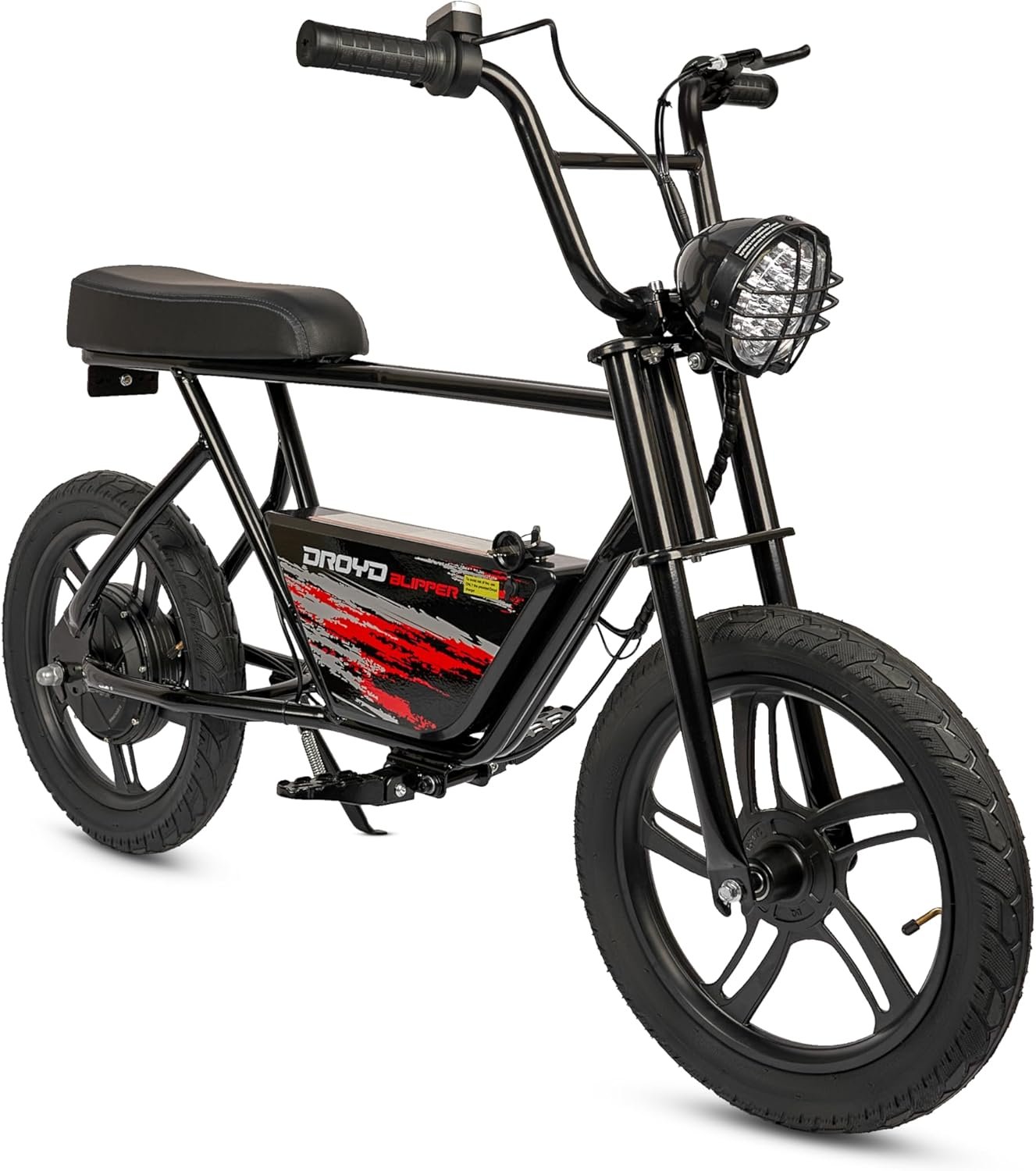
 UL Certified 54.6V 2A Fast Electric Bike Charger for 48V Ebike Battery
A simple way to keep an e-bike charged and ready to ride.
Step 3: Compare cost and care honestly
E-bikes usually cost more to buy and have extra care: battery charging, battery ageing, motor and electrical checks, and heavier tyres and brakes. Manual bikes cost less to buy and maintain, with only normal bike care. Do not compare purchase price alone: think about years of use, battery replacement in the long term, and whether you will ride more often with assistance.
Check local support before buying an e-bike: a dealer who can service the motor and battery, and a safe place to charge and store it, matter more than a small feature difference. For a manual bike, any good bike shop can usually service it, which is simpler and often quicker.
| Cost and care check | E-bike | Manual |
|---|---|---|
| Purchase | Higher, plus battery system | Lower, simpler |
| Ongoing care | Battery, charger, motor checks | Chain, tyres, brakes, gears |
| Long-term replacement | Battery eventually | Chain, tyres, cables as normal |
Step 4: Test both on your route
Test ride both types, if possible, on the same route, with the same load, at the same time of day. Note how you feel on hills, how easy it is to stop and start in traffic, how the bike handles at low speed, and how hard it is to lift or park. A short car park test does not show hill effort, load handling or carrying difficulty.
Ask the shop about weight, battery removal, charging, and service. For an e-bike, check whether the battery removes easily for charging and storage, and whether you can lift the bike without the battery. For a manual bike, check gear range on your steepest hill, not just on flat ground.
- Test on your real route, with your real load.
- Test lifting, parking and storing, not just riding.
- Test stopping and starting in traffic.
- Test hill effort at a comfortable pace, not a sprint.
Step 5: Decide with a simple scorecard
Score each factor for your ride, not in general: hills, distance, load, carrying, storage, charging, budget and fitness goal. The bike that scores better on your most important factors is usually the right choice, even if it loses on a factor you care less about. For example, a heavier e-bike may still win if hills and load matter most, while a manual bike may win if carrying up stairs matters most.
Write your top three factors down before you shop, so a shiny feature does not override your real needs. If two factors conflict, such as hills versus stairs, test both bikes on that exact conflict: ride the hill, then carry the bike up the stairs, and see which compromise you can live with daily.
Step 6: Choose, then set up for your ride
Once you choose, set the bike up for your route: correct tyre pressure, comfortable saddle and handlebar position, working brakes and gears, and a lock that fits your parking. For an e-bike, set up a safe charging routine from day one, and learn the battery and charger matching rules in the charging guide linked below. For a manual bike, set up a simple weekly check routine.
Ride the new bike gently at first, and recheck bolts, tyres and brakes after the first few rides, because new bikes settle. Keep a note of what worked and what did not, so your next service or upgrade is based on real rides, not guesswork.
| Decision checklist | Done |
|---|---|
| Real route, hills and load noted | ☐ |
| Both types tested on same route | ☐ |
| Storage, carrying and charging checked | ☐ |
| Top three factors written down | ☐ |

Common mistakes to avoid
- Choosing on a short flat test ride, not your real hilly route.
- Forgetting stairs, trains and storage weight for an e-bike.
- Buying an e-bike without a safe charging place.
- Comparing purchase price only, not long-term care.
- Choosing a manual bike for a long hilly commute, then not riding it.
Related guides: E Bike Hub, E Bike category, How to Make Your E-Bike Battery Last Longer, How to Charge an E-Bike Battery Safely.
Frequently asked questions
Is an e-bike cheating? No. You still pedal, and many riders ride more often and further with assistance. The benefit depends on your goal: transport, fitness, or both.
Will an e-bike make me less fit? Not necessarily. If assistance helps you ride more often, total activity can rise. If you want maximum exercise per ride, a manual bike is more direct.
Can I ride an e-bike without the battery? Yes, in most cases, but it will feel heavier than a manual bike, especially on hills. Check with the maker before riding without a battery.
Do e-bikes need more maintenance? Yes, in addition to normal bike care, they need battery, charger and motor care, and heavier parts wear differently. Manual bikes are simpler to maintain.
Which is better for a hilly commute? An e-bike usually wins for hills, load and arriving fresh, provided you can charge and store it safely and lift it where needed.
Which is better for a flat, short ride? A manual bike often wins for simplicity, weight and cost, especially if you carry it upstairs or store it in a small flat.
Should I buy an e-bike if I live upstairs? Only if you can manage the weight safely, or remove the battery to lighten it, or store it at ground level. Test carrying the exact model up your stairs, with the battery fitted and removed, before you buy, because a bike you cannot carry easily will be left unused, or stored in an unsafe place. If carrying is difficult, a lighter manual bike, a ground-floor store, or a lift may change the answer, and a folding e-bike is not automatically lighter, so check its actual weight, not just its folded size.