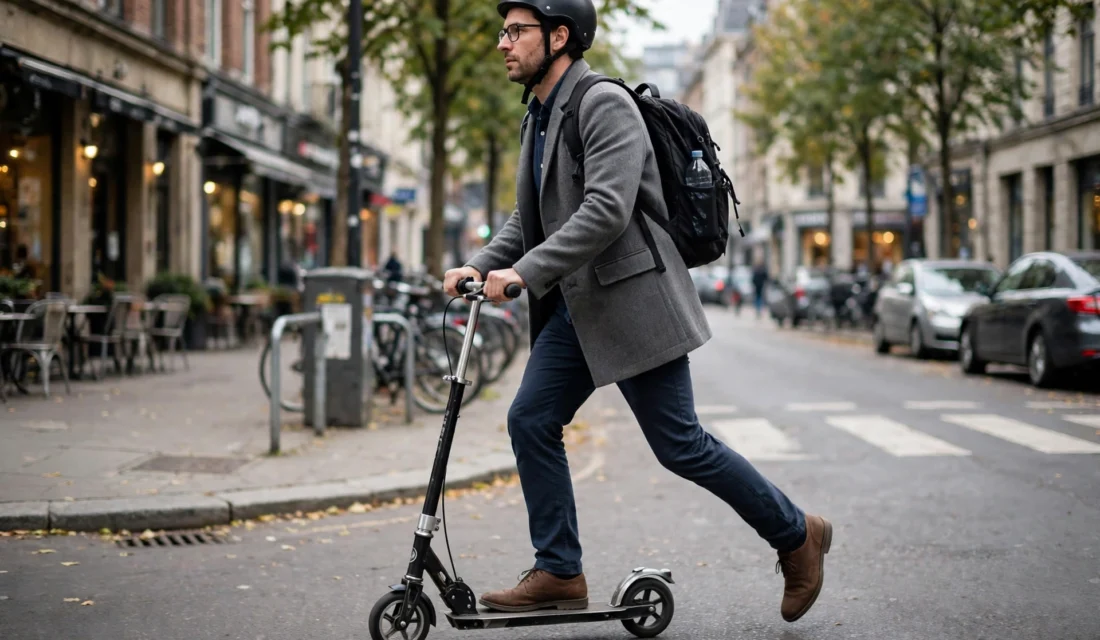
Short answer: For road commuting, choose an adult kick scooter with 180 to 230 mm wheels, a wide deck, a reliable rear brake and a quick fold. It suits flat trips of 1 to 5 km, especially the walk to and from a bus or train.
Introduction
A kick scooter turns a slow walk into a smooth, quick ride. You push, glide, and arrive without the hassle of parking a bike or waiting for a short bus hop.
It works best where paths are smooth and traffic is calm. On rough roads, steep hills or very long routes, a bicycle or e-scooter is usually a better choice.
This road kick scooter for commuting guide compares road kick scooters, covers sizing and safety, and walks through choosing, folding and riding one on a daily commute.
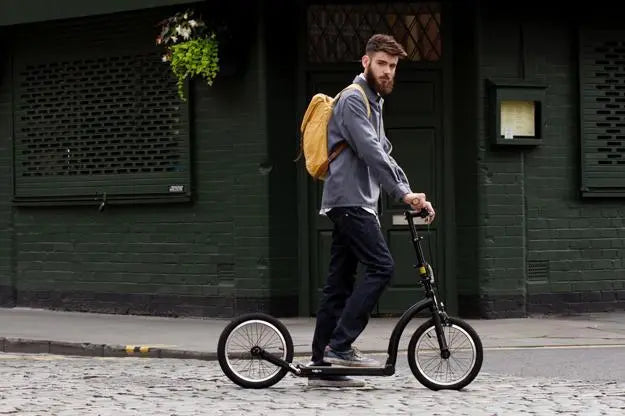
A good commuter scooter feels stable at speed, folds in seconds, and is light enough to carry onto a train or up a flight of stairs. Weight matters more than top speed, because you will lift it every day.
Kick scooters compared
| Scooter type | Wheels | Typical weight | Best for |
|---|---|---|---|
| Big-wheel commuter | 180–230 mm | 5–7 kg | Smooth roads, 1–5 km trips |
| Compact folder | 125–150 mm | 3–5 kg | Trains, buses and tight storage |
| Off-road / dirt scooter | 200 mm plus, knobbly tyres | 7–10 kg | Gravel paths and rough parks |
| Electric scooter | 200–250 mm | 12–16 kg | Longer trips and hills (check local rules) |
Wheel size guide: Larger wheels roll over cracks and drain covers more easily and hold speed better. Smaller wheels fold smaller and turn quicker, but feel every bump on a rough road.
| Rider | Handlebar height | Deck |
|---|---|---|
| Under 165 cm | Around hip height | Standard adult deck |
| 165–183 cm | Hip to waist height | Wide deck for both feet |
| Over 183 cm | Full adjustable range | Long, wide deck |
Safety first: Always check the weight limit, test the brake before traffic, and wear a helmet. A scooter that is too small or has a weak brake is not a bargain, however cheap it is.
Brakes, folding and comfort features
- Rear fender brake: Simple and common. Press with your foot to slow down. Test it on a gentle slope before a busy road.
- Hand brake: Gives finer control, especially in the wet. Useful if your route includes downhill sections.
- Quick fold: Look for a one-lever fold with a lock that holds when carried. Practise folding at home, not on a crowded platform.
- Deck grip: A non-slip deck surface matters in rain. Smooth decks look neat but can be slippery when wet.
- Handlebar grips: Soft, wide grips reduce hand fatigue on longer pushes. Check they do not twist loose.
- Stand: A kickstand lets you park upright at a cafe or office door without leaning the scooter on a wall.

Commuting on a kick scooter is a rhythm, not a race. Short, steady pushes keep your speed even and leave energy for the rest of your day. Alternate your pushing foot every few minutes to avoid tiring one leg.

Madd Gear Metro 200 – Adults and Teens Folding Kick Scooter – Fast 8-inch Smooth Rolling Wheels, Adjustable Height Handlebar, Lightweight, Rider Capacity 220 lbs
A folding adult scooter with large wheels for smoother city rides.
What you will need
| Item | What it is for |
|---|---|
| Helmet | Head protection on every ride |
| Lock or carry strap | Securing or carrying the folded scooter |
| Lights | Visibility at dawn, dusk and in tunnels |
| Gloves | Grip and comfort in cold or wet weather |
| Small backpack | Hands-free carrying for work gear |
Choose and commute, step by step
1. Map your real route
Ride or walk the route once and note the surfaces: smooth tarmac, cracked pavements, cobbles, kerbs and steep sections. A big-wheel scooter handles most of these, but a route with many high kerbs may need a lighter, more portable model.
Time the trip. A kick scooter typically covers 1 km in 5 to 7 minutes at a relaxed pace, compared with 12 to 15 minutes walking. If your trip is over 5 km, test it on a weekend first.
2. Check size, weight and fold
Stand on the deck with both feet. You should feel stable, with room to place one foot beside the other. Raise the handlebar to hip height and push the scooter forward: it should track straight without wobbling.
Fold it, carry it for a minute, and unfold it. If any step feels awkward in a shop, it will feel worse on a busy train. Check the folded size against your office storage space.
3. Test braking and turning
From walking speed, brake gently, then firmly. You should stop smoothly in a few metres without the rear wheel skidding sideways. Practise a slow U-turn and a quick stop, because city riding needs both.
Check local rules before your first commute: some paths ban scooters, and some cities set speed or age limits. Follow the same side of the path as other users and give walkers plenty of room.
4. Build a safe daily routine
Set the same routine every morning: helmet on, lights checked, brake tested, bag on your back. A two-minute check avoids most roadside problems.
Plan where you will fold and store the scooter at work. A dry corner, a locker or under a desk all work, but confirm with your workplace first. A scooter left in a corridor can block a fire exit.
5. Ride predictably in traffic
- Keep your line: Ride straight, signal with a hand when turning, and avoid weaving between walkers.
- Slow at junctions: Drivers may not expect a scooter. Slow down, make eye contact, and only cross when you are sure you have been seen.
- Watch the surface: Wet leaves, metal covers, tram tracks and painted lines can be slippery. Cross tracks at a wide angle.
- Leave space: Keep at least a metre from parked cars, because doors can open suddenly.
- Stop for walkers: On shared paths, walkers have priority in practice. Slow down and pass wide, with a bell or voice warning.
6. Maintain it weekly
Spin both wheels and listen for grinding or wobble. Tighten bolts, check the folding lock, and wipe the deck clean. Replace worn grips or wheels before they fail on a commute.
Store the scooter dry. Rain is fine for a ride, but leaving a steel scooter wet in a shed will rust bolts and bearings. A quick wipe after a wet ride takes less than a minute.

WAYPLUS Aquas Kick Scooter for Kids, Teens and Adults – Foldable, Lightweight, 8-Inch Non-Slip Deck, ABEC9 Bearings, Adjustable Height, Lifetime Service
A lightweight folding scooter with a non-slip deck for daily trips.
Commuter checklist
| Check | Pass mark |
|---|---|
| Weight limit | Above your weight plus bag |
| Fold and carry | Folds in under 10 seconds, lock holds |
| Brake | Smooth stop from walking speed |
| Wheels | Spin freely, no wobble or flat spots |
| Storage | Fits your train, office and home space |
Common commuting mistakes
- Buying a child’s scooter: Small decks and low weight limits feel unstable for adults and wear out fast.
- Skipping the helmet: A fall at even 10 km/h can cause a serious head injury.
- Ignoring local rules: Some paths and stations restrict scooters. Check before you rely on one daily.
- Choosing the heaviest model: A heavy scooter is fine on the road but hard on stairs and trains.
- Riding in the rain without grip: Wet decks and wet brakes need slower speeds and longer stopping distances.
- Forgetting maintenance: Loose bolts and worn wheels turn a quick commute into a breakdown.
Frequently asked questions
Is a kick scooter good for commuting?
Yes, for short, flat trips of 1 to 5 km, especially combined with a bus or train. It is faster than walking, cheap to run, and easy to store.
How fast can a kick scooter go?
Most adults cruise at 10 to 15 km/h on flat ground, with short bursts faster on gentle downhills. Speed depends on your pushing power, the surface and the wheel size.
Can I take a kick scooter on a train or bus?
Usually yes, if it folds and is carried as luggage. Check your operator’s rules, and avoid rush-hour crowding where possible.
What wheel size is best for roads?
For road commuting, 180 to 230 mm wheels are a good balance: they roll over cracks smoothly without making the scooter too heavy or bulky.
Do I need a helmet on a kick scooter?
Yes. A cycling helmet is a sensible minimum for road and shared-path riding, even at low speed.
Are kick scooters allowed on pavements?
Rules vary by city and country. Some places allow them on cycle paths only, others on pavements too. Always check local rules and ride considerately around walkers.
Related guides
Explore the Scooters Hub and browse more posts in the Scooter category. For big-wheel options, see Jetson Hex Big Wheel Kick Scooter and 5 Foldable Adult Scooters. For roadside repair basics, read How to Fix a Flat Tyre on the Road.
When a kick scooter is not enough
A kick scooter is a tool for a specific job. If your commute is longer than 5 km, climbs steep hills, or runs on rough gravel every day, you will arrive tired and slow. In those cases, a bicycle, an electric scooter or a mix of cycling and public transport will serve you better.
That is not a failure of the scooter. It simply means the route, not the rider, needs a different vehicle. Keep the kick scooter for the short, smooth trips where it shines, and it will stay enjoyable for years.