
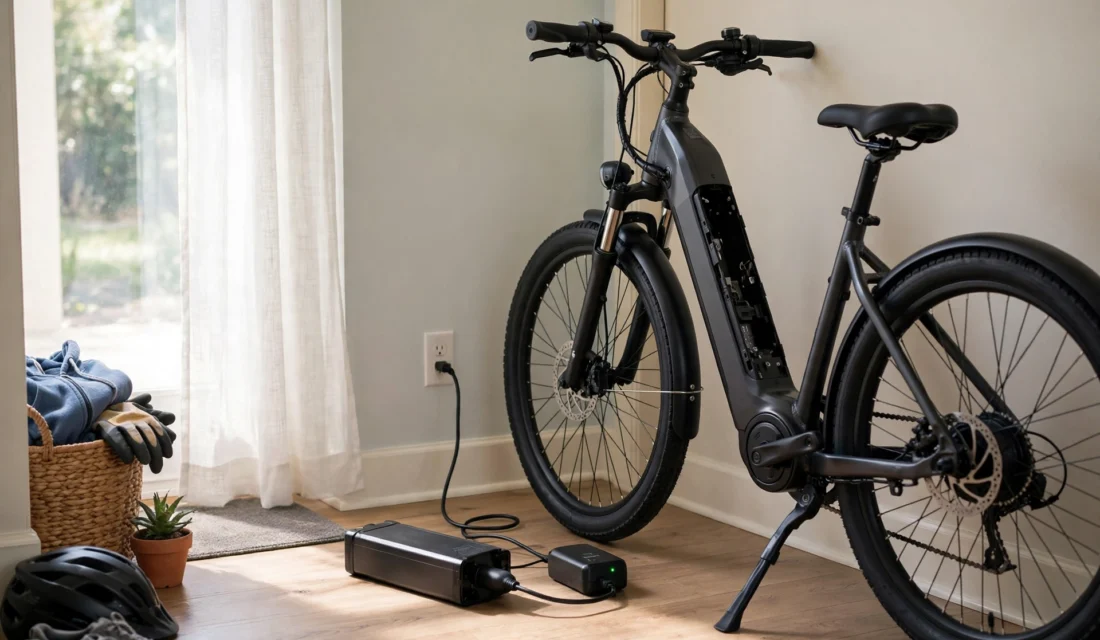
Short answer: Use only the charger made for your battery, charge in a cool, dry place away from flammable materials, and avoid leaving the battery fully empty or fully full for long periods. For daily riding, a mid-range charge is usually kindest; for storage, a partial charge is usually better than 100% or 0%. Never charge, use, or open a swollen, damaged, or unusually hot battery — take it to a qualified repairer instead.
Introduction
An e-bike battery is the most expensive part to replace, yet most of its care is simple and boring: the right charger, a sensible charge level, a cool place to rest, and regular checks. This guide walks through those habits step by step, so you can get more useful life from the battery you already own without guessing at settings or opening anything you should not touch.
One important warning runs through the whole guide. Battery brands and models differ, so your manual always wins over general advice. If this guide and your manual disagree, follow your manual, and check its rating and storage guidance for your exact battery.
Charging, storage, and riding: what helps and what hurts
| Habit | Helps battery life | Hurts battery life |
|---|---|---|
| Daily charging | Charging with the correct charger, then unplugging when done. | Using a mismatched charger or leaving it plugged in for days. |
| Storage | A partial charge in a cool, dry, indoor place. | Storage at full charge, empty, or in extreme heat or cold. |
| Riding | Smooth pedalling, lower assist on flat ground, and correct tyre pressure. | Constant full assist, heavy loads, and long rides at very low charge. |
| Temperature | Charging and storing at room temperature where possible. | Charging a frozen battery or one left in strong sun or a hot car. |
| Care | Clean, dry contacts and a quick monthly check for damage. | Water jets, loose mounts, and ignoring swelling or strange smells. |
What you will need
- Your e-bike manual, or the battery label, for voltage, charger type, and storage guidance.
- The manufacturer’s charger supplied for your battery.
- A dry, soft cloth for cleaning the battery case and contacts.
- A cool, dry indoor storage spot away from flammable materials.
- A tyre pump, so soft tyres do not waste battery power through extra rolling resistance.
- Your battery key, if your battery locks to the frame.
Do not buy a replacement charger, battery, or case until you have checked the manual. The wrong voltage, connector, or fit can damage the battery and may be unsafe.
Step 1: Use the correct charger, every time
Use only the manufacturer’s charger, or an exact replacement the manufacturer approves. Check the voltage, connector, and battery type before you plug in. A charger that looks similar is not necessarily safe or suitable, even if it fits the socket.
Before charging, inspect the charger cable, plug, battery case, and charge port. If anything is cracked, frayed, loose, or smells burnt, stop and do not charge. Place the charger on a hard, ventilated surface, not on bedding, clothing, or paper. Charge away from flammable materials, and never leave charging unattended if your manual warns against it.
Follow this order unless your manual says otherwise:
- Switch the e-bike off.
- Connect the charger to the battery first, then to the wall outlet.
- Check the indicator light and let the battery charge without moving it.
- Unplug from the wall first, then from the battery, when charging is finished.
- Let a hot battery cool before charging, and let a cold battery warm to room temperature first.

UL Certified 54.6V 2A Fast Electric Bike Charger for 48V Ebike Battery
A 48V e-bike charger shown in an earlier charger guide. Only use it if it exactly matches your battery’s voltage, connector, and manual.
Check price on Amazon
Step 2: Choose the right charge level for daily use and storage
For everyday riding, you do not need to chase 100% every time. A mid-range charge is usually gentler on the battery, and it still leaves plenty of range for most commutes. Charge to full only when you need the extra range, such as a longer ride, then ride soon after charging.
For storage, avoid both extremes. A battery left completely empty can become hard to revive, while a battery left full for months is under more stress. A partial charge, around the middle of the gauge, is a safer resting level for most batteries. Check your manual, because some brands give a specific storage percentage.
| Situation | Sensible charge approach | Why it helps |
|---|---|---|
| Daily commute | Charge to a mid-range level; top up as needed. | Less time spent at stressful high or low levels. |
| Long ride tomorrow | Charge fully, then ride soon after. | You get the range without long storage at full charge. |
| Not riding for weeks | Store at a partial charge and check it monthly. | Reduces stress and avoids a deep, damaging discharge. |
| After a ride | Let the battery cool, then charge if needed. | Charging a hot battery adds heat stress. |
If the battery will sit unused, set a monthly reminder. If the level has fallen noticeably, top it back to a partial charge. Do not store it plugged in for the whole period.
Step 3: Protect the battery from heat and cold
Heat is one of the fastest ways to age a battery. Do not charge or store it in direct sun, beside a radiator, in a hot car, or in a sealed shed on a hot day. If the battery feels hot after a ride, let it cool in the shade before charging. If it becomes unusually hot during charging, unplug it, move it away from flammable materials if it is safe to do so, and seek advice from a qualified repairer.
Cold also matters. A very cold battery may give less range, and charging a frozen battery can damage it. Bring the battery indoors, let it reach room temperature, and only then charge it. In winter, store it indoors where possible, rather than in an unheated garage or outside, and follow your manual’s temperature guidance.
Step 4: Avoid full discharges and ride regularly
Try not to run the battery completely flat. When the gauge is low, switch to a lower assist level, pedal more, and head home or to a charger. Repeated deep discharges wear a battery faster than shorter, gentler cycles.
Regular use also helps. A battery left unused for months can lose charge and condition, so ride it when you can, even for a short trip. On flat ground, lower assist and steady pedalling use less energy than constant full assist. Keep your load reasonable, and avoid long, steep climbs at full assist if a lower setting will do the job comfortably.
Good riding habits include:
- Start in a lower assist level and raise it only when you need it.
- Pedal smoothly instead of stopping and starting at full power.
- Plan charging stops on longer rides, rather than pushing the last charge.
- Shift gears early on hills, so the motor does not work harder than it must.
Step 5: Store the battery the right way
If your battery removes from the frame, take it indoors for storage. Store it upright, dry, and protected from knocks, with nothing heavy stacked on top. Keep it away from flammable materials, heaters, and damp corners. If it stays on the bike, store the whole bike in a dry, sheltered place and switch the power off.
- Charge or discharge to a partial level, following your manual.
- Clean the case and contacts, then dry them fully.
- Remove the battery if your manual allows it, and lock it away from children.
- Check the charge level once a month and top it to a partial level if it has fallen.
- Before riding again, inspect the case, mounts, and contacts, then charge as normal.
Do not store a damaged battery in a bedroom, hallway, or escape route. If you are unsure whether a battery is safe to store, ask a qualified repairer before keeping it indoors.
Step 6: Clean, check, and keep tyres at the right pressure
Once a month, switch the power off and remove the battery if you can do so safely. Wipe the case with a dry, soft cloth. Check the contacts for dirt, corrosion, or bent pins, and clean them gently as your manual describes. Never use a pressure washer or hose on the battery, motor, or display, and never poke tools into the charge port.
Check that the battery locks firmly and does not rattle. A loose battery can damage its mounts and contacts over time. Also check the tyres: soft tyres increase rolling resistance, so the motor works harder and the battery drains faster. Inflate to the pressure shown on the tyre sidewall or in your bike manual.

Mini Bike Pump – Portable Aluminum Alloy
A portable aluminium alloy mini pump for keeping tyres at the right pressure, which helps reduce rolling resistance.
Check price on Amazon
Step 7: Know when to stop using a battery
Stop using and charging the battery at once if you notice swelling, cracking, leaking, a strange chemical smell, smoke, or unusual heat. Do not try to open the battery, press a swollen case back into shape, or charge it to see if it recovers. Battery cells are not a home repair.
Move the battery away from flammable materials only if it is safe to do so, keep people away, and contact a qualified repairer or your local battery recycling service for advice. The same applies after a crash, a hard drop, or water damage, even if the battery looks fine at first. Range that drops sharply, charging that stops early, or a battery that will not hold charge also deserves professional checking, not repeated charging attempts.
Monthly battery care checklist
| Check | Done? |
|---|---|
| Battery case: no swelling, cracks, or leaks. | ☐ |
| Contacts clean, dry, and undamaged. | ☐ |
| Battery locks firmly and does not rattle. | ☐ |
| Charger cable and plug undamaged. | ☐ |
| Storage level checked; topped to partial if needed. | ☐ |
| Tyres at the correct pressure. | ☐ |
For more e-bike help, see the E-Bikes Hub, and read our earlier guide to e-bike battery chargers if you need to understand charger types before replacing one. Always check your manual first, and seek a qualified repairer for battery or cell faults.
Frequently asked questions
Should I charge my e-bike battery to 100% every time?
No, not usually. A mid-range charge is gentler for everyday use. Charge fully when you need the range for a longer ride, then ride soon after charging.
Can I leave my e-bike battery charging overnight?
Follow your manual. Many chargers stop when full, but leaving a battery plugged in for days, or charging unattended when the manual warns against it, is not good practice. Charge in a safe place and unplug when done.
What charge level should I use for storage?
A partial charge is usually best, rather than full or empty. Check your manual for a specific level, store indoors in a cool, dry place, and check the level monthly.
Can I use any charger that fits my e-bike?
No. Use only the manufacturer’s charger or an exact approved replacement. Voltage, connector, and battery type must match, even if the plug appears to fit.
What should I do if my battery is swollen or hot?
Stop charging and using it at once. Do not open it, puncture it, or try to charge it again. Move it away from flammable materials only if safe, and contact a qualified repairer.
Why does my battery lose range in cold weather?
Cold reduces usable range and can make charging less efficient. Bring the battery to room temperature before charging, store it indoors, and expect some range loss on very cold rides.
Affiliate Disclosure: We may earn a commission when you buy through links on this site, at no extra cost to you.
