Straight answer: for most city riding, a lightweight e-bike is the better buy. It is easier to lift up steps, carry onto a train, and push when the battery runs out. A cargo e-bike wins only when you carry a real load every day — children, a weekly shop, or work gear — because it keeps that load low, steady, and safe. Light load? Choose lightweight. Heavy daily load? Choose cargo.
Cargo E-Bike vs Lightweight E-Bike: Which One Is Right for City Riding?
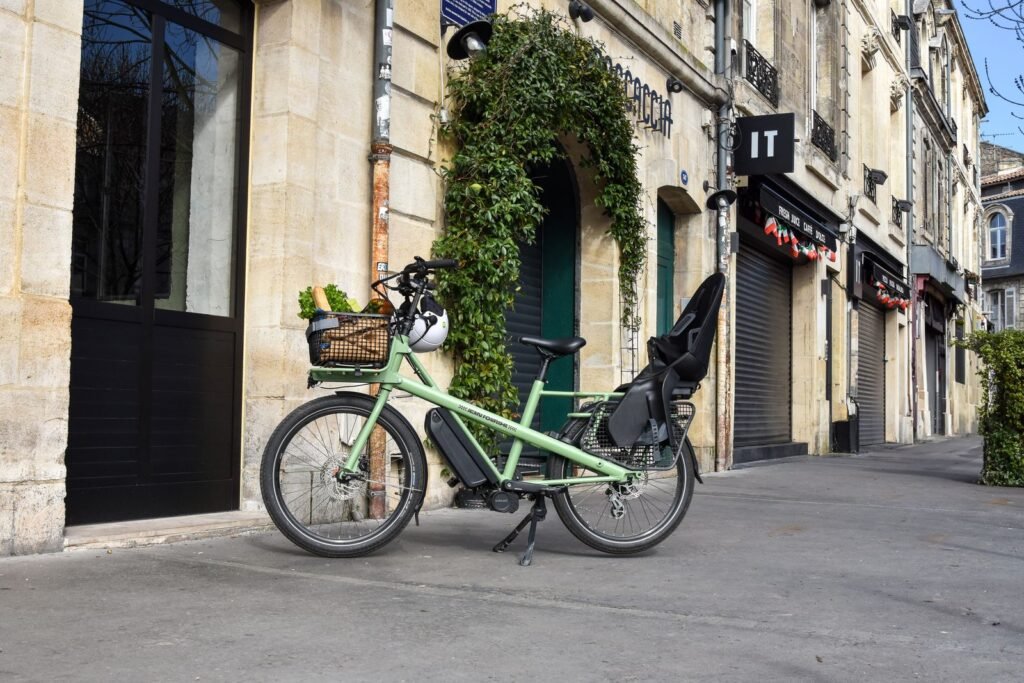
City riding means short trips, stops and starts: lights, junctions, kerbs, steps and crowded racks. A cargo e-bike carries weight — a child seat, a box, or a week of shopping — on a long, strong frame. A lightweight e-bike is built to be light, so you can lift it, carry it up steps, and push it easily.
That matters more in a city than on an open road. With nothing to carry, the lighter bike is faster to start, easier to stop, and simpler to park. Add a child or a heavy bag, and the cargo bike makes sense, because it carries the weight where it belongs.
This guide compares the two, gives you a short test to run before you buy, and shows what to do if you already bought the wrong one. See the E-Bikes Hub, and our commuter e-bike vs lightweight e-bike and folding e-bike vs lightweight e-bike comparisons.
Cargo E-Bike vs Lightweight E-Bike: The Core Comparison
The table below is the decision in one place: the cargo bike gives you carrying power, and the lightweight bike gives you freedom to move it.
| Attribute | Cargo E-Bike | Lightweight E-Bike | What to watch |
|---|---|---|---|
| Best for | Daily loads and children | Solo trips, light bag | Cargo wins for people and heavy shops; lightweight wins otherwise. |
| Weight | Heavy, built to carry a lot | Light, easy to lift and push | Lift it up one step before you buy. |
| Carrying | Big rack or box, low and steady | Small rack or bag | Load it as on a real trip, then brake and turn. |
| Traffic | Steady, turns wider | Quick, turns tight | Tight streets and racks favour the lighter bike. |
| Storage | Needs long, wide space | Fits a small rack or flat | Measure your spot and doorway first. |
| Transport | Hard to lift onto a train | Easy to carry up steps | If your commute has stairs, test the lift. |
| Battery out | Hard to pedal home loaded | Easy to pedal home light | Ride it with the power off before you buy. |
| Battery | Bigger battery, more use | Smaller battery, enough for short trips | Check the range you need, not the headline. |
When the Answer Changes
The straight answer holds for most weekday riding. Five things flip it.
- Your load changes. The day you carry a child or a heavy shop, the cargo bike wins. With only a light bag, the lightweight bike wins.
- Your home has steps. If you carry the bike up steps every day, weight matters more than load space.
- Your trip has a train or bus. A lightweight bike goes up steps and onto a train. A long cargo bike often does not fit.
- Your route is hilly. A loaded cargo bike climbs well with help, but it is hard to push if the battery runs out.
- Your parking is tight. A long cargo bike needs a long space. If your rack or hallway is small, choose the lightweight bike.
The City Test: Ride Your Own Route in 15 Minutes
Judge each bike on your real route — your steps, kerbs, parking spot and load — not on a short ride around a car park.
- Load it as you would on a real day. Put in the child seat, shopping or work bag you actually carry. An empty cargo bike feels easy; a loaded one is the real test.
- Start and stop three times. Pull away from a kerb, stop at a line, and start again. You should hold the bike upright without a wobble.
- Turn in a tight space. Turn around in a space no wider than a pavement or a bike rack aisle. A long cargo bike needs more room.
- Lift it and park it. Lift the front wheel up one step, carry it a few metres, and put it in your parking spot.
- Ride it with the power off. Pedal a short, flat stretch with the motor off. This is your ride home if the battery runs out.
What a fail looks like
- You wobble when you stop → the load is too high or too far back → lower it and move it forward.
- You cannot lift the bike up the steps → it is too heavy for your home → choose the lightweight bike.
- You cannot turn in the rack aisle → the bike is too long → measure the space and choose the shorter bike.
- You cannot pedal it with the power off → it is too heavy to push home → keep more charge in reserve.
Myth vs Fact
Myth: “A cargo e-bike is always slow in the city.”
Fact: With the motor helping, a cargo bike keeps up in traffic. The slow part is parking, turning and lifting it.
Myth: “A lightweight e-bike cannot carry anything.”
Fact: It can carry a light bag and a day’s shopping in a pannier, but not a child and a week’s shopping at once.
Before you test
Wear a helmet, check the brakes and tyre pressure, and test in a quiet street before busy traffic. Ride at walking speed first. Never test a loaded bike in traffic for the first time.

1400W peak power, up to 80 miles, and a child safety fence — built for family loads.
How to Choose the Right One for City Riding
Work through these steps before you pay, to avoid the most common mistake: buying for a trip you rarely take.
What you will need
- Your usual load — child seat, shopping bags, or work gear
- A tape measure for your parking spot, doorway and steps
- Your real route, with its hills, kerbs and bike racks
- A helmet, and a quiet street for the first test ride
The method
- Weigh your real load. Pack the bag or seat you use most days. A child or a weekly shop means a cargo bike; a laptop and a light bag does not.
- Measure your home. Measure the parking space, doorway and steps. A bike that does not fit where you live will not be ridden.
- Ride your route, not a car park. Take it up your hill, over your kerbs, and into your rack.
- Try the lift. Lift it up one step and carry it a few metres, then do it again with the load on. If it hurts, the bike is wrong for your home.
- Check the battery in real use. Ride your normal distance with the load on, and see how much charge you use.
Note
If the two bikes tie, choose the lighter one. A bike that is easy to move gets ridden more.
Warning
Never ride a loaded cargo bike in busy traffic before practising with that load in a quiet street. A heavy load changes braking distance and how the bike leans.
For the cargo side, see our cargo e-bike vs throttle e-bike and cargo e-bike vs hub motor e-bike comparisons.

750W peak motor, up to 20 MPH and 40 miles per charge.
When the Damage Is Already Done
Bought the wrong one? Most city problems can be fixed without selling the bike.
- The cargo bike is too heavy to carry upstairs. Store it at ground level, and take the load off before you lift it.
- The lightweight bike cannot carry your load. Add a strong rear rack and panniers, and keep the load low. If you still need a child seat and a weekly shop, swap it for a cargo bike.
- The bike will not fit your parking spot. Park it elsewhere, or remove the front wheel if the rack is short.
- You cannot pedal it home with a dead battery. Charge it after every ride, use low assist on short trips, and plan a flat route home.
- You wobble with the load. Lower the load, move it forward, and check the tyre pressure.
Try the cheapest fix first. If two fixes do not work, the bike is wrong for your trip — sell it to someone whose trip fits it.

1450W peak power, 20×4 fat tyres, and up to 80 miles — a strong cargo-style weekend hauler.
The Safe Alternative: Start with a Lightweight E-Bike
If you are unsure, start with a lightweight e-bike. Add a rack and panniers, and move up to a cargo bike later if you need one.
- Buy the lightest bike that fits your load. If you can lift it up one step, it will fit your life.
- Add a rear rack and one pannier, and keep the load low.
- Ride it for a month and note where you struggle. If the load is the problem every week, you need a cargo bike.
- Upgrade only when the load proves it: a swap to a cargo bike beats buying one for a load you carry once a month.
What to Do Next, in Order
- Pack your real load: child or shop, or light bag?
- Measure your parking spot, doorway and steps.
- Ride both bikes on your real route, with the load on.
- Lift each bike up one step and put it in your parking spot.
- Choose the bike that fits your home and load, then charge it after every ride.
Never Do This on a City Ride
- Never ride with a loose load. A swinging bag changes the steering and can catch a wheel.
- Never overload a lightweight rack. A bent rack can stop the wheel.
- Never test a loaded cargo bike in busy traffic first. Practise in a quiet street.
- Never ride a heavy bike with a dead battery. Plan your charge, and keep a flat route home.
- Never lock a long cargo bike to a rack that is too short. It needs a long lock and a rack it fits.
In Short
For most city riding, a lightweight e-bike is the better buy: easier to lift, park, push and ride in traffic. A cargo e-bike wins only when you carry a heavy load every day. Let the lift test decide.
The essentials
- Light load and steps or a train? Choose a lightweight e-bike.
- Child, weekly shop or work gear every day? Choose a cargo e-bike.
- Test with your real load, on your real route, with the power off.
- If the two bikes tie, choose the lighter one.
- Never buy for a trip you rarely take.
More Questions, Answered
Is a cargo e-bike too heavy for city riding?
With the motor helping it keeps up in traffic. The weight matters most at home — steps, doorways and parking — not on the road.
Can a lightweight e-bike carry a child?
No, not for daily use. It can carry a light bag and a day’s shopping in panniers, but a child needs a proper seat on a strong frame — that is cargo bike work.
Which e-bike is best for a flat and a train?
A lightweight e-bike: carry it up steps, lift it onto a train, and park it in a small space. A long cargo bike often does not fit.
Do I need a bigger battery on a cargo e-bike?
It uses more power because it carries more weight, so a bigger battery helps. Ride your normal route with your load and see how much charge you use.
Additional Details
- Name: Cargo E-Bike vs Lightweight E-Bike: Which Is Better for City riding?
- Description: Cargo e-bike vs lightweight e-bike: which is better for city riding? Compare load, weight, storage and range, then run the city test before you buy today.
- Published: November 10, 2026